








bacteria become the builders in ETH zurich’s exploration of living architecture

what if bacteria could build the architecture of the future?
At ETH Zurich, researcher Karen Antorveza Paez explores the possibility of bacteria becoming architectural collaborators by combining microorganisms, sand and digital manufacturing to produce solid building elements. Through a process known as biocementation, bacteria bind loose grains together with calcium carbonate, the mineral found in limestone, mussel shells, and chalk. By integrating this biological process with 3D printing and robotic fabrication, her research investigates how microorganisms can participate in shaping the built environment, challenging the idea of architecture as an exclusively human-made practice. The research introduces an alternative understanding of construction, one in which microorganisms actively participate in producing materials.
when microorganisms become material makers
The process behind the research is called microbiologically induced calcite precipitation (MICP), also known as biocementation. It relies on bacteria called Sporosarcina pasteurii, which produce an enzyme that breaks down urea, triggering a reaction that generates calcium carbonate. The mineral that occurs, also found in limestone, mussel shells and chalk, forms microscopic crystals between grains of sand, binding them into a solid structure.
While biocementation has been investigated for years, particularly for stabilizing loose soil and developing self-healing concrete, Antorveza Paez approaches it as a material in its own right. Her research focuses on how biological processes can be controlled and integrated into digital manufacturing to produce architectural forms. The research gives bacteria an active role in the formation of the material. The architect establishes the conditions, develops the fabrication system and determines the geometry, while the microorganisms carry out the mineralization.
printing with a biological mineral binder
One of the two methods developed by the research team is 3D biocement printing, which begins with a bio-ink combining sand, live bacteria and a water-based gel made from alginate and xanthan. Similar to conventional 3D printing, this mixture can be deposited into predetermined geometries. Once printed, the object is immersed in a mineralization bath containing urea and calcium chloride. The bacteria initiate the chemical reaction that produces calcium carbonate, gradually forming microscopic crystals between the sand grains. Depending on the desired strength, the process takes between two and five days, with fresh mineralization solution supplied daily.
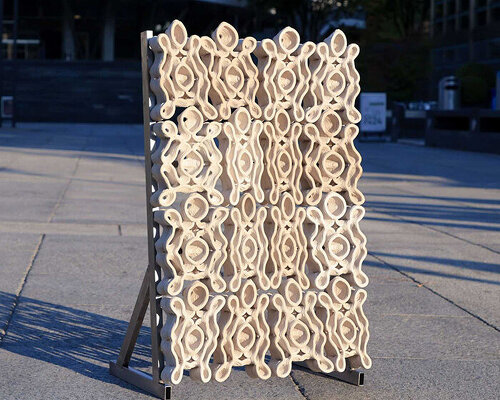
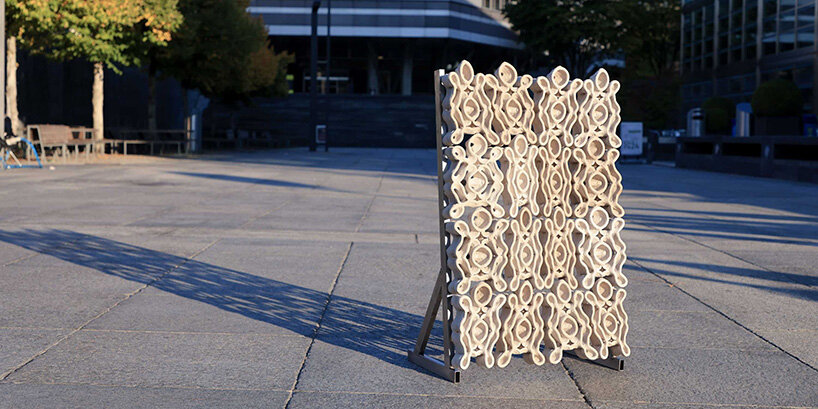
No external heat source is required. Bacterial activity gradually transforms the printed mixture into a solid mineral structure at room temperature. Antorveza Paez compares the process to baking a cake, with microorganisms taking the place of an oven by setting the material. The team has already used the technique to produce a facade element that could function as a sunshade or partition wall, whose structure develops through the interaction between the printed geometry and the biological processes taking place within it.
robotic construction inspired by geological formations
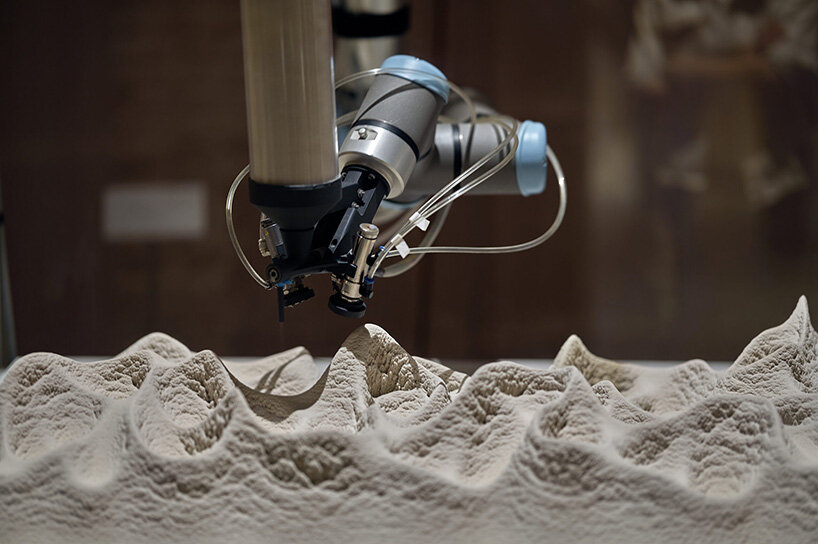
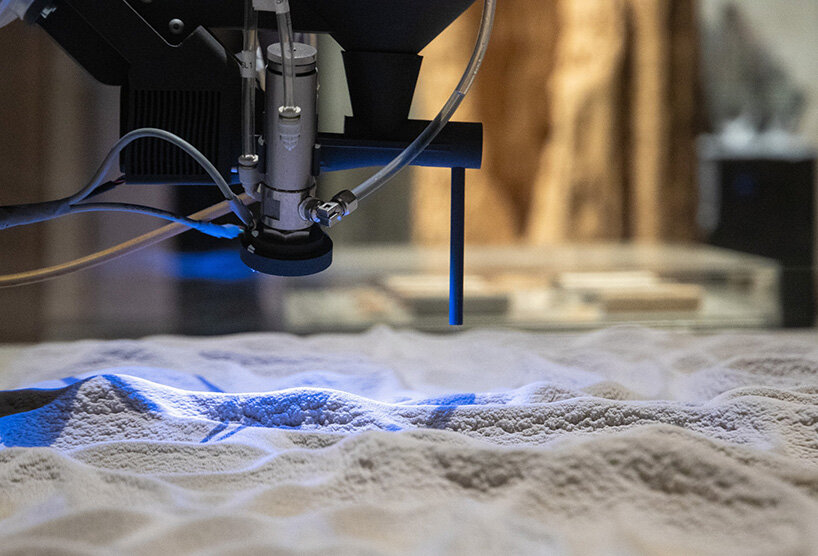
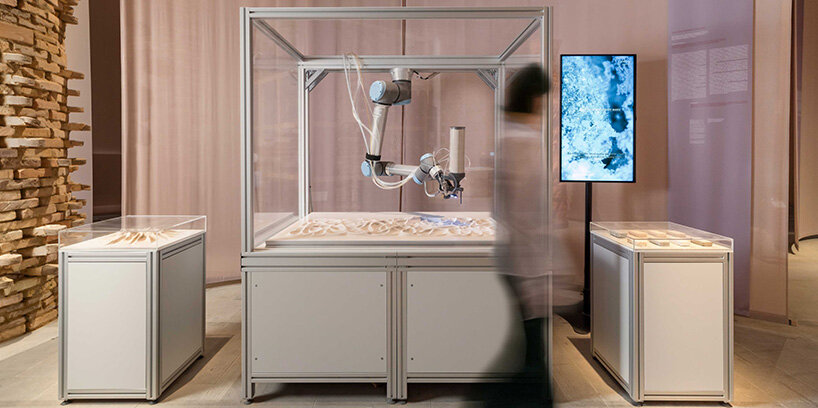
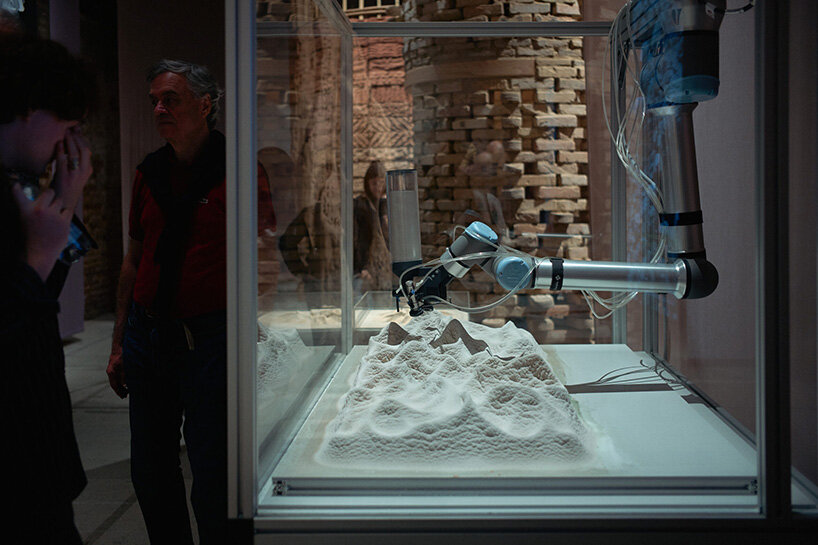
A second method moves beyond printed components to explore how biocementation can be applied directly to architectural surfaces. Here, a robotic arm repeatedly deposits sand, bacteria and the substances required for mineralization, building up a structure layer by layer. Inspired by stromatolites, sedimentary rock formations created through the mineral-depositing activity of microorganisms, the technique translates a geological process into an automated fabrication system.
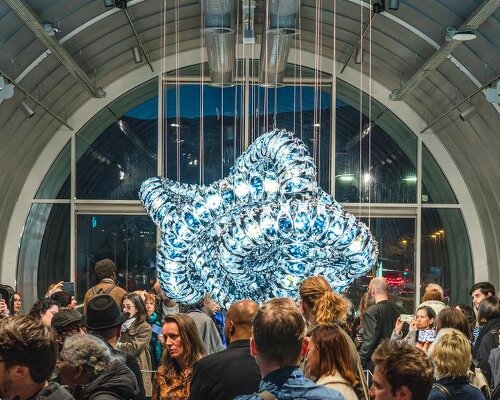
The approach was demonstrated at the 2025 Venice Architecture Biennale in the project Geological Microbial Formations, where the robotic process operated continuously for six months, allowing visitors to observe the gradual formation of the material.
the environmental limits of biological construction
The possibility of using bacteria to produce architectural materials raises questions that extend beyond fabrication. Cement manufacturing is a major contributor to construction-related carbon emissions, and biocementation offers a potential alternative that avoids the high-temperature processes associated with conventional cement production. However, the biological process is not without environmental consequences. The reaction generates ammonium as a by-product, a substance that can be damaging to the environment if not properly managed. Antorveza Paez is currently investigating the environmental impact of biocementation and possible solutions for handling this chemical waste.
There are also considerable material challenges ahead. The researcher describes biocementation as closer to mortar than concrete, with further investigation needed to understand how grain sizes, mineral bonds and internal structures affect strength and durability. Its application in load-bearing architecture therefore remains a longer-term possibility.
rethinking who gets to build
Beyond its potential material applications, the research points toward a different understanding of architectural authorship. If buildings have traditionally been conceived as the products of human design, engineering and industrial manufacturing, biocementation introduces the microorganism as another participant, suggesting that architectural production can emerge through orchestrated interactions between human intelligence, digital technologies, biological activity and mineral matter.
For Antorveza Paez, the research is also an opportunity to reconsider our relationship with building materials. Architects rarely know much about the processes through which the materials they specify are produced. Working with microorganisms brings those processes into focus, revealing how sophisticated material structures can emerge through biological activity.
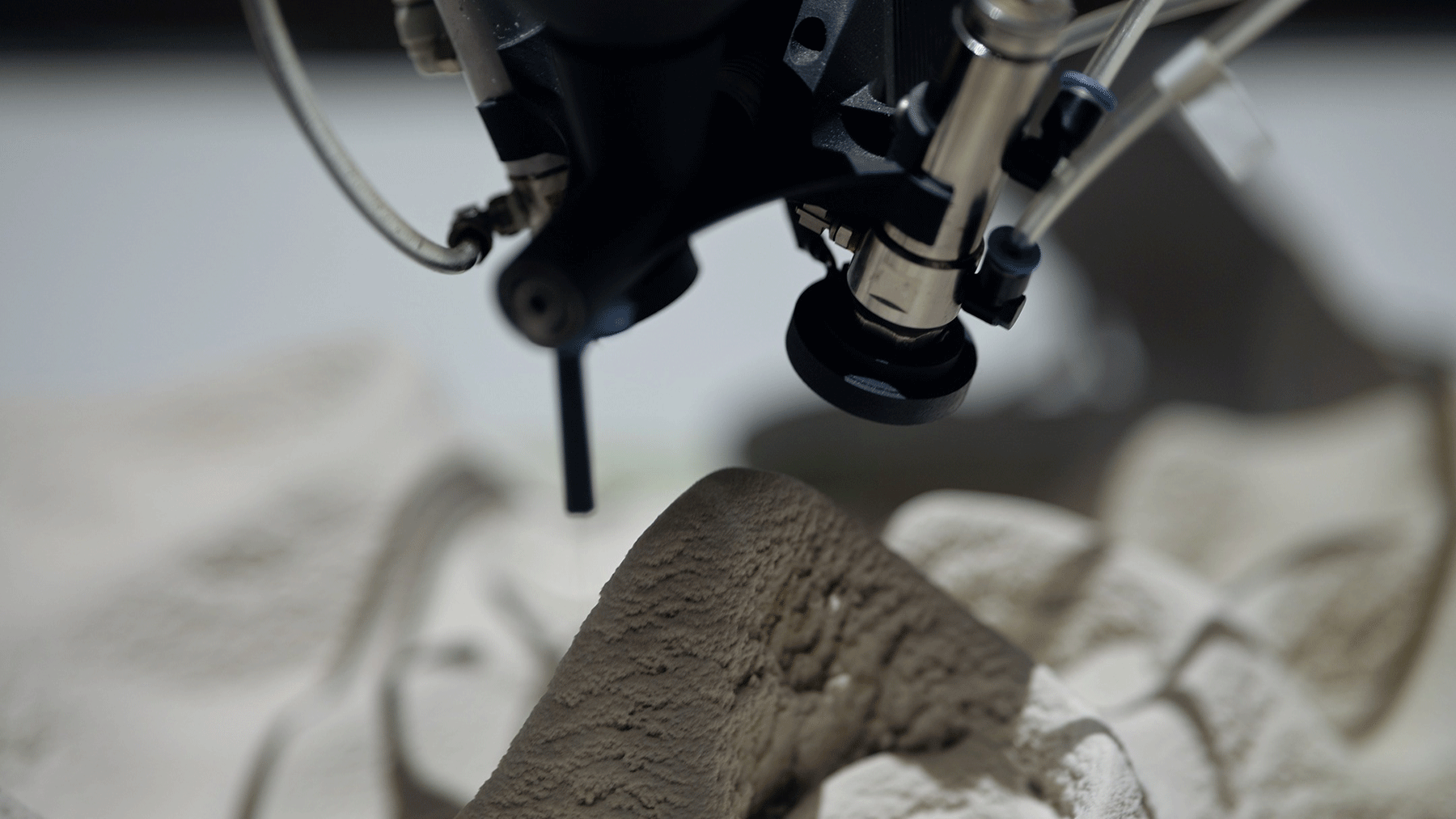
image by Gerhard Bliedung
project info:
name: 3D biocement printing and robotic biocementation spraying
researcher: Karen Antorveza Paez | @kaphend
institution: ETH Zurich | @ethzurich, Department of Architecture
research groups: Digital Building Technologies and Complex Materials Group
This article is part of designboom’s POSTHUMAN UTOPIAS chapter, exploring what happens when humans are no longer the measure of all things. These stories rethink our relationship with the planet through interspecies architecture, living materials, regenerative landscapes and emerging technologies – learn more here! The chapter is presented in partnership with INDX|GLOBAL – a global cultural platform placing Indian architecture, design, and creative intelligence in conversation with the world.
Each designboom editorial series explores one theme in depth through projects, interviews, features and news across architecture, design, art and technology. Discover more chapters here, and get in touch if you’d like to submit a story through our submissions portal or contact form.
The post bacteria become the builders in ETH zurich’s exploration of living architecture appeared first on designboom | architecture & design magazine.