


Five little-known stage designs from the archives of Zaha Hadid


The unsung set designs of Zaha Hadid take centre stage in the latest exhibition curated by her foundation in London. In this roundup, we spotlight five standout objects that were uncovered from her archives for the show.
Named Zaha Hadid: Architecture of Performance, the exhibition is the Zaha Hadid Foundation's first collection-based show dedicated to the architect's portfolio of stage and set designs.
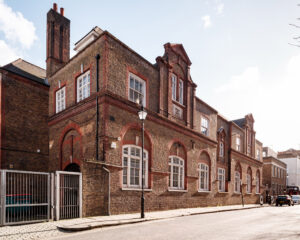
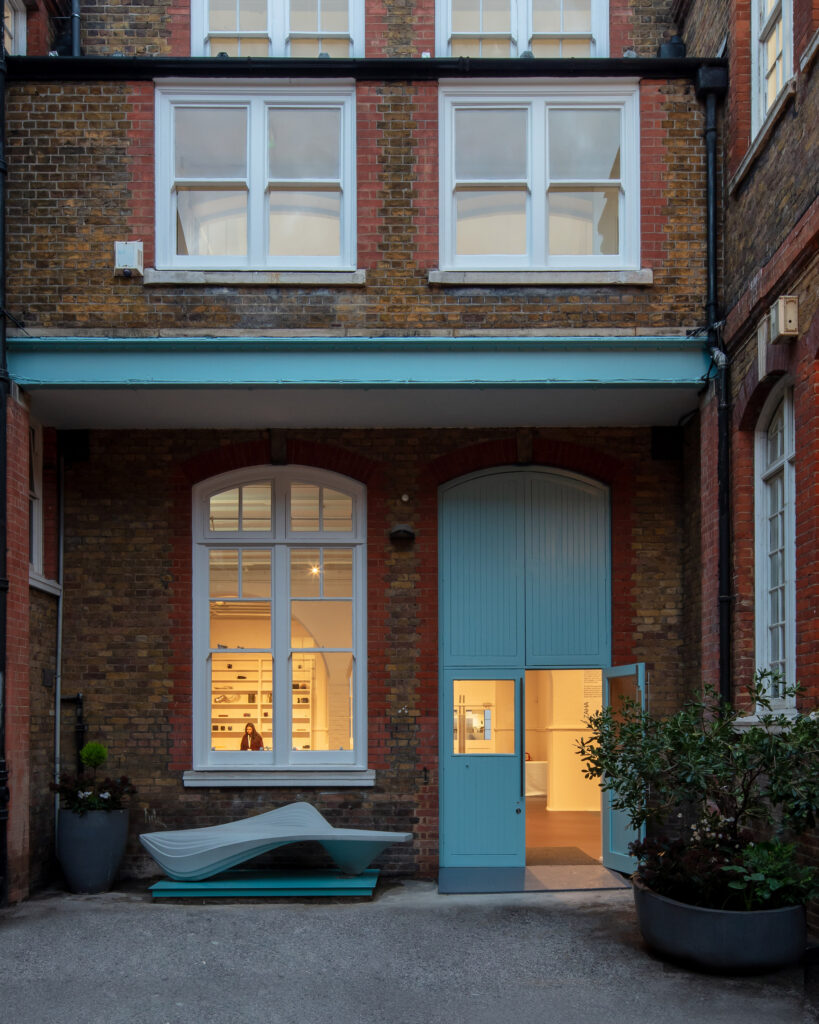
It coincides with the reopening of the foundation's home in Hadid's former office – a former Victorian schoolhouse at 10 Bowling Green Lane in Clerkenwell, following a refurbishment by Studio KA coinciding with the 10th anniversary of Hadid's passing.
The exhibition was curated by the foundation's senior researcher Catherine Howe and design historian Libby Sellers as guest curator, and contains five projects illustrated through a mix of archival models, drawings, video footage and even costume.
Together, these offer insight into the evolution of Hadid's signature complex geometries and digital design techniques, through the lens of sets for dance, opera and pop music.
According to curator Howe, the exhibition exemplifies how Hadid "didn't want to be fixed" in her work, and how "she wanted to work across so many media".
Howe added that the exhibition came about serendipitously, after the foundation had kept discovering records of these unsung projects while unpacking boxes.
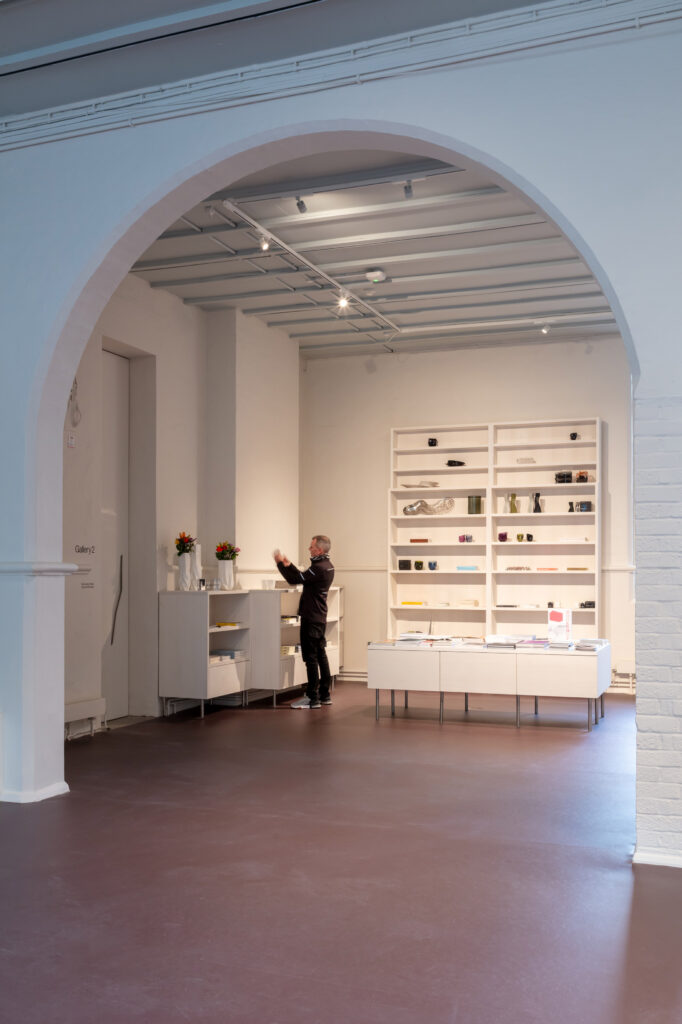
"We open a lot of boxes," she told Dezeen during a tour of the exhibition. "Sometimes it's fortuitous, or it's that there's a big box and we need to move it, and we kept noticing all these amazing projects that hadn't really been talked about."
"Of course, everyone talks about her incredible buildings, but I think the interdisciplinarity of some of these projects was just being forgotten about, and we said 'we need to do something on performance'."
The foundation's chairman, Rana Hadid, who is also the niece of Hadid, told Dezeen the reopening of the foundation was a "very emotional" moment for her, but suggested the exhibition only marks the beginning of discovering treasures in the foundation's archive, which is estimated to contain 300,000 items.
"[Hadid's] archive is so extraordinary, it's limitless paintings, drawings, sketchbooks, digital material, personal material, it goes way beyond architecture," Rana Hadid explained.
"It's really about studying the process of her thinking, and using all that to help younger generations learn more about the process, the experimentation, the way you can start an idea and move forward with it, use technologies to be able to build it."
The Zaha Hadid Foundation is an independent charity founded by Hadid in 2013. The Zaha Hadid: Architecture of Performance exhibition is on until 27 March 2027.
The foundation's reopening programme also includes a video artwork by artist LionHeart and a timeline visualisation of Hadid's life by data journalist Mona Chalabi.
Read on for five stand-out exhibits from the Zaha Hadid: Architecture of Performance exhibition.
Così fan tutte, 2014
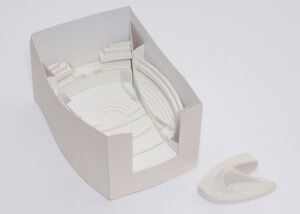
Hadid created this model for her design for the staging of Mozart’s Così fan tutte opera, presented at Frank Gehry's Walt Disney Concert Hall in Los Angeles in 2014.
Her dynamic stage design featured a spiralling white platform, engineered with sections that could rise and fall to help echo the shifting relationships of performers in the opera.
It had a curvature that mirrors many of her buildings, including the iconic Heydar Aliyev Centre in Baku, completed two years prior.
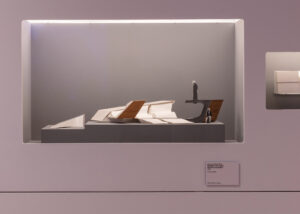
Night Life, 1999
Another model featured in the exhibition is one Hadid created when designing the set for the Pet Shop Boys’ Nightlife World Tour, which took place between 1999 and 2000.
The design comprised an interconnected, reconfigurable system of ramps that could be tailored to suit different venues while maintaining the overall aesthetic. It also incorporated projection surfaces, transforming the stage into a multimedia environment.
According to the foundation, it was Hadid's "first commission for a major pop concert".
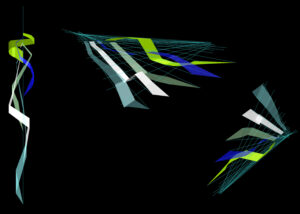
Metapolis, 1999
This collection of digital drawings depicts the stage design that Hadid created for the Metapolis Ballet in 1999, and embodies the abstract design language for which the architect was best known.
These ultimately became a trio of lightweight bridge structures that were moved, reconfigured and even worn by dancers across the stage. It is exhibited alongside a costume, which Hadid also designed for the ballet.
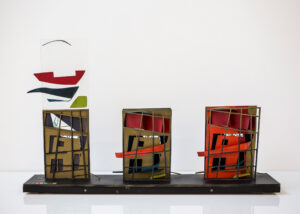
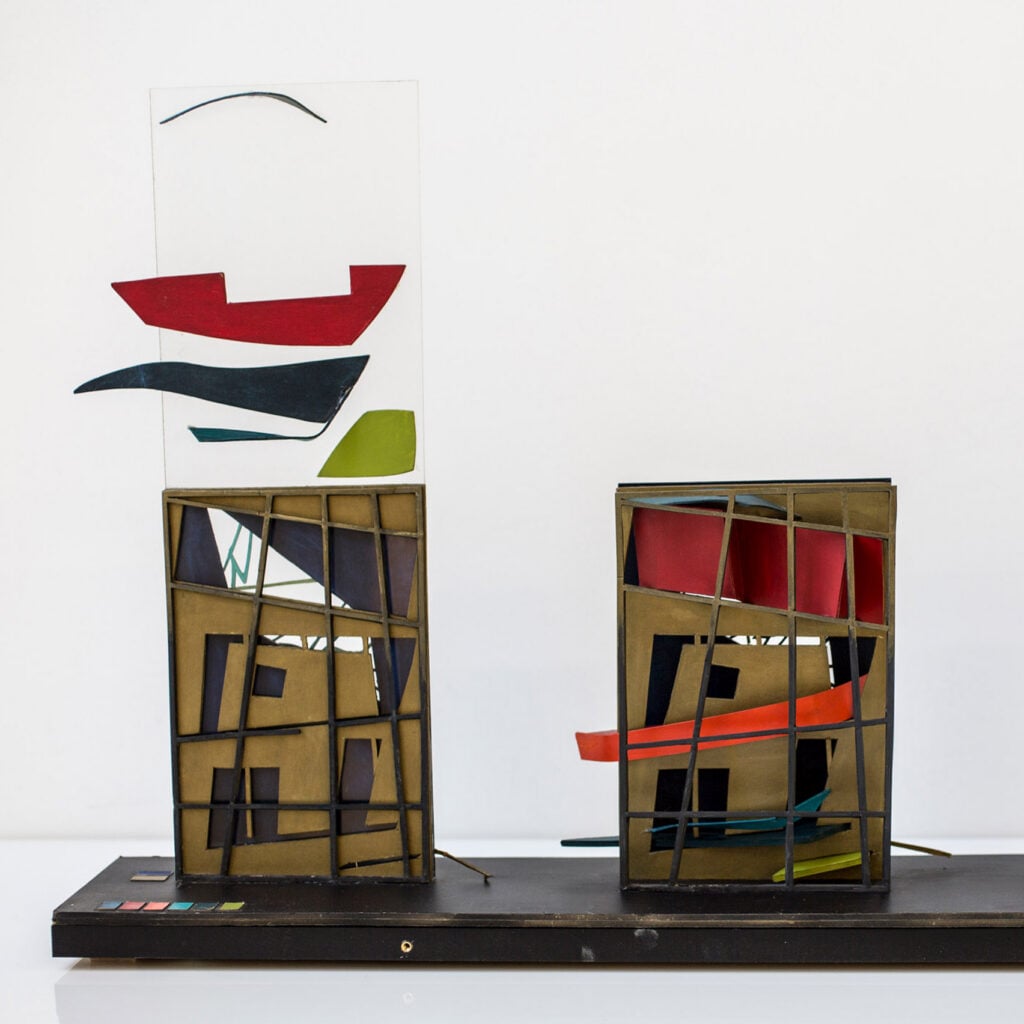
Music Video Pavilion, 1990
This trio of models were developed by Hadid for her pavilion at an event in Groningen called What a Wonderful World! Music Videos in Architecture in 1990.
It responded to a brief that asked for explorations into how the cultural phenomenon of music videos could be translated from screen to public space.
Hadid's final design featured an uncharacteristically bright colour palette and a grid-like structure with shifting floors and angular walkways, and proposed "how architecture could shape the experience of viewing itself", the foundation said.
The final pavilion was exhibited alongside contributions by her fellow 'deconstructivist' architects, including Rem Koolhaas, Bernard Tschumi, Peter Eisenman, and Coop Himmelb(l)au.
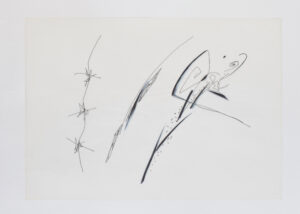
d1, 1989
This abstract sketch of an unnamed architectural project, originally developed by Hadid for Hamburg, later formed the basis of a dance performance called d1 by British choreographer Rosemary Butcher.
The project, which was Hadid's first dedicated to performance, saw the sketch transformed into a monochromatic network of lines on a floor, across which dancers moved as though "navigating a cityscape".
Zaha Hadid: Architecture of Performance takes place from 3 November 2026 to Saturday 27 March 2027. For more events in architecture and design, visit Dezeen Events Guide.
The post Five little-known stage designs from the archives of Zaha Hadid appeared first on Dezeen.