






How long should a building last?



Concerns about embodied carbon are increasing the impetus to design architecture that stands the test of time. But just how long should we expect a building to last? Nat Barker reports.
"When we build, let us think that we build forever," the 19th-century critic John Ruskin famously wrote in his seminal book The Seven Lamps of Architecture.
But, in almost all cases, we do not. Most commercial buildings have a standard design life of around 50 to 60 years, and it's common for them to last only half that long.
"The constraint is about utility"
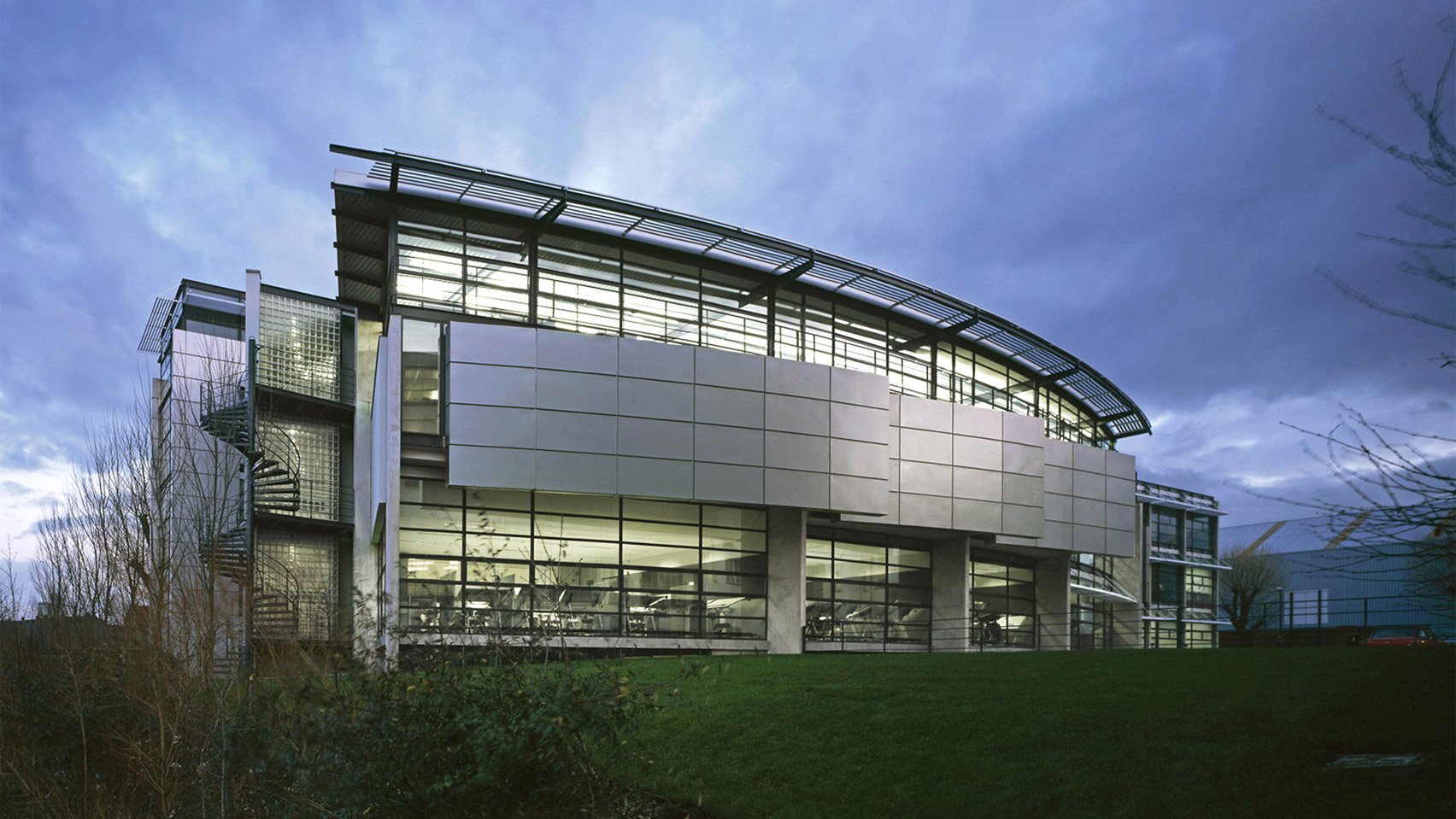
Early this year, for example, approval was given to demolish the first ever winner of the Stirling Prize, the University of Salford's Centenary Building, just 30 years after it was built.
Amid increasing awareness about the huge environmental cost of constructing and demolishing buildings, calls to move away from such short-termism are growing.
But that begs an obvious question not often discussed: what exactly is a reasonable lifespan for a building?
Attempting to answer this question quickly becomes complicated.
It's not a matter of sheer endurance. With the right care and maintenance, buildings made of most materials can stand in perpetuity.
The problem, explains Arup sustainable buildings director Mel Allwood, is that it's often difficult to predict when buildings will become surplus to requirements.
"The very long-life building that is always raised in these circumstances is the Pantheon," she told Dezeen.
"The function is very basic: it's the gathering of people in a city centre. It's almost the lowest common denominator of what society is."
Compare that to, say, hospitals built in Victorian Britain, when Ruskin was advocating for permanent construction. At the time they were cutting-edge, but now are effectively useless.
"It is fundamental that we want that material investment to have as long as possible to repay itself," said Allwood.
"But the constraint is about utility. If it stops being useful, it's no longer paying back its investment, it's just taking up space. And that judgement is really interesting."

To complicate matters further, less practical factors can also come into play. For instance, during the 1960s Victorian houses were considered highly unfashionable and many were demolished.
But today, despite being notoriously draughty and difficult to retrofit, they are considered highly desirable and so are often well looked after.
"If I had a magic wand that would allow me to predict what kind of functions we're going to use buildings for in 20 years time, 50 years time, 100 years time, I'd be doing something else," Allwood said.
Longevity "has become much more important"
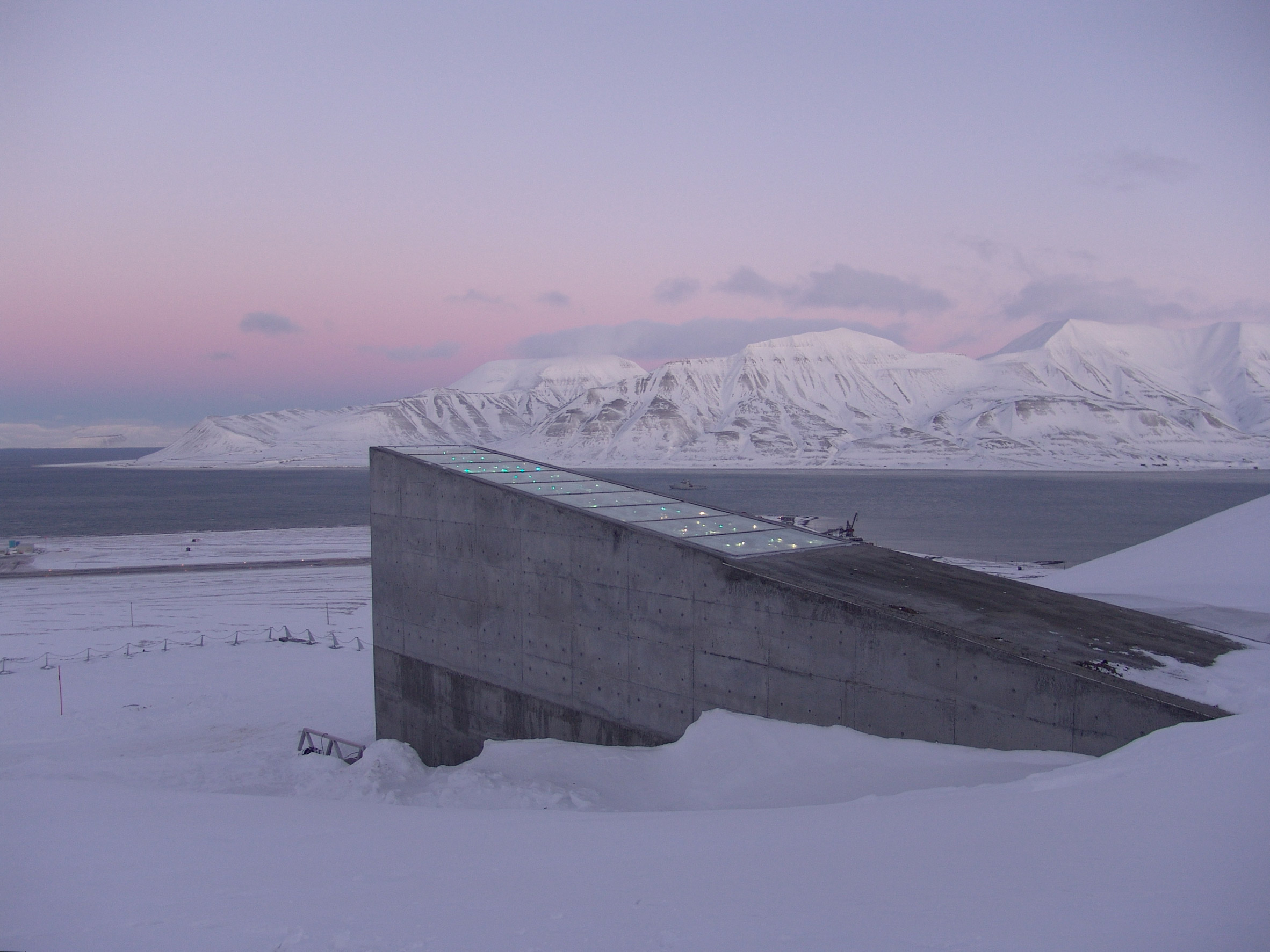
One of the few examples of a contemporary building expected to last a very long time is the Svalbard Global Seed Vault.
Dug deep into the Norwegian permafrost, it opened in 2008 and has been billed by the Norwegian government as being "designed for virtually indefinite lifetime", reportedly capable of withstanding climate change, nuclear war and asteroid strikes.
But, surprisingly, its architect Peter Söderman tells Dezeen that "actually the longevity of the whole thing wasn't that important" to him during the design process.
It's a sign, he suggests, of how much the conversation around architectural lifespans has shifted.
"It has become much more important than it was 20 years ago," he said. "At that time, maybe we didn't think so much about longevity in projects."
"We have to think about buildings that they have a longer life expectancy than before," he added. "We've been building buildings with a 50-to-100-years perspective, but we actually should think longer than that."
At the other end of the scale to the Svalbard seed vault, there has also been a shift to call for buildings to be more ephemeral when their function is predictably short-lived.
In Allword's words, it's about knowing "when to draw in pen and when to draw in pencil". For example, data centres are likely to look very different in 20 years' time, so may only justify sparing use of materials.
And stadiums constructed for the Olympics and the World Cup are now more commonly designed to be temporary.
One architect with significant recent experience of designing for the very near term is Sou Fujimoto.
He masterplanned the Expo 2025 Osaka, which ran from April to October, as well as designing the monumental Grand Ring – the world's biggest wooden structure – as its centrepiece.
Per the Osaka authorities, structures built for the expo were designed to be demountable and are now duly being dismantled, with some intended to be rebuilt elsewhere and some set to have their materials reused.

Fujimoto is unhappy about the situation.
"I feel it's a bit [of a] pity that they decided at the very beginning that the whole site should be temporarily built and then, after the expo, dismantling everything, or relocation of everything, and then make another development on that site," he told Dezeen.
"That is not really a smart way to make that kind of a large development."
Like Söderman, he argues that the focus should be on constructing buildings that can "stay longer and longer – for example, 100 years or more".
"How do you know what people are going to love?"
So how can architects of new buildings ensure that this is the case? Here Fujimoto makes a familiar argument.
"If the building is beloved [by] people, then [it has] more chances to stay longer," he said.
"I like to design buildings really fundamentally relating to human behaviours and human community, or a psychological comfort, because that kind of thing is not changing drastically."
"So it is quite important to think about these kind of rather psychological or emotional or social meanings, as well as physical or scientific meanings – both of them are very important."

But Laura Baron, head of sustainability at UK architecture studio Purcell, which specialises in working with historic buildings, is cautious about this type of thinking.
"I've heard the argument before from current architects who say, 'If you build a building that people will love, then it will last forever,'" she said.
"And I'm like, but how do you know what people are going to love? You're sort of relying on your own ego to tell you that you know what people in a hundred years' time are going to love."
There is broad agreement that even though the functions of a building will likely change over time, the hope must be that the structure is retained and adapted for new uses.
"Nowadays, we're very concerned about flexibility," said Söderman. "We should be designing buildings that can be alternated in some way."

There are practical ways of approaching this challenge, suggests Baron.
"Designing for adaptability I think needs to challenge some of the preconceptions we've got about what is an acceptable amount of space and what's an acceptable floor-to-ceiling height," she said.
"Where we see buildings that have lasted a long time which weren't necessarily built to last that long are things like Georgian townhouses in London that are now office spaces or colleges or used for different purposes."
"Partly because they're beautiful and people like them, but also because they've got quite generous floor-to-ceiling heights, and so you can be a bit adaptive within the spaces that they provide."
High ceilings and ample floorspace have allowed, for example, old industrial buildings to be converted for multiple different purposes in cities around the world – from cultural centres to housing.
These qualities have even allowed some types of buildings with very specific original functions and limited architectural ambition to be renovated for various new uses, such as silos and cooling towers.
Construction methods also play a role, and contemporary building habits make adaptive reuse more difficult.
"Everything's glued together, everything's made of really complex components," said Baron. "And extracting them or changing them is challenging."
These characteristics can also make modern buildings harder to repair. For example, explains Allwood, entire facades are often replaced – at significant carbon cost – because a single element has failed.
"If we had thought about how we could do replacement cycles and repair and maintenance, then there may be much more frequent opportunities to just save whole facades," she said.
"Because you've addressed that one element of design for disassembly, then you've got a real opportunity to save enormous amounts of carbon and enormous amounts of disruption."
"I'm not sure that it's within our power"
This argument ties in to calls for new buildings to be constructed with demountability in mind so that they can be disassembled at the end of their useful lives, with the constituent materials theoretically reused elsewhere.
Preparing for buildings' demise has historically been overlooked by architects.
"Certainly when I was in architecture school, it's not something you were taught to think about – how the end-life of your building that you've just poured all of your blood, sweat and tears into designing is going to, at some point, not exist anymore," said Baron.
"Architects don't necessarily want to envisage the demise of their own masterpiece," she added. "And I think it is a difficult mindset shift, but I think it's definitely changing."
Inevitably, more spacious, high-ceilinged buildings that have been designed for adaptation and disassembly have a higher up-front financial cost.
Similarly, adaptive reuse projects often take longer than demolish-and-rebuild, making them more expensive due to increased labour costs.
This means that even with a mindset shift from architects, policy changes would likely be required to compel the construction industry to produce buildings that can outlast their initial function and be productively recycled when necessary.

Fujimoto has recently had first-hand experience of the limited power of architects to determine the fate of their buildings.
The Grand Ring – which was designed to be fully demountable – is currently being dismantled despite his hopes for it to stay longer.
"I was hoping, I was expecting, from the very beginning that if the expo was very successful and if people really love it, then this Grand Ring could stay longer, like the Eiffel Tower or like some other few examples of the expo building which is staying longer," he said.
He estimated that with the addition of a roof and the right maintenance, it could have stood for a century.
But now, his understanding – not confirmed by the Expo 2025 Osaka authorities – is that most of the 27,000 cubic metres of wood used to construct The Grand Ring will be incinerated as fuel.
This, he says, is "the worst thing to do".

For architects eager to design buildings that stand the test of time, The Grand Ring might be seen as a cautionary tale.
"When you build something you want it to last, as an architect," reflected Söderman. "I am not sure that it's within our power to make a building last for that long."
"We can allow for a number of different pathways that might become an eventually, but we have to be kind of humble in our own aspirations of longevity," said Baron.
Of course, these things can cut two ways, she adds.
"There's so many examples of amazing buildings that have been around way longer than they were supposed to be."
Dezeen In Depth
If you enjoy reading Dezeen's interviews, opinions and features, subscribe to Dezeen In Depth. Sent on the last Friday of each month, this newsletter provides a single place to read about the design and architecture stories behind the headlines.
The post How long should a building last? appeared first on Dezeen.