




Why did Gaudí not have more of an impact on global architecture?

Few architects have achieved more public recognition than Antoni Gaudí. But why was he not more influential? Nat Barker reports as part of our Gaudí Centenary series.
Thanks to fantastical buildings and a fascinating character, Gaudí and his work have long been a source of considerable interest to many.
Around the centenary of his death, Barcelona has been gripped by Gaudí fever. So many events have been organised that several of the Catalan city's institutions are referring to 2026 as "Gaudí Year".
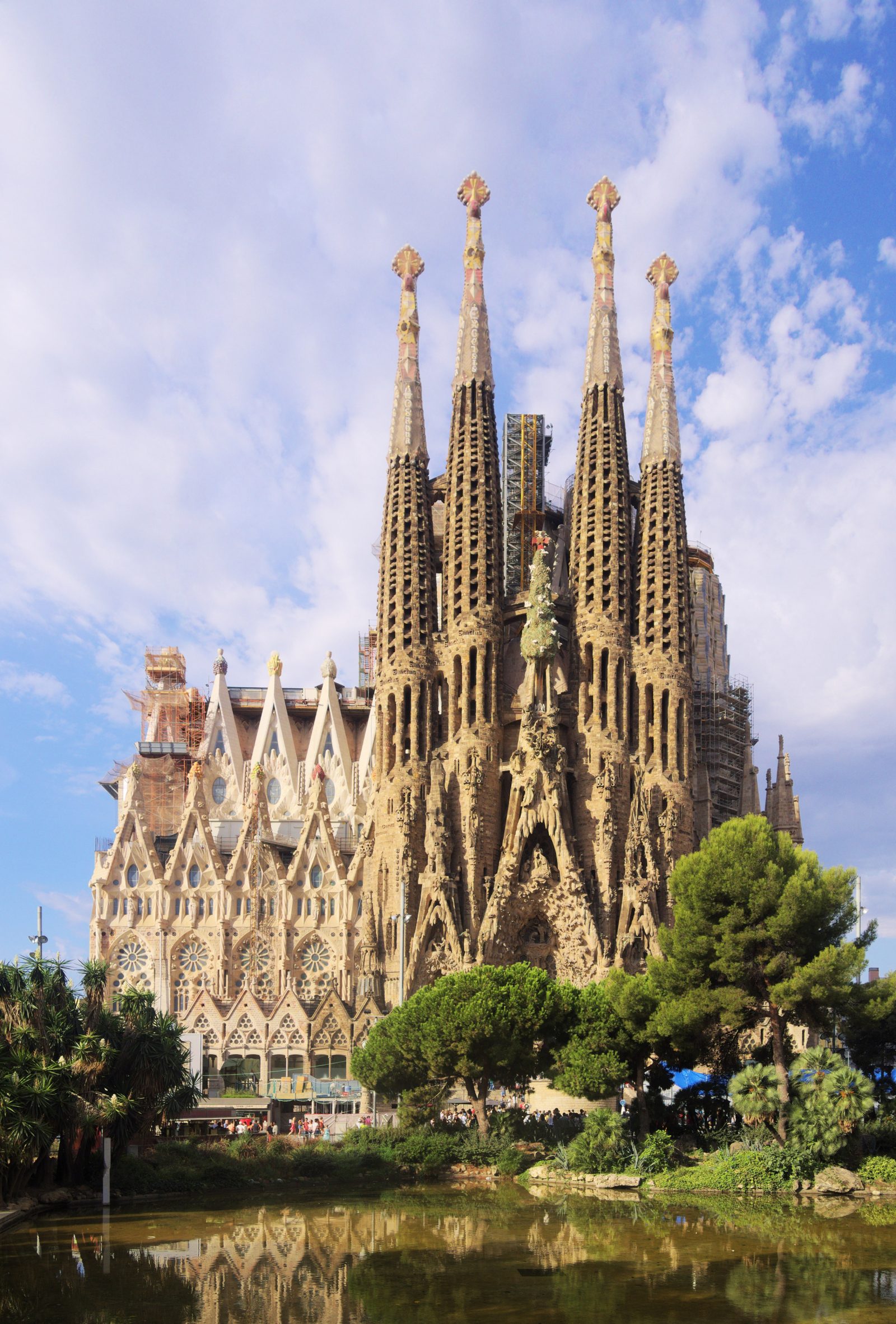
Among those who attended an anniversary mass at the architect's finally completed Sagrada Familia was Pope Leo XIV – with Gaudí himself well on the path to sainthood.
It's hard to imagine this level of pomp and circumstance in honour of any other architect, living or dead.
However, walk around most other major cities today and the buildings on display give little indication that he ever existed – much less so, arguably, than other prominent architects of the late 19th and early 20th centuries.
Why the lack of obvious Gaudí influence on global architecture, despite his global fame?
"He's famous in the general public," architecture historian and critic Mario Carpo told Dezeen. "But he's not necessarily popular with professional architects."
"A person against the spirit of his time"
The years surrounding Gaudí's sudden death represented a Cambrian explosion of architectural ideas in Europe.
Walter Gropius had founded the Bauhaus seven years prior in 1919. In 1923, Le Corbusier published his seminal Vers une Architecture. In 1925, art deco was launched by a major expo in Paris.
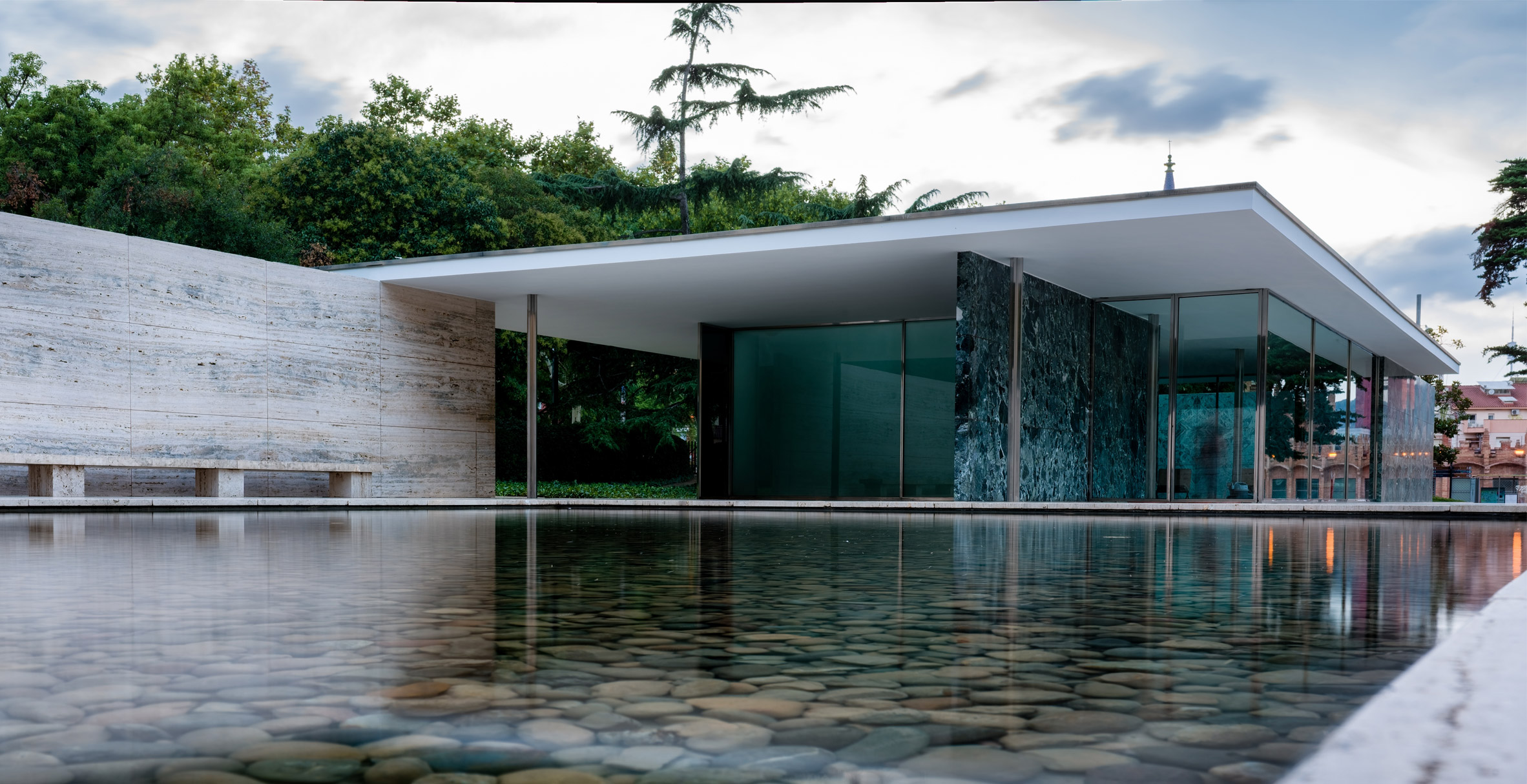
And in 1929 in Barcelona itself, Ludwig Mies van der Rohe blew away a World Fair with his famous pavilion, whose gridded rationality and extensive glazing looks much more familiar to us today than Gaudí's trippy creations.
Each of these ideas were firmly embedded in the societal upheaval of the first world war and the rapid advance of modernity. Gaudí was not.
"He was really a person against the spirit of his time," said Carpo. "Look at the buildings and you understand that people of the time must have thought, 'that guy is nuts'."
"He stands for a very specific strand of art nouveau, which is really very idiosyncratic," said MoMA chief curator of architecture and design Martino Stierli. "It's really him. Nobody else worked exactly like him."
Or, as Gaudí's biographer Gijs van Hensenberg puts it, he was "peculiar and particular".
"People just didn't understand what the hell he was about," van Hensenberg told Dezeen.
In technical terms Gaudí was highly innovative, and he used emerging materials such as reinforced concrete.
But on a more philosophical level, while others were embracing the machine age Gaudí had been looking centuries into the past, particularly with his most famous work – the Sagrada Familia.
"Gaudí was in a sense re-enacting and embodying and trying to revive the medieval way of building," Carpo said.
Motivated by his fervent Catholicism, Gaudí wanted to repeal the aberrations that had been the Renaissance and Reformation to restore what he viewed as the purer Christianity of the middle ages, including its churches.
Intrinsic to that ambition was the idea that a cathedral was not, as in the view of the modernists and most Western architects today, the product of a design thought up by an intellectual and passed to workers to materialise.
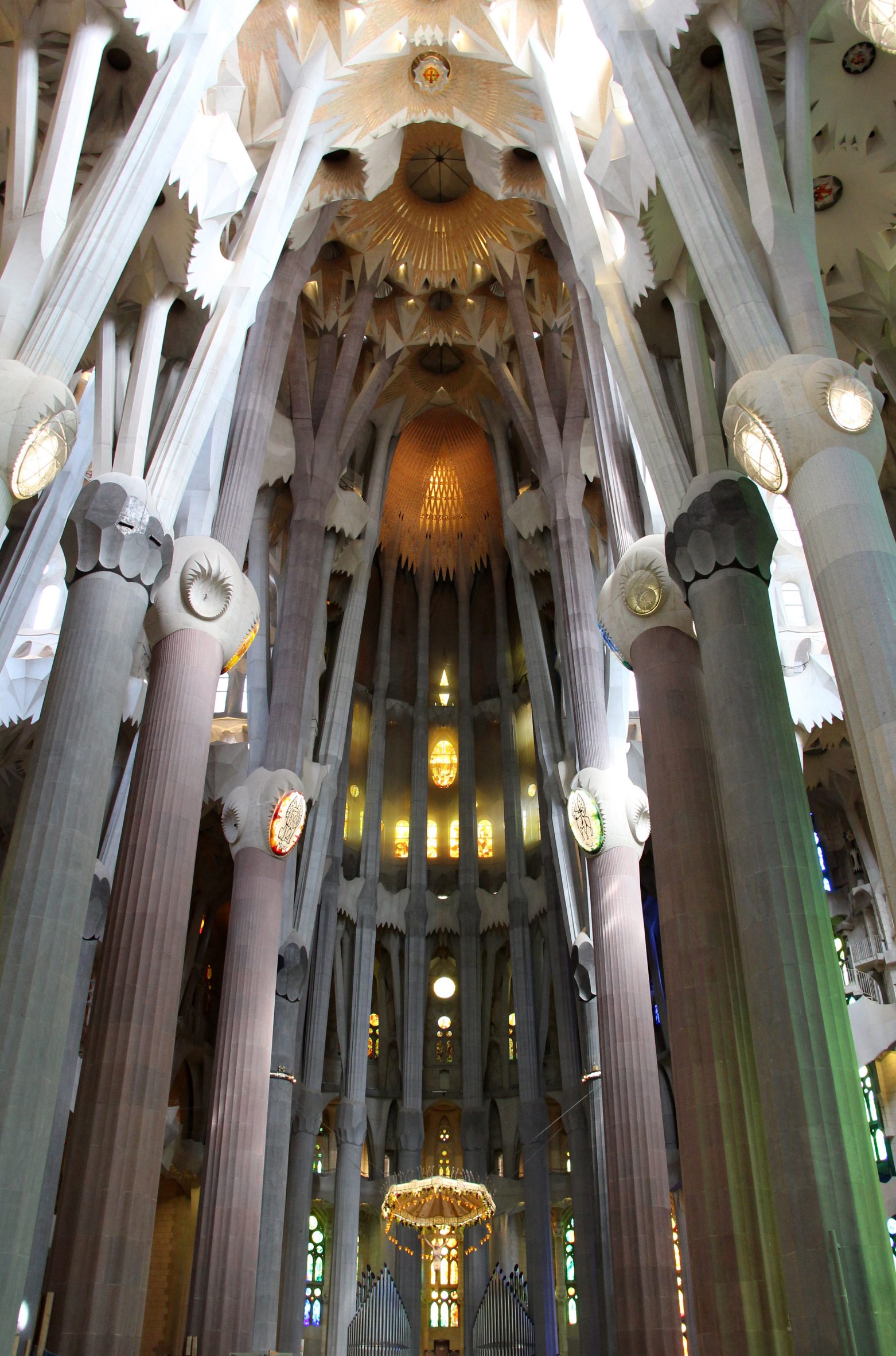
Instead, as in the medieval period, it was produced by artisanal master builders, designing and constructing as they went.
According to Carpo, Gaudí's belief in this approach is evidenced by the fact he used models rather than drawings, and by the fact that he slept at the site for the last 14 years of his life, climbing up onto the scaffolding each morning.
"Conceptually, it is as if he wanted to build the entire Sagrada Familia with his hands, everything improvising and extemporising on-site," said Carpo. "He was a madman."
"It's too expensive, it's not practical"
Clearly, this understanding of how architecture should work was totally at odds with the zeitgeist and the rapidly expanding construction industry, which the Bauhaus modernists and Le Corbusier were embracing wholeheartedly.
"They didn't think it was viable in an industrialised society to have this kind of crafts-based ornamentation – it's too expensive, it's not practical," said Stierli.
"But also it was against their notion of finding an architectural language that is in line with the industrial revolution."
Even ignoring architectural philosophy, Gaudí's career was not a useful blueprint for the new construction needed in Europe following the first world war, points out Barcelona-specialising architectural historian Jelena Prokopljević.
He had built principally on behalf of wealthy businessmen who were seeking cultural cachet, most notably his industrialist patron Eusebi Güell.
"These types of commissions simply disappear; they're not feasible anymore," Prokopljević told Dezeen.
"Gaudí builds to represent a new industrial class in Barcelona, in Catalonia. But later on, the necessities are much wider, and there is a lot of institutional and public construction, and also there starts to be a necessity for affordable housing, and you can't build it in this way."
These factors – combined with the fact that Gaudí's models were smashed up on the second day of the Spanish Civil War in 1936 – meant that his legacy was at its lowest ebb in the decades following his death.
Tellingly, when Nikolaus Pevsner published his influential book Pioneers of the Modern Movement: from William Morris to Walter Gropius in that same year, Gaudí was mentioned only in two appendix footnotes.
"More influential in the 21st century than the 20th"
But, Prokopljević says, though "sometimes the line was thinner and sometimes thicker" a throughline from Gaudí's architecture to today has always remained intact.
In fact, in Stierli's mind, though it's true that Gaudí had zero impact on the "grid-centric, very rational take on modernism" sometimes referred to as the international style, by the 1950s his presence may have been making itself known in less obvious ways.
"If you consider that our idea of modernism, the way it has been perpetuated through the notion of the international style, is highly reductive of what modernism or modern architecture was in the 20th century, I think you will find some really interesting throughlines," he said.
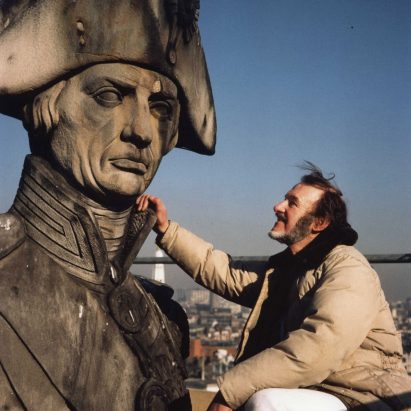
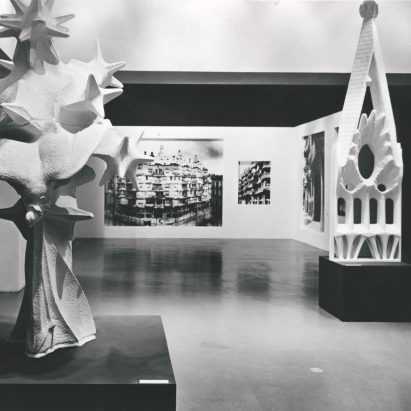
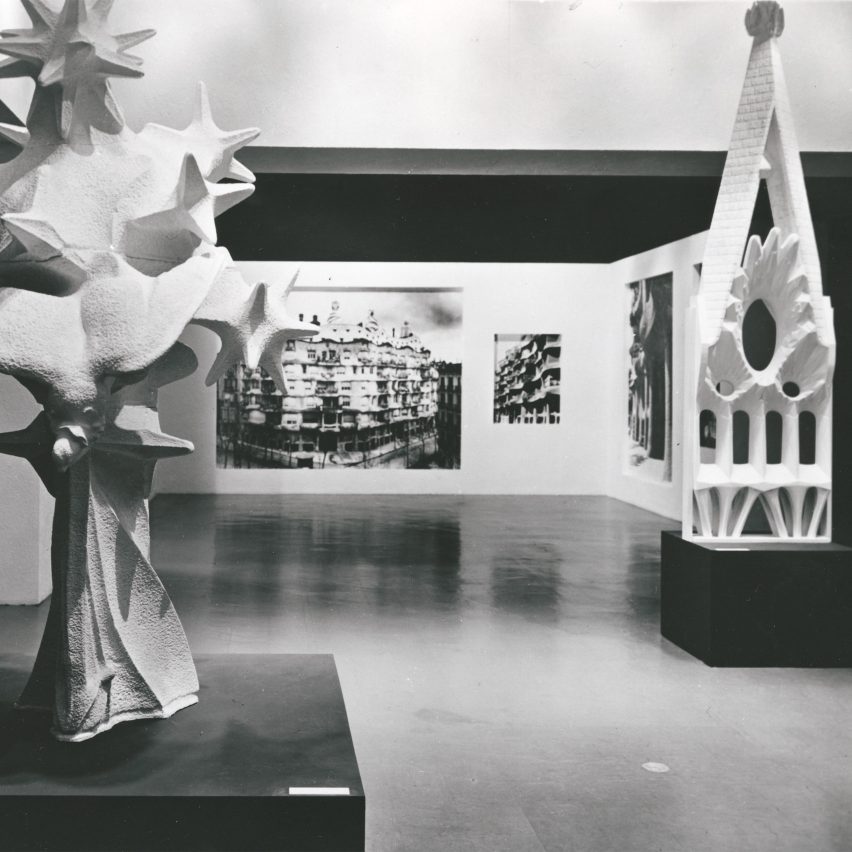
He points to a monographic exhibition on Gaudí held at MoMA in 1957 (pictured top).
In a press release issued at the time, curators Henry Russell Hitchcock and Arthur Drexler referred to "the recent preoccupation of many architects with sculptural forms and curved surfaces… which, although not directly influenced by Gaudí's little-known work, have nevertheless provided the impetus for the recent quickening of interest in his architecture".
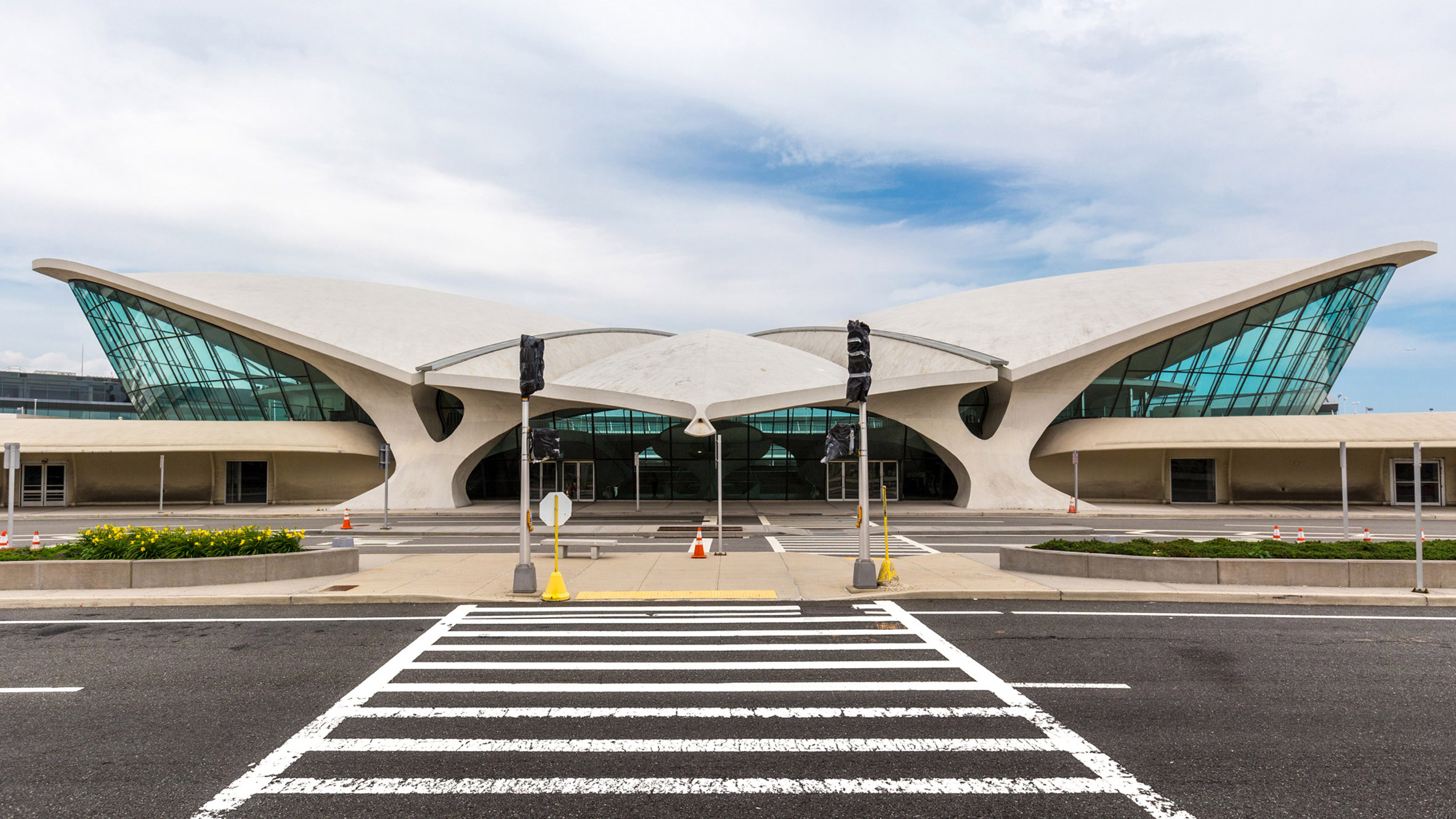
An obvious example is Eero Saarinen's swooping and biomorphic TWA Flight Center, completed in 1962.
"I don't know if Saarinen knew of Gaudí, but even if he didn't, there is this other tradition of modern architecture within the 20th century that has often been written out of canonical histories, but it's there," said Stierli.
By the late 20th century, the use of computational modelling to kickstart construction of the highly complex Sagrada Familia led to growing interest in Gaudí among an emerging group of tech-savvy architects who were also keen to create spectacular forms.
"You could really see his catenary models as a predecessor to parametric design, and so then if you talk about Frank Gehry or Zaha Hadid, I think you can really start to build a lineage," Stierli suggested.
At the same time, Barcelona's international profile was boosted considerably by the 1992 Olympic Games and accompanying urban transformation work – with an explosion in visitor numbers to Gaudí's city.
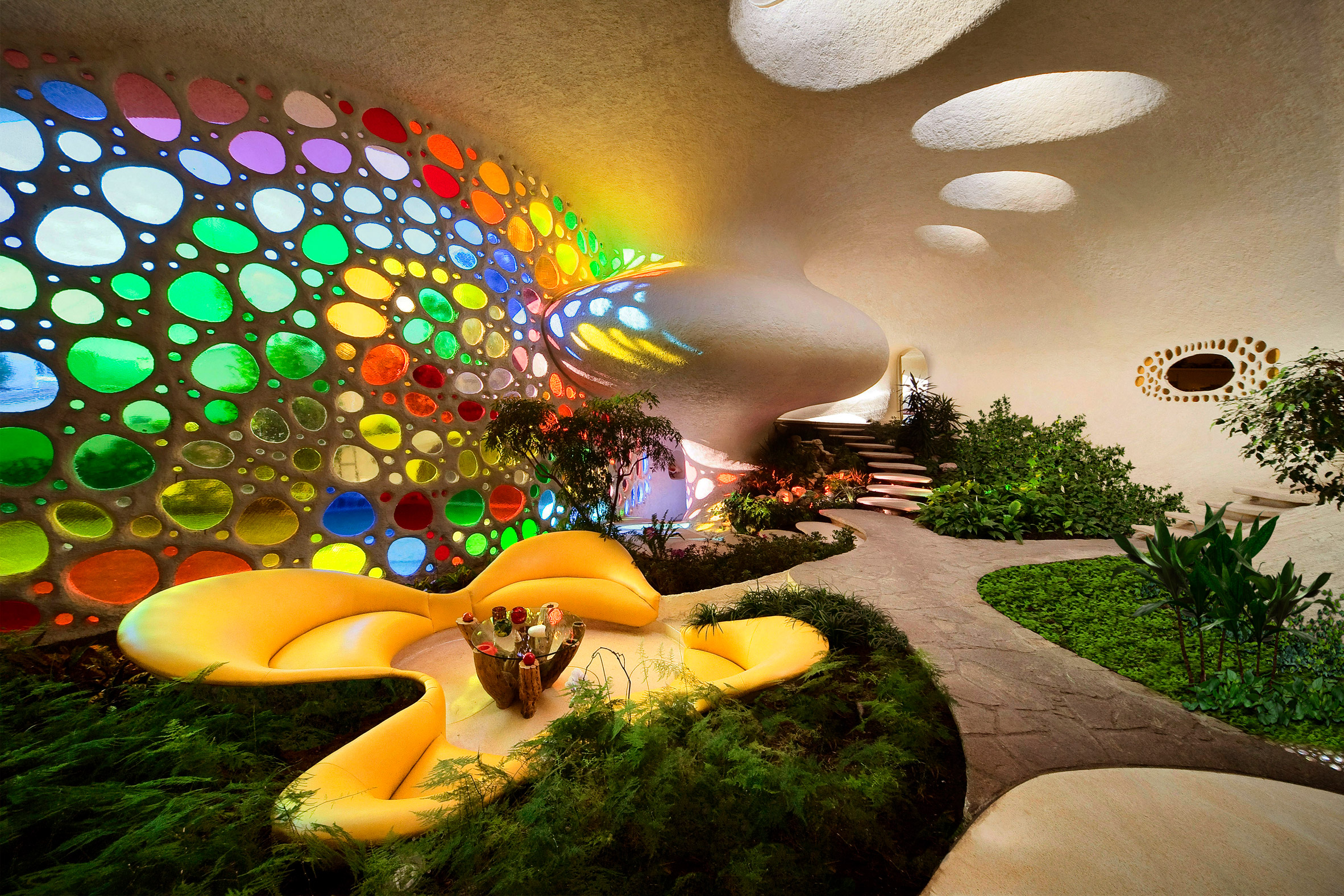
Since then, his visible impact on contemporary architecture has only grown – with fellow Spanish architect Santiago Calatrava and Catalan studio EMBT two notable examples, as well as the organic structures of Mexican architect Javier Senosiain.
EMBT principal Benedetta Tagliabue told Dezeen she particularly admires Gaudí's experimentation, use of physical models, collaboration with artisans and obsessive pursuit of making designs a reality, while also sharing with him a "common aim" in seeking to evoke nature with curving architectural forms.
"These are very beautiful ideas that I will try to maintain in our studio," she said. "So yes, we are influenced by Gaudí, because we have the same desires. But we try with all our best not to copy Gaudí, because copying Gaudí is really something very difficult and extremely dangerous."
"I would say that he was actually possibly more influential for the 21st century rather than the 20th," remarked van Hensenberg.
Today, Gaudí's relevance to the way architects design buildings extends well beyond his engineering ambition.
"He was very much into recycling materials, upcycling materials, and that is very interesting for today's generation," noted Prokopljević.
"We're in a moment where we are increasingly realising that our way of thinking about architecture is no longer aligned with what we're facing in terms of ecological concerns," added Stierli.
"And so I think his deep investment and research into the laws of nature and biomimetic design is something that we see a certain resurgence of at the moment."
It's a testament to Gaudí's uniqueness that he managed to be simultaneously after and before his time.
The main photo is by Alexandre Georges, courtesy of the Museum of Modern Art.
Gaudí Centenary
This article is part of Gaudí Centenary, our editorial series profiling the Catalan architect and designer Antoni Gaudí, marking 100 years since his death.
The post Why did Gaudí not have more of an impact on global architecture? appeared first on Dezeen.