





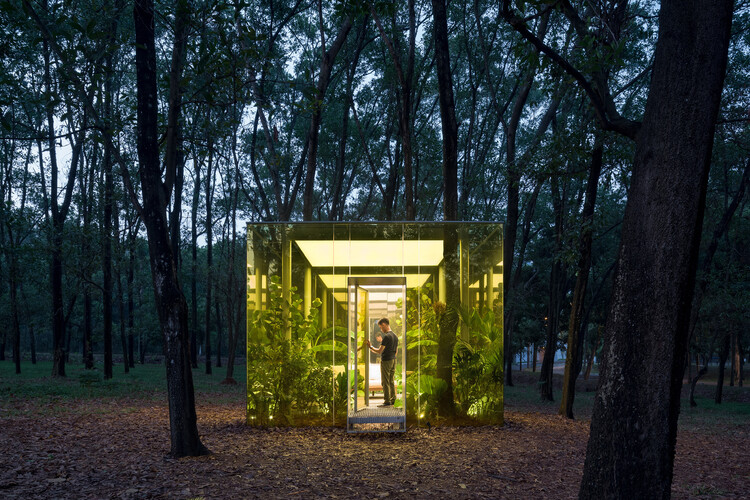




Why ‘Japandi’ Entryways Are Going Viral in 2026: The “Genkan” Ritual Explained

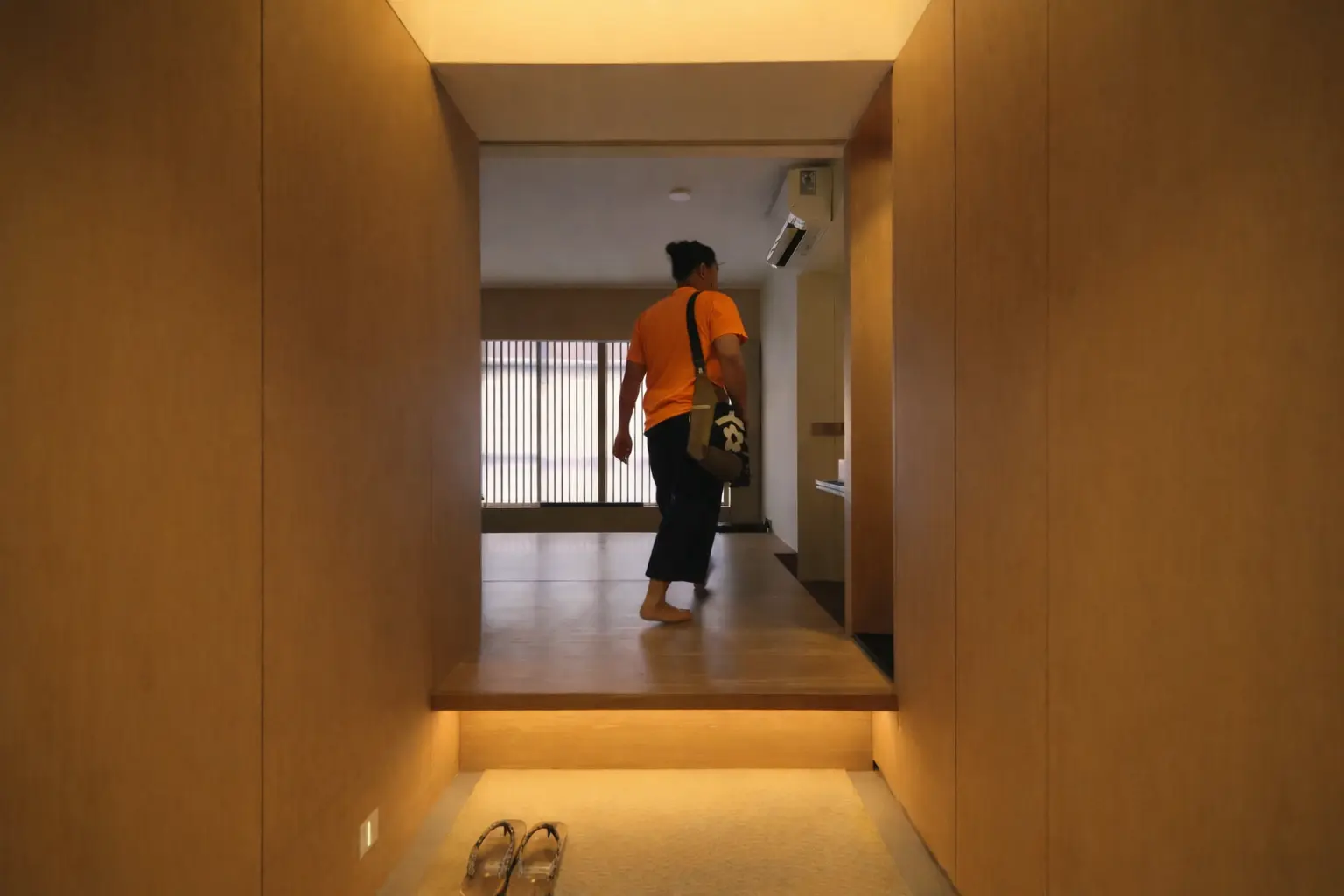

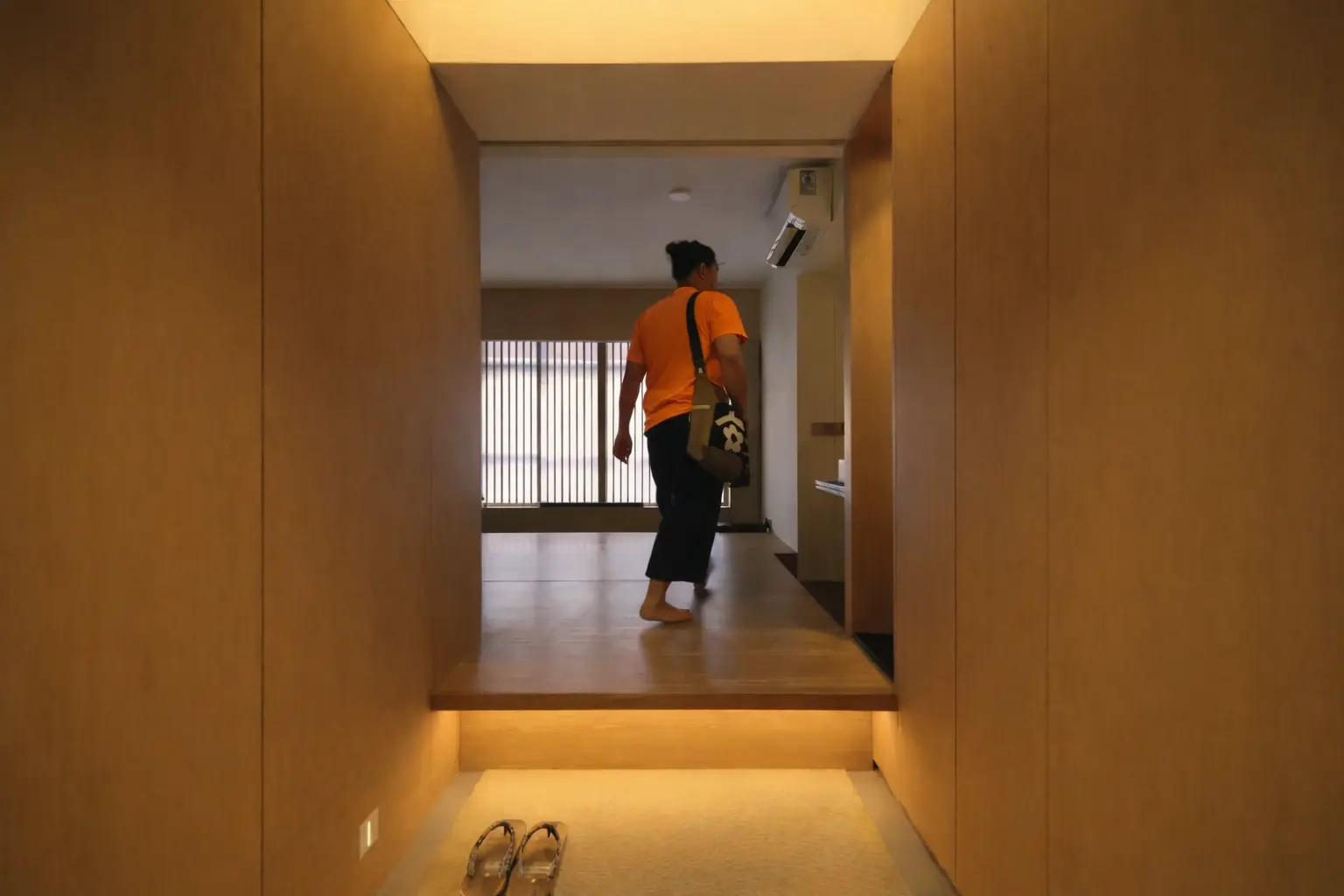
If your entryway feels like a high-traffic collision zone before you’ve even kicked off your shoes, you aren’t alone.
In many Western homes, the front door opens directly into the living room or kitchen. There is no “pause button,” meaning shoes, bags, and the day’s stress spill into your sanctuary. In 2026, let’s look to the Japanese principle of the Genkan to solve this visual noise. It’s not just an organizational hack; it’s a psychological boundary that protects the calm of your home.
What is a Genkan?
Traditionally, a genkan is a small, defined area lower than the rest of the home where outdoor items are shed. It serves as a literal and metaphorical “clean zone.” While you might not be able to lower your floor, you can recreate the genkan mindset by treating your entry as an intentional transition zone rather than a “drop and go” area.
1. Create a Visual Step-Up

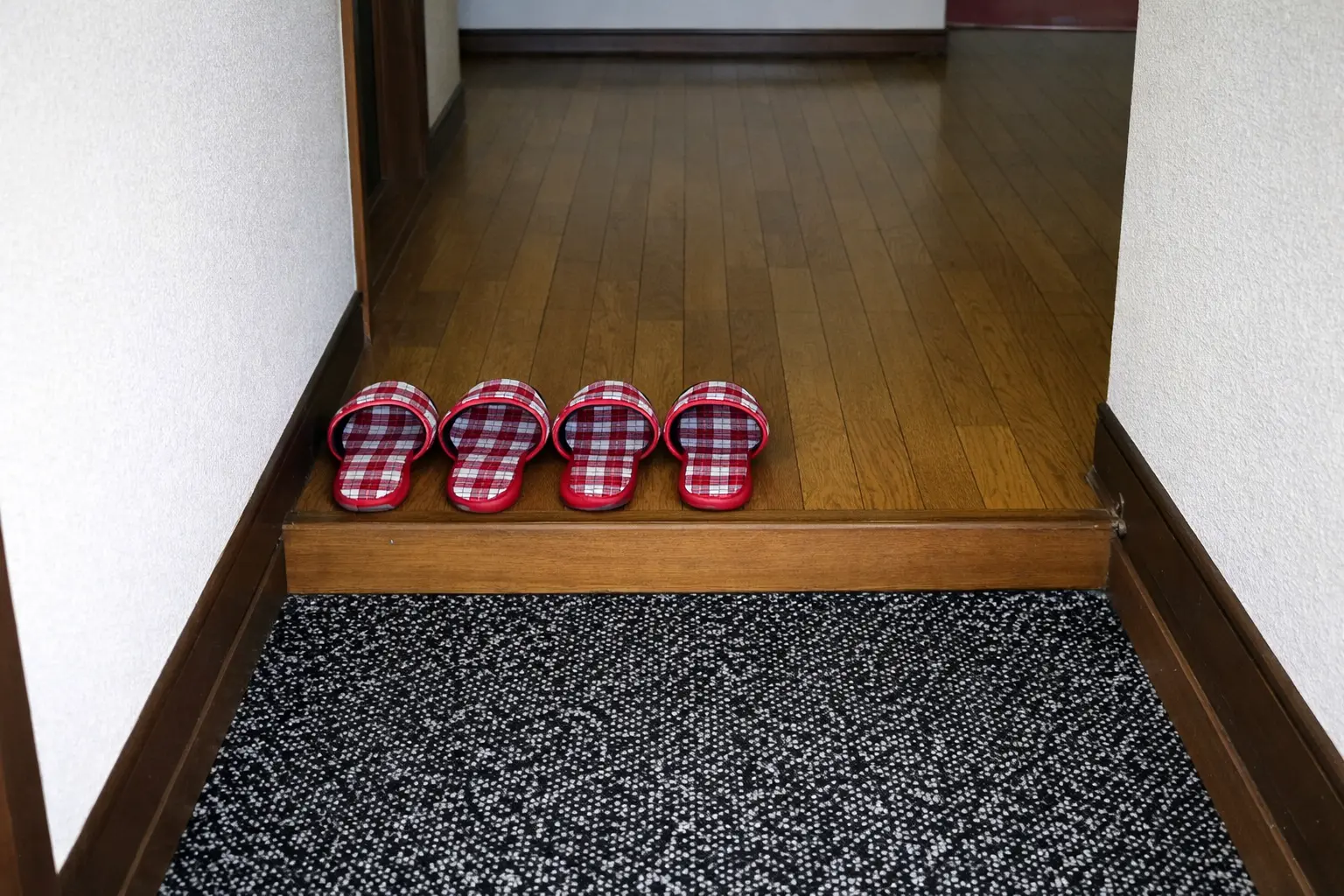
The genkan works because it creates a boundary. In a flat, open-concept home, you have to create that boundary manually.
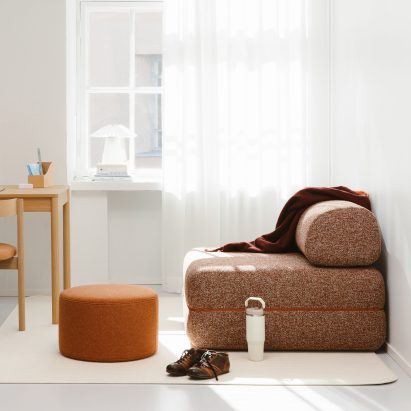
- The 2026 Strategy: Use a textured, high-contrast rug (like a woven sisal or a low-pile wool runner) to define the entry zone.
- The Boundary: Position a slim, low-profile console table or a wooden slat screen to act as a “soft wall.” This creates a physical pause that prevents the outside world from “leaking” into your living room.
2. Contain the Visual Noise (Shoes & Bags)

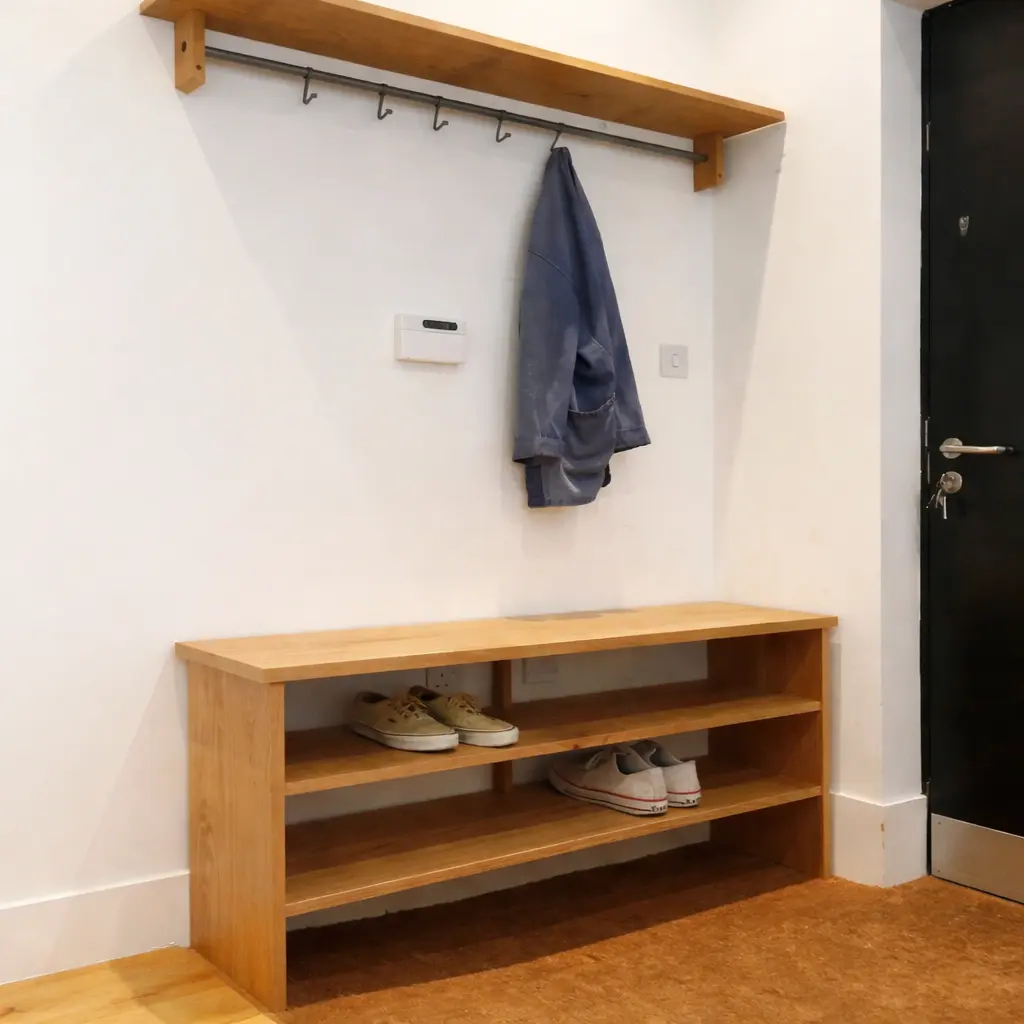
The biggest killer of entryway peace is the “shoe pile.” In a Japanese home, shoes never wander past the threshold.
- The Trick: Invest in a Getabako (shoe cabinet). Unlike open racks, a closed cabinet hides the colors and textures of footwear, which instantly lowers the “visual volume” of the space.
- Pro Tip: Use a low-profile bench that doubles as storage. It provides a seat for the “shoe ritual” while keeping the floor clear.
3. Designate a Drop Off Zone for Clutter

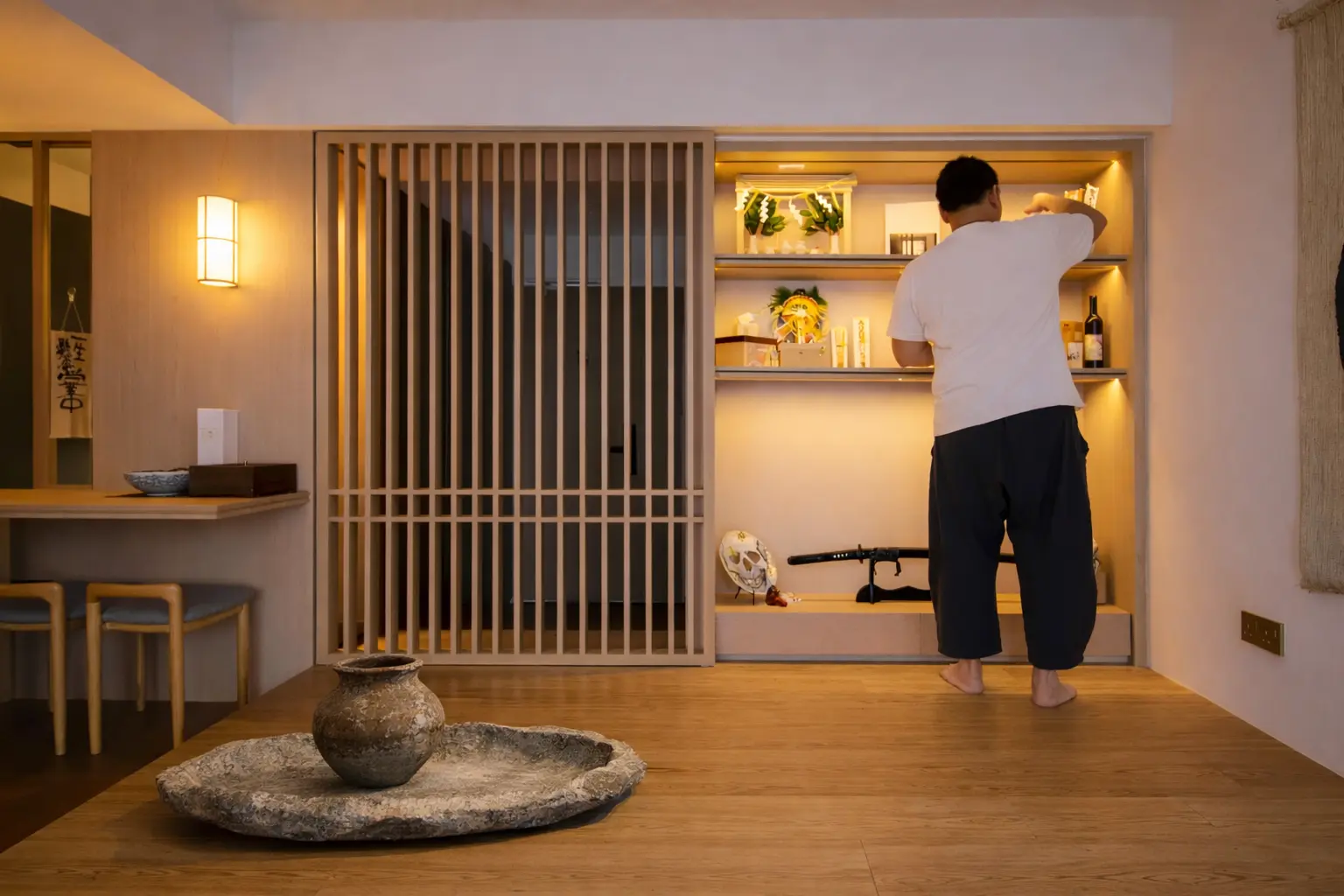
Keys, mail, and sunglasses are the small items that create big messes. If they don’t have a home, they become “floaters” that travel to your kitchen counter.
- The Japanese Way: Use a single, handcrafted stoneware tray or a wooden bowl on your entry console.
- The Rule: If it doesn’t fit in the tray, it doesn’t stay in the entry. This forces a daily edit of mail and receipts, keeping the surface clear for intentional decor like a single sculptural branch or a piece of wabi-sabi pottery.
4. Engage the Senses

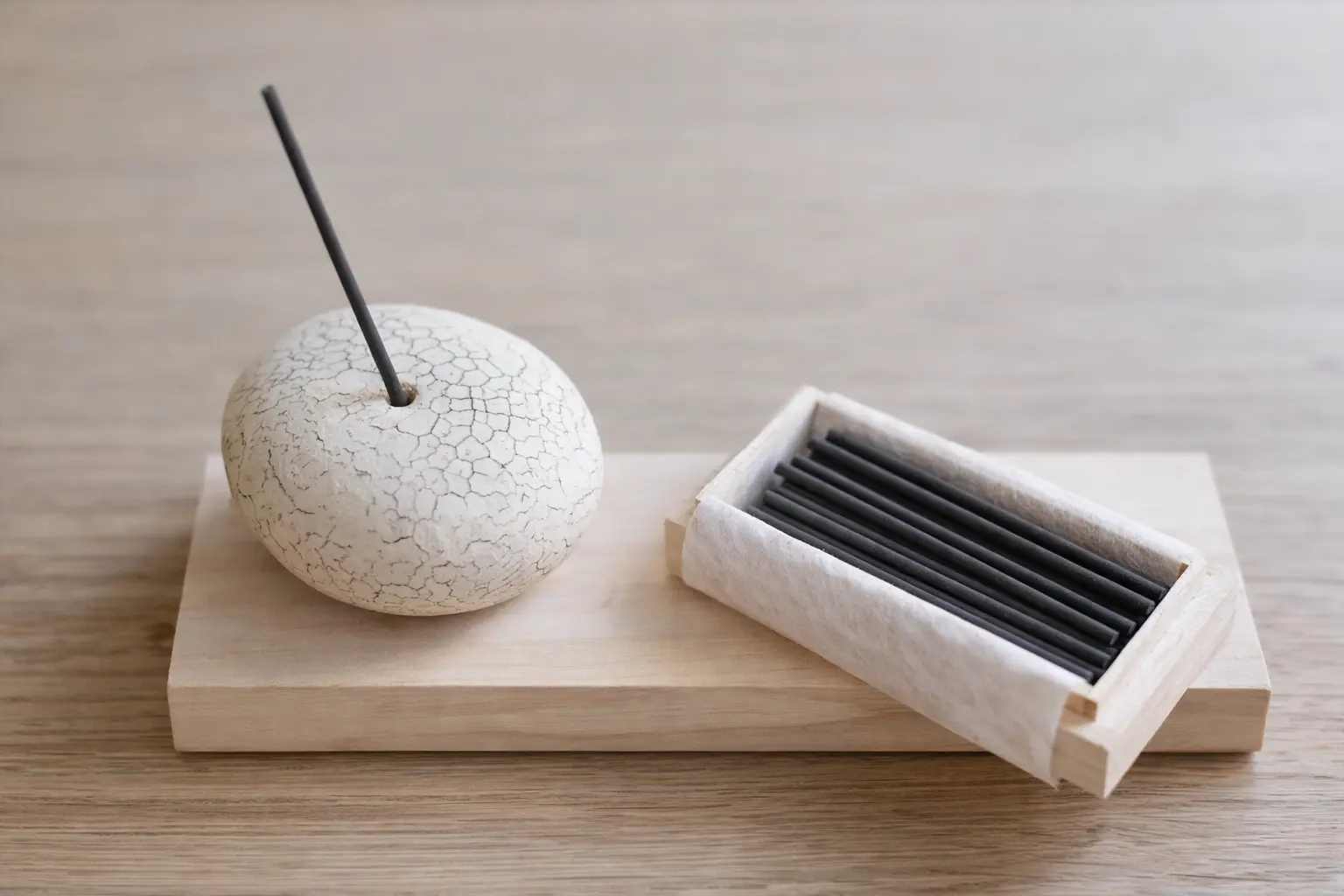
The genkan experience is as much about the atmosphere as it is about organization. Because the sense of smell is tied directly to the brain’s emotional center, it is an effective tool for triggering a “relaxation response” the moment you walk in.
- The Strategy: Use a specific, grounding scent—such as Cedar, Sandalwood, or Hinoki—exclusively in the entryway.
- The Goal: By consistently using an earthy, woody fragrance at the door, you create a psychological checkpoint. Over time, this specific scent acts as a sensory signal to your nervous system that the “outside” world has been left behind and the transition to your private sanctuary has begun.
Why This Works


As our homes continue to serve as offices and gyms, the threshold is the only thing that separates our public lives from our private peace. By creating a genkan-inspired “pause,” you aren’t just cleaning your floor—you’re protecting your mental space.
The Takeaway: You don’t need a renovation. You just need a rug, a cabinet, and the discipline to let the outside world stop at the door.
You're reading Why ‘Japandi’ Entryways Are Going Viral in 2026: The “Genkan” Ritual Explained, originally posted on Decoist. If you enjoyed this post, be sure to follow Decoist on Twitter, Facebook and Pinterest.