














ZHA launches construction of 110-million-passenger airport near addis ababa

Construction begins on Africa’s largest airport, designed by zha
Ethiopian Airlines Group begins construction on what is set to become Africa’s largest airport, Bishoftu International Airport (BIA), designed by Zaha Hadid Architects (ZHA) and located around 40 kilometers southeast of Addis Ababa. With an initial annual capacity of 60 million passengers, rising to 110 million once fully built, the project marks a major infrastructural shift for the country, positioning Ethiopia as a central aviation hub between Africa, Asia, and the Middle East.
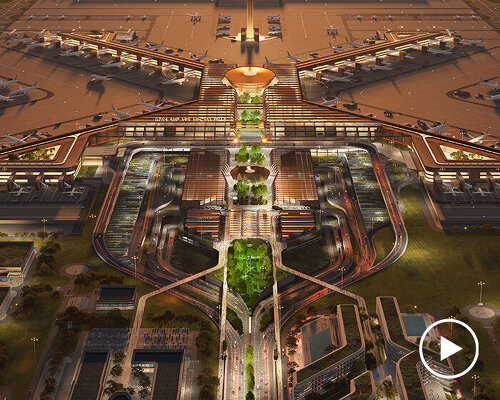
The architectural concept draws from Ethiopia’s geography and cultural diversity. A central spine organizes the terminal and its piers, reducing transfer times while acting as a spatial anchor. Each pier features distinct interior material palettes and colors, referencing the country’s varied regions. The overall layout takes inspiration from the Great Rift Valley, which runs close to Bishoftu, using a continuous linear geometry to organize the complex and simplify wayfinding.
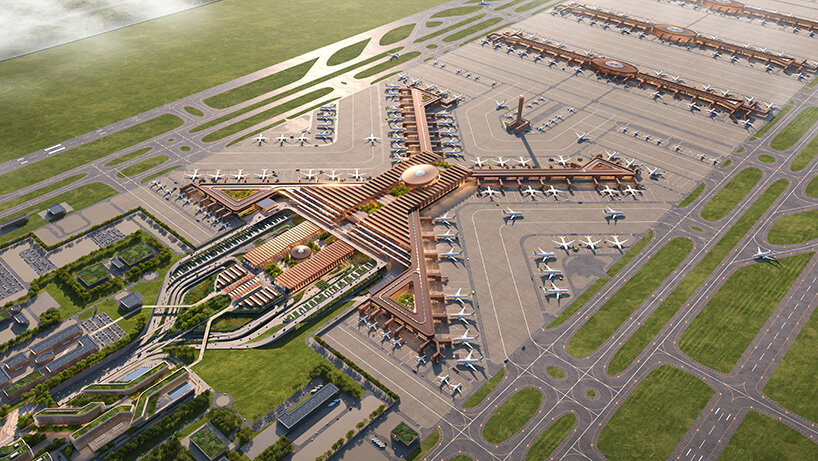
all renderings by X-Universe
planned around transfer passengers and long layovers
Designed by the international design firm ZHA in collaboration with lead consultant and airport planner DAR (Dar Al-Handasah), the new terminal is conceived primarily around transfer travel. Ethiopian Airlines estimates that up to 80% of future passengers will be in transit, moving between destinations without leaving the airport. In response, the terminal integrates extensive amenities for long layovers, including an airside hotel with 350 rooms, dining and entertainment zones, and outdoor gardens and courtyards.
BIA’s location also plays a strategic operational role. Sitting nearly 400 meters lower in elevation than Addis Ababa’s existing Bole International Airport, and paired with longer runways, the new site will allow aircraft to take off with higher maximum payloads using less fuel. This will enable Ethiopian Airlines to operate longer nonstop routes while carrying more passengers and cargo, a logistical advantage that directly influences the airline’s future network planning.
Environmental performance has been embedded into the planning of the project, with the terminal targeting LEED Gold certification. The building will be naturally ventilated, incorporate solar shading, and include semi-open and outdoor spaces that respond to the region’s temperate highland climate. Water management systems will redirect stormwater from runways and rooftops into wetlands and bioswales, supporting reuse while contributing to local biodiversity. Photovoltaic arrays will generate on-site energy, and construction will rely on modular methods using locally produced or recycled materials.
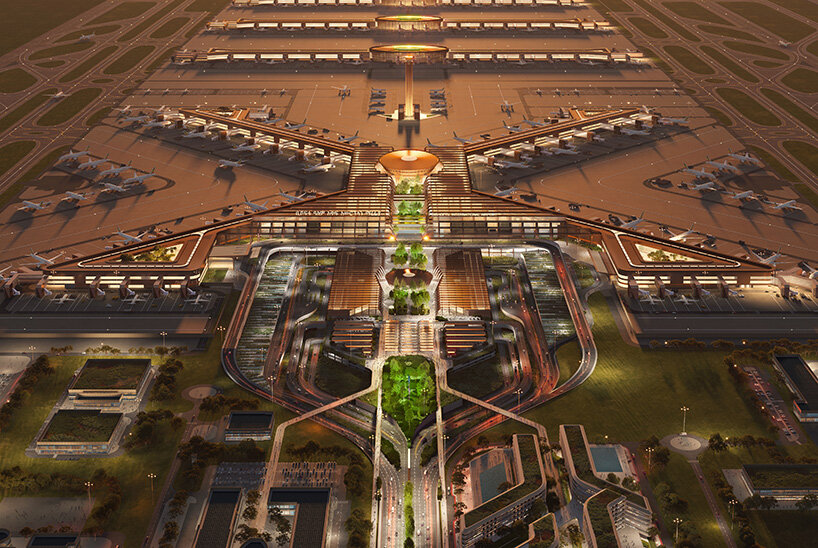
the terminal unfolds from a central spine, with branching piers arranged to shorten transfer distances
Phased construction toward a four-runway hub
Beyond aviation, the airport is conceived as the anchor of a broader urban development. A high-speed rail link will connect BIA with central Addis Ababa and the existing Bole Airport, while an adjacent Airport City will introduce mixed-use buildings, public parks, and employment opportunities for a projected local population of 80,000. Designed for 24-hour operation without curfews, the new hub aligns with Ethiopian Airlines’ long-term Vision 2035 strategy, which seeks to expand the airline’s passenger, cargo, and maintenance services globally.
Cristiano Ceccato de Sabata, director of aviation at Zaha Hadid Architects, frames the project in broader social terms. ‘Bishoftu International Airport is a visionary project for Ethiopia and Africa as a whole. Airports bring people together and bridge national divides. ZHA is honored to be part its development—connecting every region of the continent as Africa’s global gateway,’ he shares.
The first phase of Bishoftu International Airport is scheduled to open in 2030, featuring two independently operating parallel runways and a 660,000-square-meter terminal. Later stages will expand the complex to four runways and parking for 270 aircraft, reflecting the scale of growth forecast by IATA for East Africa over the coming decade.
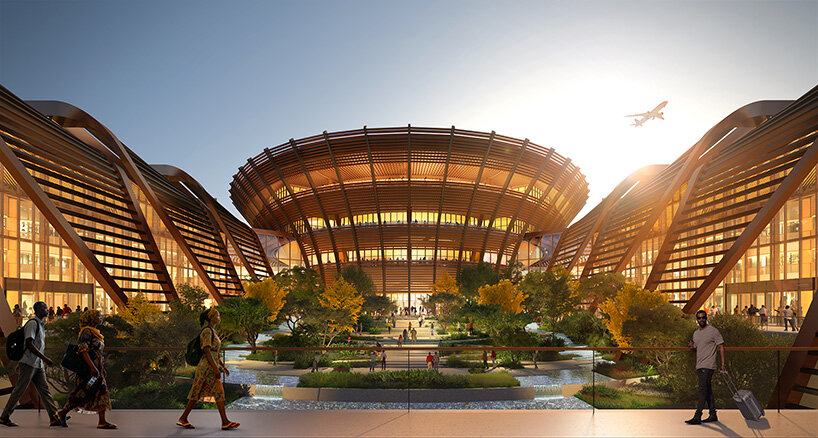
the landside forecourt integrates gardens, water features, and shaded pedestrian routes
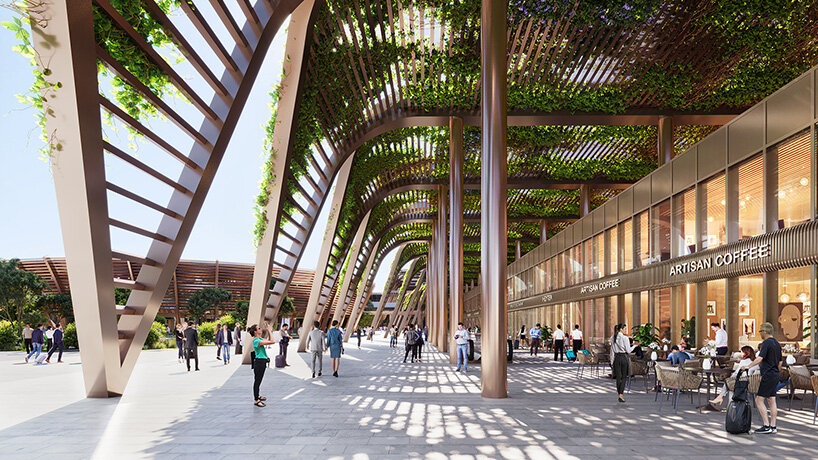
a covered retail promenade combines structural ribs with integrated planting

a vertically layered atrium filters daylight through a ribbed roof structure

departure lounges form continuous open-plan interiors beneath a daylight-filtering canopy

interior terraces stack public circulation around planted voids at the heart of the terminal

the main concourse is defined by long-span columns and a layered ceiling system
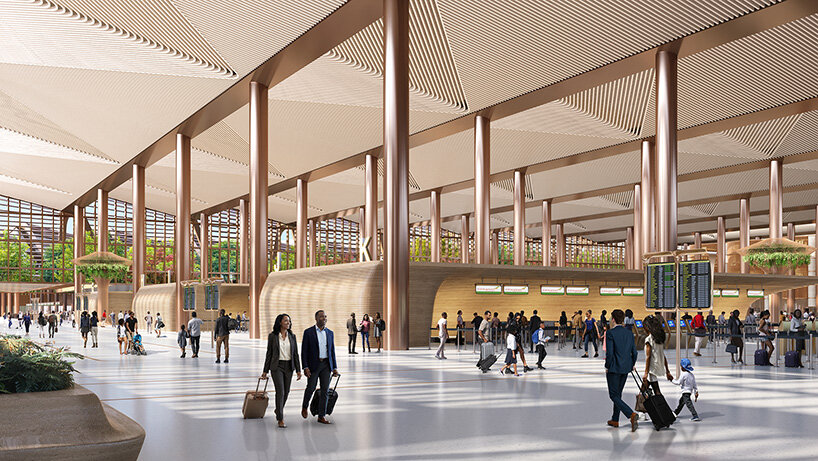
check-in halls use linear timber surfaces and deep overhangs to regulate light and movement
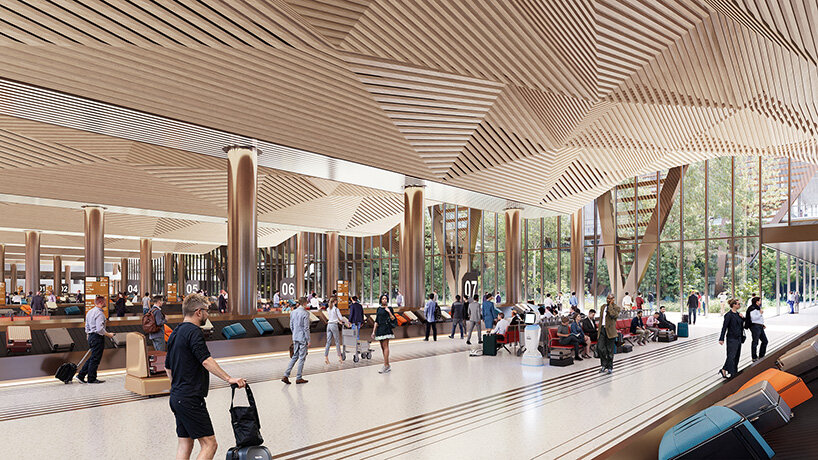
the terminal integrates extensive amenities for long layovers
project info:
name: Bishoftu International Airport (BIA)
architect: Zaha Hadid Architects | @zahahadidarchitects
location: Bishoftu, Addis Ababa, Ethiopia
client: Ethiopian Airlines (Federal Government of Ethiopia)
lead consultant & airport planner: DAR (Dar Al-Handasah) | @daralhandasah_
executive interiors architect: Pascall + Watson
airfield and apron planning: Landrum & Brown
airport city planner: SPADA Ltd.
The post ZHA launches construction of 110-million-passenger airport near addis ababa appeared first on designboom | architecture & design magazine.