









"Absolute freedom over who designs buildings only encourages the cowboy practitioner"



Only regulated professionals should be allowed to design buildings, writes Eleanor Jolliffe.
Who should be allowed to design buildings? This perennial topic was reignited late last year by RIBA president Chris Williamson's resignation from the register of architects, and the UK Government's continuing work on the recommendations of the Grenfell Inquiry.
The debate is quietly raging in the architectural press. On one side, those fighting to restrict certain functions (planning applications, building regulations applications et cetera) to qualified professionals argue greater public safety. Those against reserved functions cry protectionism, that the public should have the right to choose unqualified people should they wish to.
To design a building is not simply to draw a beautiful shape
Restricting the design of buildings to a particular group of people feels inherently uncomfortable. We like to believe that architectural design is an art. The practice of this art should not be reserved for those taught by a selected group to a tight educational syllabus; to do so would deny natural genius.
We could point to Christopher Wren (an astronomer and physicist), or Leonardo da Vinci (educated in painting and sculpture). Or, in contemporary times, perhaps Tadao Ando (a professional boxer), or Thomas Heatherwick (who studied three dimensional and furniture design). Were we to protect the functions of architectural design, these people would be excluded.
Perhaps. However, this view ignores the vast teams of highly qualified people who have worked with these lone wolves to realise their visions. It also fundamentally misunderstands the nature of architectural design, suggesting instead that "design" is simply a matter of aesthetics.
The 18th-century poet and clergyman Edward Young was a great proponent of natural genius (see Conjectures on Original Composition, 1759), but even his fervour made an exception for architecture: "A Genius differs from a good Understanding, as a Magician from a good Architect; That raised his structure by means invisible; This by the skilful use of common tools."
To design a building is not simply to draw a beautiful shape. It is to coordinate the vision of three-dimensional space and an ordered facade with the mundane realities of plumbing, heating, structural support, wheelchair accessible toilets, building regulations, planning consents and budgets.
To actually realise this vision is to further battle with the vagaries of construction supply chains, distracted sub-contractors, and an ever-widening group of emotionally, functionally and financially invested stakeholders, all with their own opinion on how the vision should be realised. Architectural practice – or indeed engineering practice, for the same argument applies to all construction professions – is as much about process as it is the moment when the first concept sketch is pulled from the pen or mouse of the visionary genius.
Why did we create such an absurdly stupid system? The truth is that we never meant to
It is the practice, or craft, of building that needs to be protected, not the art of envisioning three-dimensional space. Philosopher Roger Scruton puts this distinction more elegantly than I do: "To maintain a sharp distinction between art and craft is simply to ignore the reality of architecture – not because architecture is a mixture of art and craft but because architecture represents an almost indescribable synthesis of the two." This synthesis is entirely essential to realising good buildings.
The current British regulatory system allows anyone to act as an architect; anyone can draw a building, submit a planning application and attempt to gain building-control approval. However, to use the title "architect" requires a minimum of seven years' training and practical experience, a code of conduct, professional registration and Continuing Professional Development (CPD) to a prescribed syllabus.
It is slightly Kafka-esque. Why did we create such an absurdly stupid system? The truth is that we never meant to.
Groups of architects and engineers have been attempting to define and regulate professional construction practice since the late 18th century. After nearly 50 years of various bills being rejected by parliament, the title of architect was eventually restricted in 1938. Intended as a step towards reserved functions, the political momentum waned however – everyone got a little distracted by wider global affairs in 1939 – and we have been left ever since with a halfway house that serves no-one well.
As the Grenfell Tower Inquiry stated: "There is also no consistent definition or enforcement of competence, or standards for public accountability… As a result, there is generally insufficient recognition and benefit for those who do the right thing and limited consequences for those who do not."
Our current system effectively prioritises freedom of expression above all concerns about safety and confident practice. Even the natural genius argument only takes us so far; those who truly care about their artistic vision will want it executed well. Absolute freedom only encourages the cowboy practitioner.
I am fairly relaxed about who uses the title
Speaking as an architect with my degree certificates, professional memberships and CPD logs, I am fairly relaxed about who uses the title. Let software designers, policy mandarins, and contractors' draughtspeople use the term – there are bigger concerns at stake.
What does concern me is that almost all the 23,000 homes retro-fitted with insulation under the Great British Insulation Scheme require remedial work as a result of incompetent and unregulated design and construction. I am concerned that an unregulated design and build developer caused extensive flooding, cracks and falling cladding at an "airspace" development at Apex Court in West Ealing.
I am concerned that a modular construction company dissolved itself without consequences after it built three schools that had to be hurriedly closed due to problems with the structural integrity of the buildings. I am even further concerned that it only took me five minutes to find three examples significantly dramatic enough to make the national press in the last few years. How many more mundane tragedies of unregulated, exploitative and profiteering practice lie unrecognised and unreported?
I do not believe it is protectionism to suggest that the process of designing, commissioning and constructing buildings only be carried out by regulated professionals, rather than relying solely on an overstretched building-regulations system. In the same way, I do not believe it is protectionism that the function of dispensing medications in a pharmacy, carrying out brain surgeries, or preparing probate papers is restricted to regulated professionals.
Let anyone draw the sketch and guide the aesthetic. But to continue to believe that anyone should have the right to finish the full design of a building without proper regulatory oversight is to take a belief in natural genius and innate human goodness a step too far.
Eleanor Jolliffe is an architect and writer based in London. She is co-author of Architect: The evolving story of a profession.
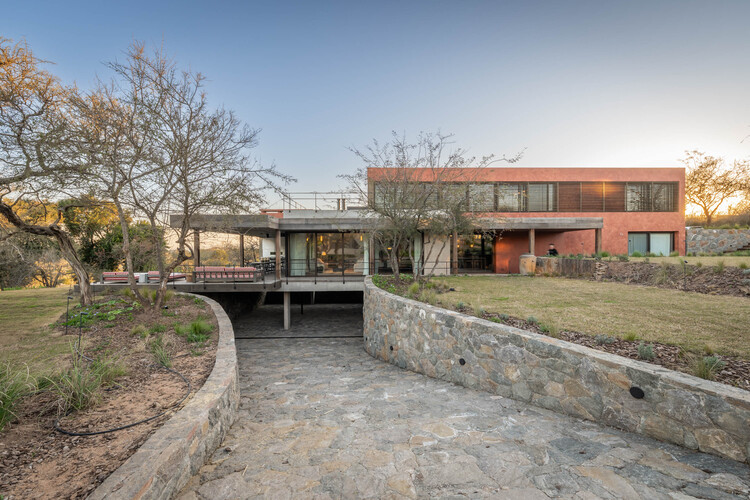
The photo is by Chaosamran Studio via Shutterstock.
Dezeen In Depth
If you enjoy reading Dezeen's interviews, opinions and features, subscribe to Dezeen In Depth. Sent on the last Friday of each month, this newsletter provides a single place to read about the design and architecture stories behind the headlines.
The post "Absolute freedom over who designs buildings only encourages the cowboy practitioner" appeared first on Dezeen.