





four spatial sequences compose indian residence anchored in memory

Saru Translates Memory into Domestic Architecture
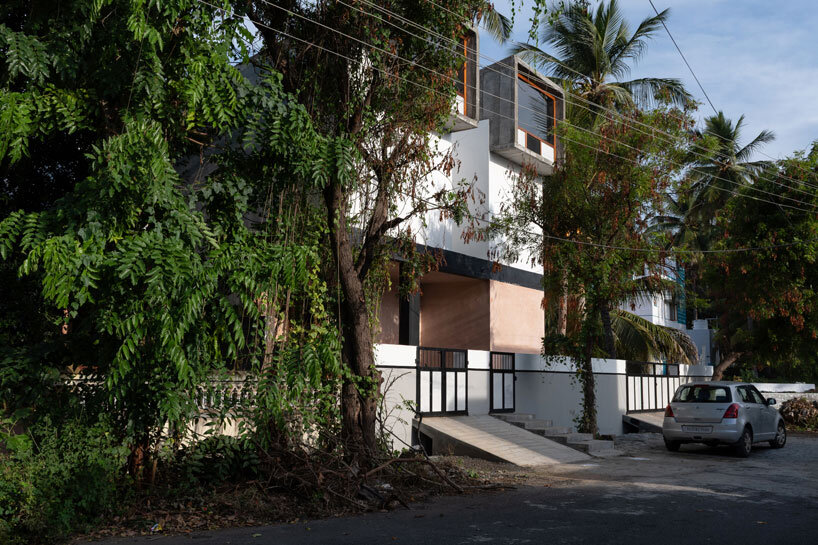
Tales of Saru is a residential project by Studio for Architecture and Regional Urbanism (SARU), located in Mettupalayam, Tamil Nadu, India, at the foothills of the Nilgiris. Built on the site of the client’s childhood home, the 3,200-sqft house is conceived as an architectural framework shaped by memory, landscape, and lived experience rather than by a predefined stylistic approach. The design translates recollections of place into spatial sequences, organizing the house around four distinct architectural narratives, or ‘tales,’ each derived from specific experiences associated with the land.
The project responds closely to its setting, drawing from the region’s climate, vegetation, and topography. Instead of imposing a singular formal language, the design allows spatial volumes to emerge from remembered relationships between built form, movement, and landscape. The resulting house operates as a layered environment where memory informs material choice, spatial proportion, and environmental strategy.
all images courtesy of Studio for Architecture and Regional Urbanism (SARU)
Four Spatial Tales organize the house’s program
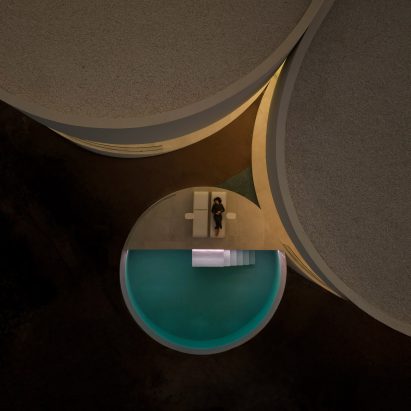
The first spatial sequence interprets childhood experiences of movement through garden paths, grass trails, and shaded thresholds. This memory is translated into a linear courtyard defined by high enclosing walls and layered planting. The narrow proportions and vertical enclosure replicate the sensation of moving through tall grass, while filtered daylight produces a subdued, dappled light condition. The courtyard functions as both a climatic moderator and a connective space, allowing seasonal changes to be perceived throughout the house. Fixed, built-in seating elements replace movable furniture, reinforcing a direct relationship between body and structure. The second narrative centers on the kitchen as the social and sensory core of the house. Referencing earlier domestic rituals associated with cooking, water, and shade, the design places the kitchen at the center of daily activity. A partially shaded dip pool recalls a former water tank, while an elevated seating element introduces vertical variation and visual connection. Landscaping elements, including a palm canopy, generate filtered light and reinforce the kitchen’s role as a focal point. Spatial organization emphasizes proximity, movement, and sensory engagement rather than formal separation.
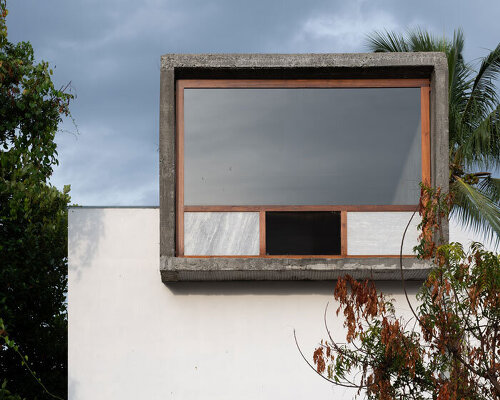
The third tale reinterprets a former garden pavilion that functioned as both a retreat and a shared activity space. In the new configuration, the pavilion is located on the upper level, creating physical separation from the ground plane. The design employs the principle of borrowed landscape (Shakkei), framing a wide view of surrounding coconut palms to extend the perceived spatial boundary. A roof garden and lotus pond soften the transition between built and natural elements. Interior spaces vary in height and enclosure, allowing a progression from quiet, low-ceilinged zones to more open, social areas. The final narrative by Studio for Architecture and Regional Urbanism (SARU) addresses a concealed viewing point once formed between roof and ledge. Due to height restrictions, this condition is reinterpreted through compact projecting volumes integrated into the private bedrooms. These projections frame a specific view toward the Nilgiris while also functioning as passive environmental devices. Their elevated position facilitates cross-ventilation, capturing prevailing breezes and allowing warm air to escape through higher ceiling zones, reducing reliance on mechanical cooling.
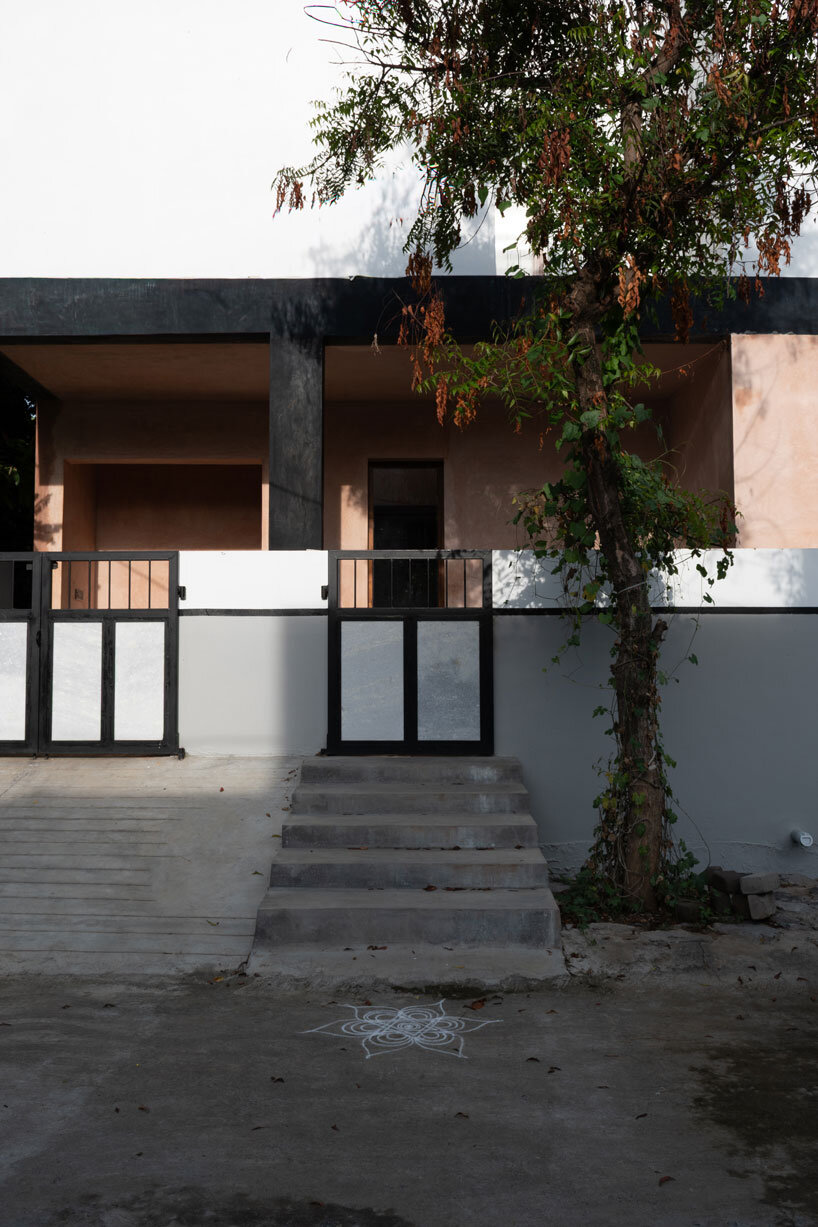
the 3,200-sqft house is built on the site of the client’s former childhood home
A Material Language Grounded in Context
Material selection is closely tied to site conditions and local availability. Reclaimed bricks from an existing boundary wall and soil excavated on site are combined with lime plaster to create breathable wall surfaces that support thermal regulation. The resulting earthen finish reflects light softly and reinforces continuity between interior and exterior spaces. Reclaimed Burmese teak from dismantled regional structures is reused for doors, windows, and structural elements, minimizing new material use while maintaining durability. A final plaster layer incorporates black oxide and crushed plant seeds, referencing earlier site markings and integrating subtle traces of past use into the building fabric.
Through its spatial sequencing, material reuse, and environmental responsiveness, Tales of Saru presents a residential architecture rooted in place and memory. The project demonstrates how personal narratives, when translated through architectural logic, can generate spaces that are both contextually grounded and adaptable over time.
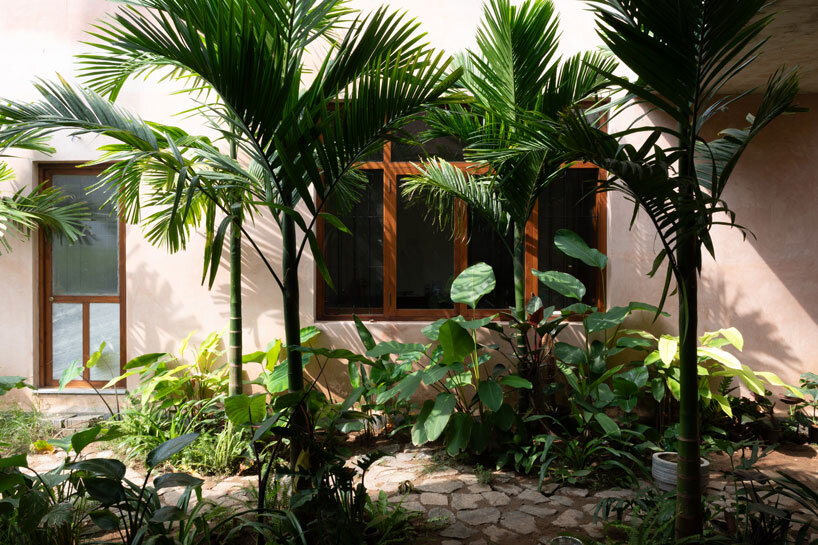
Tales of Saru is shaped by memory, landscape, and lived experience rather than a fixed stylistic language
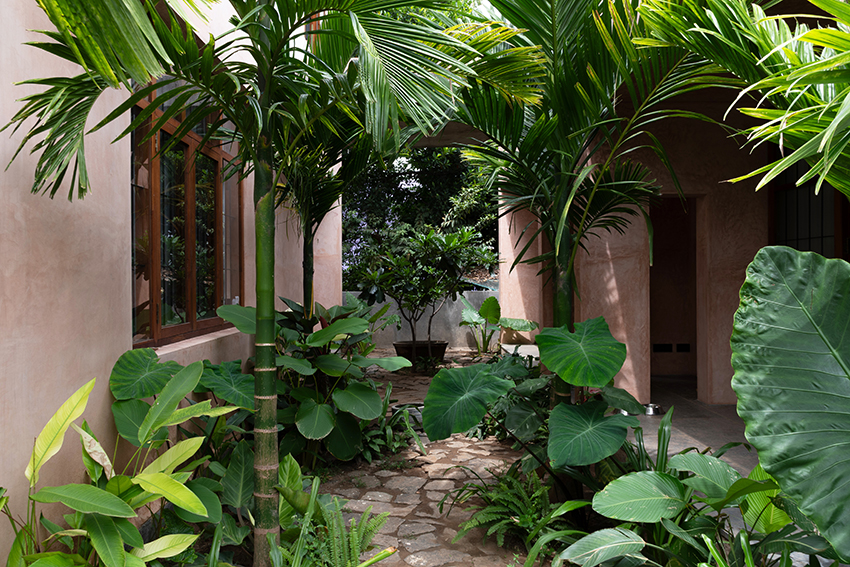
the linear courtyard filters light, allowing soft, dappled illumination
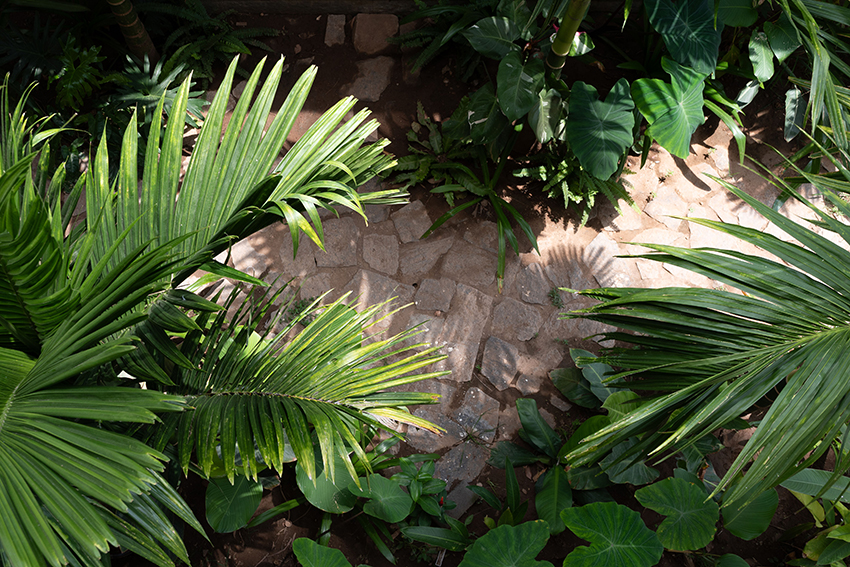
the courtyard translates memories of garden paths and shaded trails into architectural form
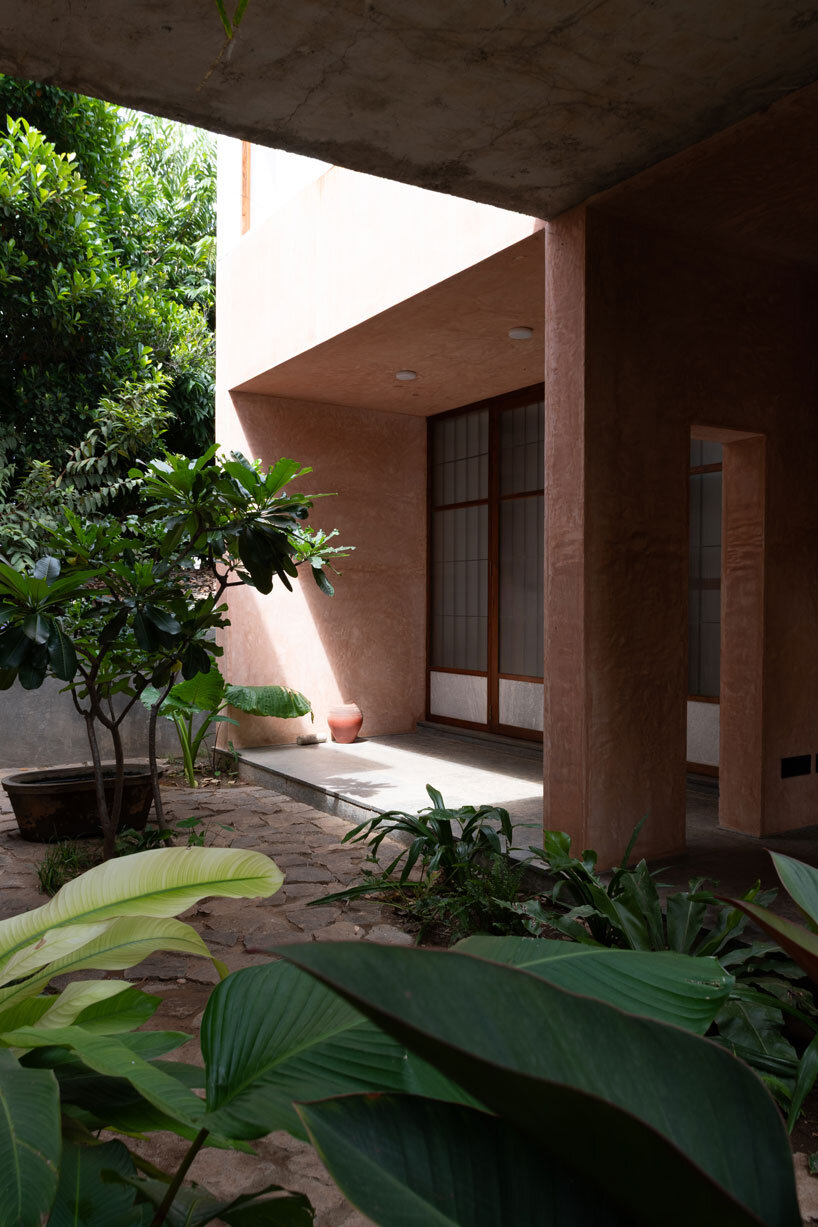
climate, vegetation, and topography directly inform the project’s spatial organization
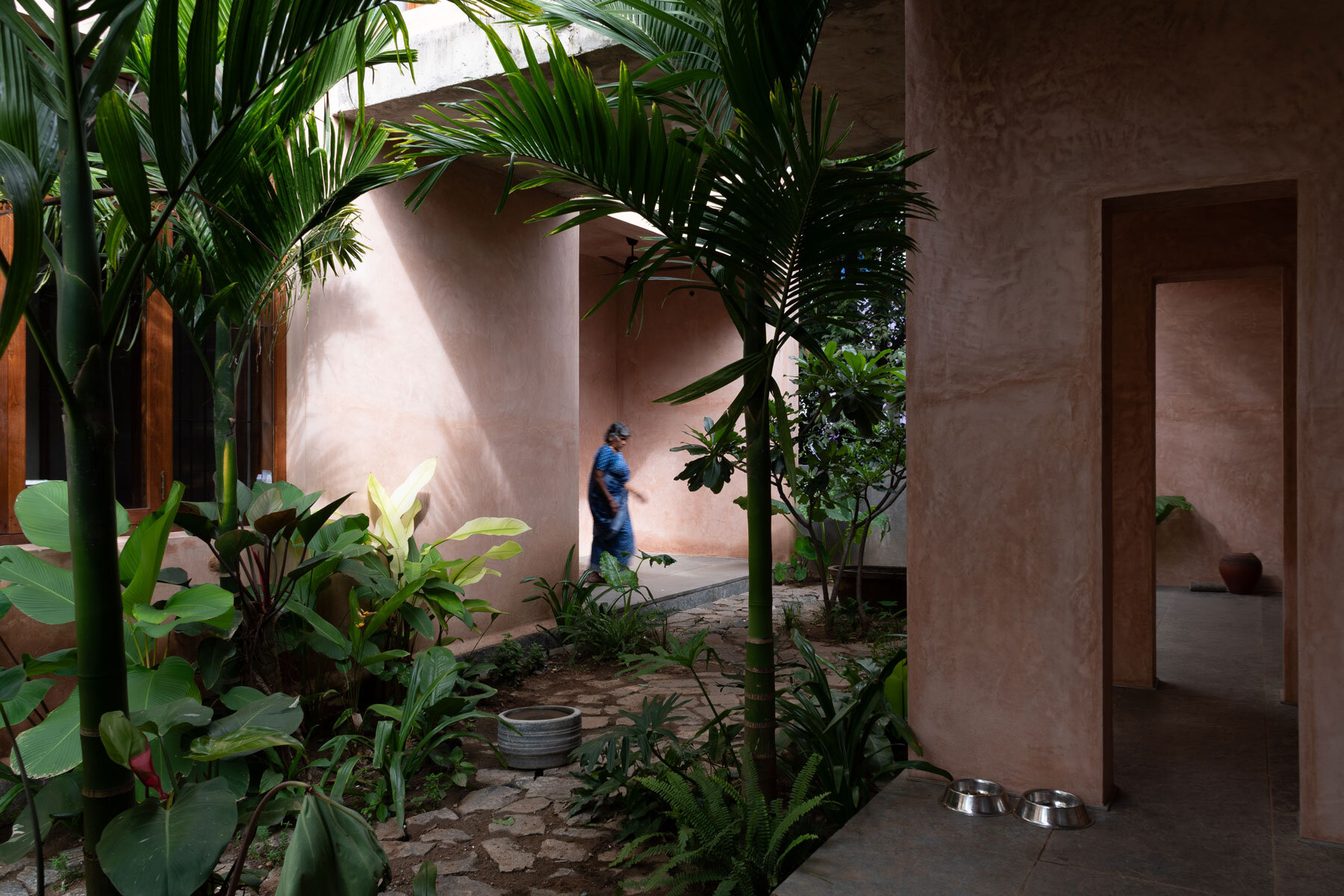
the house is organized around four architectural narratives derived from site-specific experiences
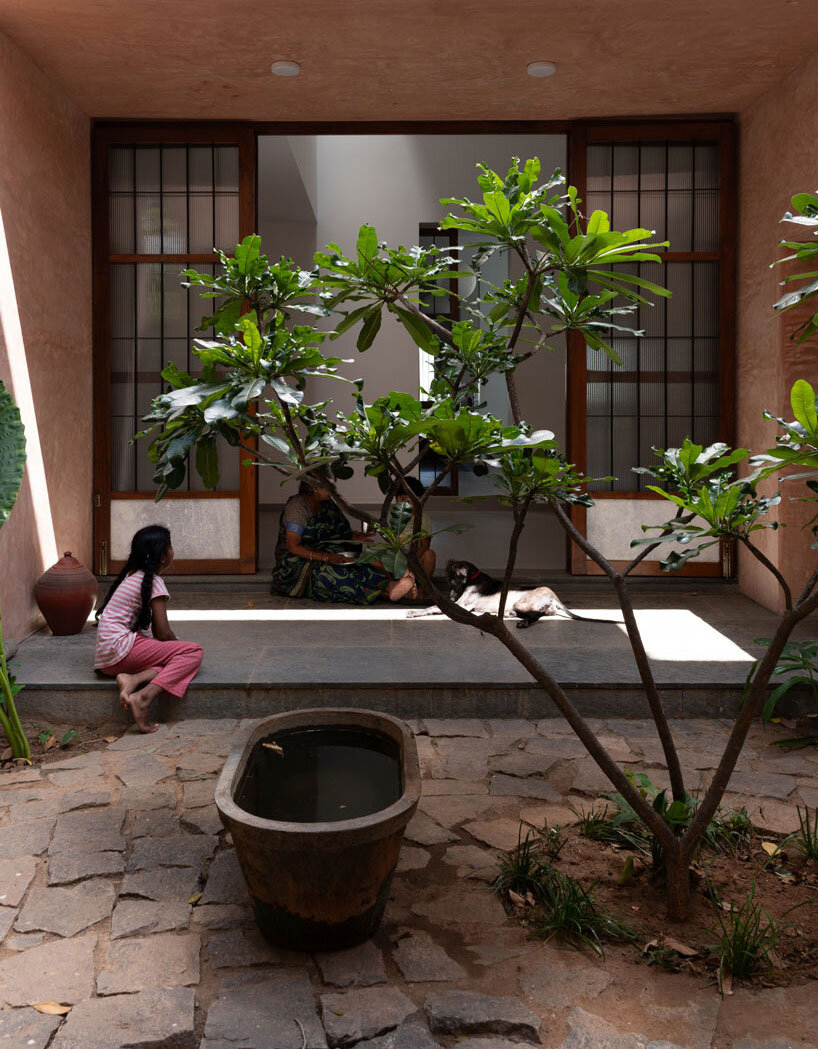
high enclosing walls and layered planting create narrow, vertically oriented outdoor spaces
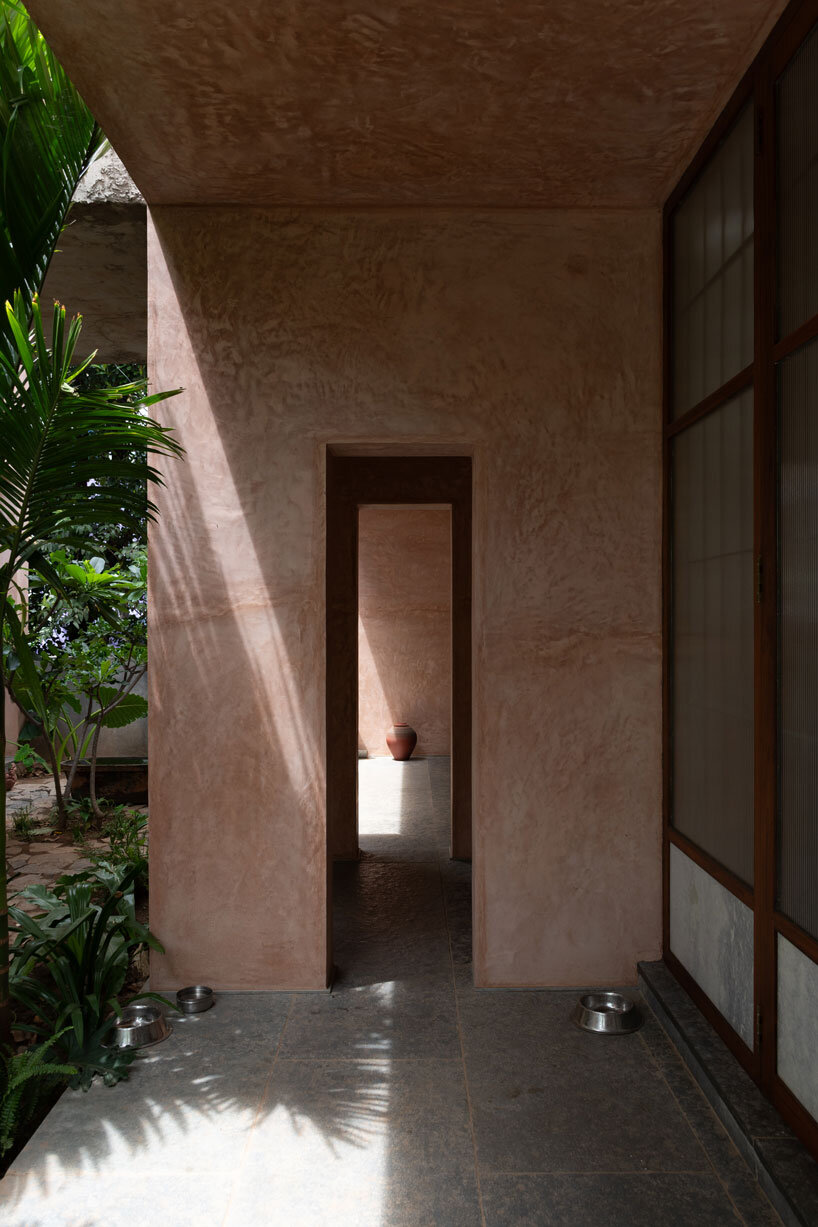
reclaimed brick, site soil, and lime plaster form breathable wall surfaces
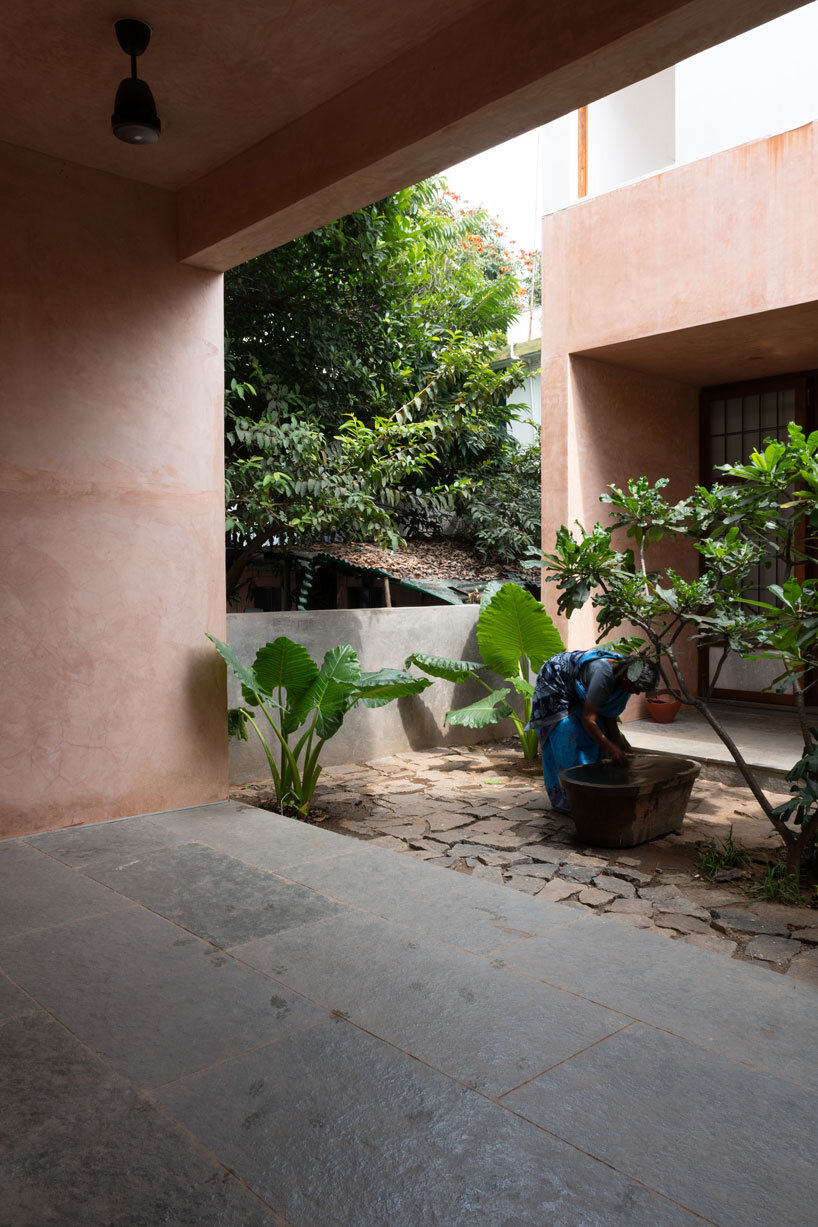
the garden and planting soften transitions between built and natural elements
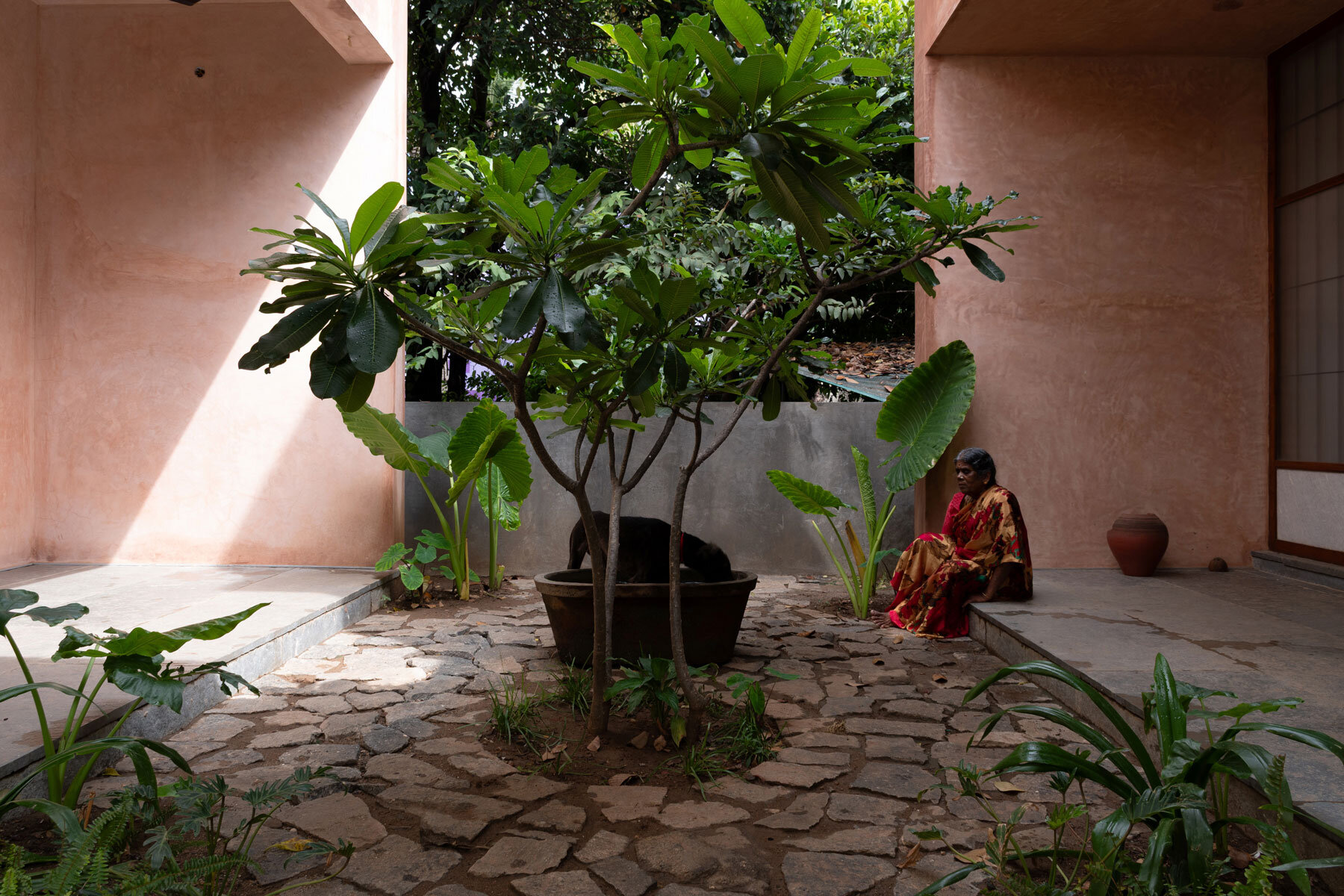
spatial volumes emerge from relationships between movement, built form, and landscape
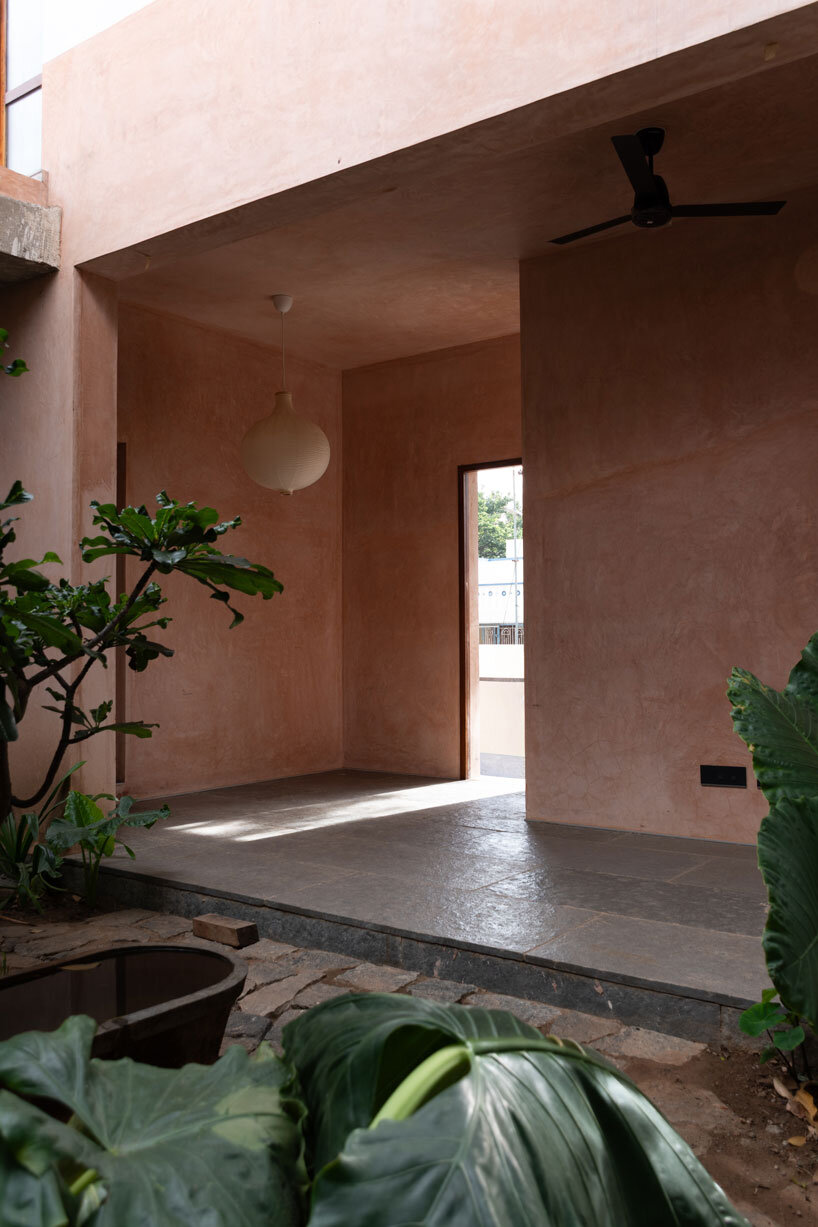
reused materials and layered finishes reinforce continuity and long-term adaptability
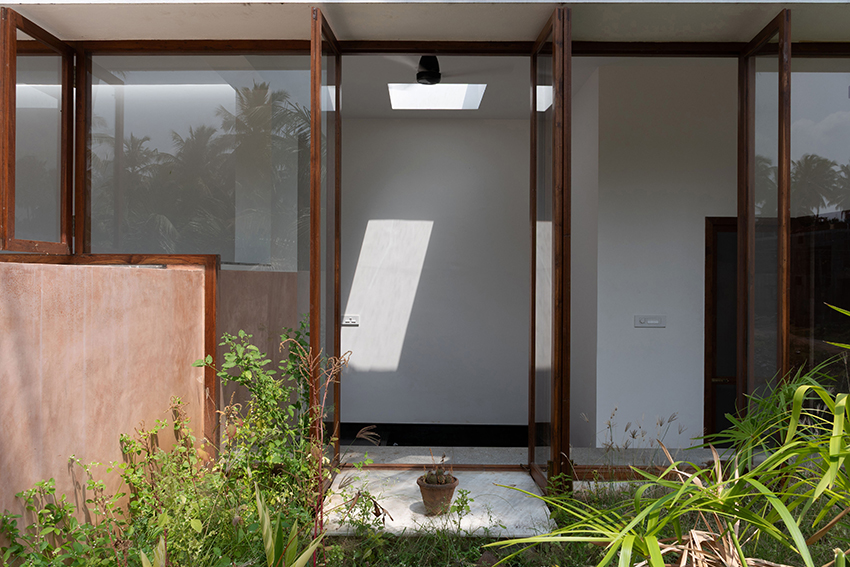
a modest roof garden blurs boundaries and employs the principle of borrowed landscape
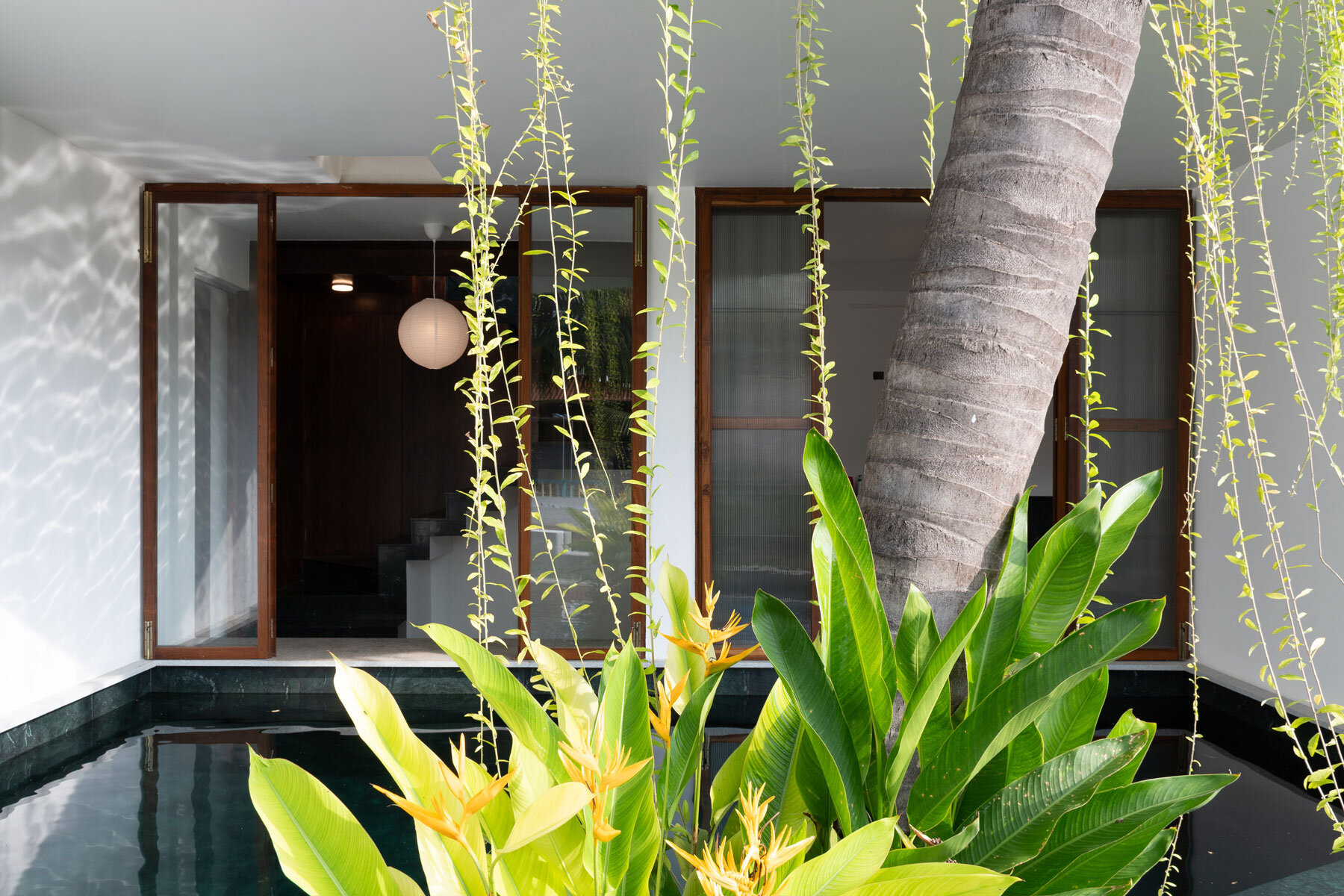
a partially shaded dip pool references a former water tank on the site
project info:
name: Tales of Saru
architect: Studio for Architecture and Regional Urbanism – SARU
location: Mettupalayam, Tamil Nadu, India
designboom has received this project from our DIY submissions feature, where we welcome our readers to submit their own work for publication. see more project submissions from our readers here.
edited by: christina vergopoulou | designboom
The post four spatial sequences compose indian residence anchored in memory appeared first on designboom | architecture & design magazine.