








what kind of life should housing make possible? 33 projects offer answers


housing is not a fixed product: laura traub on how we live now
What should housing make possible today? In HOUSING — 33 Answers to the Housing Question, editors Jeanette Kunsmann and Laura Traub bring together projects from across Europe that approach this increasingly urgent question from different directions. The book looks beyond housing as a matter of units, square meters, and supply, examining social and cooperative housing, low-cost construction, shared living, renovation, and adaptive reuse.
For Laura Traub, one of the most significant changes is a shift in how we understand the home itself. ‘Home has become much more than simply a place where we live,’ she tells designboom. ‘It has become the center of our everyday lives and often also of our working lives.’ As households, careers, and care arrangements become less predictable, the model of housing as a fixed product increasingly struggles to accommodate the ways people actually live.
Across its 408 pages, HOUSING — 33 Answers to the Housing Question suggests that housing may need to become more adaptable, more connected to its surroundings, and more attentive to the existing structures and social systems shaping everyday life.

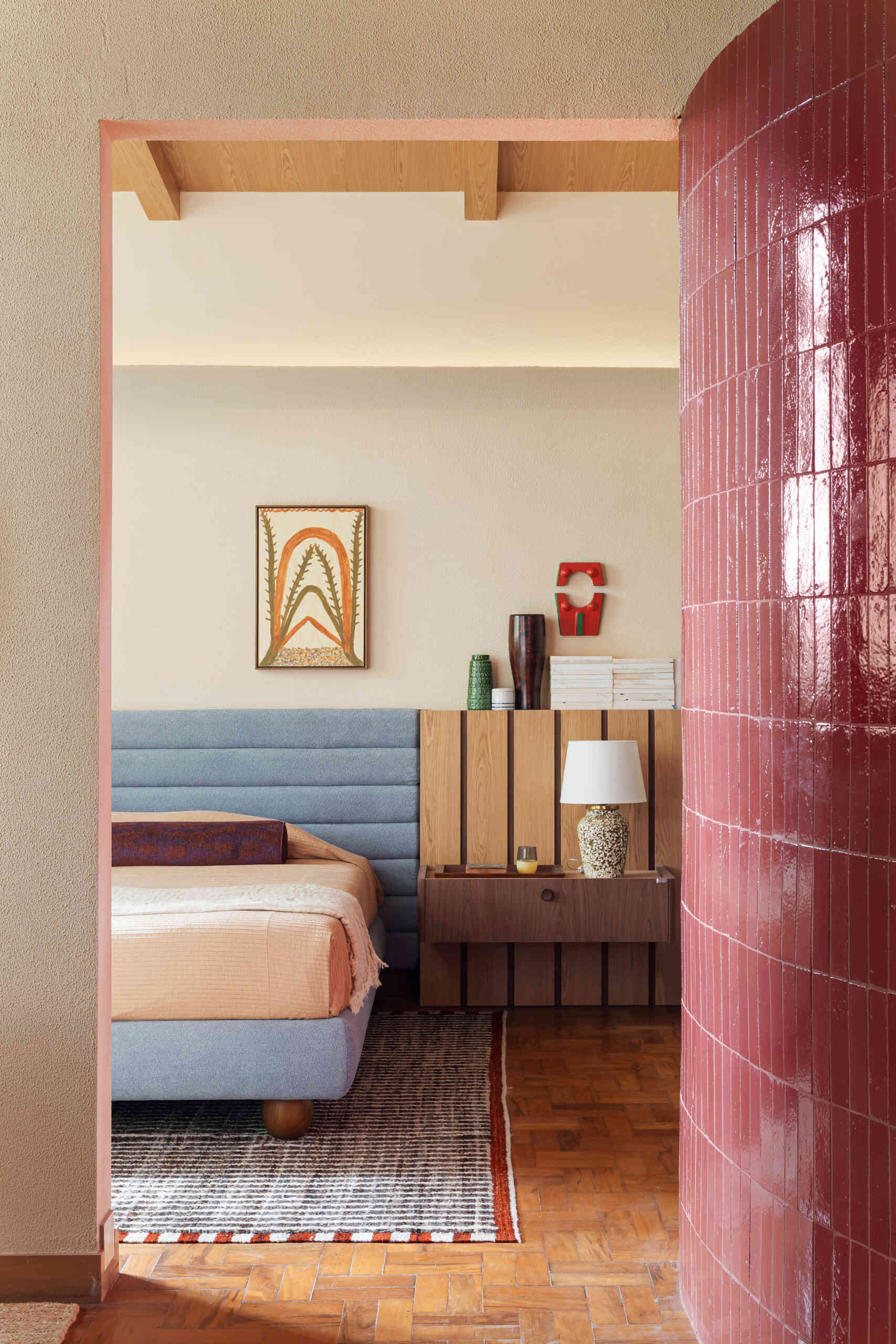
Council Apartments in Barcelona by Narch + Maira Arquitectes | image © Adrià Goula
WHEN HOME HAS TO ACCOMMODATE EVERYTHING
During the pandemic, domestic spaces had to absorb work, education, family life, leisure, and retreat, often simultaneously, the expanding role of the home particularly visible. ‘The way we live is much less static,’ Traub says. ‘Families change, we work differently, we move, we age, and our needs evolve throughout our lives.’
This instability challenges the assumption that a home can be designed as a finished and permanent answer. One project included in the book, by Buchner Bründler in Zurich, offers a broader way of thinking about the question, considering housing as part of a larger residential environment that combines different forms of dwelling with shared spaces and a relationship to its surroundings. ‘Perhaps this is the fundamental shift,’ Laura Traub reflects. ‘We need to think of housing less as a fixed product and more as something that evolves with the people who live in it.’
That distinction runs through the publication. The book is organized around three chapters — Social and Community Housing, Building Simply, and Renovate, Adapt and Build New — bringing together projects from Portugal to Bosnia and from Oslo to Basel. Their methods differ, but the larger question remains consistent: what happens when housing begins with changing conditions rather than a standardized idea of domestic life?

Council Apartments in Barcelona by Narch + Maira Arquitectes | image © Adrià Goula
THERE IS NO SINGLE ANSWER TO THE HOUSING QUESTION
The diversity of the projects featured in the book is central to its argument. Some address affordability and collective living and others work with limited resources or existing structures. What connects them, Traub suggests, is not a common formal language but a shared refusal of standardization.‘They question the idea that there is one standard answer to housing,’ the editor explains. ‘They come from very different contexts and work with very different means, but they all ask what people actually need and what can be achieved with the resources available.’
Kuku23 in Vienna illustrates this expanded understanding of residential architecture. The development combines around 430 subsidized apartments with ateliers, workshops, cultural uses, and shared spaces, connecting housing to work and neighborhood life. ‘The lesson is not that one of these projects should become a universal model. ‘For us, the lesson of the 33 projects is not that we need one new model,’ Traub shares with us, ‘but that we need a greater diversity of solutions that respond to their particular context and to the people who live there.’

Council Apartments in Barcelona by Narch + Maira Arquitectes | image © Adrià Goula
THE HOME DOES NOT END AT THE FRONT DOOR
Housing is shaped by far more than the architecture of an apartment. Public space, schools, transport, shops, and social infrastructure all influence how a place is experienced. Yet Traub is careful not to assign architecture more power than it possesses. ‘We see this relationship as very strong, but also more complex than simply saying that better architecture creates better communities,’ she observes. ‘A beautifully designed communal space does not automatically create social relationships.’
The observation is important in a field where shared spaces are often presented as inherently social. Architecture can provide opportunities for encounter, but it cannot prescribe community. Nor should it eliminate the need for privacy.
‘A home also needs to offer privacy and retreat,’ Traub continues. ‘The role of architecture is not to prescribe how people should live together, but to create the conditions for different forms of everyday life.’

Housing Complex Auenweide near Vienna by einszueins architektur | image by Hertha Hurnaus
HOUSING, CARE, AND THE TIME OF EVERYDAY LIFE
Affordability and supply remain fundamental concerns, but Traub argues that the conversation must also address the organization of everyday life. ‘We also need to ask what kind of homes and neighborhoods support a good life.’
Care is one of the questions that becomes visible through this broader lens. Who looks after children, older people, or people who need support? And can housing reduce some of the pressure placed on the individual household?
The House for Five Women in Bosnia, included in the book, was developed around the needs of five women and combines private rooms with generous shared spaces. For Traub, the project demonstrates how housing can support both independence and social connection without presenting collective life as an obligation.
The question also concerns time. ‘The location and organization of housing influence how much time we spend travelling, working, caring and managing everyday life,’ she highlights. ‘Perhaps the housing crisis is therefore not only about a shortage of homes, but also about how we organise everyday life.’

Housing Complex Auenweide near Vienna by einszueins architektur | photo by Hertha Hurnaus
THE MOST IMPORTANT BUILDING MAY ALREADY EXIST
Among the forms of experimentation gathered in the book, Laura Traub sees particular potential in working with what is already built. As the ecological and material costs of new construction become increasingly difficult to ignore, renovation, conversion, and adaptation are likely to become as important as new housing. ‘Given the amount of housing and infrastructure that already exists, renovation, conversion, and adaptation will be at least as important as new construction in the future,’ she argues.
The Felix-Platter-Spital in Basel, a former hospital that was transformed into around 135 apartments while retaining much of its existing structure and character, demonstrates this approach. ‘The project does not simply preserve an existing building,’ she suggests. ‘It adapts it to new needs and gives it a new role.’
This position reframes experimentation in housing. Innovation does not necessarily require a spectacular new typology or an entirely new building. It can emerge from the slower work of understanding what already exists and finding ways to make it useful again. ‘For us, this is where experimentation becomes meaningful: not when it produces the most spectacular new building, but when it finds an intelligent way of using what already exists.’ Laura Traub adds.

Collective Living near Paris by Plan Común | image by Javier Agustín Rojas
33 POSSIBILITIES FOR HOW WE MIGHT LIVE
The 33 selected projects form what Edition DETAIL describes as an atlas of possible strategies, with plans, sections, construction drawings, photographs, and interviews making different architectural positions available for comparison. For Traub, the larger takeaway is to understand housing as more than a commodity or a collection of square meters. ‘Housing shapes how we live our everyday lives, how we relate to others and how connected we feel to the places we live in,’ she reflects.
There is no universal model for a good home, she emphasizes. ‘The right answer depends on people, places and circumstances, and these change over time.’
HOUSING — 33 Answers to the Housing Question therefore leaves the housing question deliberately open, assembling different responses and asking readers to consider what domestic architecture should actually support. ‘So perhaps the question is not simply how much housing we need, or how much we can afford, but what kind of life we want our homes to make possible,’ Traub concludes. ‘For us, that is the real value of the book: it reminds us that housing is ultimately not just about places to live, but about how we want to live.’

Collective Living near Paris by Plan Común | photo by Javier Agustín Rojas

Collective Living near Paris by Plan Común | photo by Javier Agustín Rojas

Collective Living near Paris by Plan Común | photo by Javier Agustín Rojas

Jeanette Kunsmann and Laura Traub bring together projects from across Europe

the House for Five Women in Bosnia was developed around the needs of five women

Hirtenweg Housing Estate near Basel by Studio Gugger | image by Daisuke Hirabayashi

Hirtenweg Housing Estate near Basel by Studio Gugger | image by Daisuke Hirabayashi

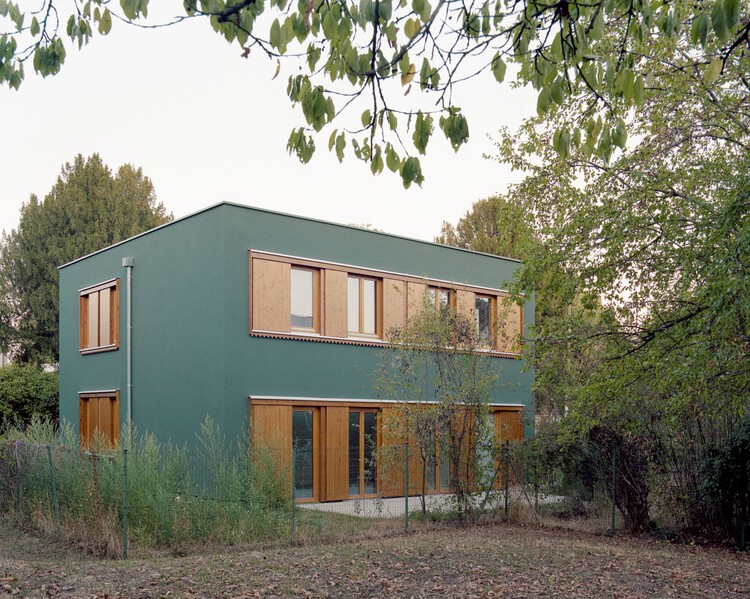
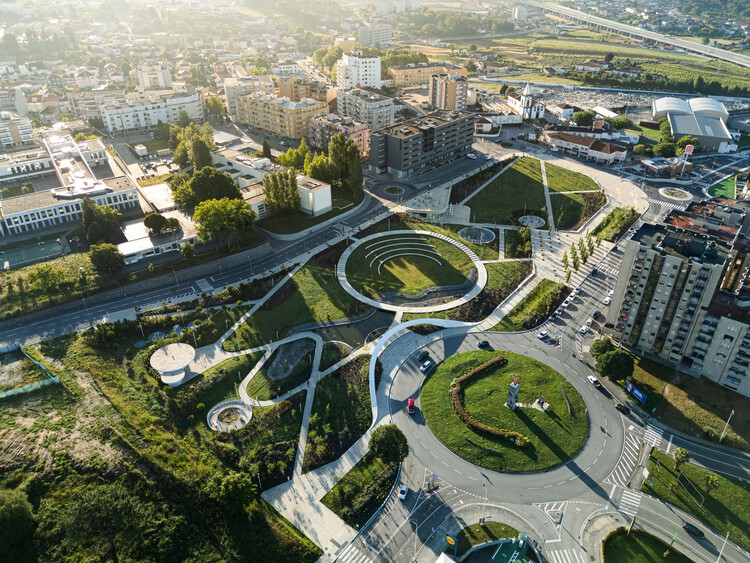
residential Complex near Porto by Summary Architecture | image by Fernando Guerra | FG+SG

residential Complex near Porto by Summary Architecture | image by Fernando Guerra | FG+SG

residential Complex near Porto by Summary Architecture | image by Fernando Guerra | FG+SG

an atlas of possible strategies

plans, sections, construction drawings, photographs, and interviews make different architectural positions available for comparison

residential Complex near Porto by Summary Architecture | image by Fernando Guerra | FG+SG

HOUSING — 33 Answers to the Housing Question
project info:
name: HOUSING — 33 Answers to the Housing Question
editors: Jeanette Kunsmann | @jeanette.kunsmann and Laura Traub
publisher: Edition DETAIL | @detailmagazine
This interview is part of designboom’s MODES OF HABITATION chapter, exploring how the spaces we inhabit can reshape the ways we live together. Discover more stories rethinking domesticity, shared living, and the many forms a home can take here.
The post what kind of life should housing make possible? 33 projects offer answers appeared first on designboom | architecture & design magazine.