



Meet Courage Dzidula Kpodo, Lesley Lokko's pick for the most influential architect of the next 20 years

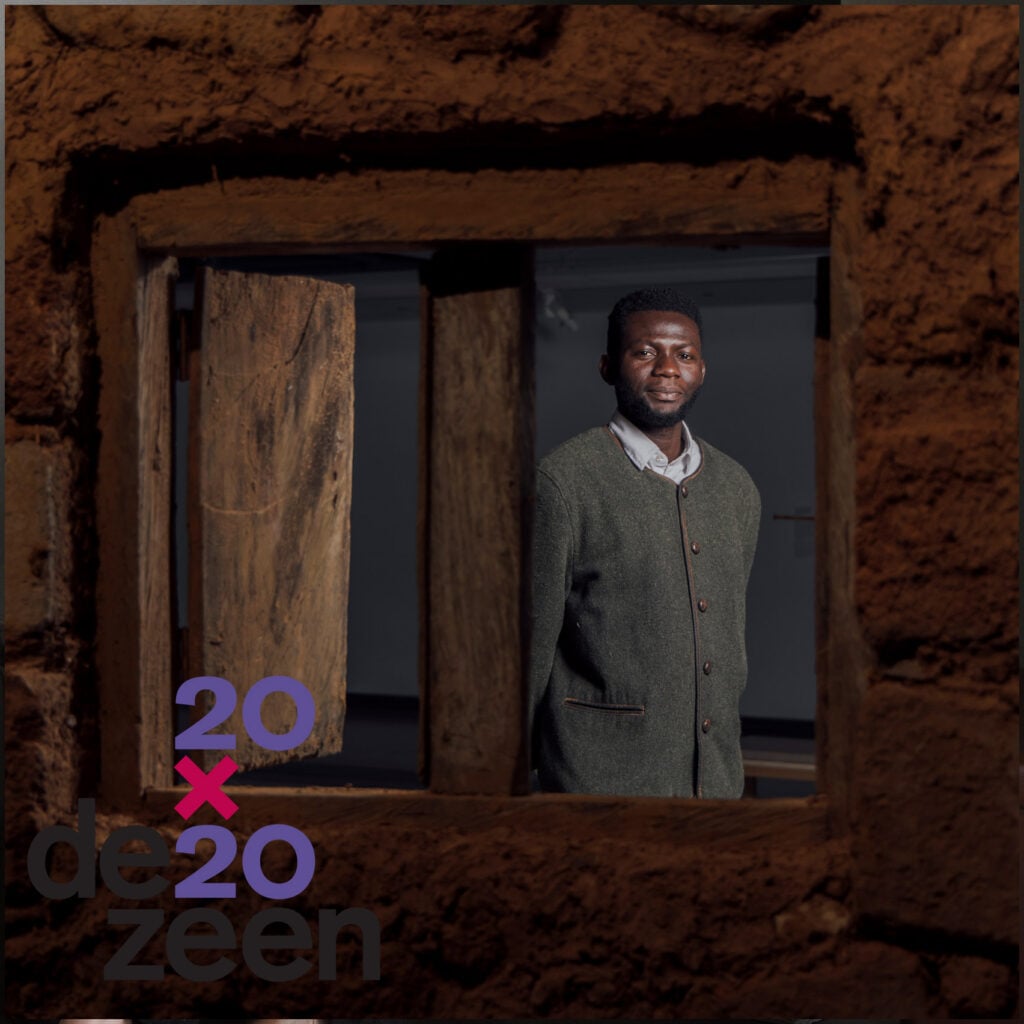

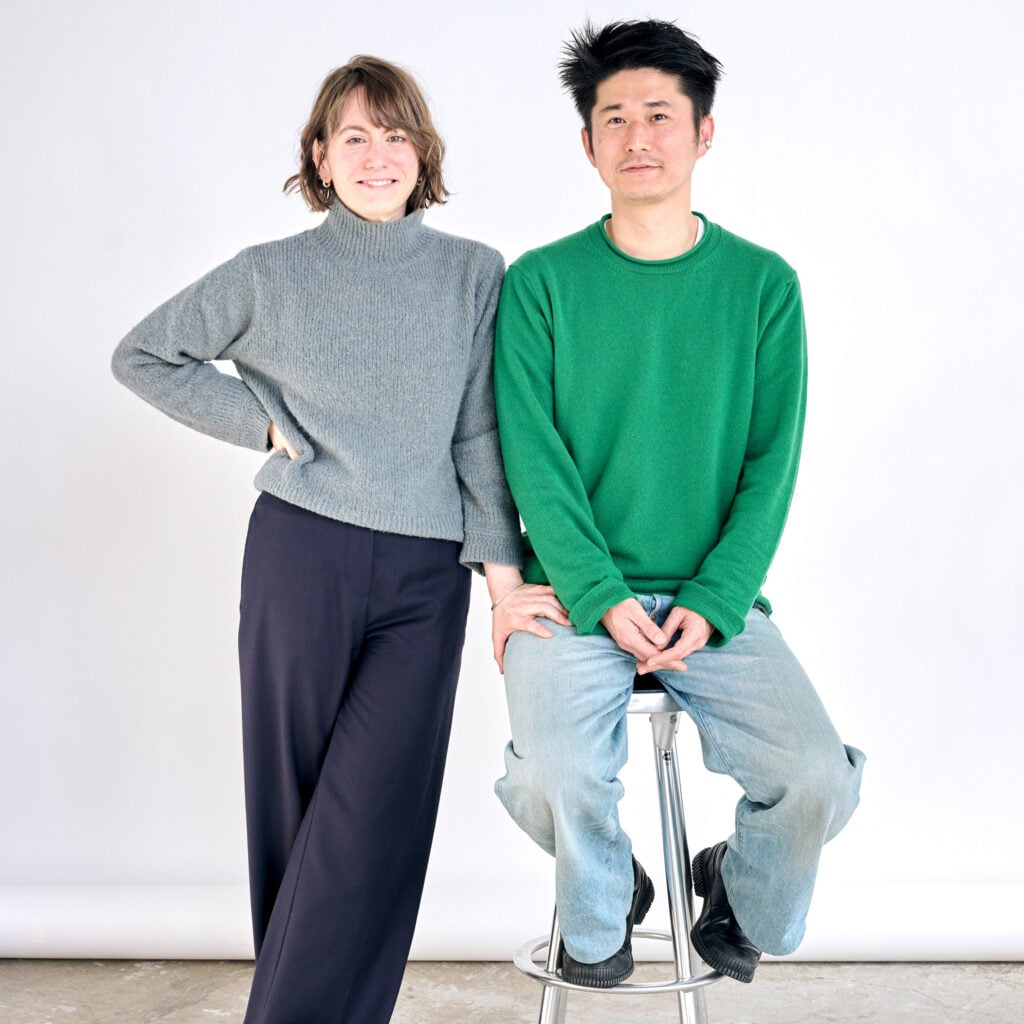
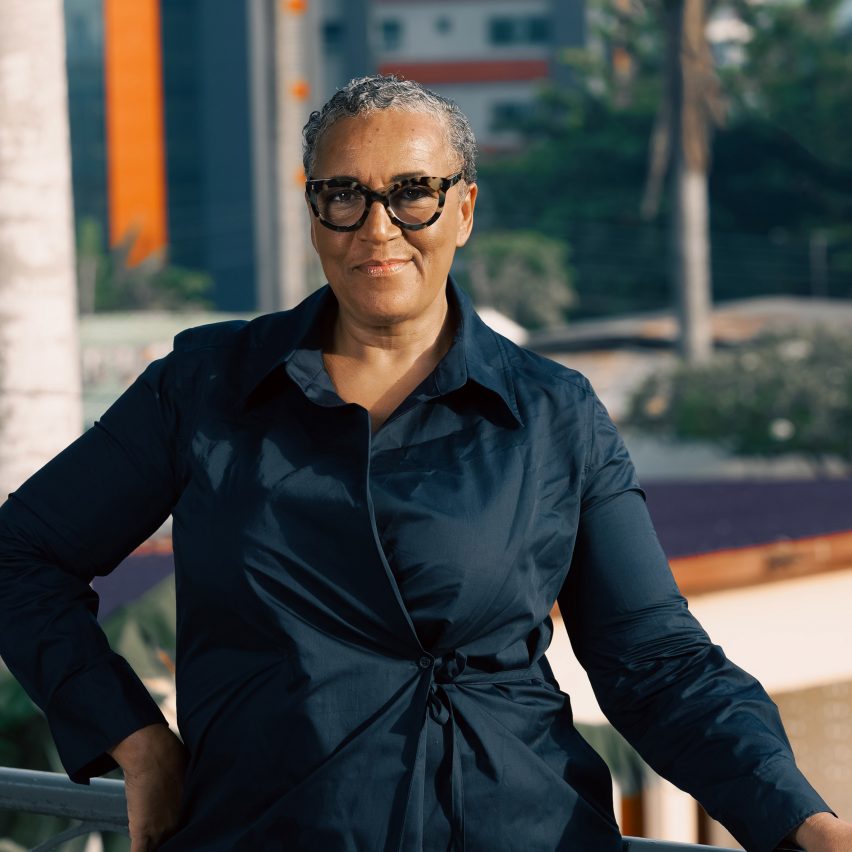
Ghanaian-Scottish architect Lesley Lokko has nominated Courage Dzidula Kpodo as a key name to watch over the next two decades for Dezeen’s 20×20 project, sponsored by Kohler.
In this interview he explains why despite growing global attention, his ambitions remain resolutely local.
Having only graduated in 2025 from a master’s in architecture at the Massachusetts Institute of Technology (MIT) – for which he was awarded the Arthur Rotch Prize for highest overall mark – Kpodo is already someone Lokko believes will "help shape the next chapter of African architecture".
Kpodo’s work, which sees him blur the roles of architect, artist and archivist, is focused on revealing what he calls the “silences” in prevailing narratives about Ghanaian architecture, and challenging the idea that Ghana’s future development must be a "linear prescription of urbanisation".
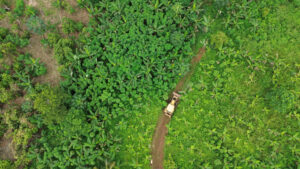
If this sounds theoretical or speculative, Kpodo’s approach is anything but: the site of his MIT thesis was an almost five-acre stretch of farmland in Ghana to which he purchased a 99-year lease in 2022, and is currently using as a live site to consider alternative forms of development in the region.
Stating how, if nothing else, the purchase would "preserve the value of the money I had in my savings account," Kpodo sees the site becoming an alternative institution of sorts, constructed using materials he has salvaged from vernacular buildings that would otherwise be demolished.
“The committee at MIT was a bit shocked, because they weren’t used to the idea of a thesis project existing in the real world," Kpodo told Dezeen. "But I still thought of it as almost as a sort of sketch, just at 1:1 scale.”
“Doing that gives you something to test – people are going to interface with it; you can test out its failures and success very quickly.”
Growing up in Kumasi, Kpodo initially focused on visual art in school before pursuing a course in architecture at the Kwame Nkrumah University of Science and Technology (KNUST), and subsequently MIT.
At KNUST he was quickly exposed to narratives around both architectural success and Ghana’s own architectural history that left him seeking something more “homegrown”.
“We had a lecture from Francis Kéré in which he spoke about his Serpentine Pavilion, and how taking on commissions from big institutions or big clients can become critical for defining your practice,” said Kpodo.
I thought: okay, what can I do now that is within my means instead of waiting for the big commissions to come?
“At the time, I couldn't imagine any of these commissions coming to those of us working in the South. I couldn't see any architects who were operating on that scale, or even at a kind of global scale,” he continued.
“It almost had the opposite effect on me. I thought: okay, what can I do now that is within my means instead of waiting for the big commissions to come? I think it's by being local that I can have something to offer to the world."
Kpodo became interested in local architectural archives, initially those of the KNUST Development Office, but also the less formalised collections of images and drawings that he encountered online.
He soon helped establish Postbox Ghana, a research collective initiated by artist Manuela Nebuloni to create an alternative architectural archive using postcards and stamps from the 1950s to the 1980s, which often depicted examples of Tropical Modernism and state infrastructure constructed following Ghana’s independence.
However, Kpodo still felt that these archival materials did not speak to his own understanding of Ghanaian architecture, having grown up in a "not-so-well-to-do context" in Kumasi and only really encountering modernist architecture when first entering the KNUST campus.
“The whole archive that I was exposed to, whether it was in the Development Office or in the postcards, had a huge, significant gap in it," he said. "I remember stories my dad would tell me about building practices and cultures that just didn't make it into this archive or our training in architecture school.”
“As a newly independent country, Ghana wanted to break away from any kind of ethnographic notion of what the ‘Gold Coast’ – to use its colonial name – was. So those ‘traditional’ buildings and other forms of practices did not make it into the framework of thinking about what our future meant,” he continued.
“But even though these buildings are far removed from the city centres and from the archive, they were foundational in the sense that they enabled the cocoa industry, and brought in the money that built the institutions and structures that are enshrined in postcards.”
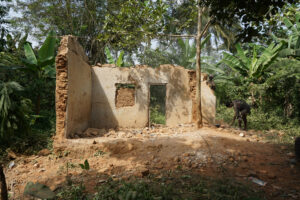
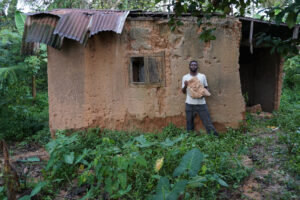
Kpodo began to photograph these vernacular buildings himself, many of them farm structures made using laterite, a type of local red earth that is formed into air and sun-dried blocks for construction
When I talk about rebuilding them, it usually lands. People get it, and then they begin asking, 'okay, but what can it be?'
Upon finding many of these buildings slated for demolition, Kpodo has more recently begun to purchase them, before carefully deconstructing their laterite structures to become the raw material for new structures on his land.
The idea was initially met locally with some confusion. "I remember one man said, 'oh, are you going to extract gold from the walls?' because laterite can contain gold," he recalled.
"But when I talk about rebuilding them, it usually lands. People get it, and then they begin asking, 'okay, but what can it be?' And then some kids would even begin making their own proposals. For me, just creating that imagination is worth it."
The land that Kpodo purchased in 2022 is in Ghana's eastern region, and was at the frontier of cocoa production in the early 1900s. Some descendants of the first farmers on the land are still based there, and were among those Kpodo interviewed to understand the history of the landscape.
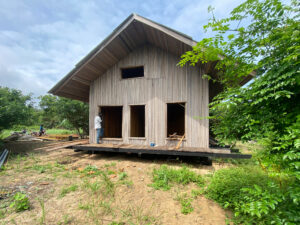
Alongside the widening of a communal path – the focus of his MIT thesis – and the moving of vernacular building materials there, he has also constructed a simple timber deck, both as a rest point for the farmers and an observation point for watching future changes unfold on the site.
If I were asked to design a Serpentine Pavilion, I’d probably make a replica in Ghana, too. You can only do so much in an exhibition setting
Kpodo envisions that this future will include both new agricultural processing facilities for the farmers on the land, as well as community spaces that enable further discussions around its ongoing development.
This work also forms the basis of Kpodo’s educational and curatorial work. He is keen to continue "speaking both languages" – the more practical with the conceptual – but he feels the latter should always be grounded in a “local base” rather than detached from it.
In 2023, his work with Postbox Ghana was exhibited at both Vantage Point Sharjah and the Venice Architecture Biennale. In 2025, he curated the LagosPhoto Biennial alongside Maria Pia Bernardoni and Robin Beth Riskin, with the theme of Incarceration.
Kpodo also taught on the one-month Nomadic African Studio at the African Futures Institute, founded by Lokko as a space "dedicated to rethinking education, culture, and practice from the African continent outward."
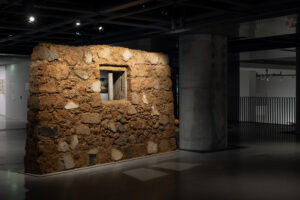
Most recently, he orchestrated the transportation of the wall of a laterite farmhouse a little further afield to the Fondation Cartier in Paris, as part of the exhibition Ibrahim Mahama: Harvest Season, where it is accompanied by images from the Postbox Ghana archives.
“If I were asked to design a Serpentine Pavilion, I’d probably make a replica in Ghana, too," he said. “You can only do so much in an exhibition setting. You can only talk so much. If the work has no ground and no local base, then I think it becomes very difficult for you to bridge what it is that you're presenting versus the work that it proposes to be doing.”
“We need to cultivate other sites that do the real work, sites that translate it into something which is not necessarily concerned with an educated audience," he continued.
“My sense is that we're increasingly going to see the most ‘powerful’ institutions seek out these hyper-local narratives and projects as a way to really understand the world.”
To celebrate Dezeen's 20th birthday, we asked 20 of the most influential architects and designers of the last 20 years to identify someone they think will have a major impact in the next 20 years. Over the next four weeks, we'll reveal their picks in a series of profile interviews.

20x20
The post Meet Courage Dzidula Kpodo, Lesley Lokko's pick for the most influential architect of the next 20 years appeared first on Dezeen.