












Mesh-89 device lets Palestinian drivers stay ahead of checkpoint closures


Recent Central Saint Martins graduate Joud Abuhomos has invented a simple, off-grid communication device called Mesh-89, designed to alert Palestinian bus drivers to the status of the West Bank's 89 permanent checkpoints.
Deliberately unassuming in appearance, Mesh-89 is intended to help drivers navigate the everyday problem of traffic restriction around Israeli-run checkpoints, which can cause multiple-hour delays on Palestinian roads and limit travel between cities.
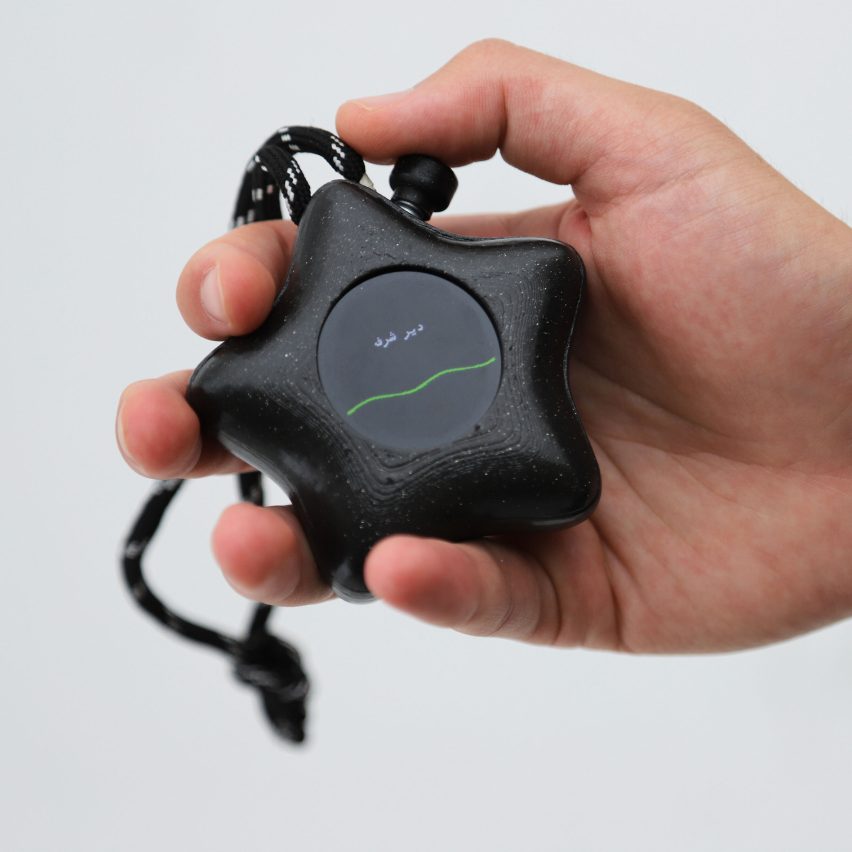
The device lets drivers share information between them and view it in a way that is comprehensible at a glance. The small screen simply displays a waveform in red, yellow or green to indicate that a checkpoint is restricted, delayed or accessible.
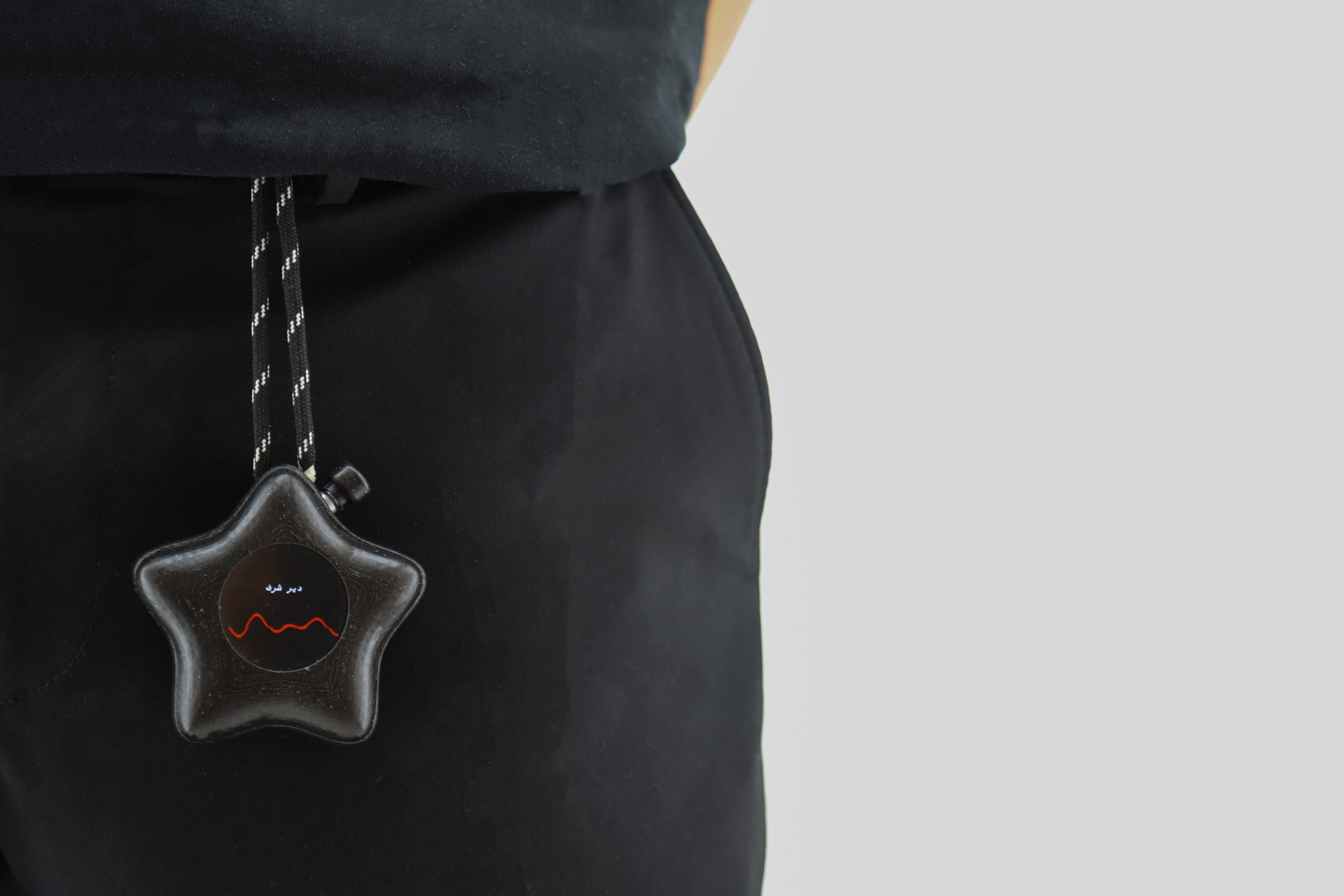
The device works through long-range (LoRa) radio waves rather than cellular networks, meaning updates can be shared even when mobile signals are jammed, as is sometimes the case around checkpoints due to security and military operations.
Abuhomos devised Mesh-89 to address a problem she experienced herself as a resident of the West Bank city of Ramallah, where she lived until 2024 when she commenced her masters in Industrial Design at London school Central Saint Martins.
"The project began from a gap between what navigation systems show and what Palestinians actually experience on the road," said Abuhomos. "Digital maps present roads as clean and navigable, while the reality can change within minutes as checkpoints close, road gates appear and routes become inaccessible."
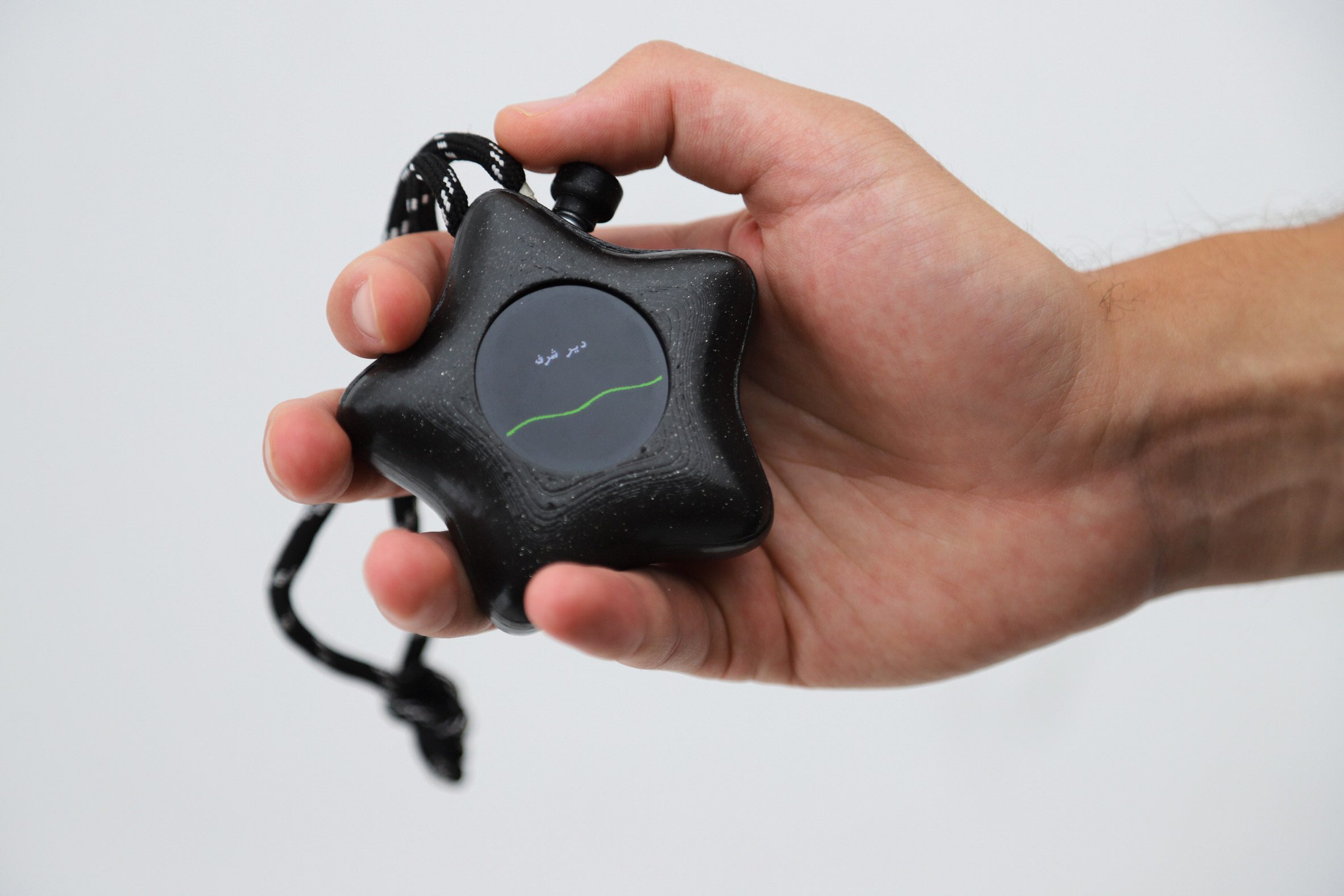
"In the occupied West Bank, there are 89 permanent checkpoints, yet only three appear on Google Maps," she continued. "I grew up using these roads, sitting in these buses, waiting at checkpoints, arriving late because of unannounced closures, and following navigation systems that did not reflect the reality in front of me."
Abuhomos stresses that Mesh-89 is at this point a proposal and is yet to be tested on the ground, where drivers currently rely on messaging apps such as WhatsApp to share updates about what's happening on the roads, as long as there is cellular service.
However, she was able to conduct field interviews remotely. In a video created as part of her project, taxi drivers recount their experiences of trips that are delayed by hours.
"There's no sense of safety on the roads any more," said taxi driver Ghassan Saed. "You can't work normally. You can't move around like everyone else. They put pressure on you until you feel like leaving."
"You feel sick of the situation. Sometimes you end up turning back. Sometimes you spend three or four hours driving around, only to end up turning back. Other times it's a complete closure. You can't move at all."
To cater to the drivers' needs, Abuhomos designed an object that could blend in with other paraphernalia on their dashboards, which are usually filled with ornaments, keychains and gifts from passengers.
For that reason, her Mesh-89 electronics are enclosed within a star-shaped case, 3D-printed from PLA plastic with hand-applied glitter and varnish to mimic the aesthetic of tchotchkes.
This "cultural camouflage", as Abuhomos calls it, also helps to shield the device from easy identification and possible confiscation at checkpoints.
"The camouflage is practical, but the aesthetic side is also important because I did not want the technology to arrive as something foreign," Abuhomos told Dezeen. "I wanted it to look like it already belonged there."
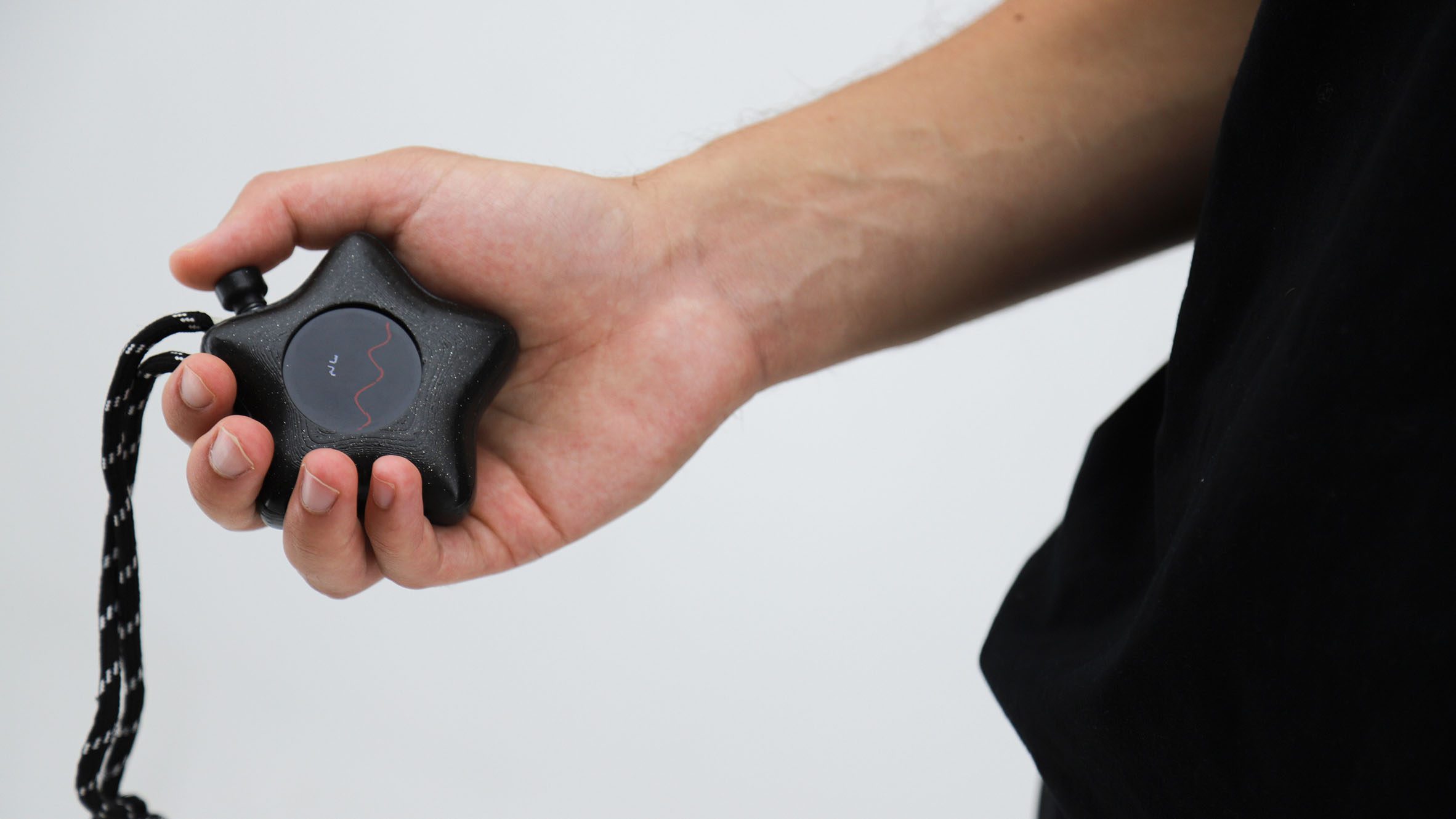
Although Abuhomos says the form could be customised and diversified, the star shape has the advantage of sitting comfortably in the palm and allowing for easy, stopwatch-like operation of the knob on the side of the device.
Drivers rotate the knob to select the checkpoint they would like to report on, and click it once, twice or thrice to record its condition.
Inside the device are ESP32 microcontrollers and Wio-SXI262 LoRa modules – low-cost, low-power parts often used by makers.
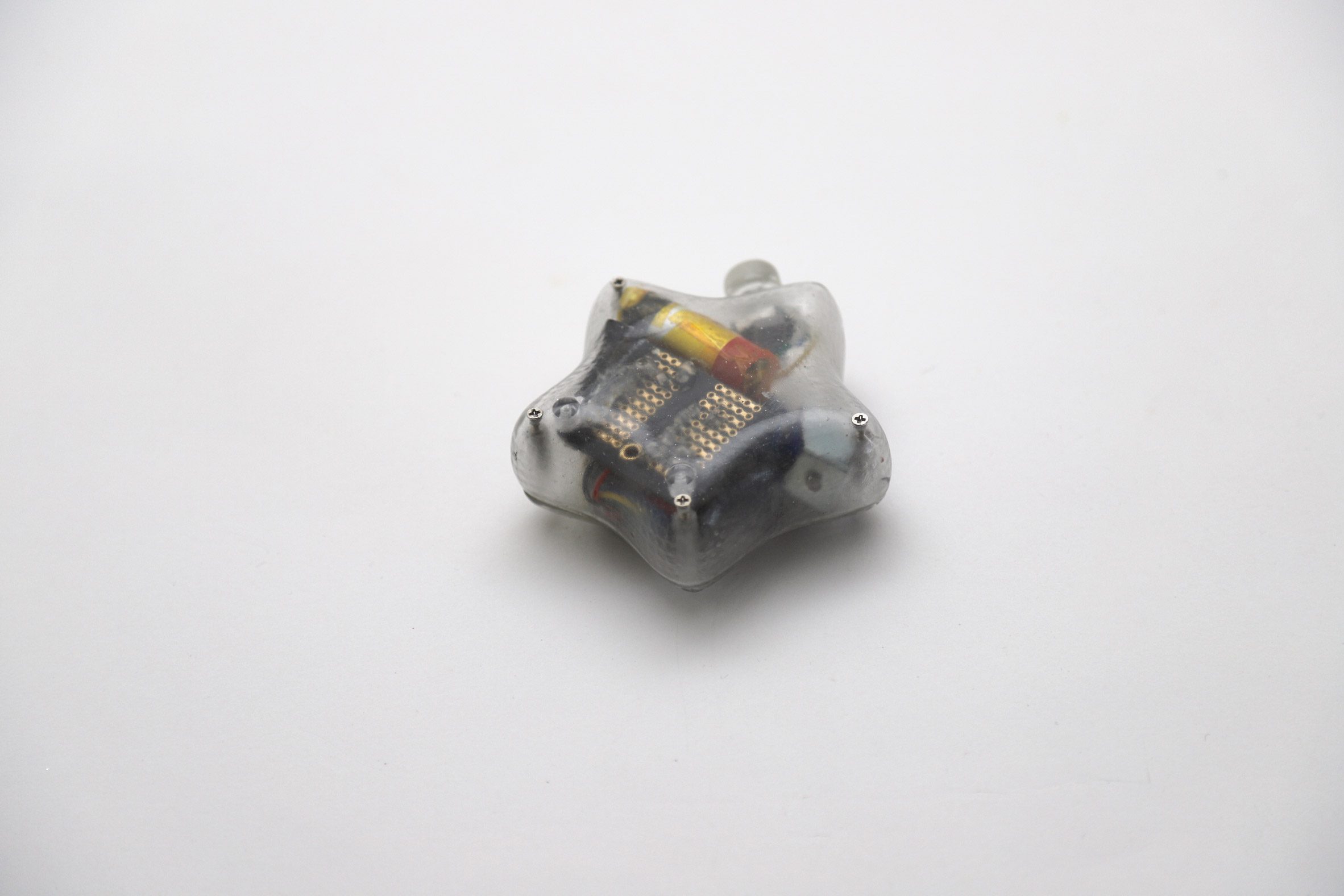
The LoRa modules connect Mesh-89 devices, forming a mesh network where each device is connected to multiple other devices, allowing messages to hop from one to another to extend the communication range.
Currently, anyone connected to Mesh-89's network could send an update, but Abuhomos intends to look into ways to identify the sender or create a system of verification as a next step. The network itself could also be interfered with or jammed.
"I think testing the device in Palestine will bring completely new insights into its technical effectiveness and the way drivers would actually operate, understand and trust the system," Abuhomos added.
Other designs to have come out of Palestine include candle holders made of upcycled tear gas canisters, created by designer Majdulin Nasrallah.
The post Mesh-89 device lets Palestinian drivers stay ahead of checkpoint closures appeared first on Dezeen.