




scaffolding pipes turn into street furniture activating a future development site in osaka


Temporary Urban Platform Activates a Vacant Development Site
GAS STAND (Grow and Spread) is a temporary urban activation project by team raw row, developed for Osaka Gas Urban Development on a portion of the site planned for a future mixed-use building that will include the Daigas Group headquarters. Located along Midosuji, Osaka’s principal north–south boulevard, the project temporarily transforms the undeveloped site into a public platform for community activities, informal gatherings, and everyday use before permanent construction begins.
Rather than leaving the site vacant during the pre-construction period, the intervention introduces a temporary spatial framework that supports public occupation while testing future approaches to site management and community programming. Operated by Osaka Gas Urban Development, GAS STAND functions as an interim environment where office workers, local residents, and visitors can gather through informal activities, local initiatives, and neighborhood events.
The project responds to the character of the surrounding business district, where weekday pedestrian activity contrasts with quieter weekends and where public spaces for lingering are limited. Instead of creating a conventional plaza separated from the street, the design extends the logic of the existing urban environment into the site, reducing the perceived boundary between public and private space. This approach positions the temporary intervention as an extension of the streetscape rather than an isolated destination.

all images by ©︎Yosuke Ohtake
Scaffolding Pipes and Street Furniture Define the Intervention
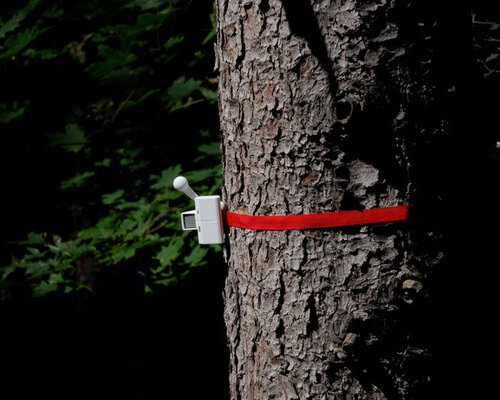
The spatial composition is assembled from familiar urban components, including benches, standing counters, bulletin boards, graphic markings, planters, traffic mirrors, and scaffolding pipes commonly associated with streets and construction sites. Reconfigured within a new arrangement, these everyday elements support sitting, gathering, information sharing, and informal interaction while maintaining a visual continuity with the surrounding city. Rather than functioning as fixed amenities, the individual components operate as adaptable tools that encourage participation and accommodate changing activities over time. Their temporary nature allows the site to evolve while remaining closely connected to the daily rhythms of the neighborhood.
Conceived as the first stage of a longer urban transformation by design studio team raw row, GAS STAND explores how public life can emerge before architecture is completed. By activating the site through temporary design interventions, the project establishes an early framework for community use, spatial identity, and future occupation while anticipating the role of the permanent mixed-use development.

GAS STAND occupies the site of a future mixed-use development

traffic mirrors are repurposed as architectural elements

scaffolding pipes form part of the spatial structure

familiar construction materials are assembled into a public environment

graphic markings introduce playful moments within the site

the temporary project is located along Osaka’s Midosuji boulevard

the intervention activates the site before construction begins

the project extends the logic of the surrounding streetscape

office workers, residents, and visitors share the temporary platform

the intervention responds to the rhythms of the business district

the temporary installation anticipates the life of the future building
project info:
name: GAS STAND
designer: team raw row | @teamrawrow
location: Midosuji, Osaka, Japan
photographer: Yosuke Ohtake | @yosukeohtake_archiphoto
designboom has received this project from our DIY submissions feature, where we welcome our readers to submit their own work for publication. see more project submissions from our readers here.
edited by: christina vergopoulou | designboom
The post scaffolding pipes turn into street furniture activating a future development site in osaka appeared first on designboom | architecture & design magazine.