







Sthapati "draws from Jodhpur's royal past" for pastel-coloured airport

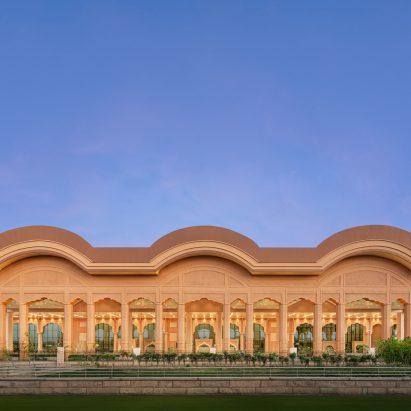
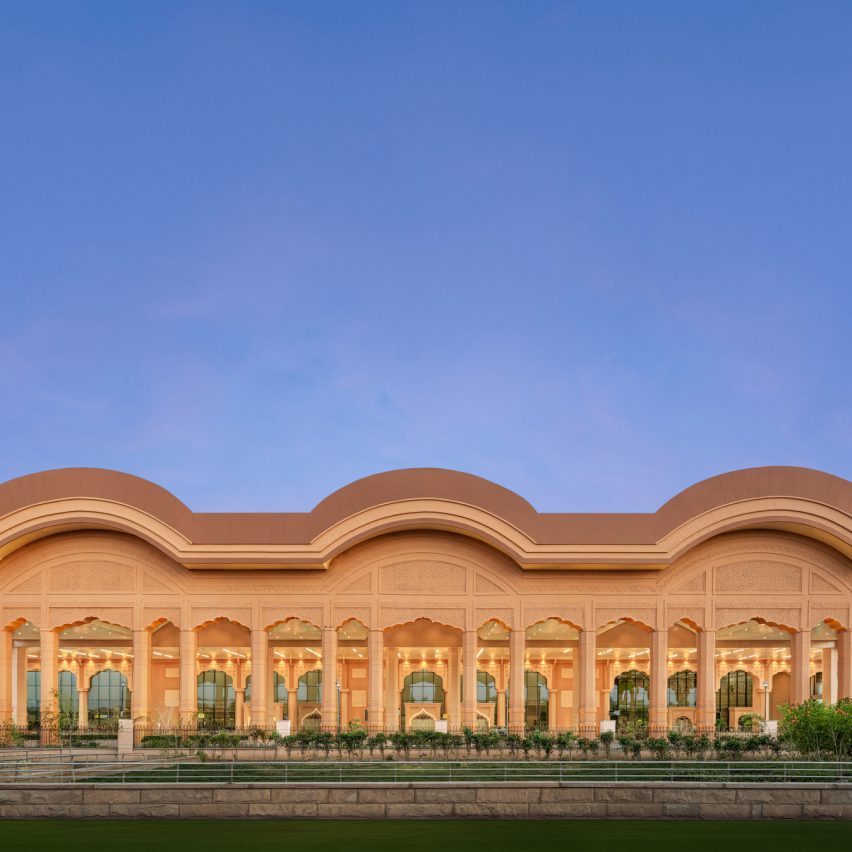
Architecture studio Sthapati took visual cues from local palaces and gateways for its expansion of the Jodhpur Airport in Rajasthan, India.
Unlike the majority of airports, the distinctive form of the 23,400-square-metre terminal building was directly informed by historic local architecture, including the Mehrangarh Fort and Umaid Bhawan Palace.
"Jodhpur Airport is designed to respond to the city's growing role in Rajasthan's tourism and strengthen its position as the gateway to Western Rajasthan, while drawing on its distinctive architectural and cultural identity," said Sthapati.
"Inspired by the historic gateways, forts, and palaces that define Jodhpur's built environment, the terminal incorporates the region's architecture at the scale of contemporary infrastructure."
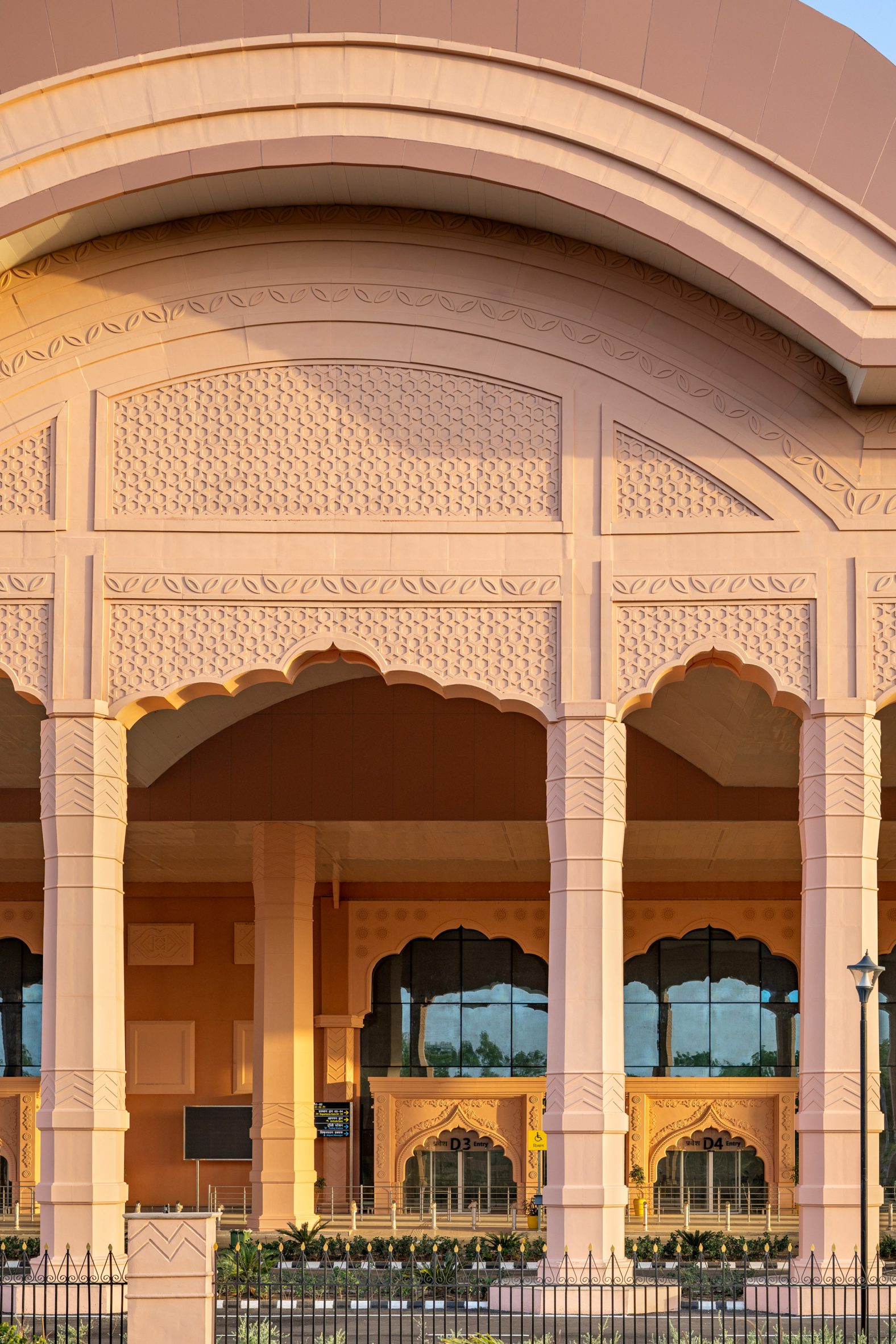
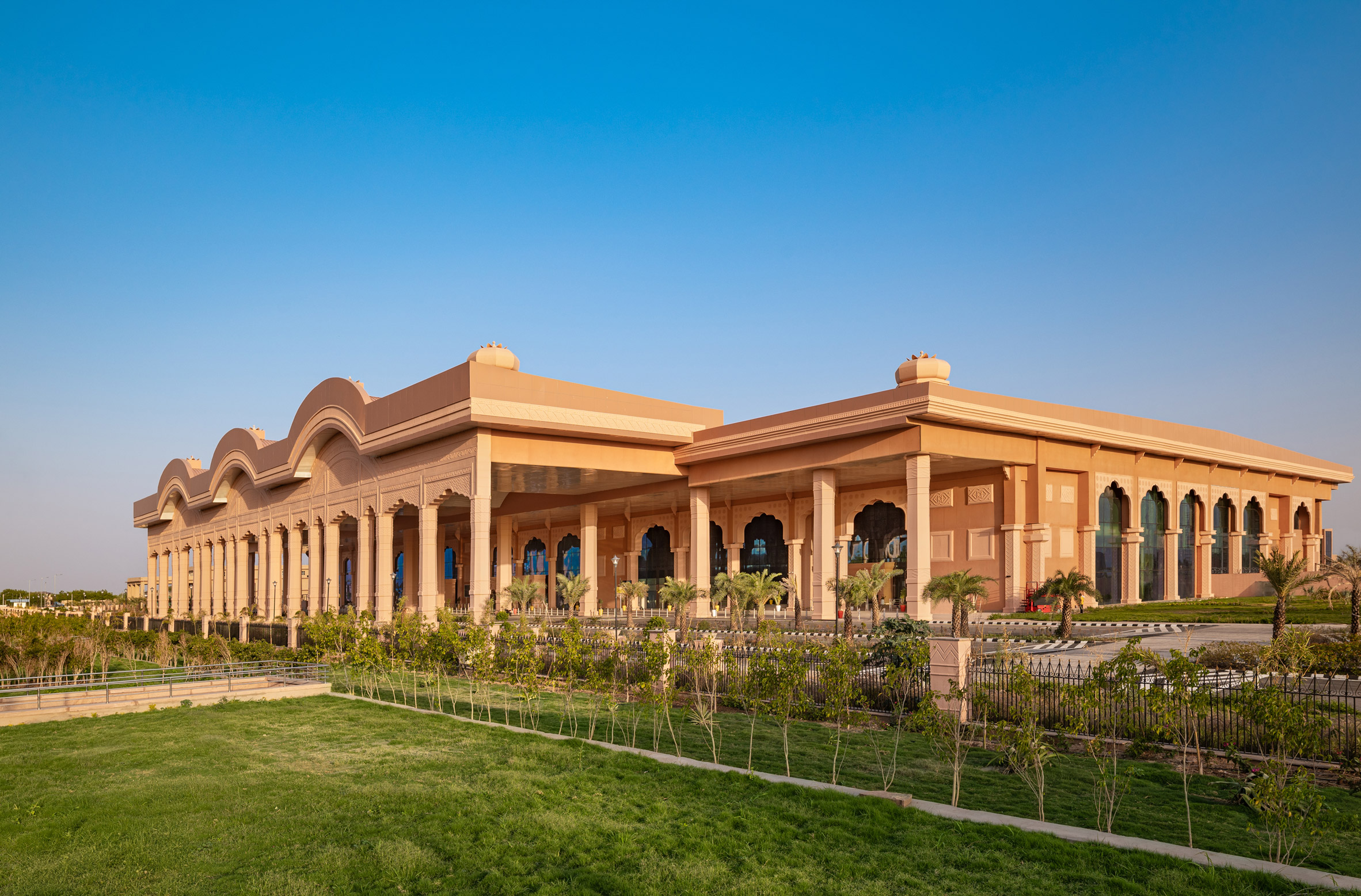
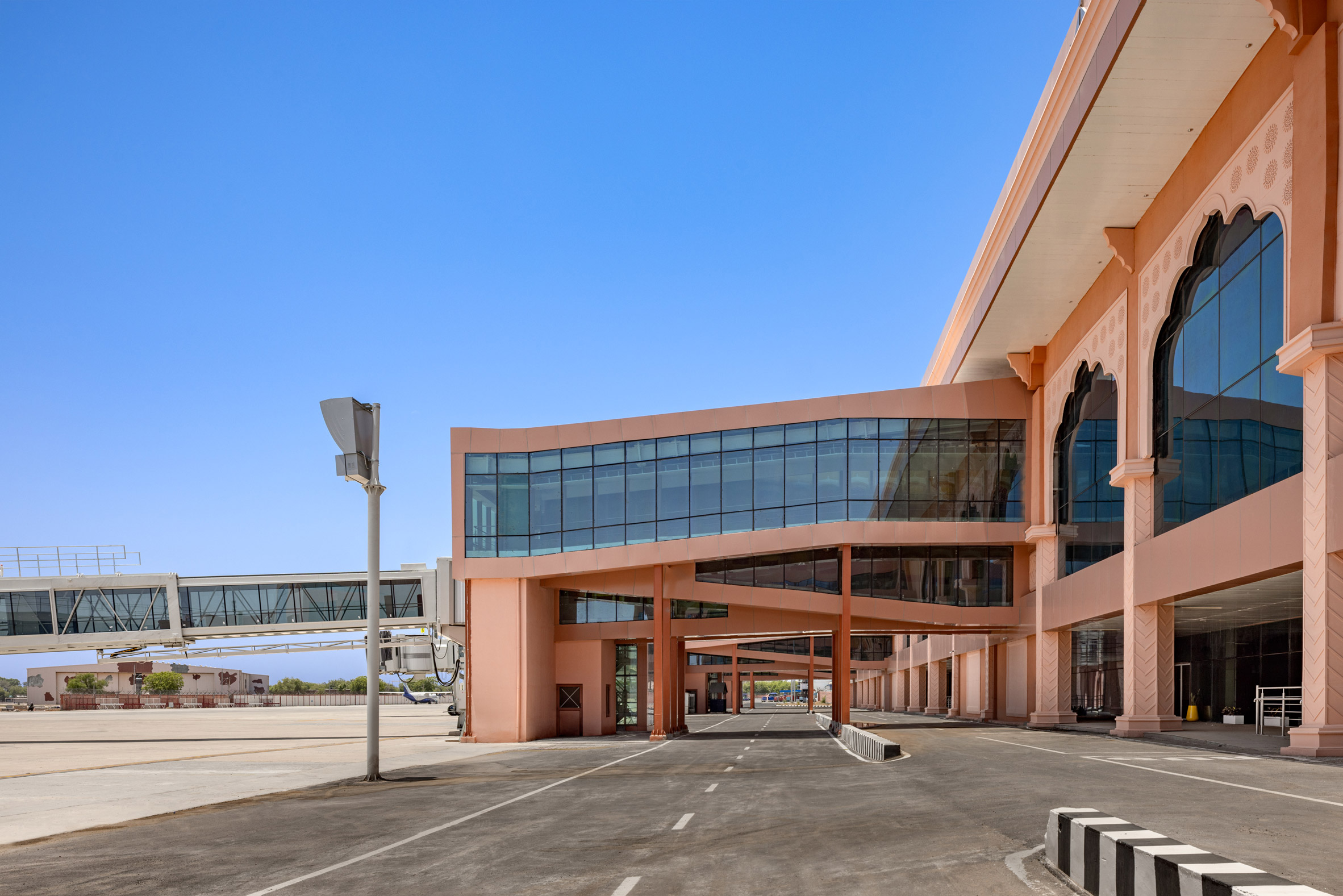
Jodhpur Airport has a steel structural frame covered in glass fibre-reinforced concrete (GRC) panels with a pinky-orange hue, nodding to the carved sandstone surfaces of the region's historic architecture.
These panels were cast with decorative geometric shapes to represent the intricate carvings found on these buildings.
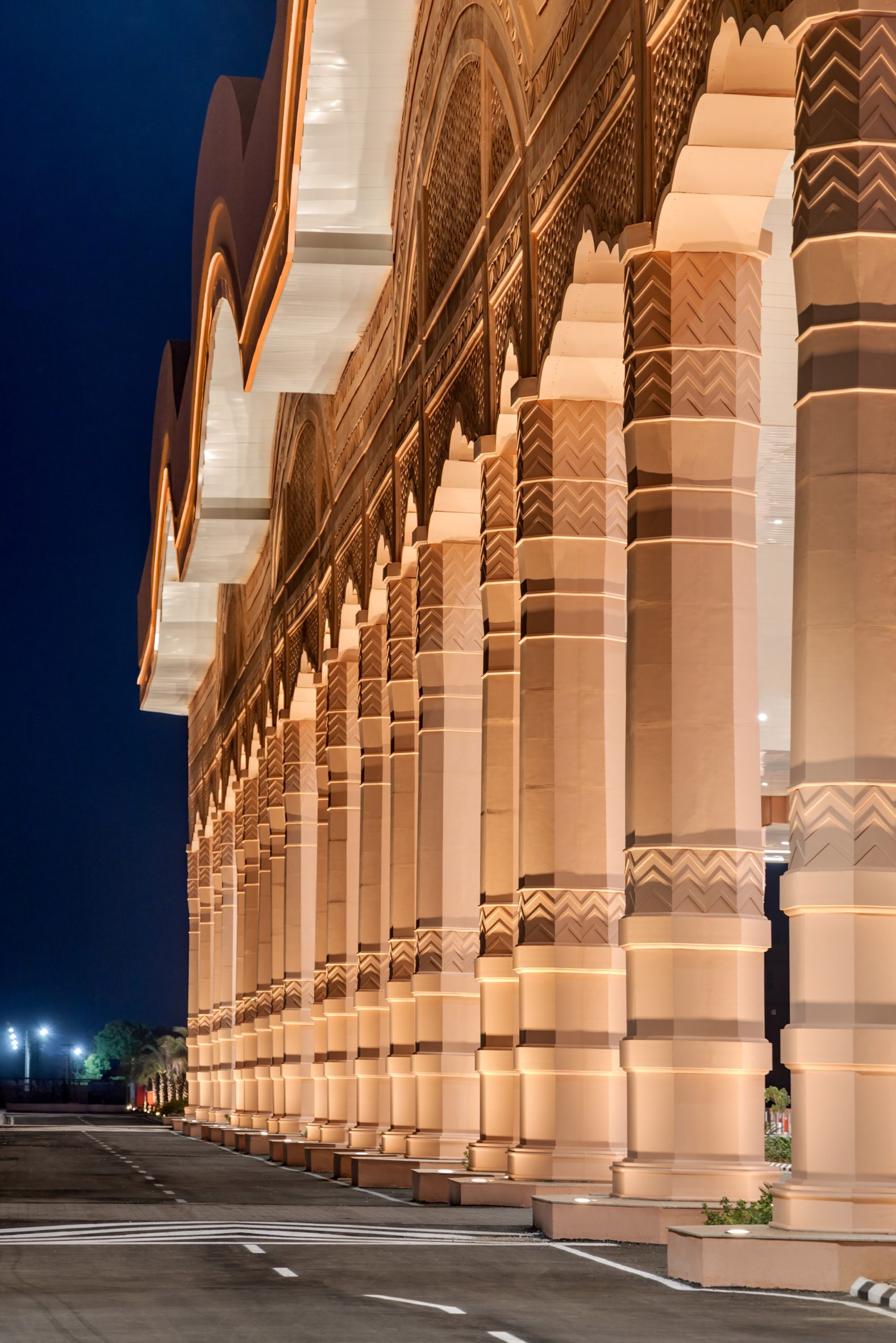
It incorporates round domes and multi-foil arches directly informed by Rajputana architecture, while a series of columns supports a large entrance canopy.
This canopy forms part of an entrance progression that was designed to recall the monumental gateways common in the region.
Along with historic regional architecture, the building aims to build on the city's aviation legacy, with Indian prince Umaid Singh establishing the pioneering Jodhpur Flying Club on the site of the airport in 1931.
"The terminal draws inspiration from Jodhpur's royal past, set in a city where Maharaja Umaid Singh established the Jodhpur Flying Club in 1931, making Jodhpur an important part of India's earliest aviation history," said Sthapati.
The expanded airport terminal was built to serve increasing numbers of tourists who visit the city, heading to the sights that informed its architecture.
It was designed to serve two million passengers annually and has six aerobridges that connect the terminal directly to the aircraft.
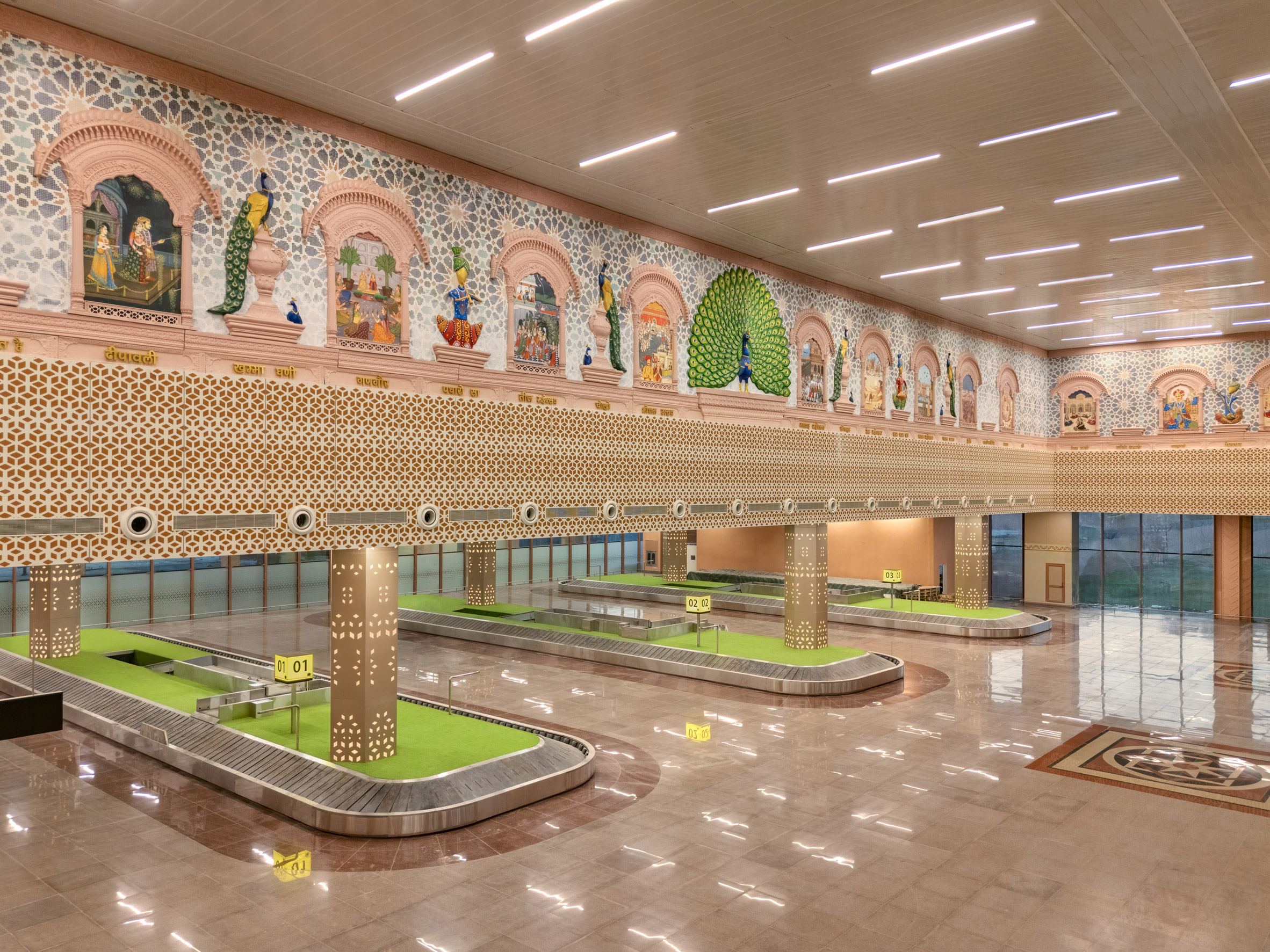
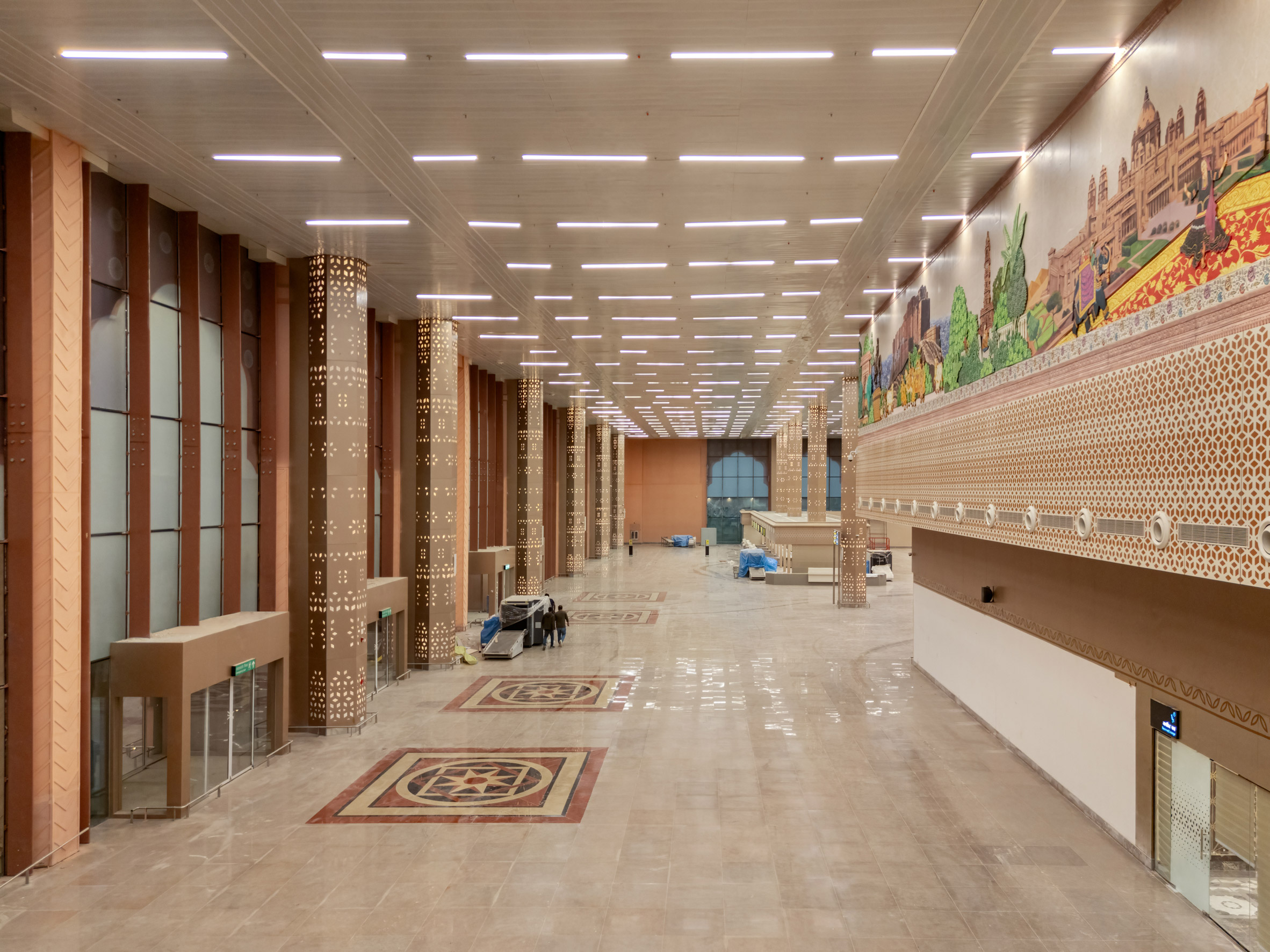
According to Sthapati, the interiors were designed to prioritise passenger flows, while incorporating clear references to the region's art.
Designed in collaboration with local artisans, the murals in the airport depict scenes from royal courts and peacocks.
Other airports recently featured on Dezeen include an airport in Seattle with a massive timber-clad "tree" and a Cambodian airport by Foster + Partners topped with a latticed canopy.
The post Sthapati "draws from Jodhpur's royal past" for pastel-coloured airport appeared first on Dezeen.