





Gaudí's "ghost of an alternative New York" visualised by AI artist Thierry Lechanteur

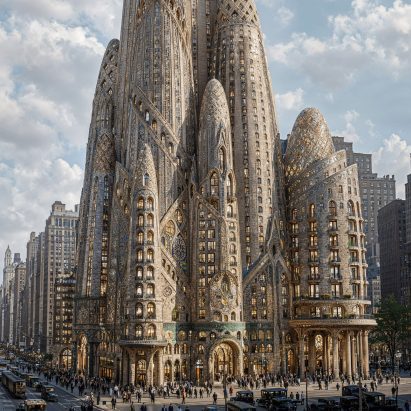
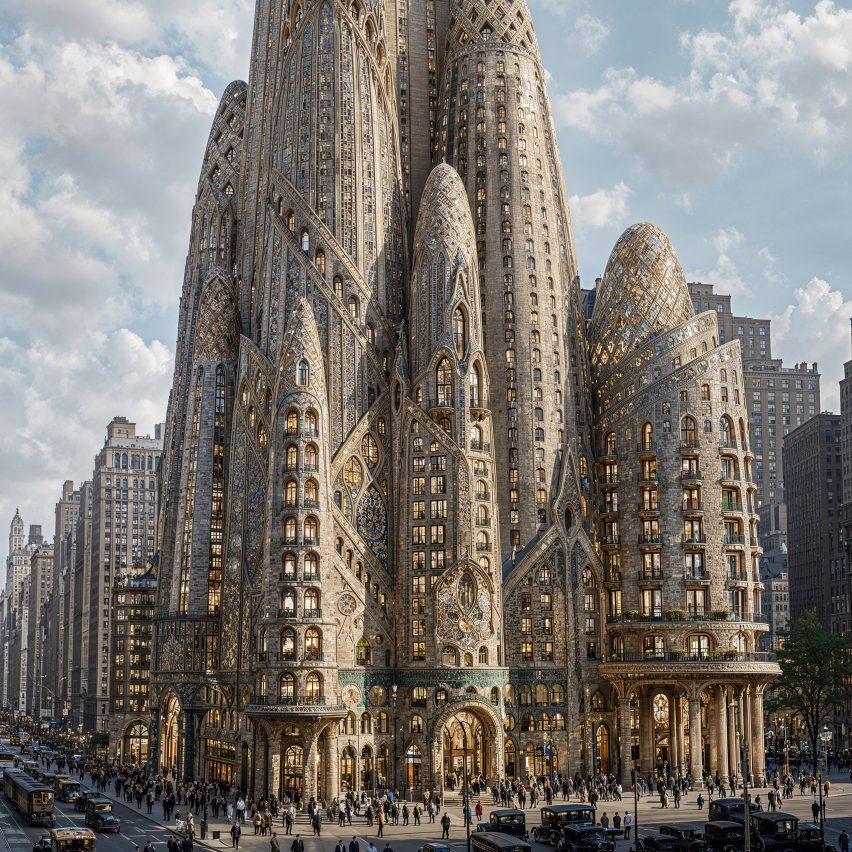
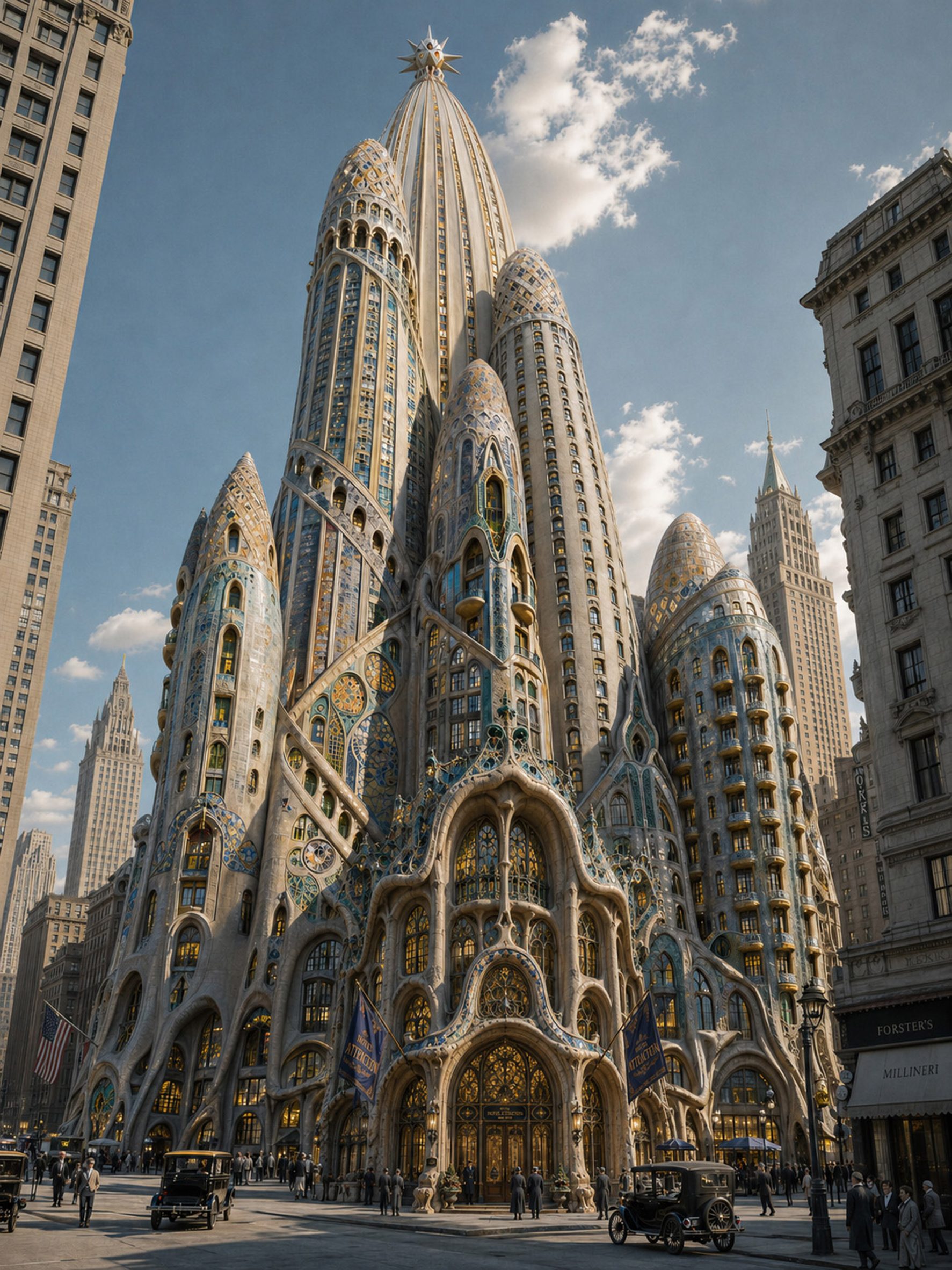
AI artist Thierry Lechanteur has transformed a speculative design by Antoni Gaudí for a supertall hotel in New York into a series of digital renders, featured as part of our Gaudí Centenary series.
Currently gaining traction online, the visuals recreate what Belgian artist Lechanteur described as "one of [Gaudí's] most fascinating projects" to mark the centenary of the architect's death.
The monumental hotel design, named Hotel Attraction, was developed in 1908 for a pair of unknown businessmen, but was never realised.
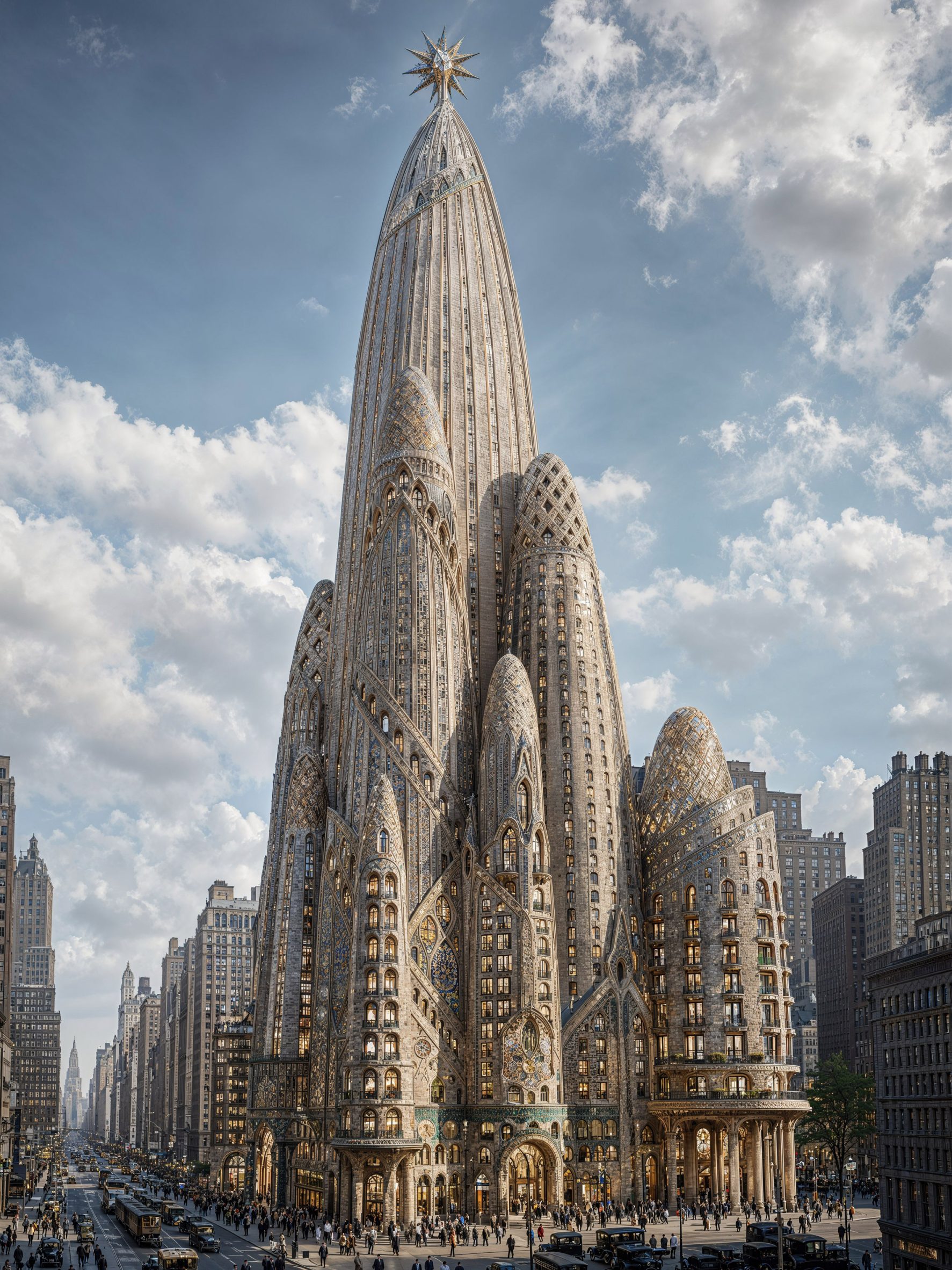
Gaudí's proposal consisted of a cluster of nine skyscrapers peaking at 360 metres on an unspecified site in Lower Manhattan. Today, the closest we will see to the real building is in models and digital visuals such as Lechanteur's.
The images have been widely shared on Instagram since Lechanteur posted them earlier this month, representing what the artist called "a nostalgia for a future that never happened".
"My work revisits architectural heritage through visual fictions," Lechanteur told Dezeen.
View this post on Instagram
A post shared by Analog Architecture Drawings (@analog_architecture_drawings)
Gaudí designed the building in 1908
"For the centenary of Gaudí's death, I wanted to extend his dream rather than reconstruct his drawings: a free interpretation of the tower he imagined for New York, grown from his architectural vocabulary rather than from any single document," Lechanteur continued.
"I think people are moved by architecture that almost existed: the Hotel Attraction is a ghost of an alternative New York, and seeing it rendered touches something like nostalgia for a future that never happened. And in a skyline of glass and steel, a 360-metre tower of colour and curves feels almost transgressive today, perhaps even more than in 1908."
Gaudí's designs for Hotel Attraction remained little known until they were published by his collaborator Joan Matamala i Flotats in 1956, in the report titled When the New World Called Gaudí.
The designs were once again publicised in 2003, when they were submitted as an entry to the international memorial competition for the redesign of the World Trade Center site by a group of art historians.
It is believed Gaudí was commissioned for the design in 1908 by two American businessmen. Alongside the hotel, it would have contained a theatre, gallery, restaurants and a viewpoint at its peak called the Space Tower.
Various accounts suggest why the skyscraper was never realised, including it being deemed too unrealistic, that Gaudí ended the project due to illness in 1909, or that he cancelled it due to his client's ambition to cater solely to the elite.
Lechanteur's visuals depict the exterior of the tower, which would have been defined by Gaudí's signature sweeping curves, giving rise to a mountain-like cluster.
It would have had a central tower with a circular plan and a star-shaped crown, surrounded by eight lower volumes. Gaudí is said to have envisaged it being built from a mix of iron, cement, stone and brick, finished with mosaics and glass domes.
Lechanteur said creating the visuals required collating extensive written records, built from scholarly accounts of the project, along with Gaudí's drawings.
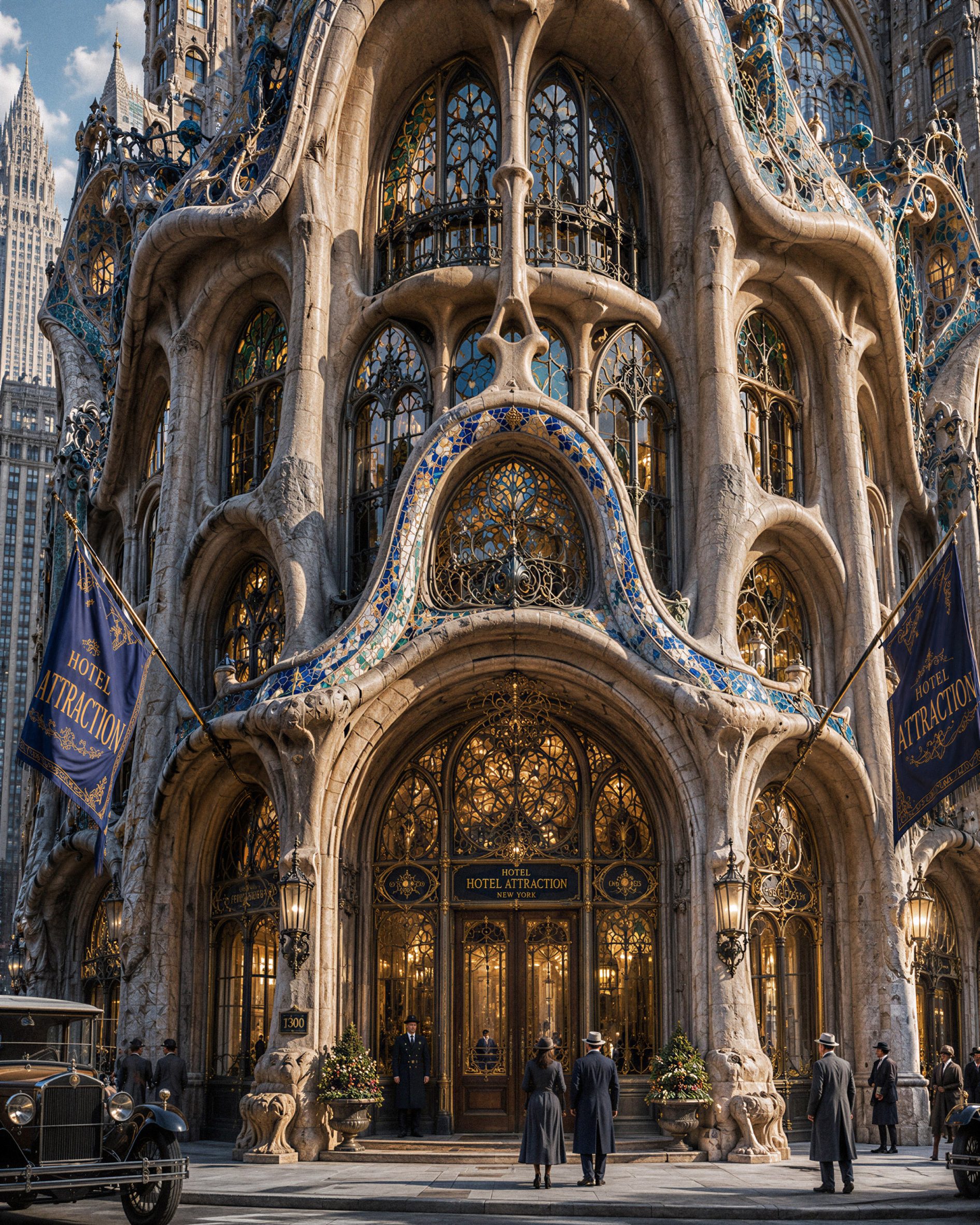
"I rewrote all of this into my own detailed brief, which generated dozens of images; I then selected the strongest ones, reworked them in Photoshop, and ran them through further AI passes to unify the final result," he told Dezeen. "It's closer to an editing room than to a single shot."
According to Lechanteur, numerous AI models were involved in the process, though he predominantly works with ImagineArt – an AI creative platform with access to numerous model generators.
The artist has been creating AI-based architectural visuals since 2022, before "the current generative AI wave", he said.
He explained his ambition as an artist is to create "visual fiction, somewhere between photography, architecture, memory and imagination".
Our Gaudí Centenary series is taking place to mark 100 years since the death of Catalonia's most famous architect. Over the last two weeks, we have taken a deep dive into some of his most famous projects, including the Sagrada Familia, the Church of Colònia Güell and Casa Batlló.
We also spoke to a lead architect on the Sagrada Familia, who told Dezeen there are "future challenges" ahead to complete the world-famous basilica.
Gaudí Centenary
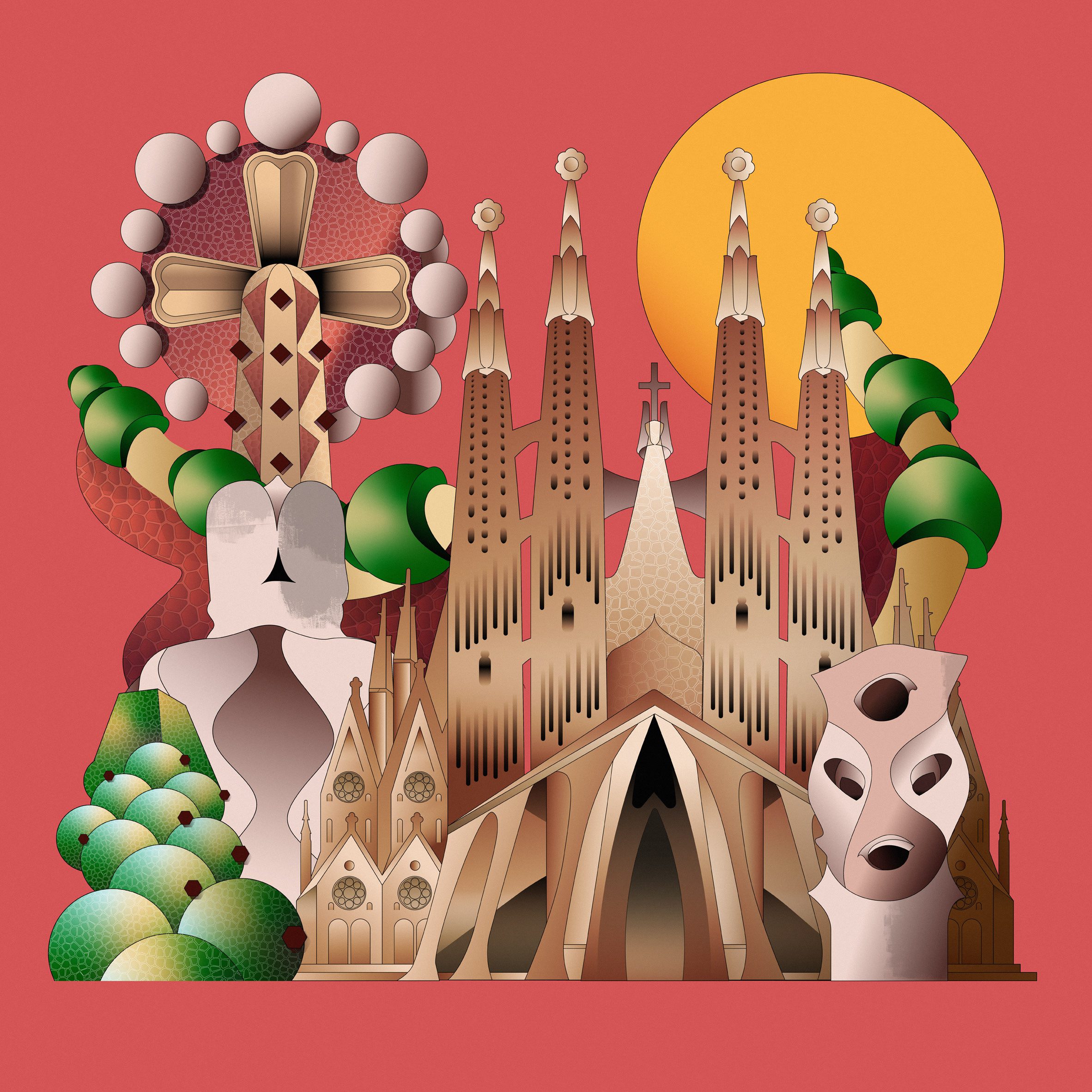
This article is part of Gaudí Centenary, our editorial series profiling the Catalan architect and designer Antoni Gaudí, marking 100 years since his death.
The post Gaudí's "ghost of an alternative New York" visualised by AI artist Thierry Lechanteur appeared first on Dezeen.