

















Harvard University transforms waste wool into cladding for retrofits

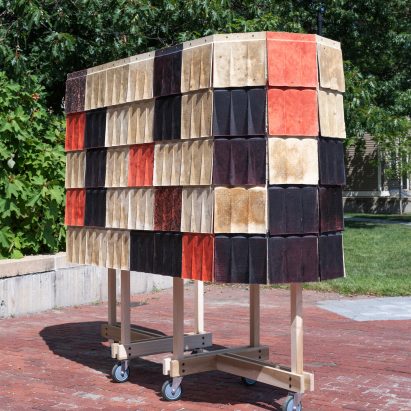
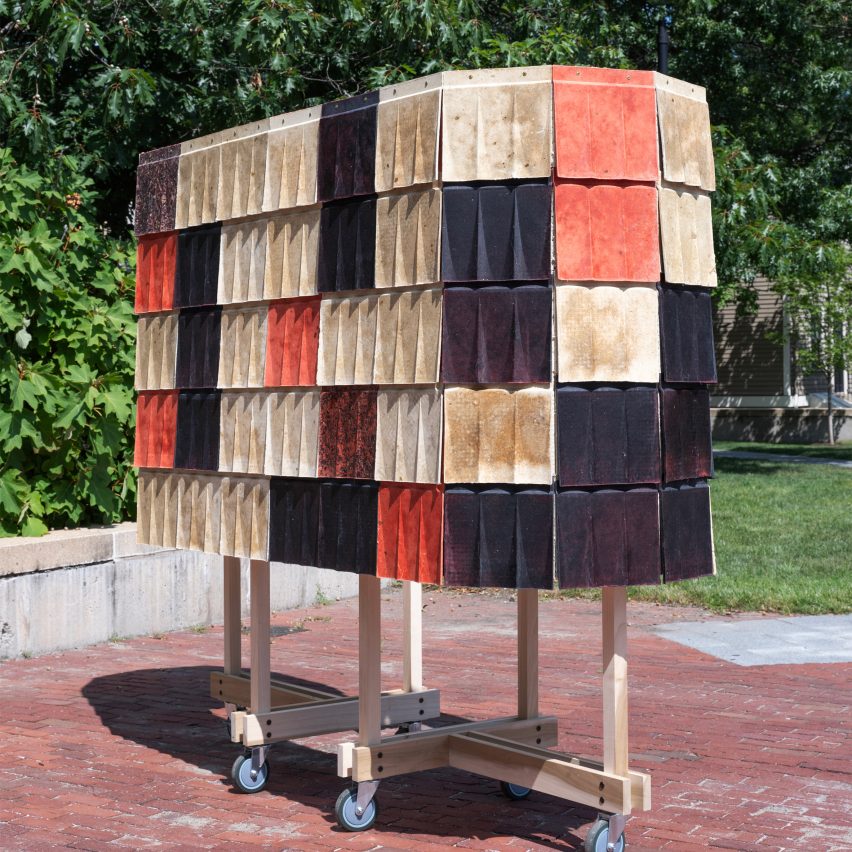
Grinham Research Group at Harvard University has developed an insulating cladding tile made from waste wool, which was presented at this year's Oslo Architecture Triennale.
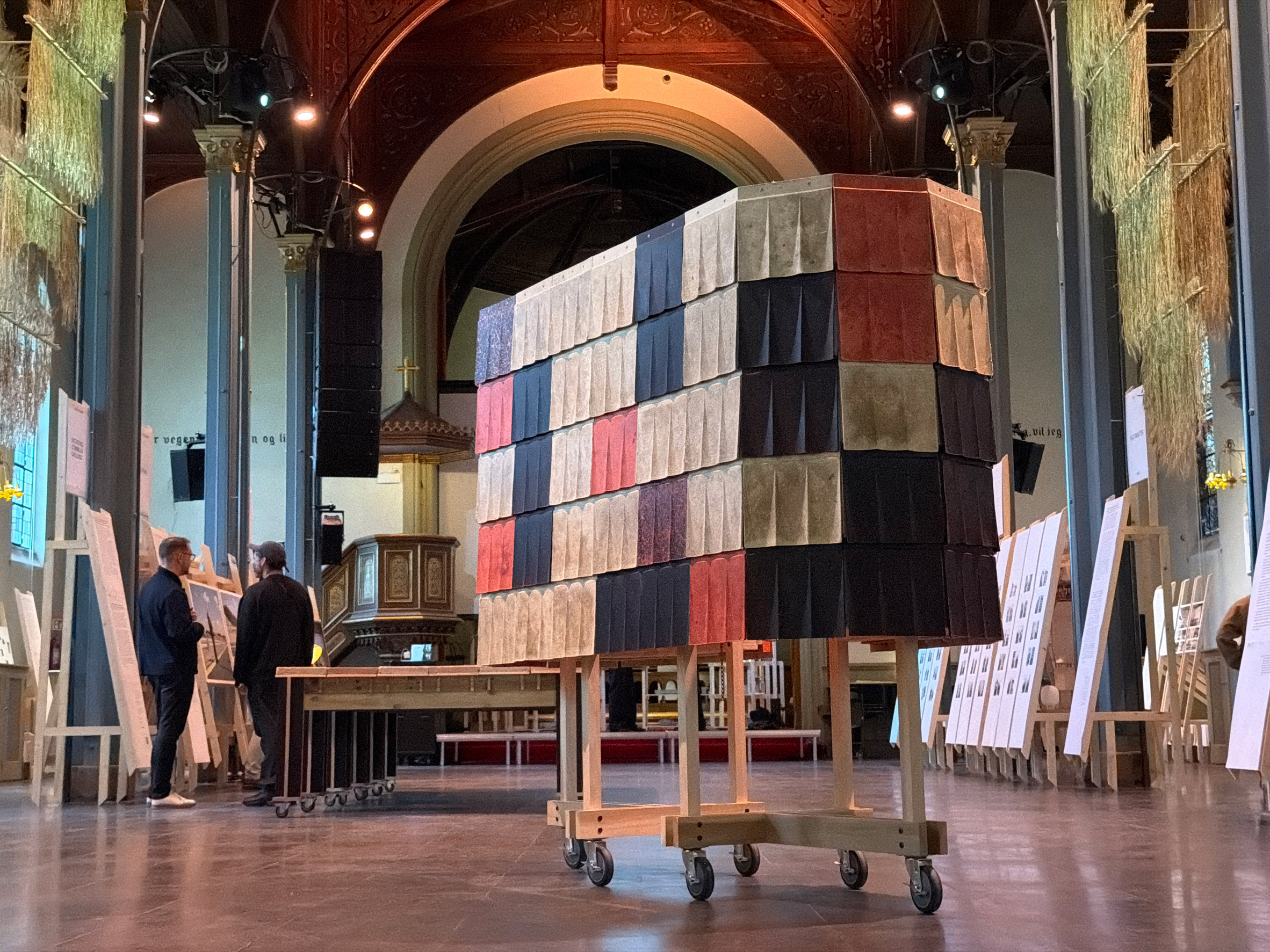
In an installation named Upcycling Wool Ecologies, Grinham Research Group showcased its tiles on a timber frame in Oslo's Sofienberg Church as part of the triennale's main exhibition, which takes place from 17 September to 1 October.
Grinham Research Group saw the potential in wool's insulative, fire-resistant and antibacterial properties, and wanted to save it from being discarded as a residual material in the agricultural and textile industries.
The group also wanted to develop a material that could help facilitate building reuse.
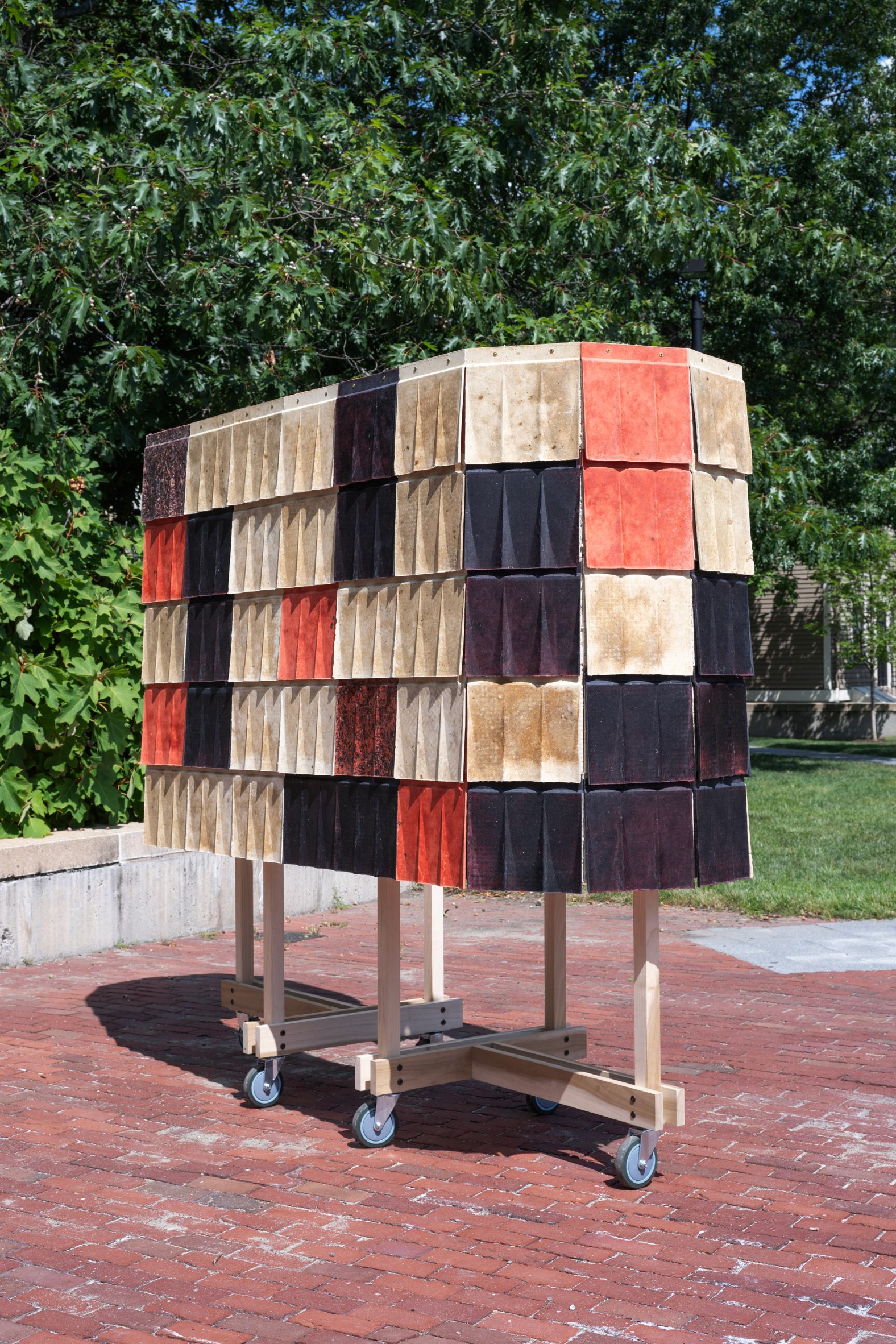
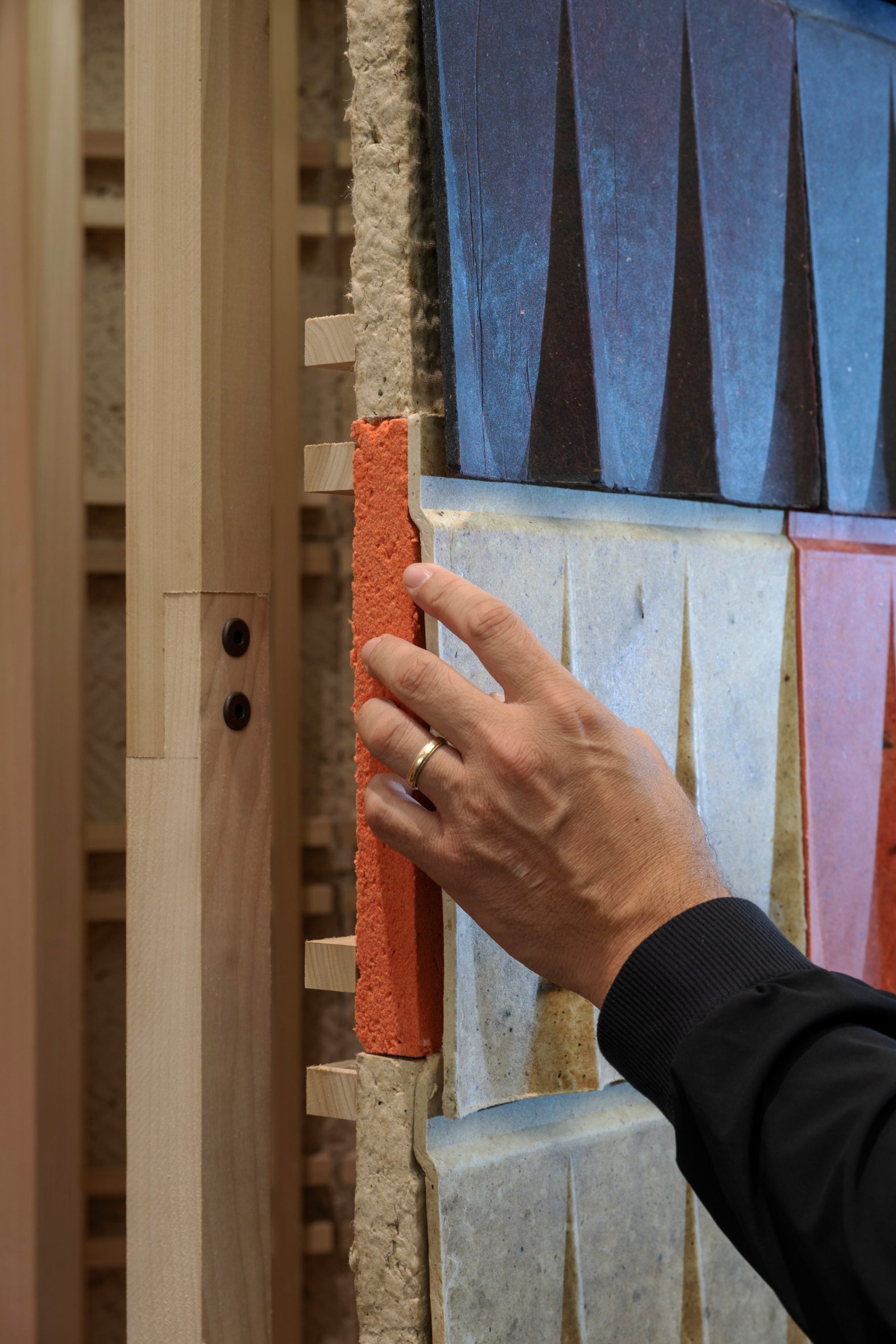
Their solution was a tile with a multi-layer design that can be applied to the exterior of buildings, avoiding the costly work of digging into a wall to upgrade its insulation.
Made from recycled wool, the tiles have a low-density back panel that acts as an insulating board and a denser outer panel with greater durability and weather resistance.
"We need pluralistic solutions that reflect the complexity of nature," Grinham Research Group founder Jonathan Grinham told Dezeen.
"Architecture can actively design these new industrial ecologies that retain the value of materials, skilled labour, and existing industries while creating scalable retrofit solutions," he continued.
"By transforming waste wool into durable exterior cladding, biogenic carbon captured through grass, sheep, and wool can be retained in the built environment, while the same material improves the performance and extends the useful life of existing buildings."
To make the tiles, wool is treated with an alkaline solution that partially breaks down its keratin proteins, before a mechanical process further separates the material into a liquid.
Citric acid is then added, which, when heated with the wool-derived keratin, binds residual and unprocessed wool fibres into a rigid composite without the need for a petrochemical resin.
According to the group, around 1.95 billion kilograms of raw wool are produced each year, with approximately 60 per cent used for wool clothing manufacturing. Unused wool is typically stockpiled, burned or buried.
"The decline of domestic textile manufacturing, competition from synthetics, and selective grading have left enormous quantities of wool without a viable market," said Grinham.
"Wool has lost its economic value, but not its material properties," he continued. "We're developing new chemistries that transform this overlooked natural polymer into a useful biocomposite for building insulation and cladding."
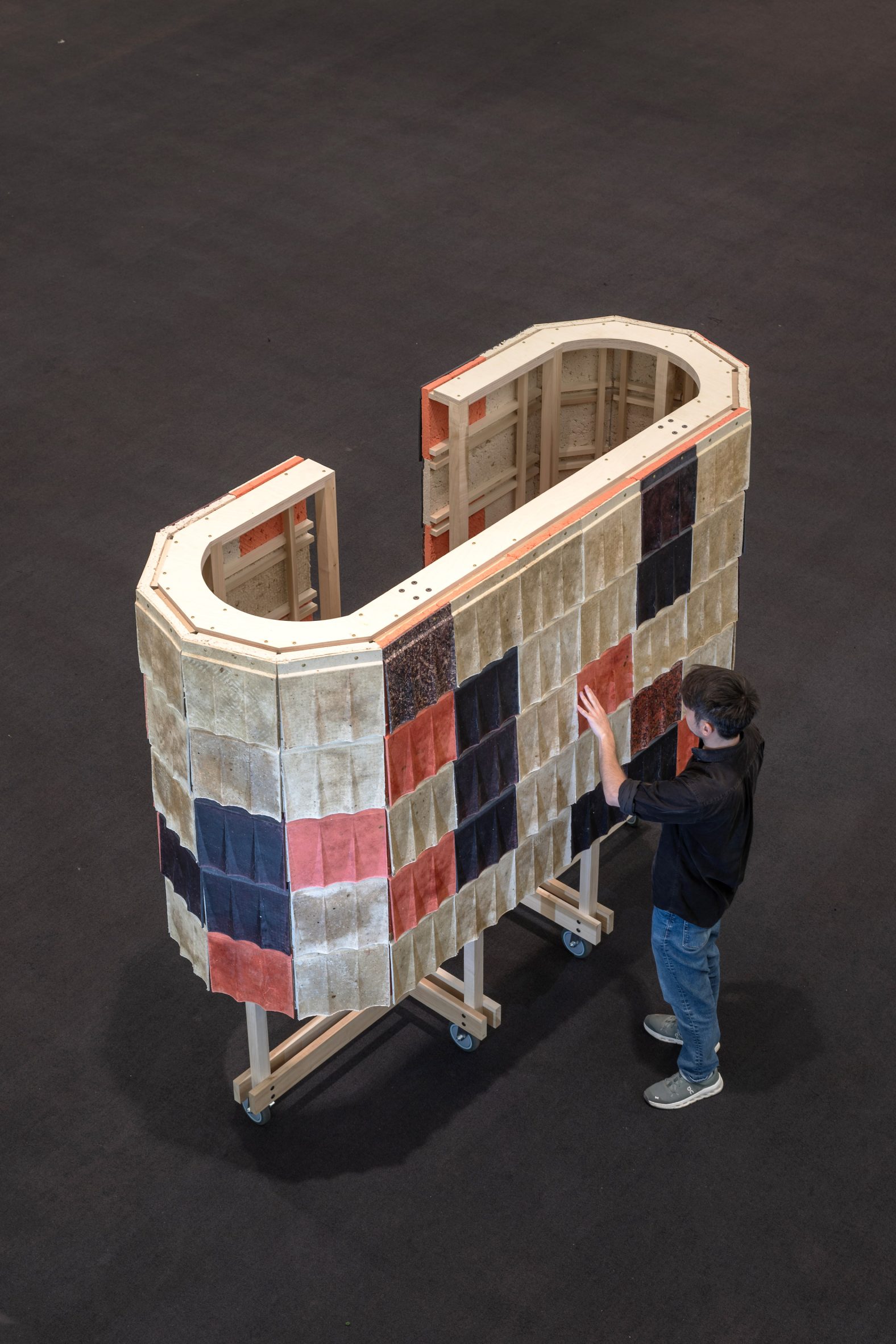
For the Oslo Architecture Triennale installation, Grinham Research Group sourced preconsumer waste wool from the American Woolen Company in Connecticut. It used a mixture of naturally coloured and dyed fibres, which resulted in the variations in tile colours.
The tiles showcased at the event featured a fluted surface design, but the material could be pressed into different shapes and designs.
Other material innovations that have recently featured on Dezeen include a wall surface made from forestry industry offcuts that is almost pure carbon, and a dress made from living mycelium that can repair itself.
The photography and video are courtesy of Grinham Research Group.
Oslo Architecture Triennale takes place from 17 September to 1 October at Sofienberg Church in Oslo, Norway. See Dezeen Events Guide for more architecture and design events around the world.
The post Harvard University transforms waste wool into cladding for retrofits appeared first on Dezeen.