






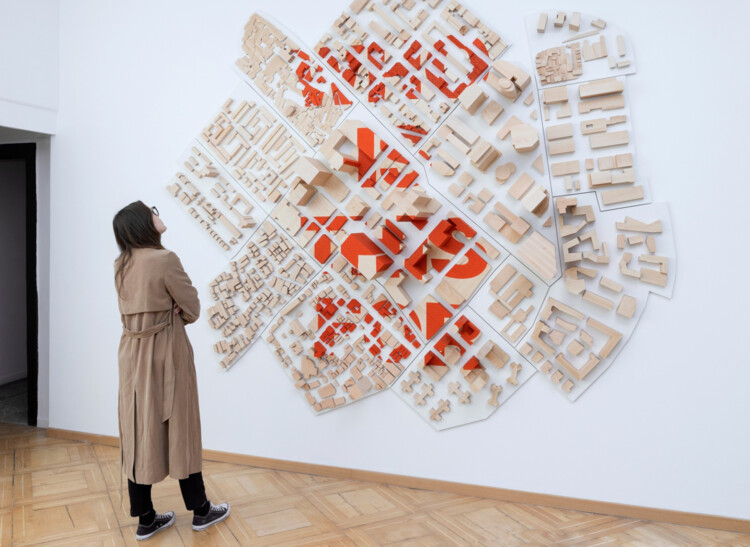


podcast: curing urban isolation through collective care and architectural intuition

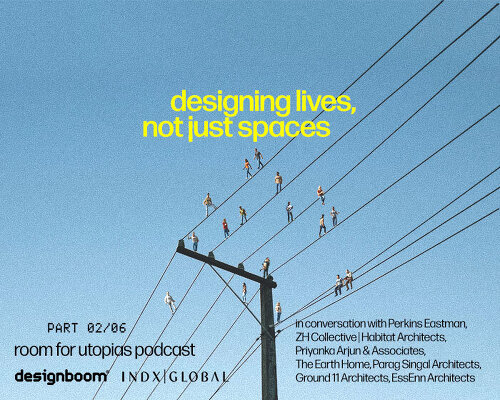
DESIGNBOOM X INDX|GLOBAL: ROOM FOR UTOPIAS
Continuing designboom and INDX|GLOBAL’s podcast series filmed during designboom.paris, the second installment of Room for Utopias spotlights contemporary Indian architects and designers rethinking community living, spatial design, and client psychology. Across in-depth panel discussions, the series shifts focus toward spatial choreography and user behavior, examining how layout decisions either isolate or bring people together, and how the architect’s hand often shapes what clients need most, but seldom know how to articulate.
Designing Lives, Not Just Spaces pairs episodes 03 and 04 to challenge the limits of conventional architectural briefs. Hosted by designboom’s Managing Editor, Iñaki Laguardia, the two conversations examine two distinct fronts: one unrolls how intentional housing layouts and shared transitional zones cultivate multigenerational care, serendipitous connection, and collective stewardship in dense urban centers; the other explores the unspoken psychology of architectural practice, demonstrating how reading hidden desires, fears, and subtle client cues elevates standard commissions into transformative spaces.
THE CURE TO URBAN ISOLATION
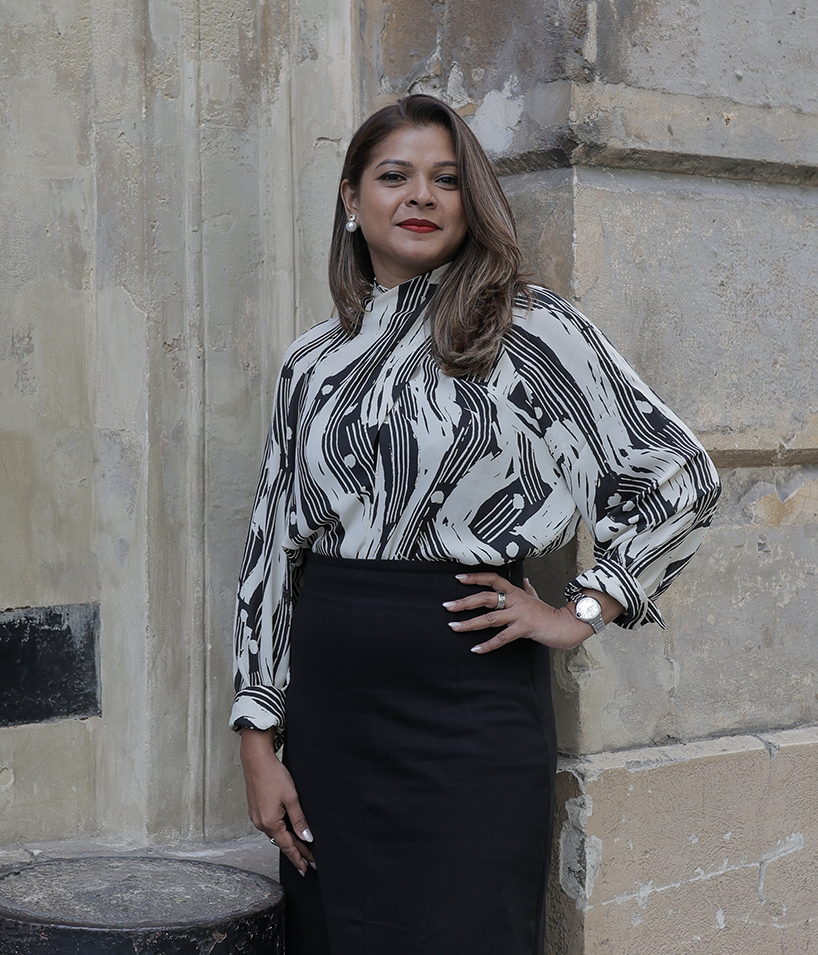
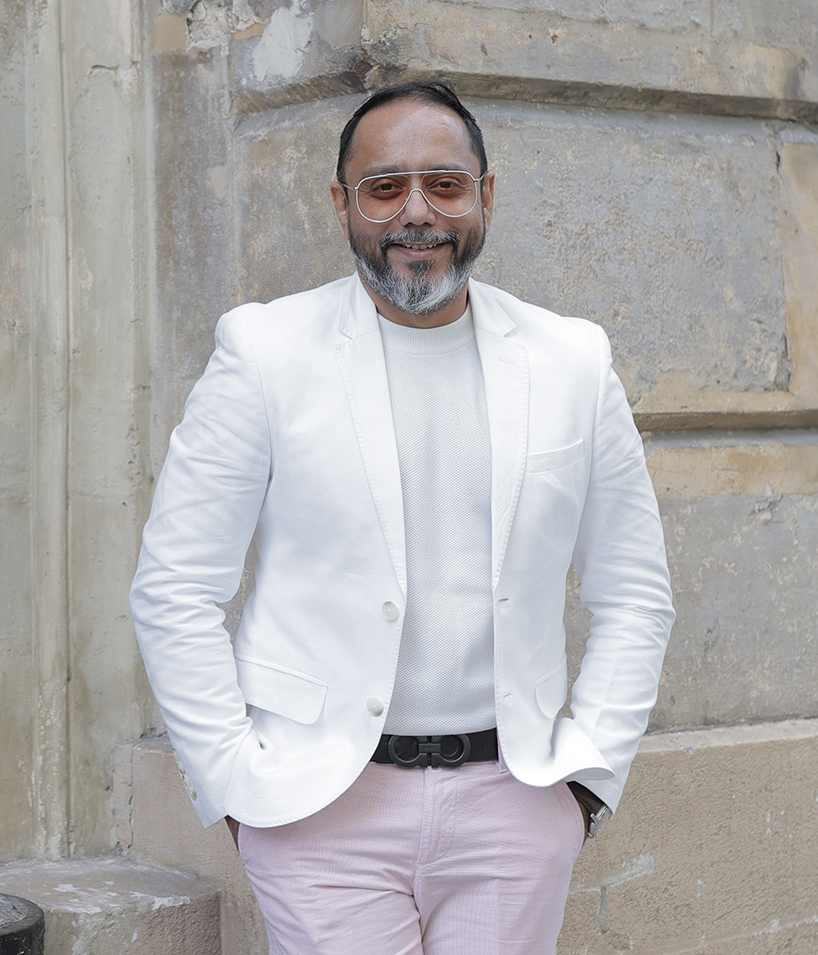
The third episode of Room for Utopias convenes four practitioners — Adreesh Chakraborty of The Earth Home, Supriya Thyagarajan of Perkins Eastman, Priyanka Arjun of Priyanka Arjun & Associates, and Sahir Choudhary of ZH Collective | Habitat Architects — to reconsider how spatial design can actively counter urban isolation. The panel explores how architecture can structure spontaneous connection, generational empathy, and shared stewardship.
Adreesh Chakraborty of The Earth Home grounds the urban crisis in evolutionary sociology, noting that human biology remains wired for social groups of roughly 150 individuals. ‘In a context where there are more than 10,000 people, it is impossible for people to actually feel connected to each other,’ Chakraborty observes, pointing out how supercities dilute fundamental empathy. To dissolve domestic barriers, the architect advocates for softening spatial boundaries by shifting social life from rigid, street-facing front doors to permeable back gardens and embedding shared ‘green fingers’ and cycle networks behind rows of homes, allowing neighbors to intersect organically without vehicular interruptions.
Supriya Thyagarajan of Perkins Eastman asserts that genuine community requires architects to foster collective stewardship rather than passive spatial consumption. ‘If they identify with their space, then they will own it… There is a sense of collective ownership on that space, and therefore then we start becoming stewards rather than consumers,’ Thyagarajan reflects. Emphasizing that generic designs fail to produce cohesion, she urges architects to break large residential towers into smaller, 30-person clusters and infuse utility spaces — such as laundromats — with warmth and light to spark chance encounters.
Priyanka Arjun of Priyanka Arjun & Associates examines modern fragmentation, contrasting historical civic anchors like temples and public squares with today’s insular city routines. Pointing out that chance friendships often hinge on unprogrammed intermediate zones, Arjun urges architects to incorporate landmark focal spaces that anchor community identity. Looking forward, Arjun insists that sustainable practice must prioritize restraint: ‘We should build for adaptability, because everything is changing so fast’.
Sahir Choudhary of ZH Collective | Habitat Architects challenges the speculative developer logic that reduces housing to repetitive, profitable stacks, observing that even the word ‘apartment’ literalizes how modern housing keeps occupants apart. Choudhary argues that fostering community requires tailoring programs to nuanced daily rituals across generations — from secure, visible play areas for young parents to slow, tea-stop walking paths for seniors. He warns against rigid, low-cost structural grids, pointing out that buildings incapable of morphing over decades inevitably face premature demolition.
THE HIDDEN PSYCHOLOGY OF ARCHITECTURE
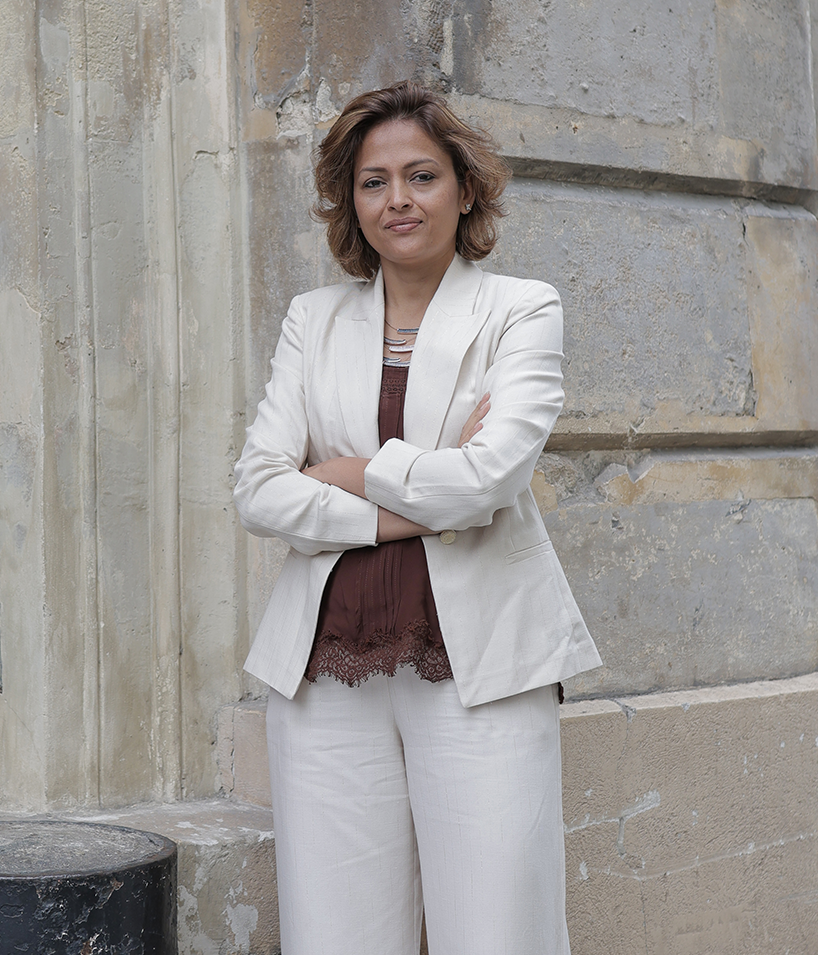
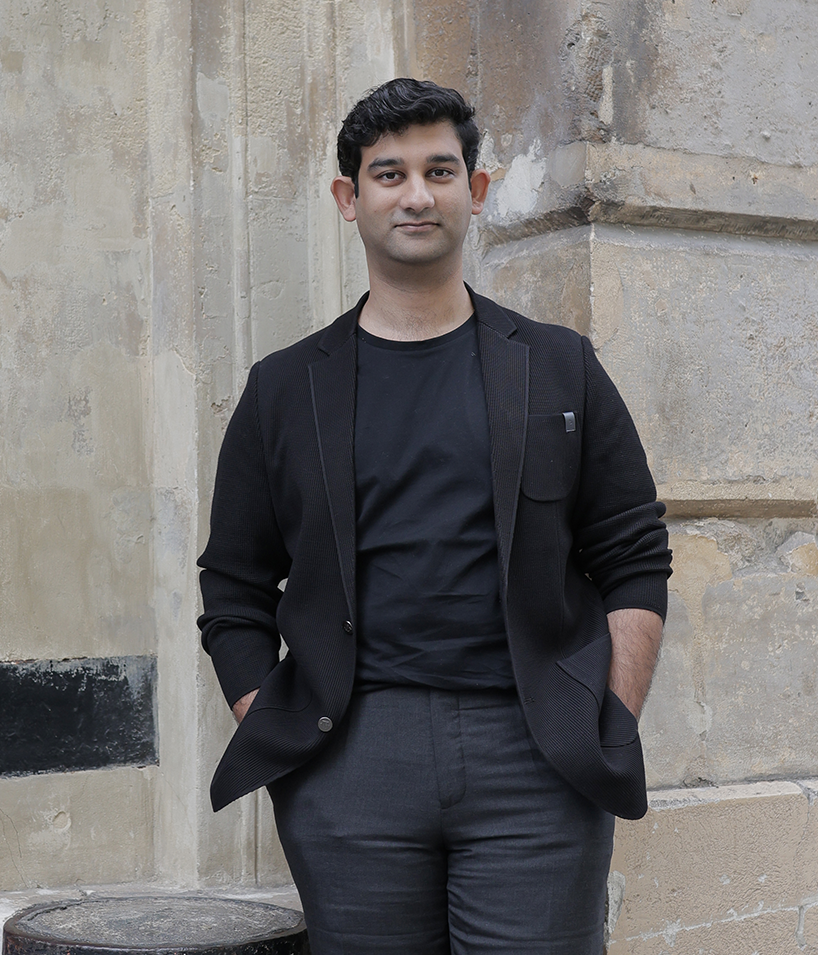
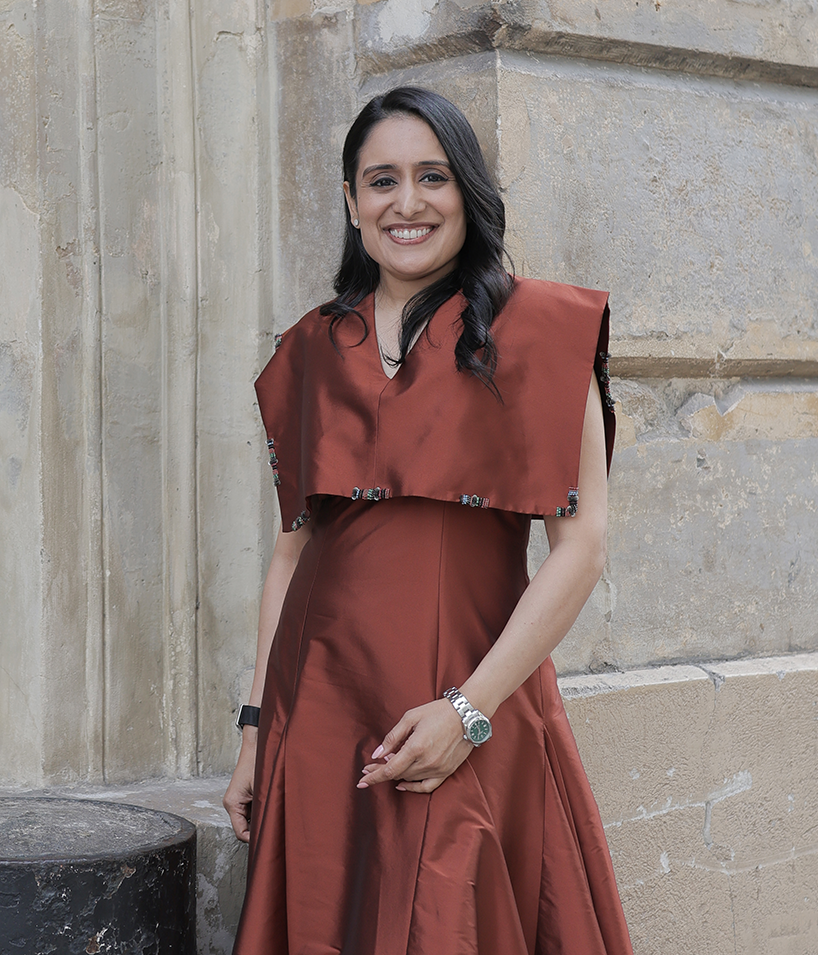
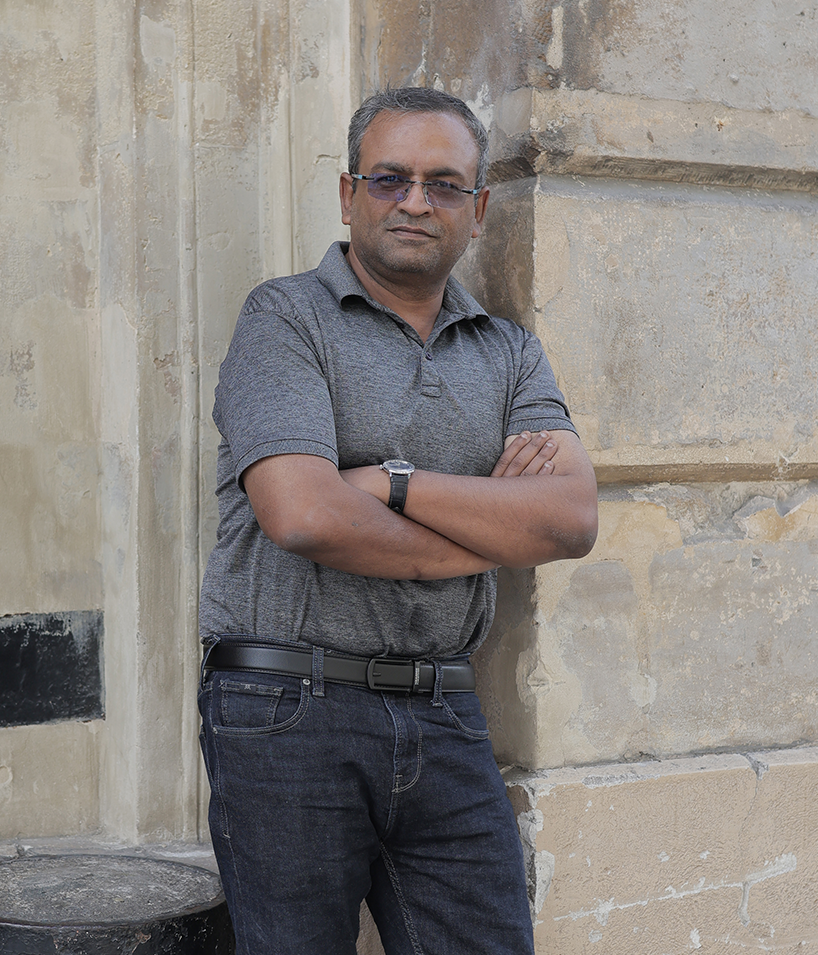
The fourth conversation turns toward the invisible dynamics between architect and client. Moderator Iñaki Laguardia sits down with Parag Singal of Parag Singal Architects, Lakshmi Sravanthi Kolluri of EssEnn Architects, and Pranav Iyer of Ground 11 Architects to discuss the soft skills, psychology, and tactical diplomacy required to reveal possibilities that lie outside standard project briefs.
Parag Singal of Parag Singal Architects describes the architect’s role as that of an empathetic listener and counselor who must decode lifestyles before laying a single foundation stone. Singal highlights his studio’s use of ‘NDFF analysis’ — a diagnostic tool that maps a client’s hidden needs, desires, fears, and frustrations through unhurried, agenda-free conversations over coffee. ‘Architects are implementers of people’s dreams… what’s important is to understand how they live, how they behave, how they want to evolve in the long run in that particular space,’ Singal notes, stressing that lasting trust cannot be rushed by quick turnarounds.
Lakshmi Sravanthi Kolluri of EssEnn Architects positions the designer as an objective third eye guiding clients past initial image references. While they often arrive with fixed, trend-driven demands, Kolluri argues an architect’s true value lies in anticipating how a structure will perform over decades. ‘Exceptional would be where we start looking at it with a very futuristic perspective… it’s got to be for a decade… we wait for the project to age with time,’ Kolluri explains.
Pointing out that successful collaborations require establishing clear alignment within the first five minutes of conversation, Pranav Iyer of Ground 11 Architects highlights the necessity of knowing how to decline mismatched projects gracefully. Moving beyond software-dominated, hyper-regulated workflows, Iyer advocates for the creative necessity of spontaneity: ‘I think architecture in general needs a lot more chaos. There’s too much order… spontaneity comes out of chaos.’
RETHINKING COLLECTIVE LIVES AND UNINTENDED SPACES
Whether scaling multi-family developments down to humane neighborhood increments or uncovering a client’s unspoken fears across an informal table, both conversations demonstrate that meaningful architecture resides in the unquantifiable. By replacing rigid formulas with social empathy, evolutionary insight, and generous timelines, these practices suggest that the future of built environments depends less on executing surface checklists, and far more on having the patience to design for lives as they actually unfold.
project info:
podcast: Room For Utopias
episodes: 03 and 04
theme: Designing Lives, Not Just Spaces
host: Iñaki Laguardia
guests: Adreesh Chakraborty (The Earth Home | @theearthhome), Supriya Thyagarajan (Perkins Eastman | @perkinseastman.mumbai), Priyanka Arjun (Priyanka Arjun & Associates | @priyankaarjun), Sahir Choudhary (ZH Collective | Habitat Architects | @zafar.habitat_zhcollective), Parag Singal (Parag Singal Architects | @paragsingalarchitects), Lakshmi Sravanthi Kolluri (EssEnn Architects | @essenn__architects), and Pranav Iyer (Ground 11 Architects | @studiog11)
in partnership with: AMICI | @amici_india; MARMO SOLUTIONS | @marmosolutionsindia; AGGLOTECH | @agglotech
The post podcast: curing urban isolation through collective care and architectural intuition appeared first on designboom | architecture & design magazine.