






this installation by jakob kudsk steensen considers the origins and agency of life

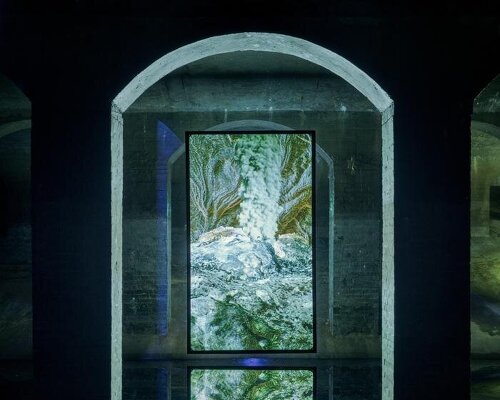
Jakob Kudsk Steensen in the Cisternerne
Artist Jakob Kudsk Steensen worked on the installation Psychosphere for five years. Exhibited at Cisternerne, The Frederiksberg Museums, Denmark, in 2025, the installation is an amalgamation of deep-sea footage shot both by Steensen himself and the research groups involved in the project. In the work, a collaborative effort between sculptors, scientific researchers, and composers brings to life near-mystical footage of a world bubbling beneath the surface of the vast oceans. In this visual, quasi-speculative recreation of some of the most mysterious parts of planet earth, Steensen explores what it means to be a living being, starting at the volcanic sites of where it all began. By looking at the evolution of life through this lens, the artist puts into question who, or what, has agency and how we as a collective of species on this Earth should go about protecting it.
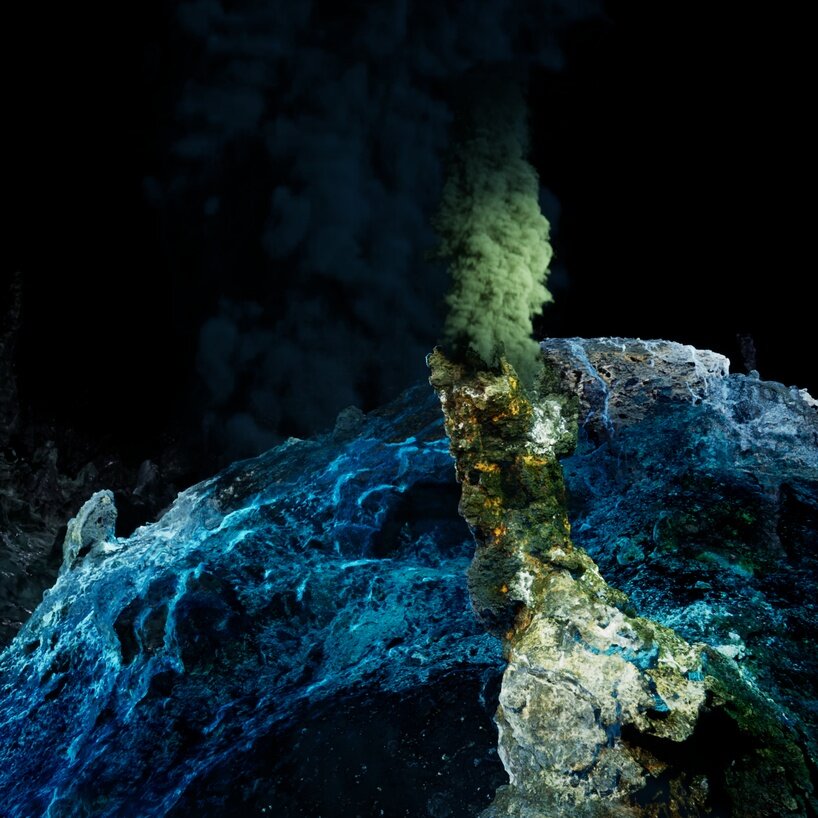
Melanie Challenger’s concept of the psychosphere
The elements of Steensen’s exhibition come together to create an image of the earliest forms of life, when gases spewed from ocean rocks and, under intense heat and compression, formed the initial material of DNA, the genetic material that is the backbone of life. In collaboration with writer and theorist Melanie Challenger, they worked within her original concept of ‘psychospheres,’ or the idea that the psyche is what separates living beings from matter. In a text for the exhibition, she writes, ‘So, what makes life unique? The most obvious answer is that living beings do things for reasons.’ She gives examples of how animals have different mechanisms for survival, unlike matter such as rock or water, which reacts, degrades, and grows passively in response to other forces.
Moving from the theory of how DNA was created to the personal agency of organisms, she comes to the conclusion that perhaps we should see ‘the world not as a biosphere of genetic resources but as a psychosphere (my word) of diverse agents alters our perspective and thereby our values and priorities.’ With this sentiment, Challenger offers a model for viewing interspecies interactions that doesn’t prioritize humans—which she acknowledges have been the source of terrible environmental destruction—but one in which ‘every living being becomes a self – a locus of meaning.’ It is from this idea that Steensen starts to build his world in the dark, dank depths of the Cisternerne, materializing the ideas within Challenger’s psychosphere through both his captured images and his sculptural imaginings of the worlds that exist deep beneath the ocean’s surface.
Glowing sculptures, reflective waters
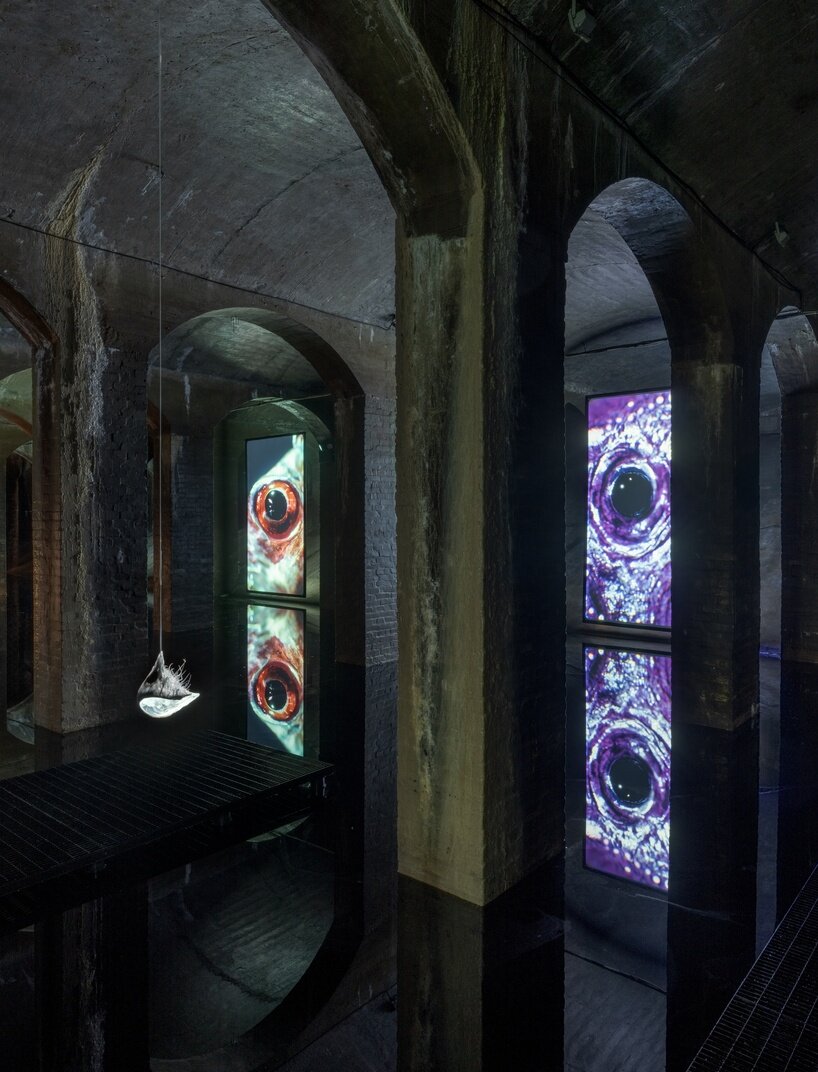
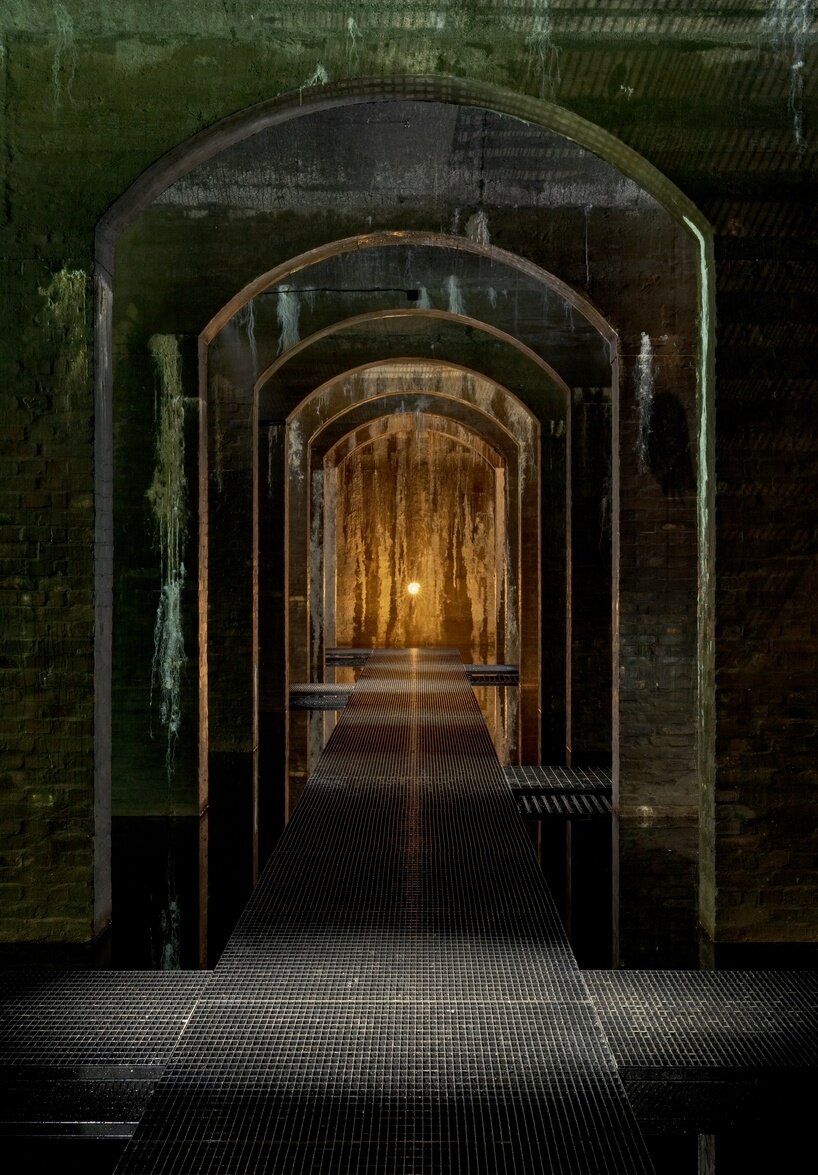
The Cisternerne, part of The Frederiksberg Museums, is an old water reservoir located beneath the Copenhagen’s surface. The space is cold and humid, creating puddles of water that have condensed on the ground. Traversing the pockets and archways of the space puts the viewer in another wet world, not too dissimilar from the ones that glow on the screens in Steensen’s installation. The videos that play are reflected in the water that sits still on the floor. In an interview with the museum, Steensen remarks on how this mirroring creates ‘a parallel world beneath.’ He remembers his own experience diving, where the bubbles released from his breath would float above him and create a mirror that reflected the world he was diving in.
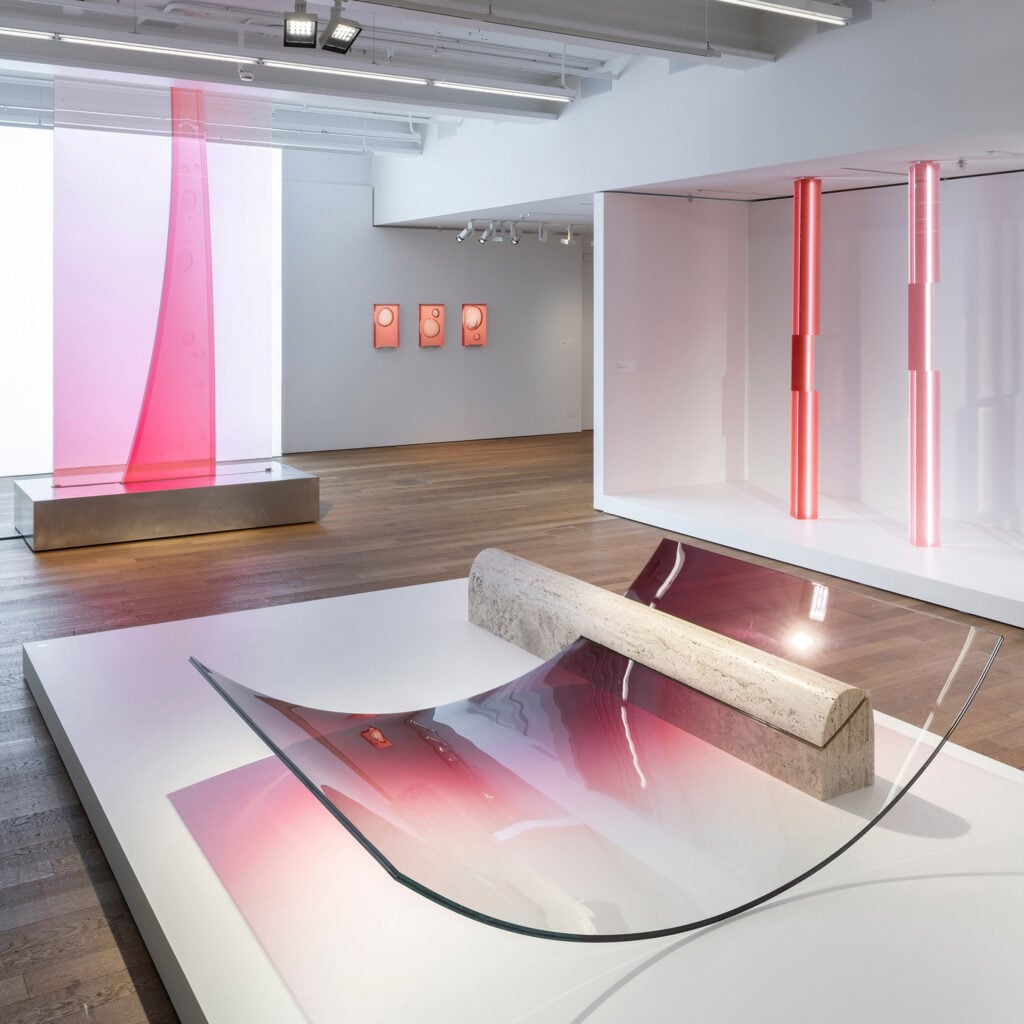
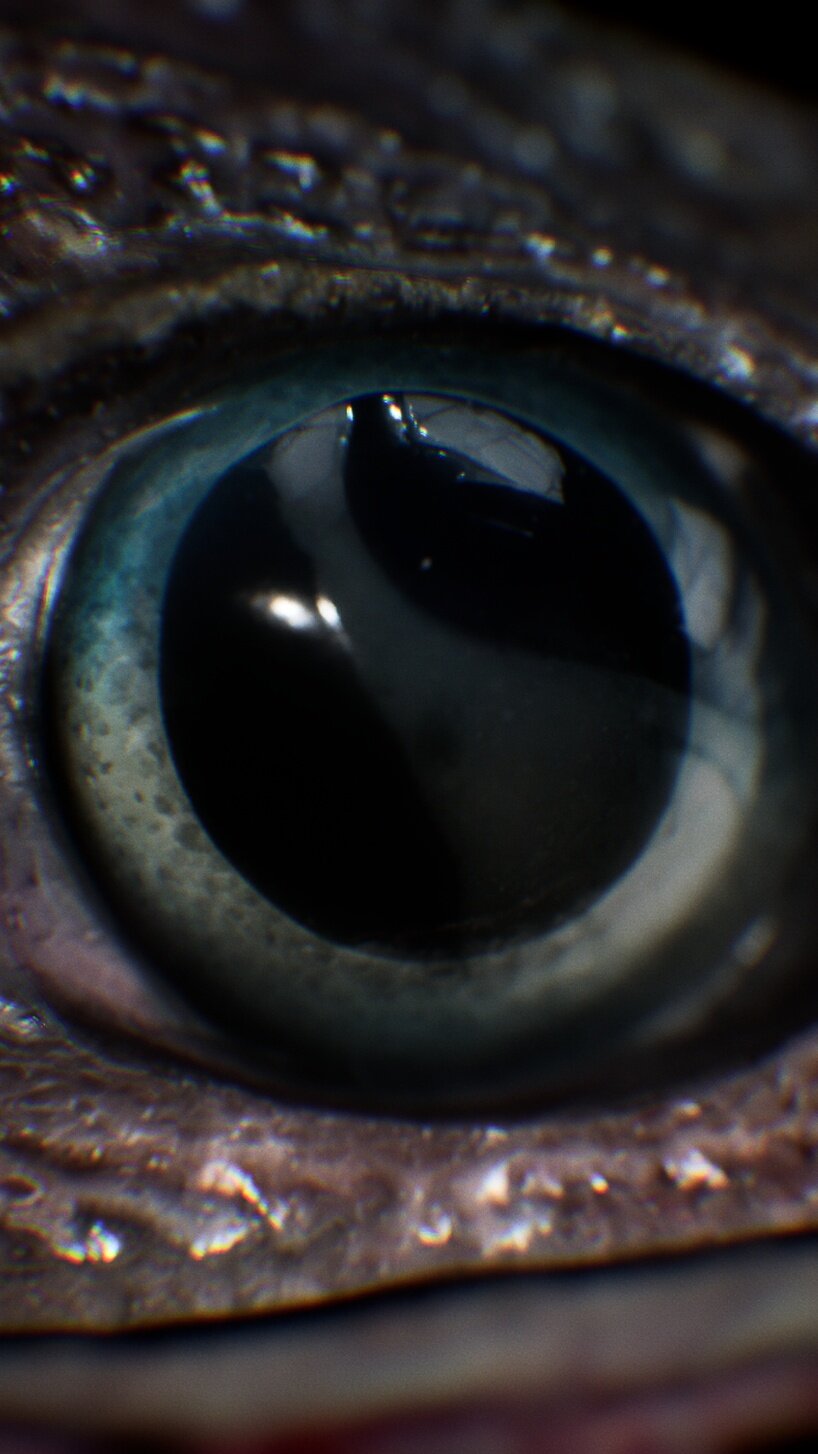
Steensen captured some of these videos himself while diving from the Azores to the Aeolian Islands. Additionally, through a collaboration with the research vessel REV Ocean/REV Aurora, he was able to create a view of underwater volcanic landforms and marine fossils. Dotting the Cisternerne space were three forms of sculptural work. Abiogenesis is the central, freestanding piece near the center of the exhibition. Orogeny, a series of interactive glass sculptures, draws inspiration from the artist’s expeditions to deserts that were once sites of massive bodies of water. The Amorphous series is made of resin and fiberglass and takes its form from the artist’s sketches and the shapes of extinct sea lily specimens.
interview with Jakob Kudsk Steensen for the exhibition ‘Psychosphere’ | video by Frederiksbergmuseerne
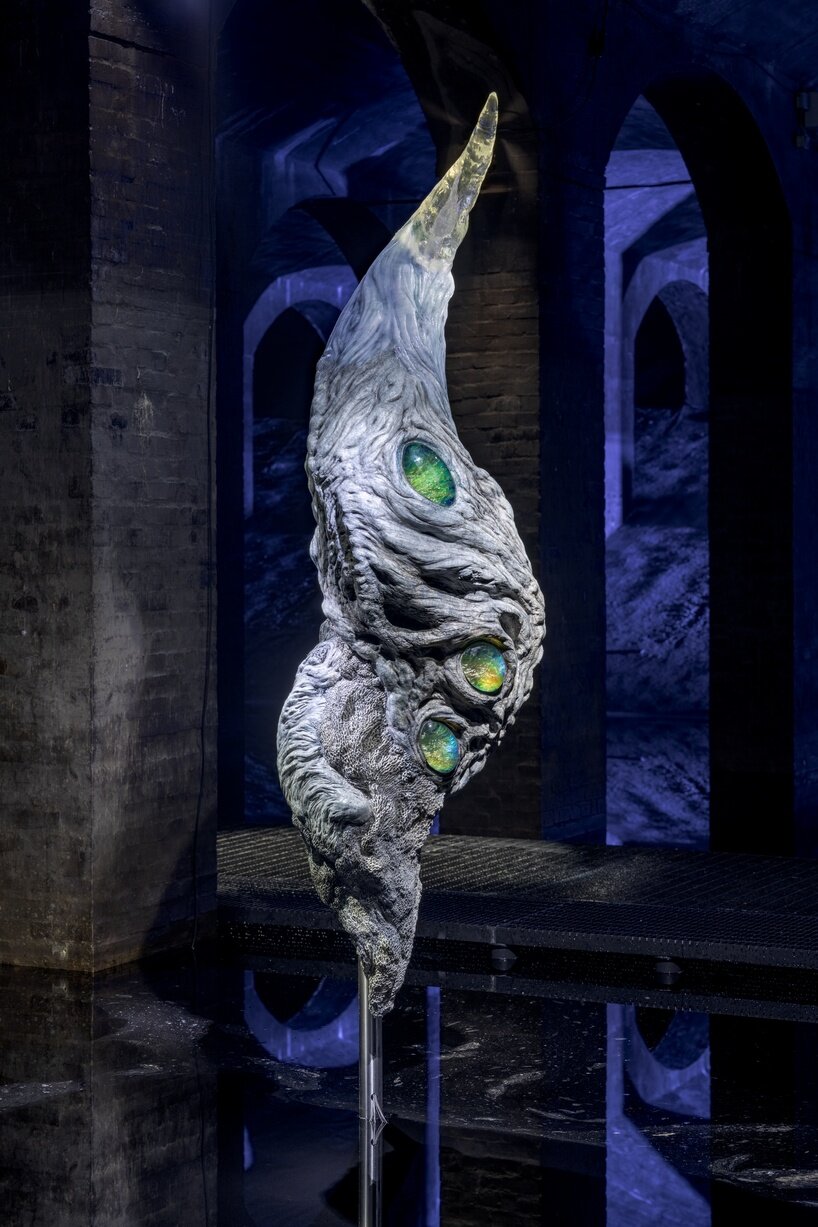
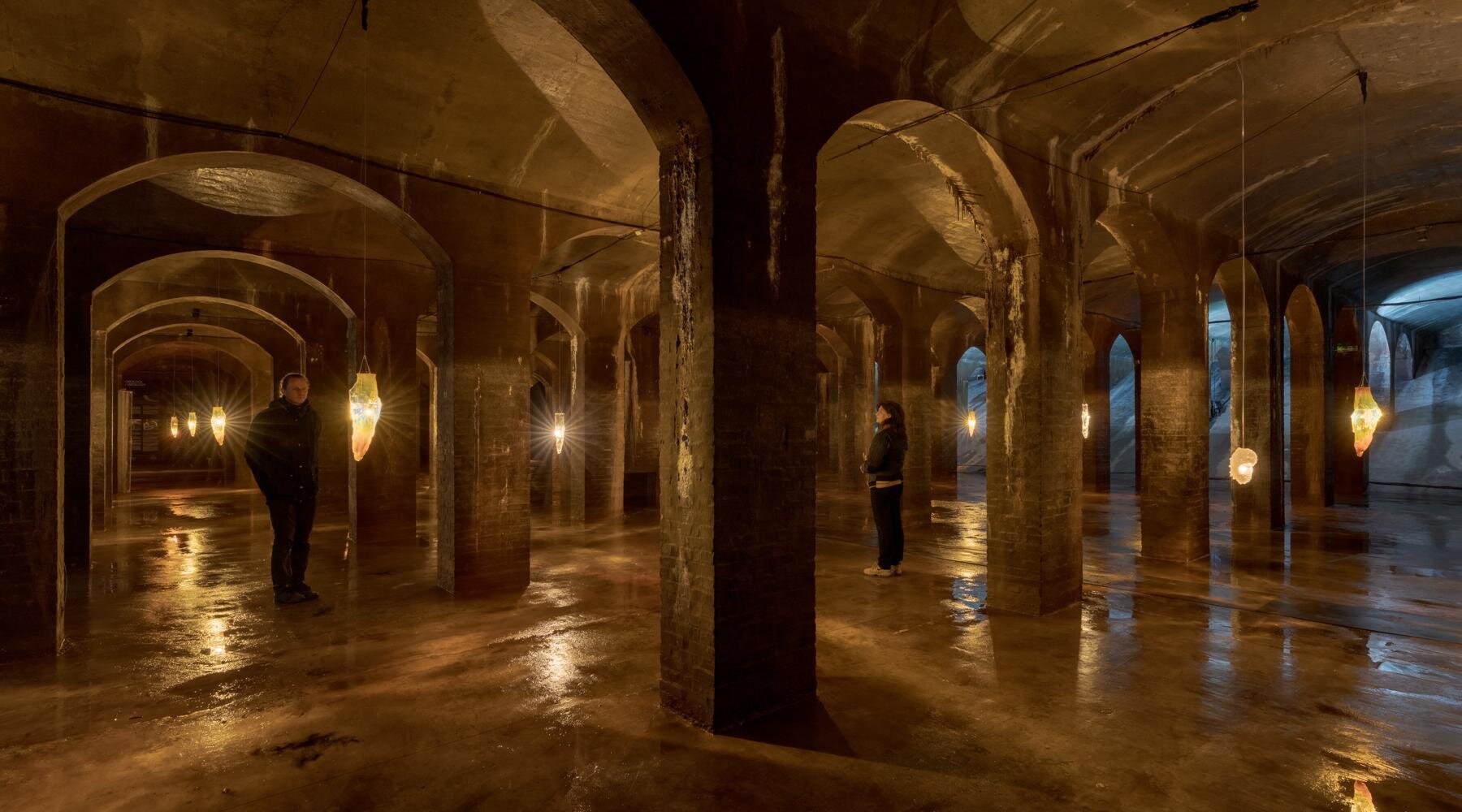
installation view of Jakob Kudsk Steensen’s Psychosphere at Cisternerne in Copenhagen, 2025 | image by David Stjernholm
The life of Steensen’s Psychosphere
Following the Copenhagen show, Psychosphere was brought to the 2025 United Nations Ocean Conference with ArtExplora. Adapted into an immersive LED tunnel, this iteration of the exhibition was presented to expand the ongoing dialogue about how to protect the deep sea. With renewed interest in deep-sea mining, there has been a movement to expand the rights of the organisms that live in this environment, moving toward an understanding that there is a duty to protect all species and not to prioritize resource extraction over environmental protection.
Ultimately, Psychosphere is a project about abiogenesis, or, as Steensen puts it, ‘the belief in the origin of life as something that evolved from non-organic matter billions of years ago, under the high pressures and gases of deep-sea volcanoes.’ Ultimately, Psychosphere invites us to reconsider our understanding of life and our place within it with Steensen asking us to recognize the agency and significance of organisms beyond the human. Here, the installation offers a vision of the ocean as a world of interconnected beings, each with its own form of existence and meaning.
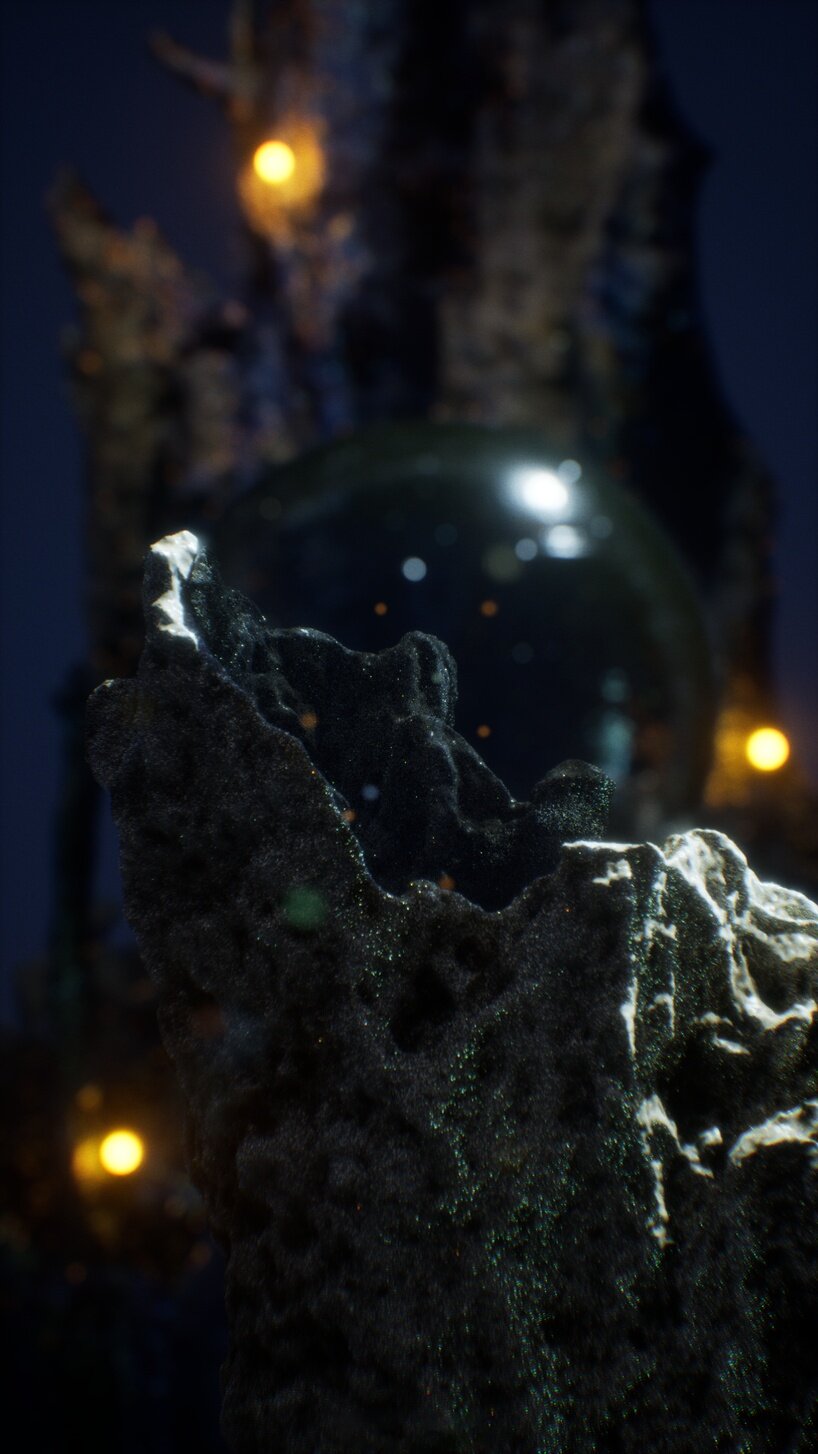
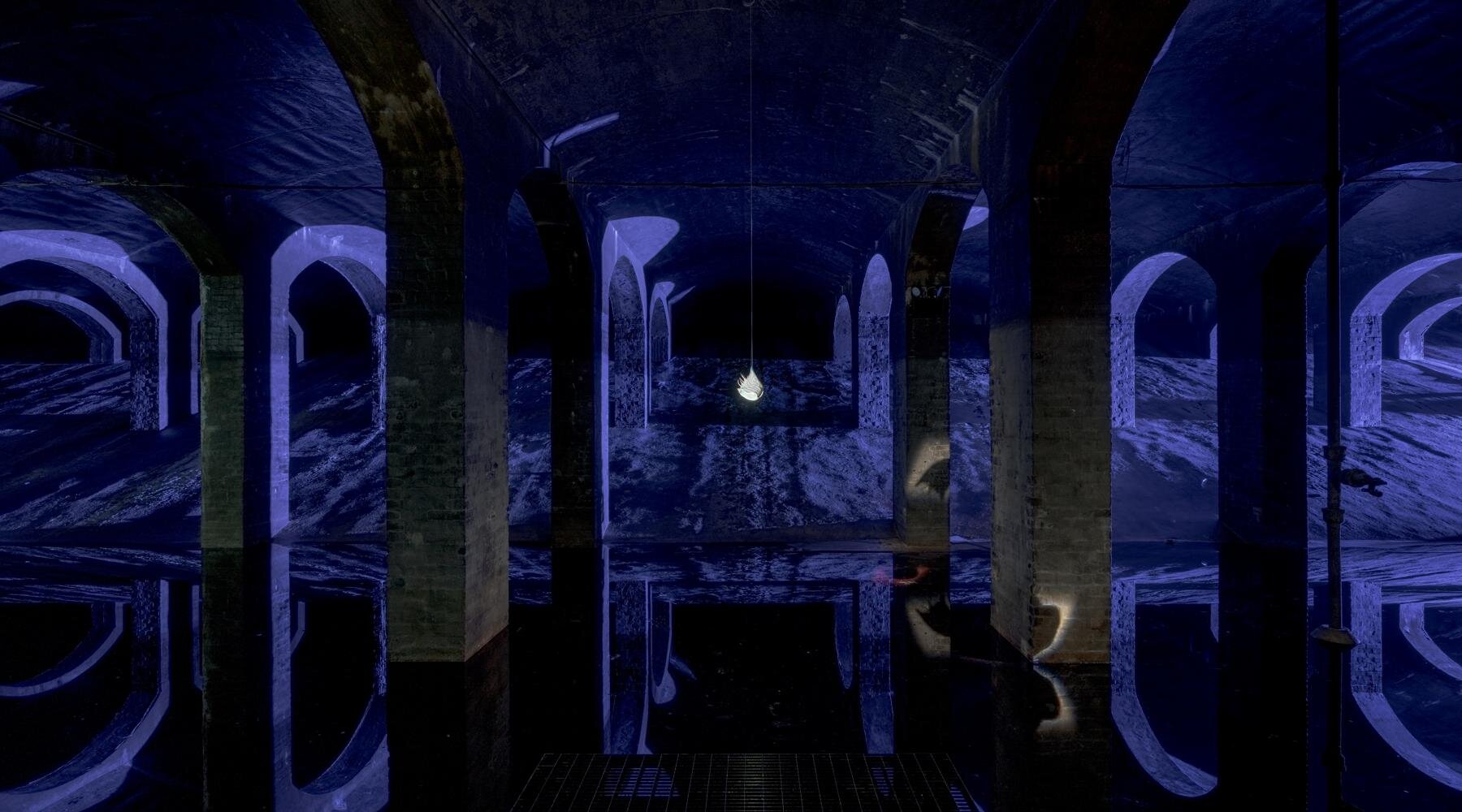
installation view of Jakob Kudsk Steensen’s Psychosphere at Cisternerne in Copenhagen, 2025 | image by David Stjernholm
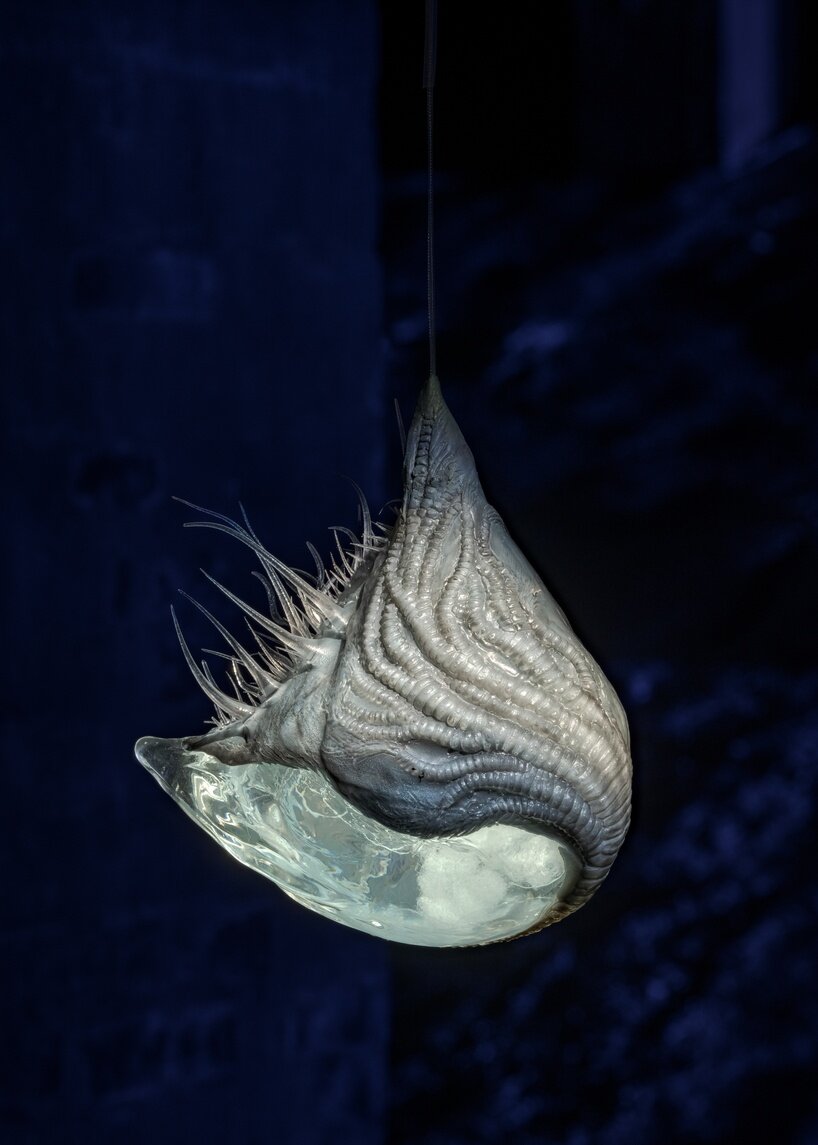
project info:
name: Psychosphere
date: 2025
artist: Jakob Kudsk Steensen
commissioned by: Cisternerne, The Frederiksberg Museums, Denmark | @frederiksbergmuseerne
foundational research: Supported by Gaia Art Foundation
The post this installation by jakob kudsk steensen considers the origins and agency of life appeared first on designboom | architecture & design magazine.