





Parametricism "changed how we think" as architects says Melike Altınışık



The theories of parametricism have positively influenced the direction of architecture, but the ambition to make it the universal style is misguided, says Turkish architect Melike Altınışık in this interview.
"I believe computational tools may become universal, but architecture should not," Altınışık told Dezeen.
"In an increasingly globalised world, architecture risks becoming visually homogenised."
Parametricism is a style of architecture that results from the use of parametric design tools, formalised in 2008 in a manifesto by Zaha Hadid Architects principal Patrik Schumacher.
In his manifesto, Schumacher proclaimed the movement should be international, becoming "the great new style after modernism".

However, Altınışık believes this ambition is unwise. For her, parametric design tools should be used to create contextually intelligent architecture rather than to achieve a particular aesthetic.
"Architecture must remain culturally and geographically specific," she said. "Climate, material traditions, social patterns and urban histories vary enormously. If computational methods are applied intelligently, they should produce greater diversity, not uniformity."
"The strength of algorithmic thinking lies in its capacity to respond to context. If it were to generate a single global visual language, that would represent a misunderstanding of its potential," continued Altınışık.
"The future of architecture is not about universal form, but about universally intelligent processes that produce locally meaningful outcomes."
Parametricism "influenced an entire generation"
Characterised by bold, fluid forms, parametricism is synonymous with the work of the late Iraqi-British architect Zaha Hadid, for whom Altınışık was once a protege before founding her own studio, Melike Altınışık Architects (MAA) in 2013.
While Altınışık disagrees that parametricism should be the universal style, as insisted by Schumacher, she believes it has positively changed the course of architecture.
"The early discourse around parametricism helped shift architecture from object-making to system-thinking," said Altınışık.
"It introduced rule-based design, adaptability, and the idea that geometry could emerge from performance criteria rather than stylistic intention," she continued.
"In that sense, it influenced an entire generation. It encouraged architects to think algorithmically and to define relationships rather than draw static forms. Today, however, we are in a different phase."
Altınışık, who worked at Zaha Hadid Architects between 2006 and 2013, said the movement influenced the way of thinking in her generation of architects.
"I have never identified with parametricism as a style," said Altınışık. "For me, it was never about formal language or visual identity. It was about learning how to work with complexity."
"The debate around parametricism as a style often reduces a methodological shift to a visual signature," she explained. "For my generation, the real transformation was epistemological rather than aesthetic. It changed how we think, not just how we draw."
"Working with Zaha Hadid was transformative"
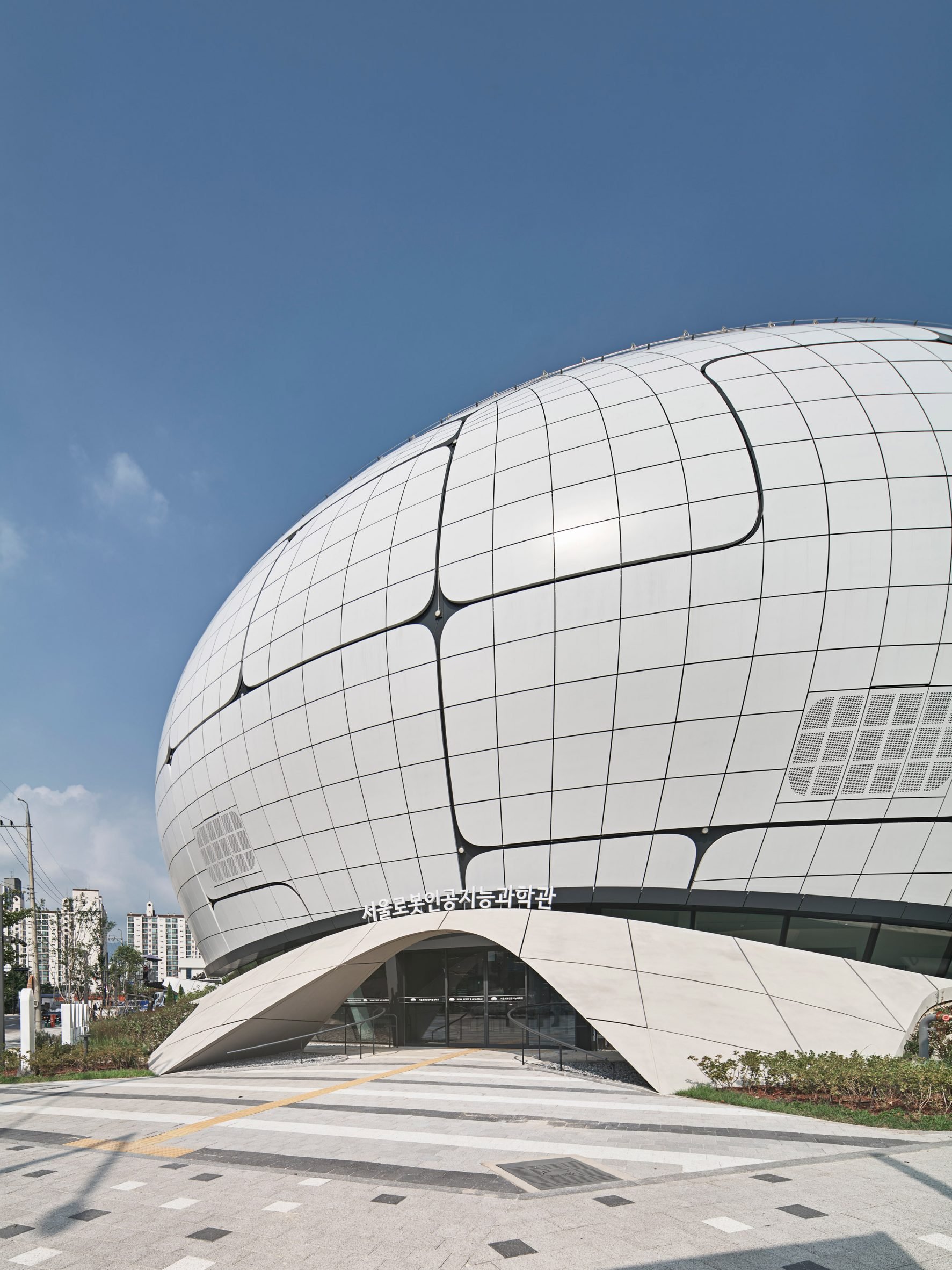
Though Altınışık does not call herself a parametricist, MAA's portfolio is closely associated with parametricism, with notable projects including the Çamlıca TV and Radio Tower and Seoul Robot & AI Museum.
She said that while they may visually align with the fluid and dynamic forms of parametricism, "the real project is the intelligence behind it".
By this, she means her buildings are designed as part of a wider environmental, social and technological system.
"At MAA, we do not design parametric forms," she explained. "Computation is not used to produce a recognisable aesthetic, but to integrate nature, technology and human experience into coherent architectural systems," she continued.
"We design systems of relationships. Computation allows us to navigate multiple parameters simultaneously between climate, program, structure, fabrication and social context. The result may appear fluid or dynamic, but the real project is the intelligence behind it."
Altınışık's said these ideas began during her time as a student at the Architectural Association (AA) between 2004 and 2006.
"At the AA Design Research Laboratory in London, I was exposed to computational thinking not as an aesthetic agenda," she reflected.
"We were not designing objects; we were designing systems. We were scripting behaviours, relationships and performance. We were organising connections between structure and skin, geometry and performance, environment and human occupation. That mindset has stayed with me."
These then evolved during her time working with Hadid – a period she described as "transformative".
"[Hadid] demonstrated that architecture could be both visionary and technically rigorous. Complexity was never something to be simplified for comfort; it was something to be mastered," she reflected
"Digital tools were used not to decorate form, but to test spatial logic and structural innovation. That environment shaped my belief that architecture must continuously evolve through experimentation."
Establishing MAA, her goal was to then take these ideas from the AA and Zaha Hadid Architects and focus on "humanising that complexity".
"It was important for me to evolve them, not replicate them," she explained.
"The influence was foundational, but evolution was necessary. We carried forward the discipline, the ambition and the courage while shaping a voice that integrates technology, nature and human experience in my own way."
Architects must be "fluent in both material craft and algorithmic logic"
Altınışık said she uses parametric design tools to create highly contextual and site-specific designs, challenging one of the biggest criticisms of parametricism, which is that parametricism creates self-referential buildings that feel unattached to their sites.
For the TV tower, the studio focused predominantly on parametric tools to respond to seismic conditions, while its work on the Seoul museum encouraged experimentation with parametric modelling and robotics.
"Working across Istanbul, Seoul and other rapidly transforming cities forced us to recalibrate digital strategies," she explained. "Each context challenged the methodology differently, preventing it from becoming formulaic."
"The goal was never to repeat a discourse, but to expand it to explore how computational design could contribute to more resilient, interactive and environmentally responsive architecture."
Looking ahead, Altınışık hopes that the ideas of parametricism can be used to prevent architecture from becoming homogenous and that the importance of this must be taught in architecture schools.
To achieve this, she believes lessons are needed in both traditional and digital tools, to ensure architects do "not prioritise tools over thinking".
"The architect of the future must be bilingual and fluent in both material craft and algorithmic logic," she explained.
"Students should learn coding, environmental simulation and digital fabrication, but they must also study tectonics, drawing, history, philosophy and material behaviour. Without cultural literacy and spatial sensitivity, digital skills risk becoming superficial."
In every design, future architects must look beyond aesthetics and remember why it is they are building.
"Beyond technical proficiency, architectural education must cultivate critical thinking and ethical awareness. Students must question not only how to build, but why to build, and for whom," she concluded.
"Architecture education should not prioritise tools over thinking. Instead, it should cultivate critical minds capable of using both traditional and computational methods with purpose."
In another interview for our parametricism series, Schumacher told Dezeen that parametricism will still become a universal architectural style, but that he's "not happy" with how fast it's being adopted.
In contrast, writer Douglas Spencer said parametricism will never become the dominant style because "the relationship between architecture and capitalism" has ceased to exist.
Parametricism
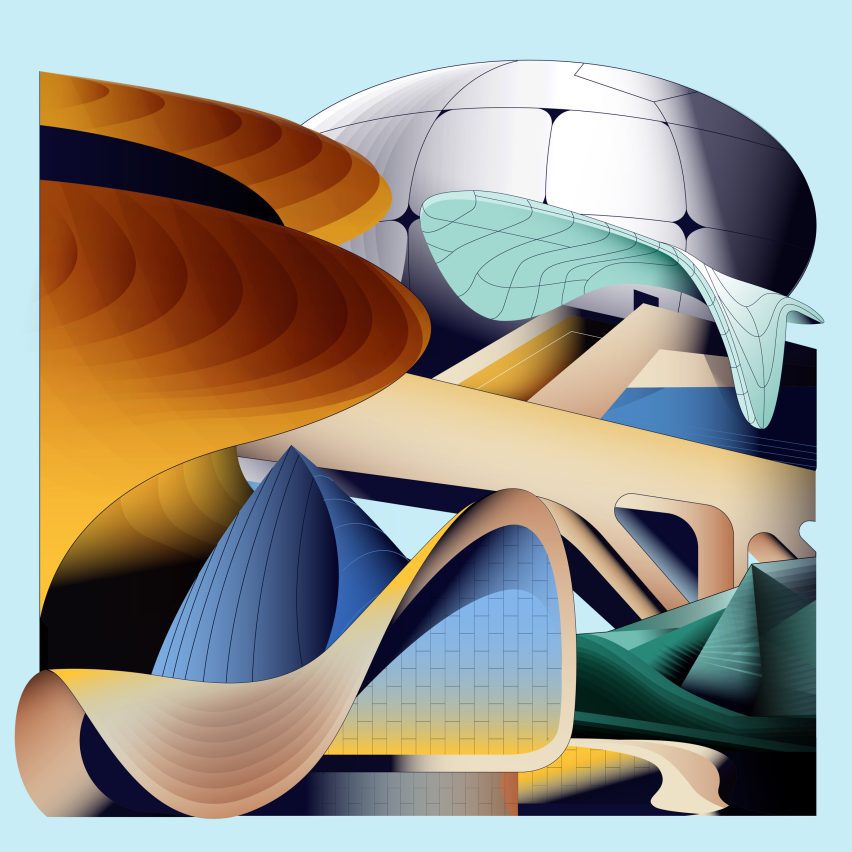
This article is part of our series on parametricism, the theory of architecture developed by Zaha Hadid Architects principal Patrik Schumacher that lays claim to becoming the 21st century's defining style.
The post Parametricism "changed how we think" as architects says Melike Altınışık appeared first on Dezeen.