


The Sagrada Familia was so ahead of its time it was "almost clairvoyant"
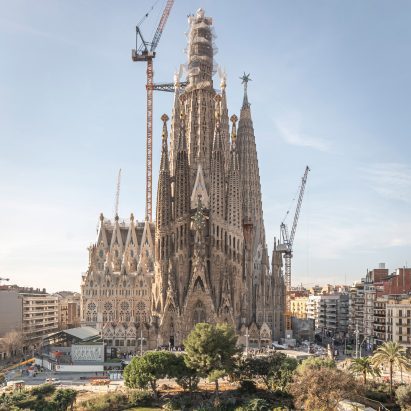
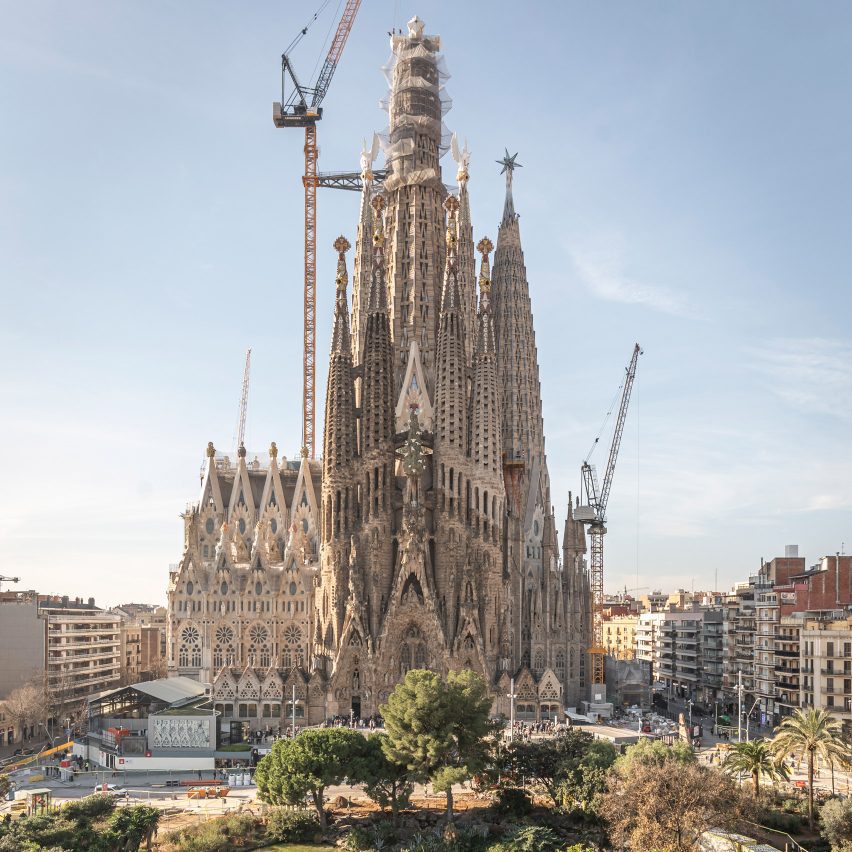
A century after the death of Antoni Gaudí, the central tower of the Sagrada Familia will be inaugurated by Pope Leo XIV tomorrow. For our Gaudí Centenary series we look at the mastery of the algorithmic design behind it.
The Expiatory Temple of the Sagrada Familia is the project that consumed Catalonia's greatest architect for most of his life.
Gaudí worked on the church for 44 years, starting at just 31 years old and stopping only when he was hit by a tram a few weeks shy of his 74th birthday. By this point he was living in his workshop and sleeping under his desk at the church.
His unfinished masterpiece went on to outlive him, becoming the longest-running active construction project in the world, carried on by seven generations of chief architects.
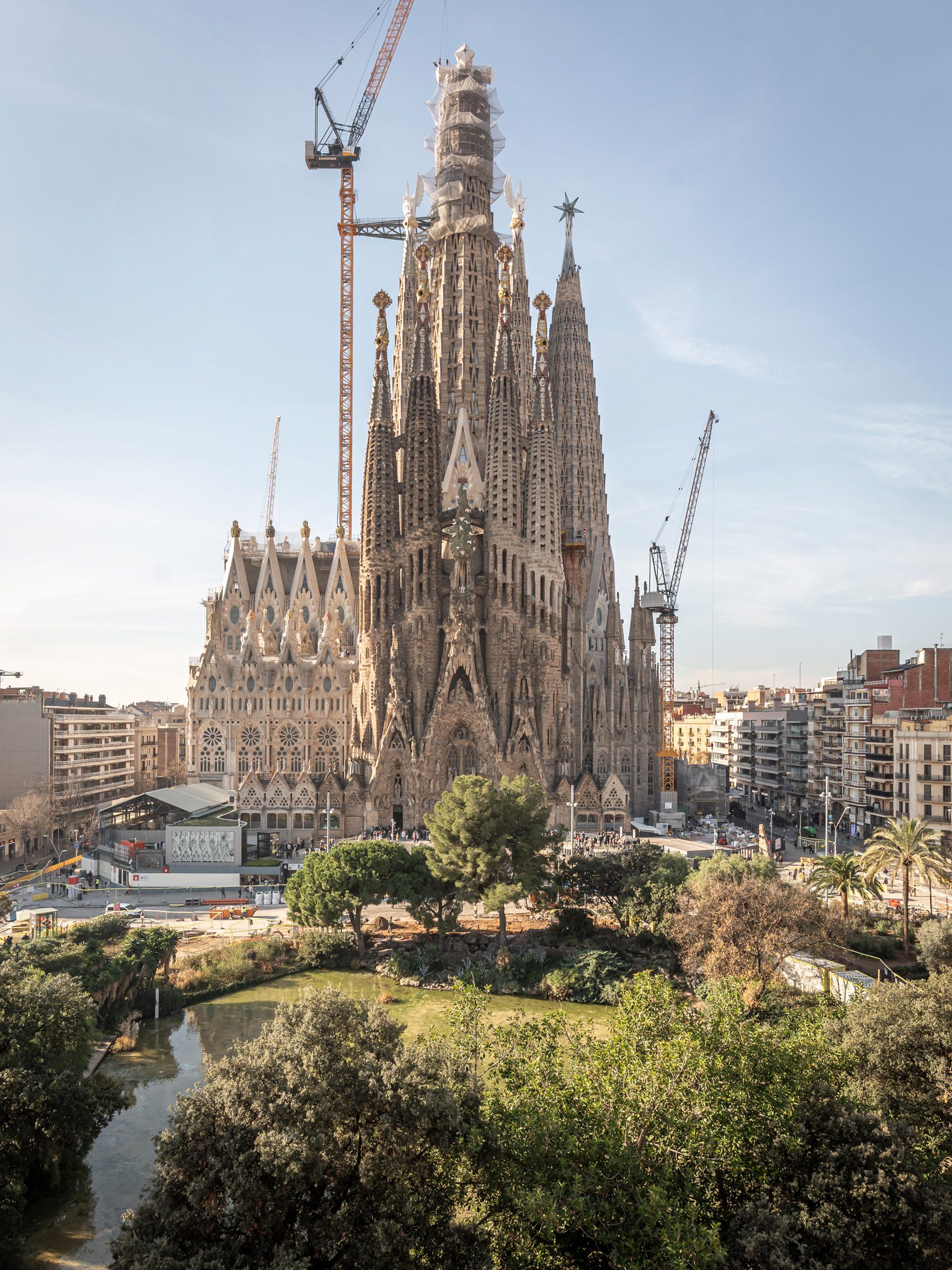
Since the Sagrada's cornerstone was laid, humanity has fought two world wars, invented aeroplanes and computers, and put people on the moon.
Coming into the world at a time of such supersonic social and political change, perhaps it was inevitable for the church to become an ideological linchpin, variously lauded and decried over the years as "genius or folly", "masterpiece or kitsch".
The one fact that can't be contested is that, in the words of architecture critic Rainer Zerbst, "it is probably impossible to find a church building anything like it in the entire history of art".
Despite the concerted efforts of seven generations of chief architects, extensive media campaigns and annual tourist revenues of €150m (£131m), the Sagrada Familia still won't be completed on the centenary of Gaudí's passing this week.
The basilica's grand entrance, including its controversial staircase, likely won't be finished before 2035.
But with its central tower topped out and set to be inaugurated by Pope Leo XIV tomorrow, a hundred years to the day after Gaudí's death, the Sagrada Familia can already claim the title of being the tallest church in the world.
It now towers 172.5 metres above the architect's final resting place in the crypt and trumps Germany's Ulm Minster, which held the record since 1890, by around the height of a four-storey building.
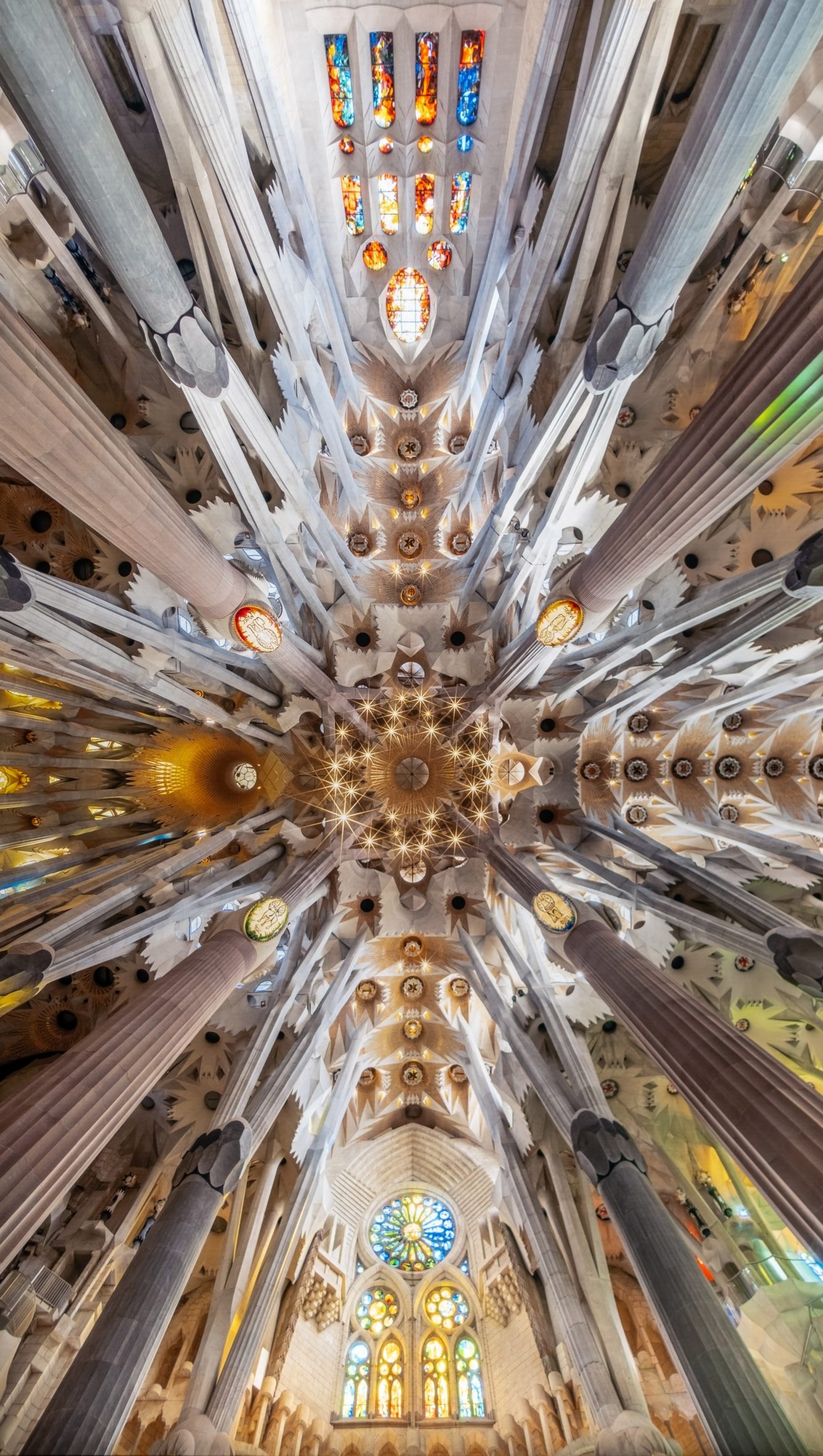
This achievement is made all the more impressive by the fact that, unlike Ulm Minster, Gaudí's design reached its record-breaking heights without the need for flying buttresses – the external supports that helped to make Gothic cathedrals the tallest structures in the world before the rise of skyscrapers.
"Flying buttresses, the epitome of high-gothic ingenuity, he referred to as crutches," explained former Sagrada Familia executive architect Mark Burry.
Instead, Gaudí developed a novel structural system that mimics the basic geometries that nature uses for structural strength.
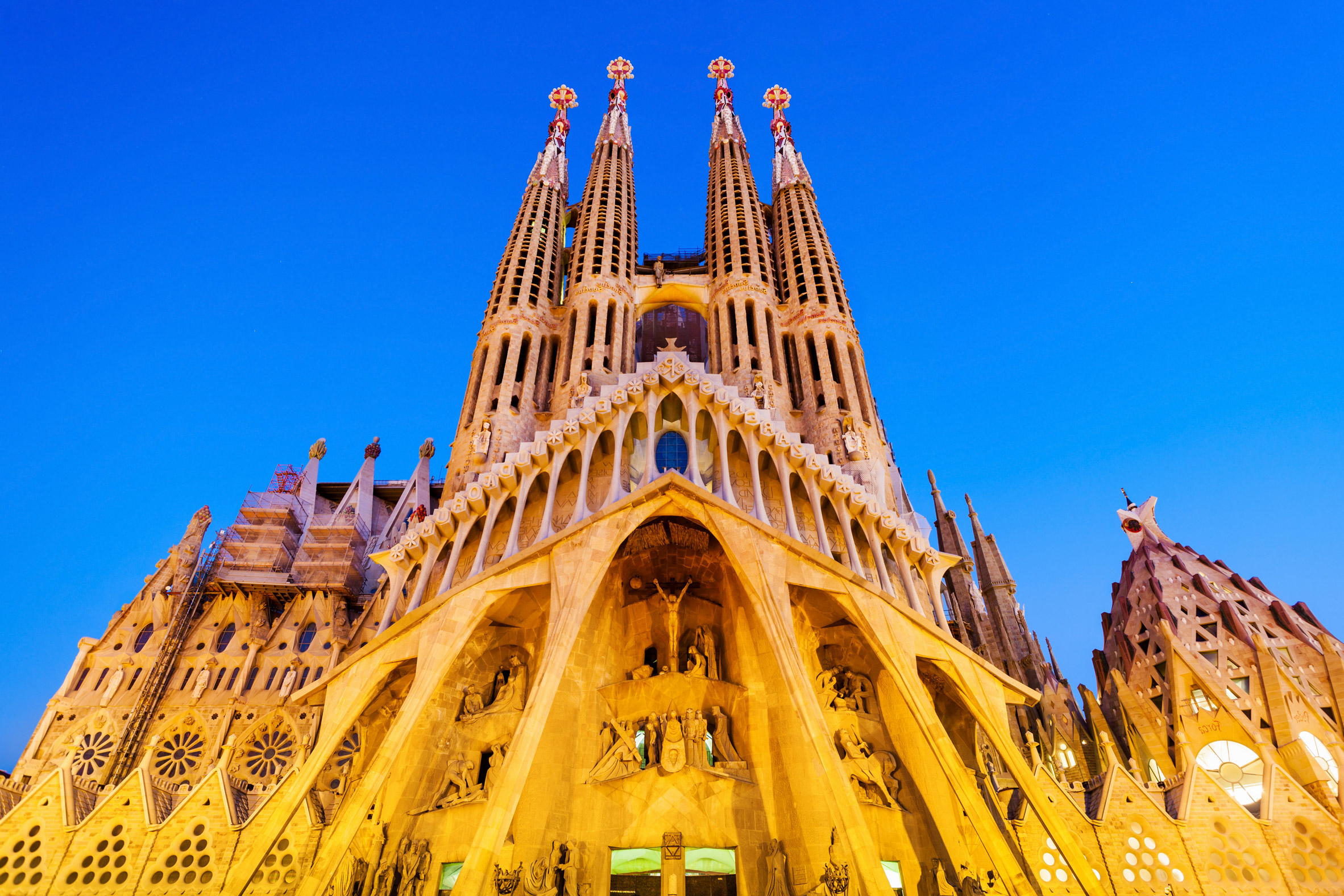
The result is a forest of slanted double-twisted columns that branch off like trees to support complex hyperbolic vaults and skylights, up to 75 metres high, which replaced the pointed arches of Gothic churches.
Following the natural lines of thrust, these branches efficiently transfer the weight of the basilica's roof and its 18 towers, representing the 12 Apostles, the four Evangelists, the Virgin Mary and Jesus Christ.
"Thinking parametrically way before the computer"
The Sagrada was originally meant to have a more conventional neo-gothic design, courtesy of its first chief architect Francisco de Paula del Villar. But when Gaudí took over the role in 1883, he abandoned the plans of his predecessor almost completely.
The only traditional elements that remained were the crypt, which had already been partially constructed, and the traditional crucifix-shaped floor plan, with a long nave intersected by the transept.
Gaudí's design is still laden with religious symbolism, from the 18 towers to the three ornate facades, which were designed to capture the story of Jesus Christ like a "Bible in stone".
But, as both a naturalist and an increasingly devout Catholic towards the end of his life, Gaudí also wanted the Sagrada Familia to capture the beauty of creation using the same sinuous geometries that, in his eyes, God had used to construct the natural world.
In the belief that "the straight line belongs to men, the curved line to God", his design for the church features almost no right angles or rectilinear shapes.
Instead, Gaudí's favoured curved geometries are repeated everywhere throughout the church, from spiralling helical columns and staircases to hourglass-shaped hyperboloid skylights and a sweeping saddle-shaped roof modelled on hyperbolic paraboloids.
Working in a time before computers or even electric calculators, Gaudí designed these voluptuous, warped surfaces using only physical models and mathematical algorithms.
"He was thinking in algorithmic terms and parametrically way before the computer," Burry told Dezeen. "When the engineers did the calculations in the 1990s, they found they had no need to change the original force diagram that Gaudí had produced."
Other architects would not reattempt organic structural design this ambitious until they had access to computers and parametric design software, some 75 years later.
"It will drive you nuts"
Fittingly, the Sagrada Familia would actually go on to become one of the first buildings – perhaps even the very first – to actually utilise this software in its construction.
Faced with the challenge of reconstructing Gaudí's strict geometric system after his plans and models had been destroyed during the Spanish Civil War, Burry turned to parametric modelling tools used by the aeronautical industry to build the Boeing 777.
At that point in the 1990s, he said, no one in architecture was using the technology due to its prohibitive cost, which came to around $150,000 for the software, plus another $100,000 for the computer itself.
"You needed to have a project like the Sagrada Familia to persuade the company to let you have it," Burry recalled.
Based on his experience with the church, Burry would later help deconstructivist architect Frank Gehry develop the first parametric software specifically for architects to realise his gravity-defying buildings in the early 2000s.
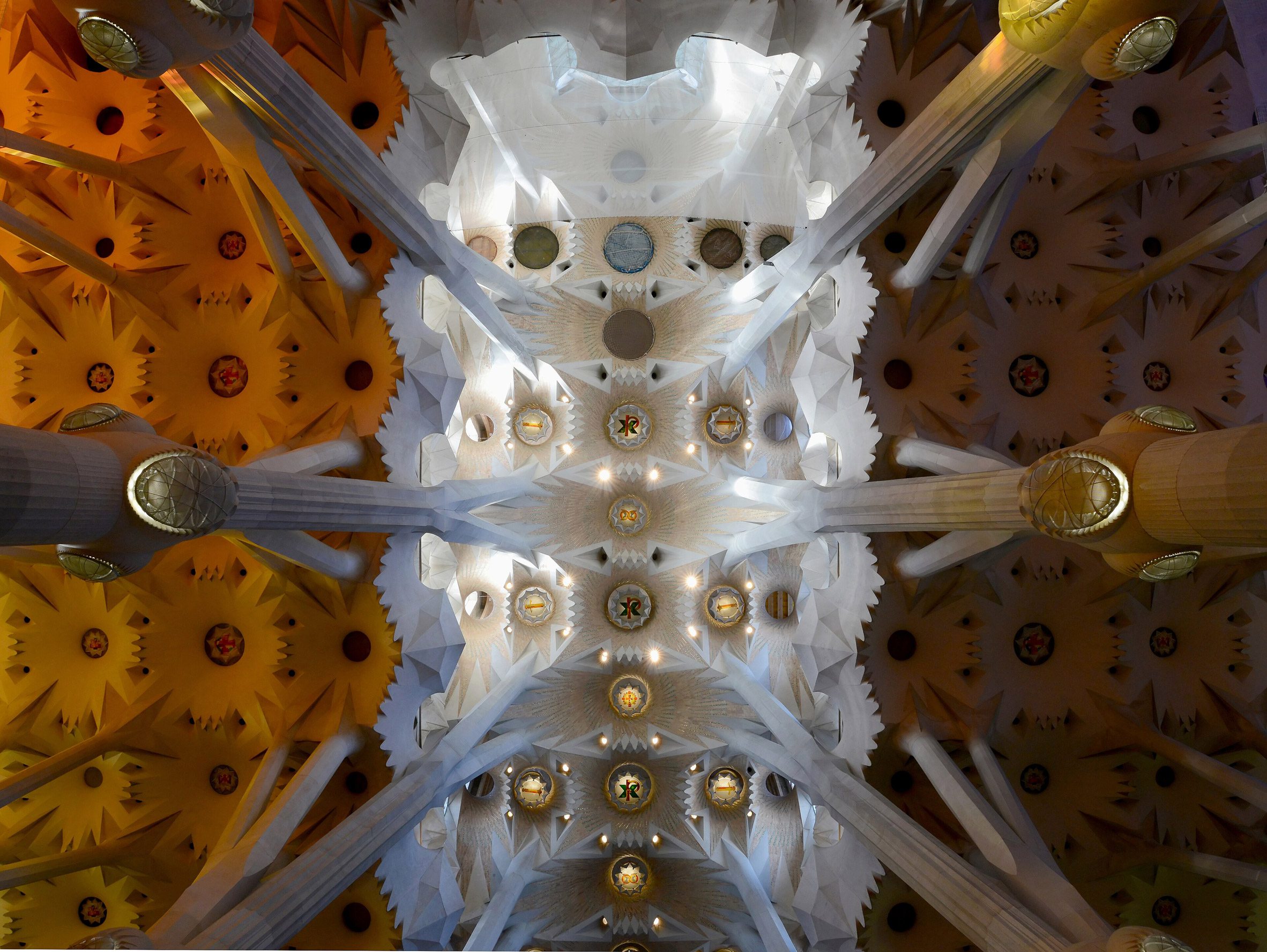
Today, these kinds of tools, like Grasshopper and Rhino, are used widely by architects to create complex 3D models that a century ago, Gaudí had somehow been able to hold in his head.
"He seems to have been almost clairvoyant in having developed a design method which makes creative use of contemporary technology," Burry said.
Architectural historian Mario Carpo even argues that the structure of the Sagrada Familia is so complex, it could only be completed with the help of digital technologies.
"If you want to design it the Albertian way – with plans, elevation, and section proportionally drawn to scale with a blueprint, etcetera, etcetera – it's impossible," he told Dezeen.
"It's like Gehry building the Guggenheim Bilbao; the form is so complicated that if you want to build it the traditional engineering way, it will drive you nuts."
"How could we have been so wrong?"
At the time of Gaudí's death in 1926, only a small part of the church was completed from top to bottom – the wall of the apse and the Nativity facade, depicting the birth of Jesus.
The architect had gone to great lengths to create the hyperrealistic sculptures on the facade, famously creating plaster casts of chloroformed animals and real stillborn babies. But he left the church without even perimeter walls or a roof.
Most of the church's construction has happened in the past 40 years, buoyed by innovations in construction and manufacturing, from 3D-printed modelmaking and machine cutting to prefabricated, post-tensioned stone panels.
"The project pioneered nearly everything that you know of – 3D printing in modelmaking, lidar scanning of buildings, long-distance collaboration with transfer of documents overnight," Burry explained.
Inevitably, all this mechanical precision in replicating Gaudí's organic architecture has been met with some backlash.
"In all seriousness, with due regard to health and safety... I would suggest distressing the new work with machine guns," architecture critic Rowan Moore wrote in the Observer.
Mostly, critics direct their ire at the decorative flourishes – like the controversial cubist sculptures depicting Jesus's crucifixion on the Passion facade – for which Gaudí left no concrete plans behind.
But seeing the building's actual structure as it nears completion, based on Gaudí's visionary geometries, has caused even some of the project's most ardent critics to change their minds.
Among them is Spanish architect Òscar Tusquets, who in the 1960s had been among the instigators of an open letter, signed by Le Corbusier and Alvar Aalto, that opposed the continued construction of the Sagrada Familia for fear of bastardising Gaudí's vision.
"How could we have been so wrong?" he wrote after touring the building in 2011. "This wonder would not exist if people had listened to us 50 years ago."
"If you see architecture as principally space and light, the interior of this church is Architecture with a capital A, exciting and grand. Architecture that makes today's eccentric shapes and structures look like child's play."
The top image is courtesy of Sagrada Familia foundation
Gaudí Centenary
This article is part of Gaudí Centenary, our editorial series profiling the Catalan architect and designer Antoni Gaudí, marking 100 years since his death.
The post The Sagrada Familia was so ahead of its time it was "almost clairvoyant" appeared first on Dezeen.