



what we learned: radical softness

softness as a method of interdependence and reciprocity
Over the past months, designboom’s editorial chapter Radical Softness has explored architecture, art, design, and technology through the lens of care, attention, vulnerability, repair, and ecological sensitivity. Rather than framing softness as weakness, the chapter presented it as a cultural and political force. Across interviews, essays, and projects, a common question emerged: what kinds of futures become possible when we prioritize listening, reciprocity, and interdependence over speed and control?
Throughout this chapter, we returned repeatedly to the idea that softness begins with attention. Not passive observation, but a deliberate practice of listening. Across projects at the Venice Art Biennale, Milan Design Week, and beyond, artists and designers asked what becomes possible when we slow down enough to hear rhythms that often go unnoticed.

in Venice, Simone Post suspends candy chandeliers throughout Palazzo Contarini Polignac | image by OKNO Studio
an Active practice of attention and co-creation
Whether through the sonic landscapes explored by Yuko Mohri, the breathing rituals embedded within Jiumo Wang’s device for children, or the contemplative atmosphere of the Holy See Pavilion, listening emerged as a form of care. These projects suggested that attention itself can be transformative. In a culture defined by acceleration, radical softness proposes another pace.
One of the strongest threads running through the chapter was a desire to decentre the human perspective. Instead of treating nature as a backdrop, many contributors approached plants, insects, microbes, weather systems, and animals as collaborators with their own forms of agency. The result was a body of work that challenged familiar hierarchies and encouraged more reciprocal ways of thinking about coexistence.
Anicka Yi‘s reflections on microbial time opened a conversation about scales of life that often remain invisible. Aki Inomata‘s long-standing collaborations with living creatures questioned ideas of authorship and ownership, while Almudena Romero worked with living crops to create photographs shaped by ecological processes. In Rootfull’s bio textile experiments, growth itself became a design tool. Together, these projects expanded the boundaries of creative practice and suggested that the future may depend on learning how to participate rather than dominate.

‘Why Not Hand Over a ‘Shelter’ to Hermit Crabs?’ -Border-, Aki Inomata, 2009- (ongoing) | image courtesy of Aki Inomata
radical softness prioritizes repair, resilience, and renewal
Repair appeared again and again throughout the chapter, not simply as a technical solution but as a cultural attitude. In contrast to systems that prioritise replacement and constant consumption, many of the featured practitioners focused on maintenance, stewardship, and care. Their work recognised that things often gain meaning through use, wear, and transformation.
Victoria Yakusha explored the relationship between memory, material knowledge, and healing through furniture and interiors rooted in local traditions. Studio Method brought repair directly into public space through a travelling workshop designed to serve communities. Jean Shin transformed fractured ceramics into powerful reflections on resilience, while Moffat Takadiwa gave discarded materials new presence through monumental woven landscapes. These projects did not attempt to erase damage. Instead, they revealed the stories, labour, and histories embedded within acts of restoration.

studio method’s travelling repair cart asks what design can do for local communities | image by Lorenzo Bondavalli
carrying softness in bodies, emotions, and intimacy
Many of the chapter’s most memorable works focused on the emotional realities of being human. At a moment when technological and social systems often reward distance, efficiency, and optimisation, these artists embraced vulnerability, pleasure, uncertainty, and affection. Their work reminded us that softness can be deeply embodied and emotionally complex.
Lisa Yuskavage‘s paintings invited prolonged contemplation through colour and atmosphere. Iris van Herpen blurred the boundaries between fashion, sculpture, and sensory experience, creating environments that seemed to move with the body itself. Bethan Laura Wood explored the emotional dimensions of colour, while Georgia Smedley reconsidered everyday rituals through objects designed to bring people into closer proximity. Elsewhere, Erwin Wurm‘s uncanny figures exaggerated the awkwardness and tenderness of physical presence, turning the body into something simultaneously humorous and fragile.

Lisa Yuskavage, The Joy of Painting, 2025 | image courtesy the artist and David Zwirner
projects and designers highlight community and care work
Questions of care extended far beyond the individual. Again and again, artists reflected on collective responsibility, interdependence, and the emotional labour required to sustain communities. Rather than presenting care as sentimental, these projects treated it as a form of political and social infrastructure.
JR‘s monumental tapestry brought together hundreds of participants into a shared image of collective presence. Ei Arakawa Nash approached care through playfulness and repetition, using baby dolls to create an atmosphere that moved between absurdity and tenderness. LR Vandy’s rope sculptures explored labour, movement, and collective resistance, while Ukrainian artists reflected on joy and vulnerability in the midst of uncertainty. Across these works, softness emerged not as retreat, but as a way of remaining connected during periods of instability and change.

Pakistan Chulah Cookstove by Yasmeen Lari | image courtesy Heritage Foundation of Pakistan
Soft architecture: shifting away from monumentality
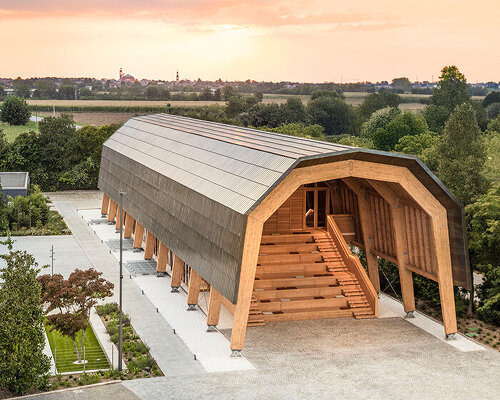
Architecture throughout the chapter shifted away from monumentality toward more atmospheric forms of engagement. Rather than imposing rigid structures onto the environment, many architects explored permeability, adaptation, and temporary occupation. Gardens, weather systems, air, mud, and algae became active participants within spatial experience.
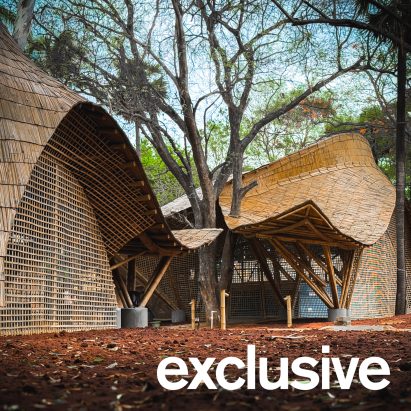
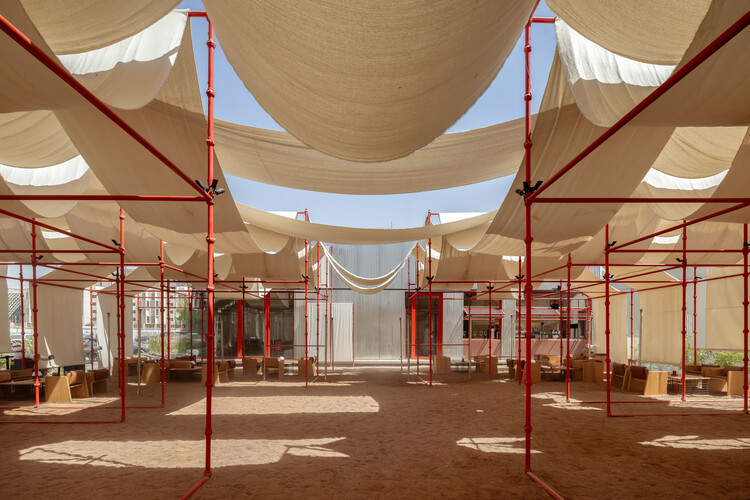
Andreas Angelidakis imagined soft ruins and queer atmospheres that resisted fixed interpretations. TAKK proposed gardens and spaces for rest that encouraged slower forms of gathering and ritual. Studio I/thee approached architecture as an ongoing collaboration with natural materials and changing conditions, while LANZA Atelier described the pavilion as a site of encounter rather than spectacle. These projects suggested that softness can exist spatially through openness, responsiveness, and the willingness to leave space for unpredictability.

LANZA Atelier’s serpentine wall gains its structural stability from its geometry | image by Iwan Baan, courtesy of Serpentine
material imagination as a central tool for radicality
Across the chapter, materials were rarely treated as inert surfaces. Instead, designers and artists approached matter as something capable of carrying memory, emotion, and cultural meaning. Texture, scent, colour, weight, and tactility became essential parts of how these projects communicated with audiences.
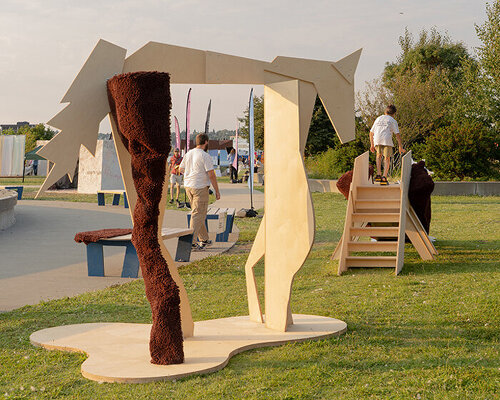
Lea Colombo’s stone objects explored sensuality through colour-saturated forms carved from red jasper. Simone Post transformed candy into delicate chandeliers that balanced joy with impermanence. Delcy Morelos filled architectural space with earth and spice, creating environments that engaged the body through smell and physical immersion. Joris Laarman experimented with concrete and plywood in ways that softened the industrial associations of both materials. What connected these projects was not a single visual language, but a shared sensitivity toward how materials shape emotional and sensory experience.

Red Jasper dining table (Red Jasper, Rose Quartz), Synergy collection, Lea Colombo | image courtesy the artist
inheritance and memory help solve contemporary problems
Many contributors looked toward inherited forms of knowledge as a way of imagining different futures. Craft appeared throughout the chapter not as nostalgia, but as a living practice shaped by repetition, adaptation, and embodied understanding. These projects recognised that traditions survive because they continue to evolve.
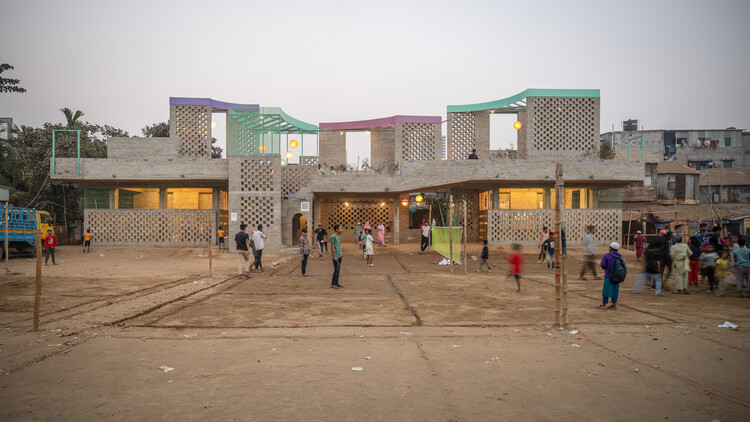
Yasmeen Lari’s architecture drew from vernacular building methods developed through generations of collective experience. Malika Verma’s exploration of the sari highlighted how draping techniques carry histories of movement, identity, and care within the body itself. Elsewhere, artists and designers returned to weaving, ceramics, rope work, and hand processes that resist the speed of industrial production. In doing so, they proposed alternative forms of value rooted in patience, continuity, and accumulated knowledge.

LR Vandy installation view at Yorkshire Sculpture Park, 2026 | image by India Hobson, courtesy YSP
play as a guidepost for future possibility
A sense of openness ran quietly through the entire chapter. Rather than presenting fixed visions of the future, many contributors embraced ambiguity, experimentation, and speculation. Playfulness became a way of approaching difficult questions without simplifying them.
Danielle Brathwaite Shirley used interactive worlds to examine ethics, participation, and responsibility. The Kazakhstan Pavilion explored silence and sensory memory through immersive environments that resisted direct explanation. The India Pavilion brought together artists working across sculpture, craft, installation, and landscape to create spaces shaped by transformation and multiplicity. Even the chapter’s softer and more humorous projects carried an underlying seriousness about how people live together and what kinds of futures are currently being imagined.
Looking back across the chapter, one lesson becomes increasingly clear. Softness is not an aesthetic category or a visual trend. It is a way of approaching the world through attention, reciprocity, vulnerability, and care. It asks what happens when we stop treating fragility as something to conceal and begin understanding it as a condition shared by people, objects, ecologies, and systems alike.

rachel youn repurposes massager components animate artificial flowers through repetitive movements | image by Riccardo Banfi
The post what we learned: radical softness appeared first on designboom | architecture & design magazine.