


Design Academy Eindhoven students reinvent the bathroom for a resource-scarce future
Tiles decorated with hair and a dissolving washbasin made of soap are among the student projects featured in Behind Closed Doors, an exhibition by the Design Academy Eindhoven and Kaldewei at Berlin design festival Currents.
The exhibition featured standout projects born from a 10-week educational partnership between the bathroom brand and students of the academy's Social Design master's degree that explored the future of the bathroom.
As part of the collaboration, the students were asked to investigate how bathrooms can be reimagined in a more circular way that doesn't just conserve resources but also encourages more circular behaviours and habits in its users.
"We gave them the idea that in a circular world, Kaldewei would not produce a new bathtub anymore because we would reuse our old bathtubs, give them a new surface and build them in again," the company's head of design Christian Büttner told Dezeen.
"So what the students really explored for us was: what are the barriers against this that we have in our head?"
Among the eight featured projects, some of the most visceral explored how we can overcome the natural aversion we have against waste materials – especially ones that have passed through the hands of other people.
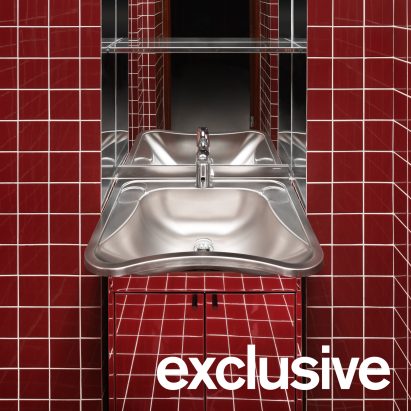
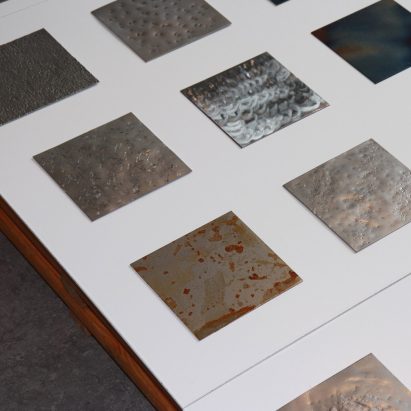
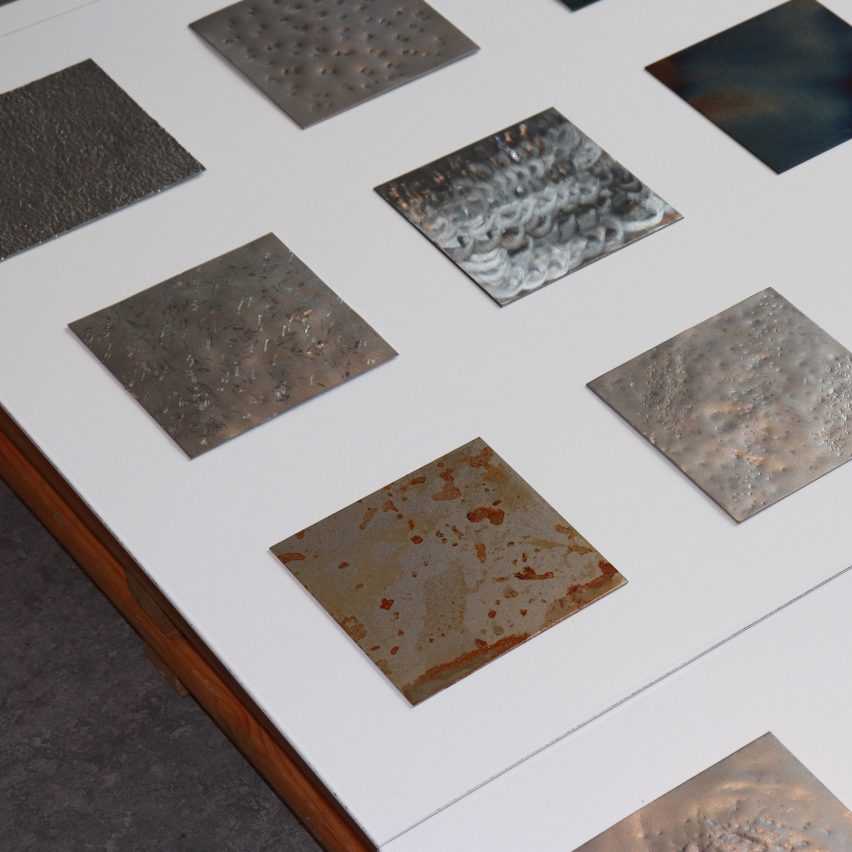
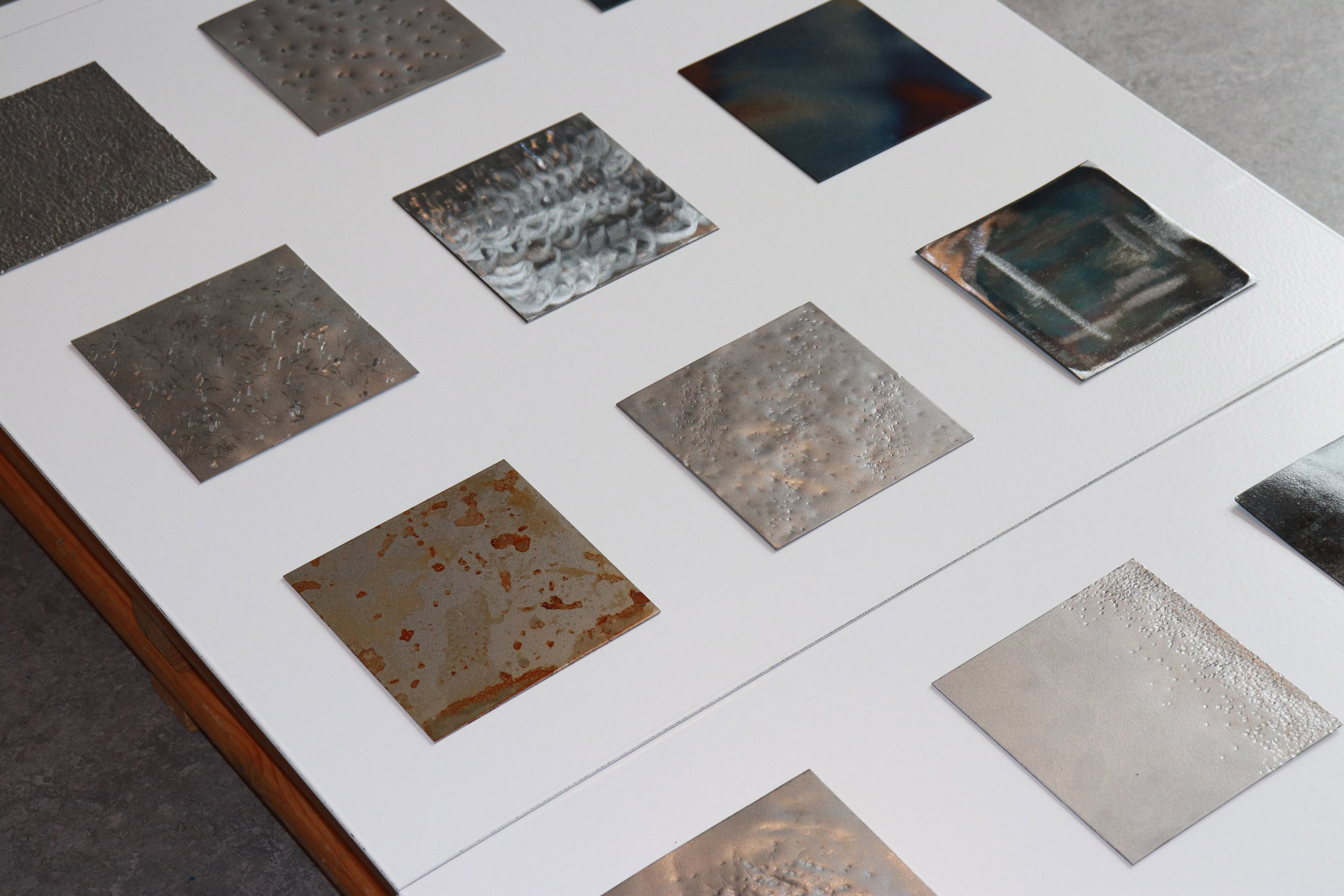
Design Academy students Sarah Kinzer and Moss A Moschen visited student bathrooms on their street in Eindhoven and documented the traces of use that were left behind – black mould, clumps of hair, limescale on a showerhead.
The duo abstracted these patterns in a collection of steel tiles, some even incorporating real strands of their own hair, to find beauty rather than revulsion in the intimate history of these materials.
"We try to make an aesthetic of disgust," Moschen explained. "If we want to talk about circularity, but as a society we hold expectations towards very clean and polished materials, how can we even do that?"
"So I think we just tried to flip the narrative and question what happens when something that we call disgusting is intentionally part of the design language."
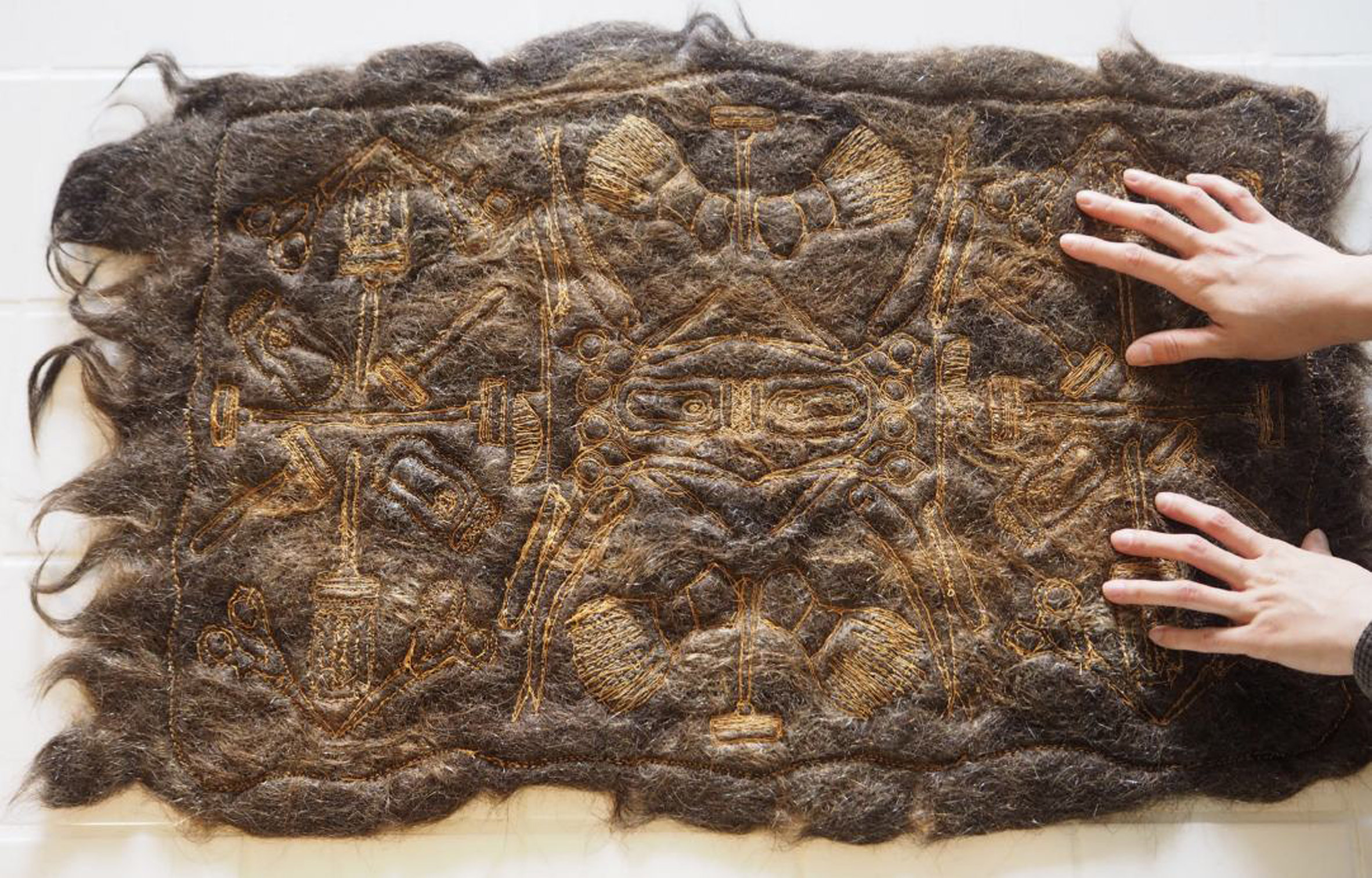
In a similar vein, Carlotta Talkenberger felted a bath mat from human hair to explore the double standard inherent in using animal hair to make many of the products around us while shunning our own.
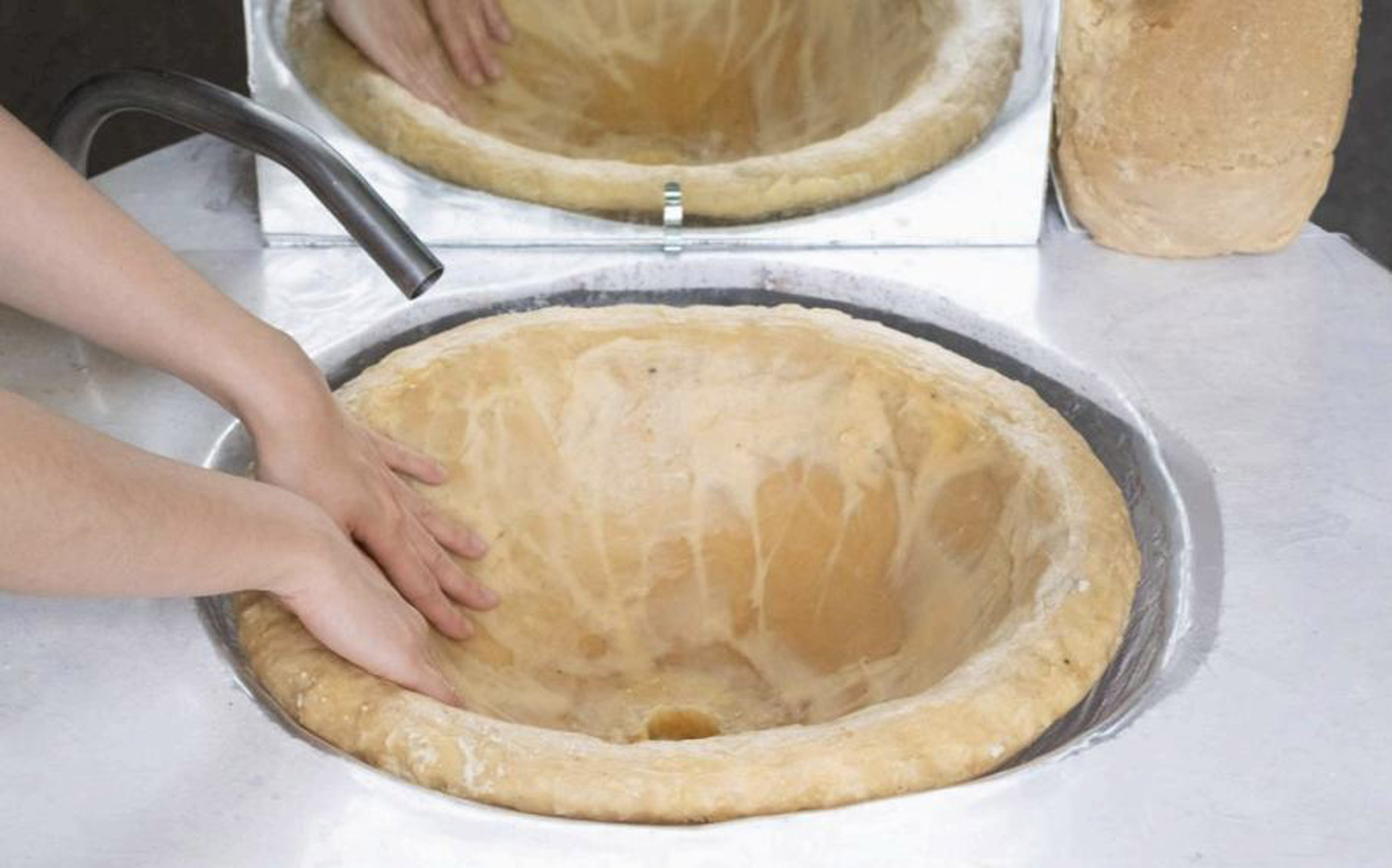
And in Ian Chu's project Wash Away Your Guilt, discarded cooking oil is turned into soap and used to form a washbasin that slowly dissolves with every use, exploring both the practical and moral implications of circularity.
"She was also questioning a little bit if circularity is a concept that we hide behind so we don't feel guilty," Moschen explained.
As Europe's record-breaking heatwaves reduced the continent's water supplies to historic lows, other students shared speculative projects about how limited access to this crucial resource could reshape our habits and spaces.
A satirical film by Hanxiao Xu depicts a community that reuses its bathwater and attributes it with mythical healing properties, while Philipp Hohnerlein and Gabriela Augustyniak imagine that bathing will cease entirely.
Instead, their Bathtube project suggests tapping into the waste heat of data centres and turning their pipes into impromptu hammams, offering the warmth and comfort of a bath without the water wastage.
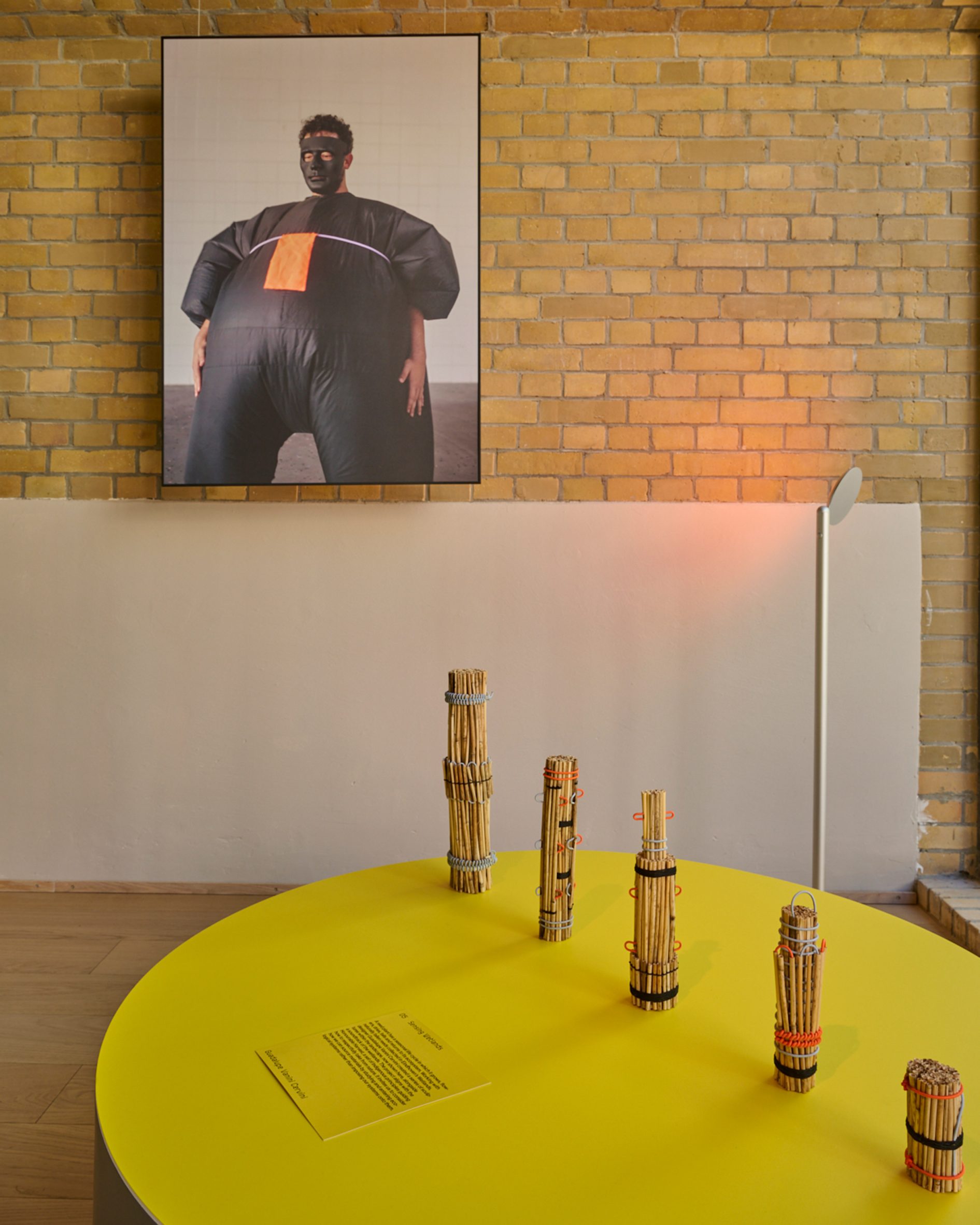
Nature's resources also take centre stage in a project from Guadalupe Vanini Cervini that explores the indigenous principle of the Honourable Harvest – a "covenant of reciprocity" stipulating how to responsibly take from nature and give back in return.
In this spirit, she used naturally fallen reeds from the wetlands around Eindhoven to create a series of sculptures set within that same landscape, but transported to Berlin for the sake of the exhibition.
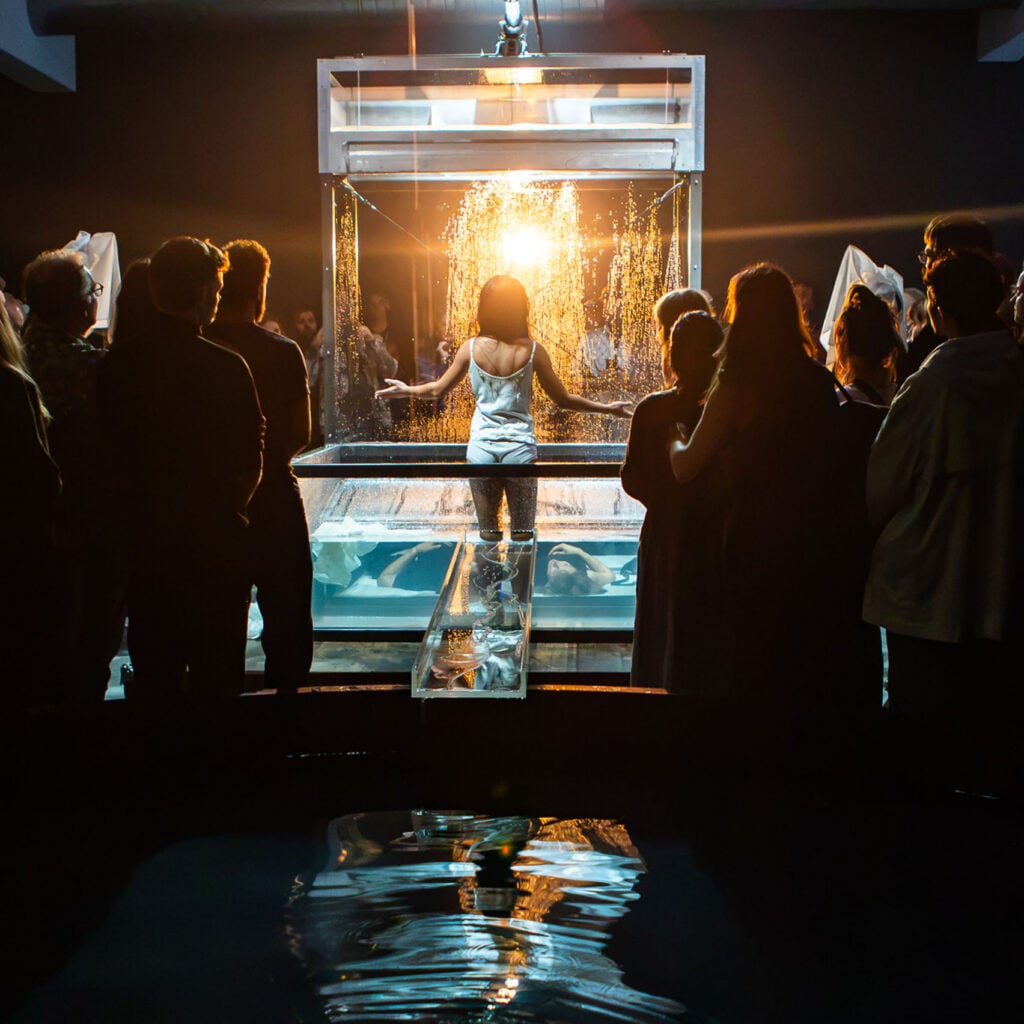
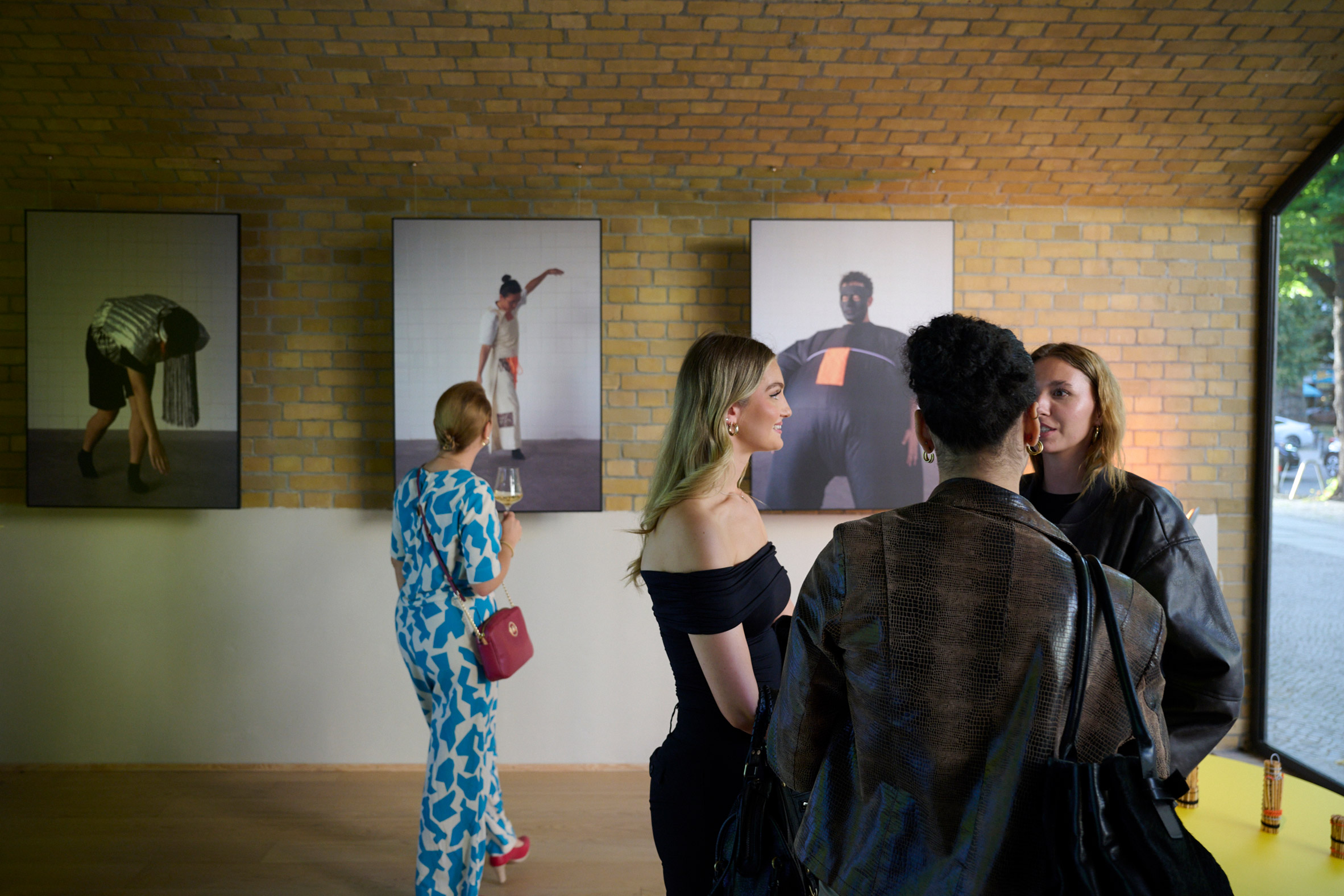
Another exploration of more-than-human design came from Tina Lehnhardt, who created a performance around a series of costumes – embodying black mould, moisture, a dead skin cell and a humidity-loving insect known as a silverfish – to humanise the other life forms with which we share our bathrooms.
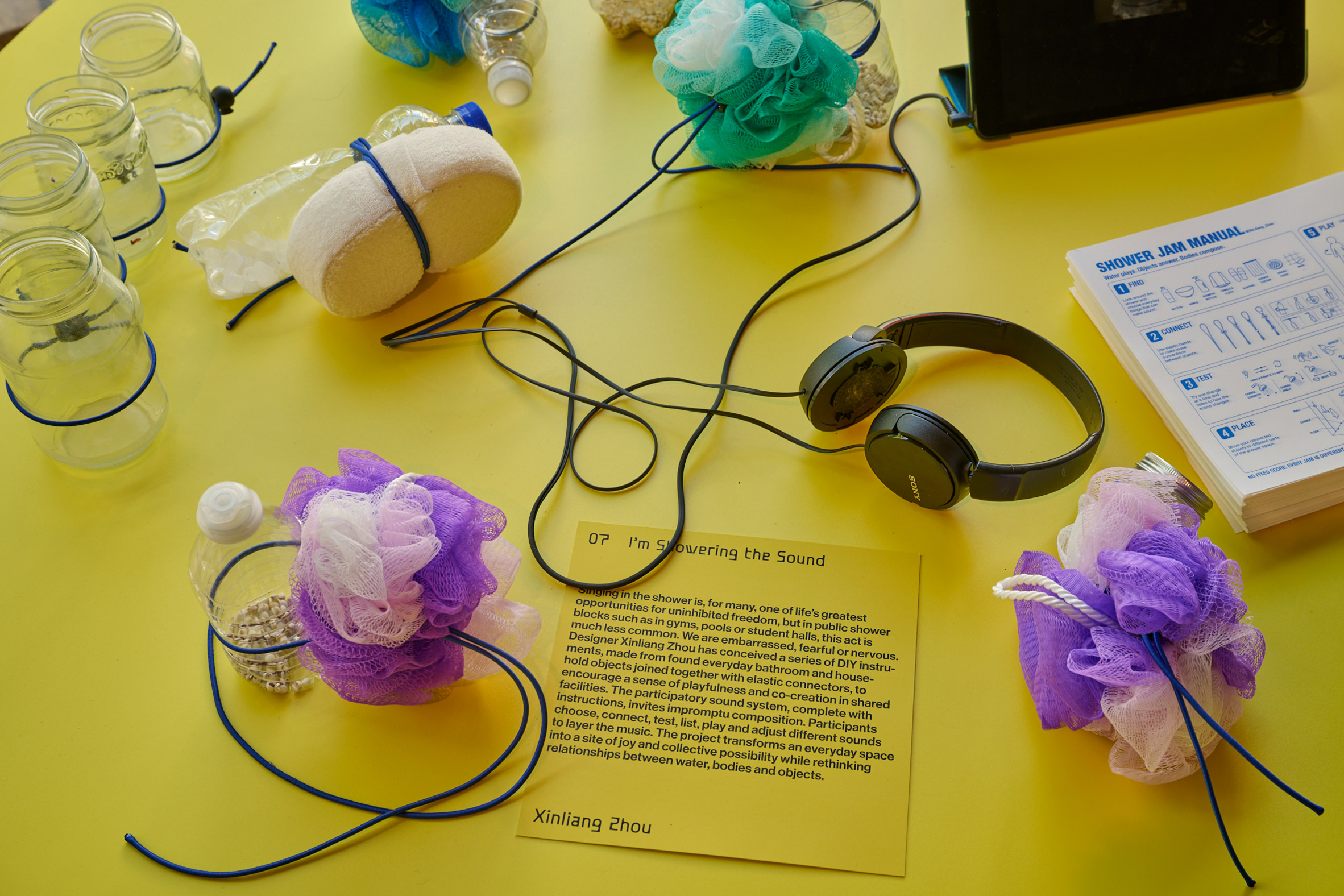
Finally, taking a more playful take on the topic, Xinliang Zhou created a simple method and instructions for how to turn everyday bathroom items into musical instruments and every shower into a jam session.
The Behind Closed Doors exhibition formed part of the inaugural Currents design festival in Berlin, which the founders argue is well on its way to establishing itself as Germany's new design capital.
Currents 2026 took place from 10 to 12 September 2026 at various locations across Berlin, Germany. For other design events around the world, visit Dezeen Events Guide.
The post Design Academy Eindhoven students reinvent the bathroom for a resource-scarce future appeared first on Dezeen.