

iF Design trend report 2026 decodes macro shifts into strategic thinking for creators


REDEFINING CREATIVE MEANING IN THE AGE OF AUTOMATION
With creative processes accelerating through automation, the parameters of creative design are fundamentally changing. Responding directly to this, the iF Design’s trend report 2026 provides a comprehensive analysis of global design trends by identifying four diametrical trend pairs that reflect the intersection of technological, social, and ecological transformations.
By charting this complex territory, the report marking its fifth collaboration with future research firm The Future: Project, maps out how contemporary creative success, across industries, requires looking far beyond the visual surface, challenging creators to operate at the strategic intersection of technical possibility and human experience.

iF Design Trend Report 2026 | all images courtesy of iF Design
IF DESIGN trend REPORT 2026 MAPS OUT STRATEGIC SCOPES FOR CREATORS
Grounded on an extensive research process and enriched by insights from the iF DESIGN AWARD 2026, with over 10,000 submissions from around 70 countries, the iF Design Trend Report 2026 acts as a global thermometer for the industry. Rather than relying strictly on flat numbers, the report supplements statistics and survey results with nuanced assessments from experts of diverse cultural and professional backgrounds, demonstrating how communities address these transformations based on historical, cultural, economic, and geographic conditions. As a strategic blueprint for the future, the institution’s report invites companies, institutions and creators to discover new approaches for creating future-oriented solutions, proving that design is not only about shaping products and services, but also about shaping relationships, systems, and possibilities.

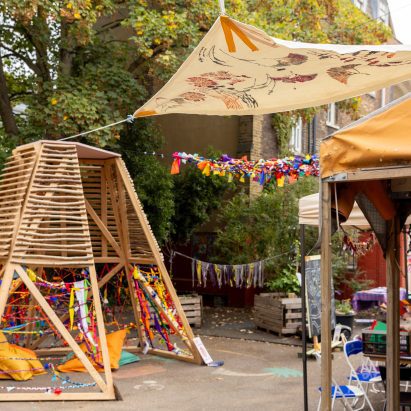
musical instruments transforms urban environments into interactive soundscapes
SOCIAL SHIFTS ENERGIZE THE SYNTHESIS OF TREND PAIRS
To provide a clear path forward, the report illustrates how true systemic change arises from the synthesis of opposing forces, examining fundamental social shifts through the lens of distinct trend and countertrend pairs, rooted deeply in contemporary social challenges and raw human needs. This structural friction is immediately evident in the primary aesthetic dilemma of our time: the Age of Average versus Recoupling Design. As artificial intelligence and algorithms fuel a hyper-homogenized global mainstream, the constant reuse of stylistic devices, imagery, and design parameters has birthed a uniform ‘Age of Average’ where attention operates as the primary currency. While brands lean heavily into this homogenized baseline to generate instant compatibility and quick readability, the pressure to break through the noise in a saturated attention economy has never been higher.
This mainstream push is directly countered by Recoupling Design, a movement seeking alternative methods that enable design innovations away from the ordinary. By purposefully decoupling and recoupling elements within the creative process, designers are urged to follow organic cultural patterns, recognizing that authentic innovation emerges from real life and community cultures rather than corporate offices.

a child’s drawing anchors CHALEUR’s identity embodying a playful, human-centered vision
Simultaneously, the industry is witnessing a shift from Convenience Culture to Skillization, fundamentally redefining how we design friction. Modern life is largely dictated by the paradigm of convenience, where solutions that make daily life effortless find immediate market success. While AI and robotics are boosting this trend to unprecedented heights, it is increasingly evident that hyper-convenience carries undesirable side effects and can cause human demotivation. The countertrend of Skillization redefines well-being by focusing on lifelong learning and the acquisition of new skills. In terms of design, this is solved by intentionally activating users. By shifting the paradigm to understand a problem as a rewarding challenge, design becomes a catalyst for personal growth rather than passive consumption.

a climbing wall anchors the interior, transforming physical movement into structural art
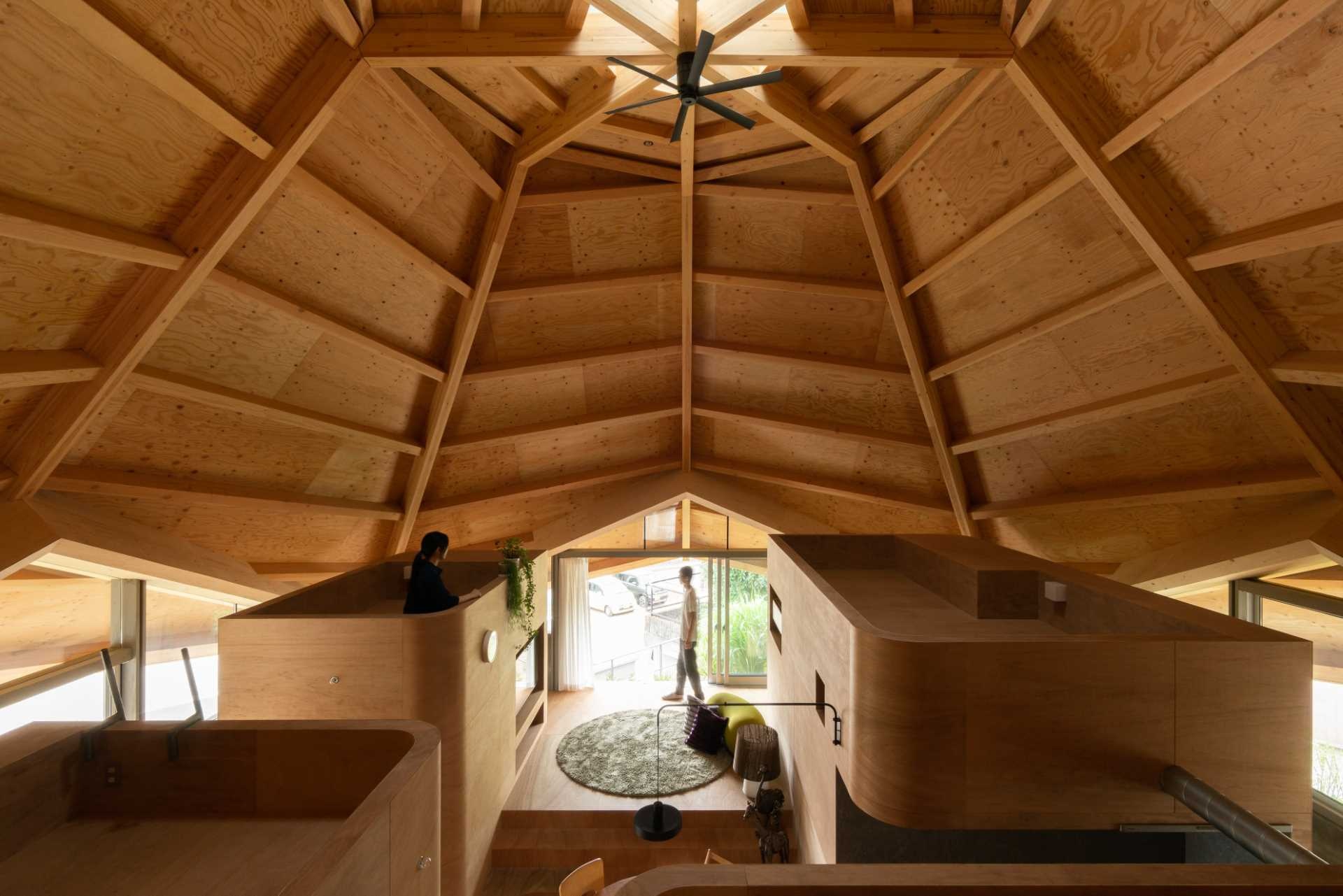
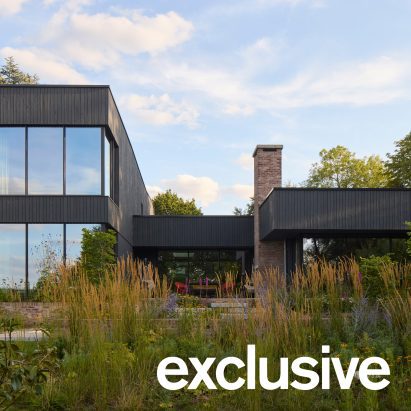
This systemic rethinking extends directly into how we shape our relationship with the living environment, framed by the tension between Next Nature and Human Enhancement. Under the trend of Next Nature, a new design approach treats buildings, infrastructures, and spaces not merely as inanimate objects, but as living structures where non-human life can thrive alongside humans, fulfilling deep ecological and psychological needs. Conversely, the trend toward Human Enhancement also seeks a new understanding of nature, but turns its focus inward to expand human biological limits. Utilizing high-tech assistance, this movement strives to bring us closer to the historical human dreams of omniscience, omnipresence, and omnipotence.

buildings engineered as living structures where non-human life can thrive alongside humans
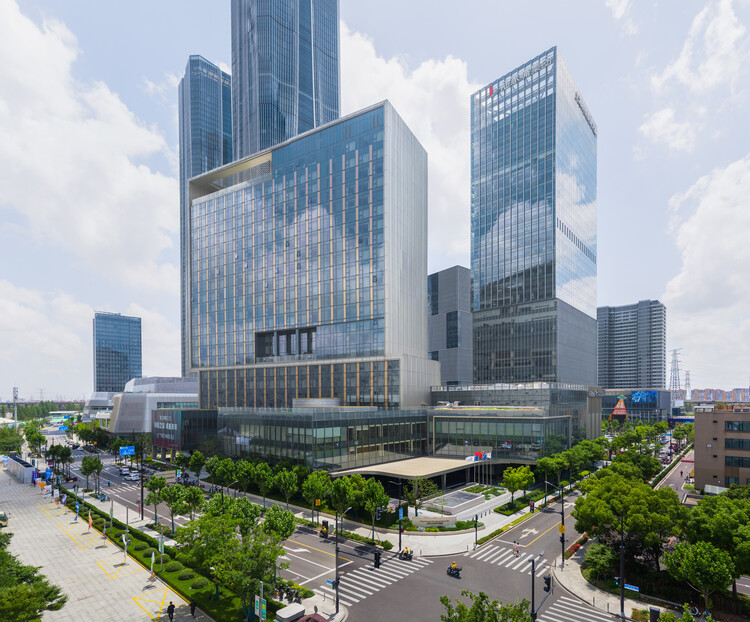
Finally, this dual perspective manifests in the built environment through the balancing forces of Unfolding Cities and Urban Villages. Metropolises continue to draw global populations, giving rise to Unfolding Cities, a trend describing massive urban power centers where economic, political, and cultural hotspots are tailored specifically to the urban matrix via grand master plans, flying taxis, and smart infrastructure. Yet, as megacities expand, the human desire for proximity and the close-knit familiarity of village life grows rapidly. Blossoming alongside large-scale infrastructure projects, the countertrend of Urban Villages focuses on shaping life at eye-level. Through highly detailed facades, short-distance mobility, creative re-purposing, and the urban intensification of existing neighborhoods, designers are giving local areas their own specific, human-centric appeal.

suspended bridges lead to a spherical suite where human comfort and wildlife coexist

a vertical village fuses rural and urban architectural languages to cultivate a dynamic community hub

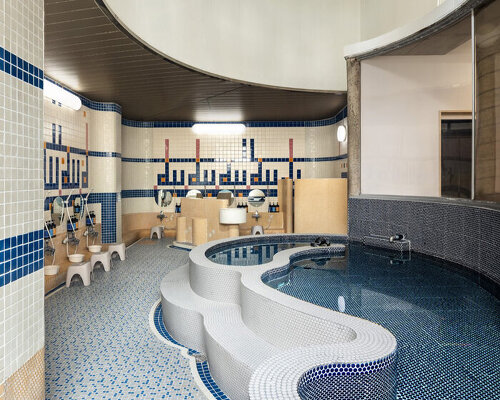
public architecture that fosters well-being, inclusivity, and active engagement

streamlining the learning process through design, the piano intuitively maps out which notes to play next

adaptive hub, for digital nomads, prioritizes human-centric connectivity and structural fluidity

through motion capture and digital archiving, the graphical data preserves traditional craftsmanship

a central courtyard framed by a flowing metal that diffuses light and rain to sustain a living, micro-landscape
project info:
name: iF Design Trend Report 2026
publisher: iF International Forum Design GmbH | @ifdesign
edited by: The Future: Project
year of publication: 2026
language: English
editorial design: Melville Brand Design | @melvillebranddesign
format: Digital
The post iF Design trend report 2026 decodes macro shifts into strategic thinking for creators appeared first on designboom | architecture & design magazine.