



Luminous viewpoint by Ryue Nishizawa rises within Japanese landfill site

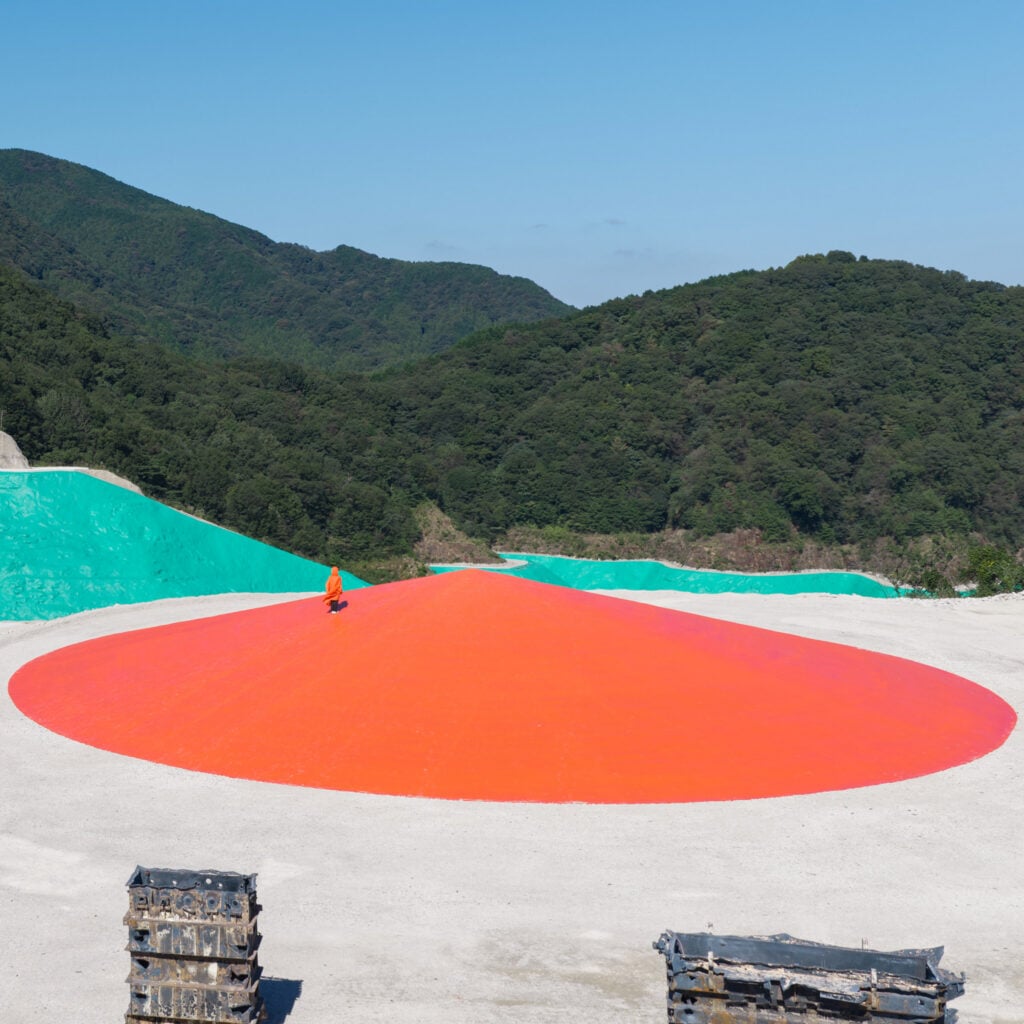

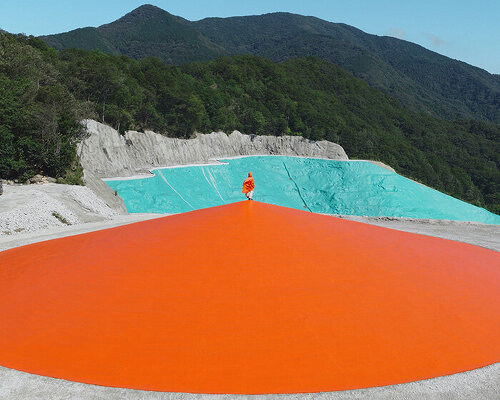
A giant orange cone designed by Japanese architect Ryue Nishizawa acts as an observation deck at this large recycling complex on Shikoku island in Japan.
Nishizawa, co-founder of Japanese studio SANAA, positioned the cone to overlook a large landfill basin at Oono Associates, a recycling complex in the city of Toon, and open up this closed-off industrial space to the public.
Named Observatory, it was created for the inaugural edition of Setouchi Art and Industry 2026, an art and architecture festival held across industrial sites in Japan.
Specifically, it forms part of the Landscapes of Waste – A landscape shaped by nature, industry, and people exhibition, curated by Nishizawa's studio partner Kazuyo Sejima, with whom he founded SANAA in 1995.
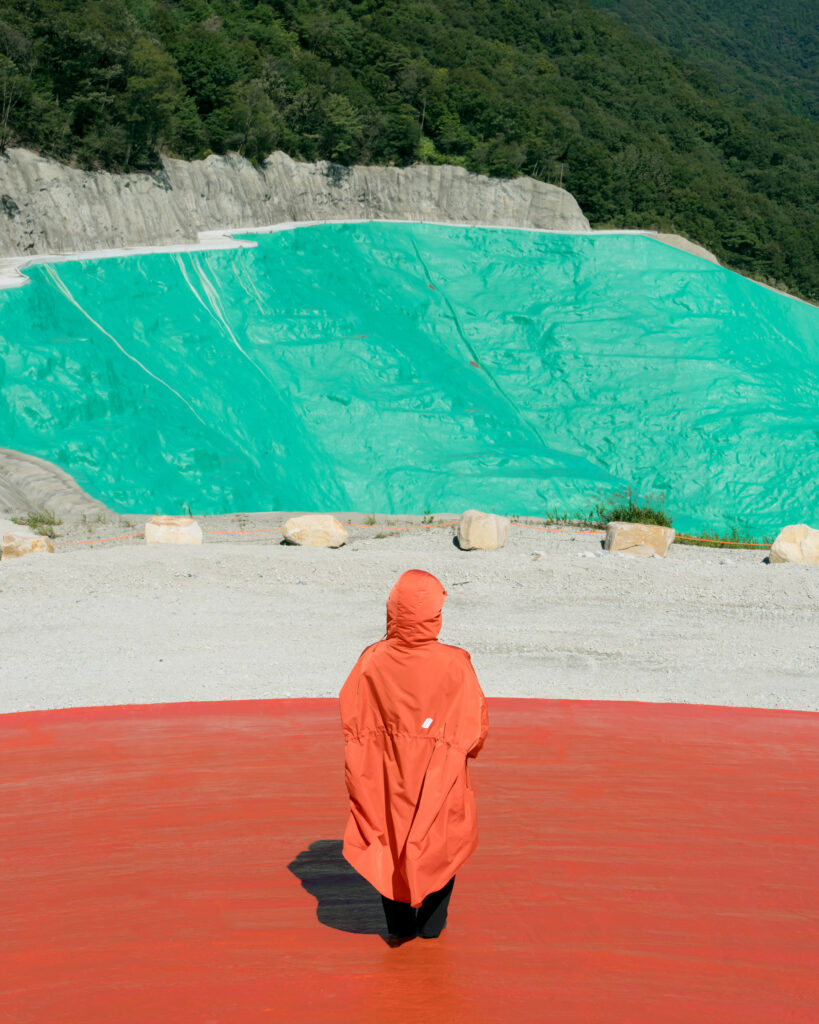
Nishizawa positioned the cone to overlook a large landfill basin within the vast recycling complex in Toon, Ehime, revealing the closed-off industrial setting to the public.
The bright orange cone measures 33 metres in diameter and four metres in height. Its size was intended to emulate an artificial hill.
Its luminous orange finish was chosen to deliberately contrast the blue-green hues of the surrounding landfill lining and landscape beyond it.
The platform encourages visitors to observe how the landscape is shaped by nature and human activity, and experience the processes of material circulation at the recycling plant.
Alongside Nishizawa's observation platform, the Landscapes of Waste exhibition includes bus stops by architectural studio Shingo Masuda + Katsuhisa Otsubo, as well as buses and visitor workwear by Suzuko Yamada Architects.
Visitors are required to take these buses to the site and put on the workwear, as seen in the photos. The festival team said this brings "visitors themselves into the composition of the landscape".
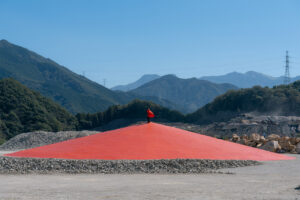
"Together, these interventions invite a closer encounter with the relationship between nature, industrial infrastructure and human activity," it added.
Setouchi Art and Industry 2026 was organised by the Japan Industrial Art Foundation. Artists and architects were invited to work with industrial sites across Okayama and the Ehime prefecture on Shikoku to create a "decentralised museum" that opens these settings to the public.
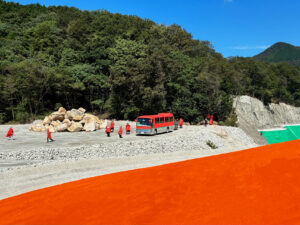
Its inaugural edition runs until 31 October across seven venues, which also include a salt production site, a textile factory, a shipbuilder and a battery manufacturer.
"Developed through collaboration between artists and participating companies, the exhibitions offer access to industrial spaces usually closed to the public, revealing the technologies, materials and people behind everyday life," said Setouchi Art and Industry.
"We hope that many people, including the younger generation, will re-examine Japan’s industries from a fresh perspective and discover the charm and potential hidden within them," added Japan Industrial Art Foundation director Masahiro Ito.
Other recent projects by SANAA include the Taichung Green Museumbrary in Taiwan and a proposal for the National Museum of Ecuador.
Project credits:
Observatory: Ryue Nishizawa
Plaza (roundabout, forest path, elevated path, rest area) and bus stop: Shingo Masuda + Katsuhisa Otsubo
Bus and wear: Suzuko Yamada (in collaboration with Kazuya Suzuki, Posa)
Supervision: Kazuyo Sejima
Advisors: Yuko Hasegawa, Yusuke Okura, Atsuhiro Miyake
Bus video cinematographer: Kenji Agata
Bus video music and sound engineering: Takayuki Noami (Non-REM Studio)
The post Luminous viewpoint by Ryue Nishizawa rises within Japanese landfill site appeared first on Dezeen.