




Studio Saar tops LDF pavilion with police and rain shields

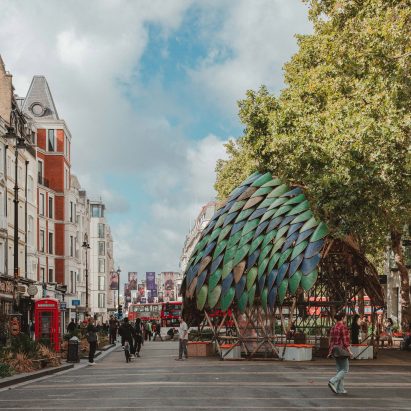
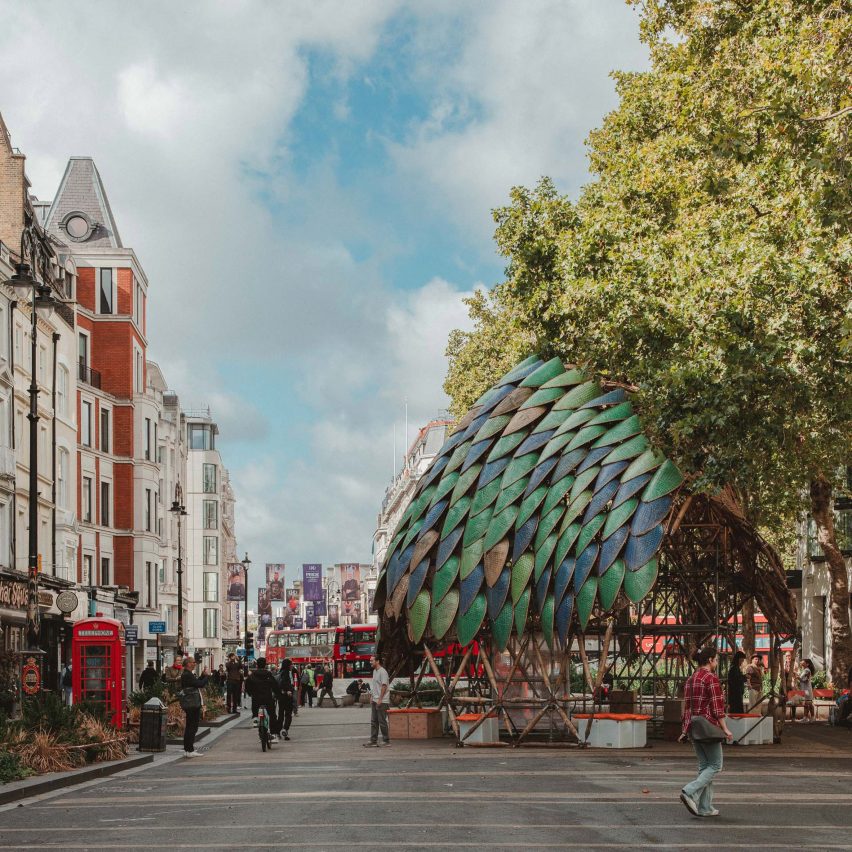
This year's London Design Festival landmark project, The Pangolin Shield, explores Britain and India's colonial history through a bamboo-grid pavilion covered with shields used both for protection and aggression.
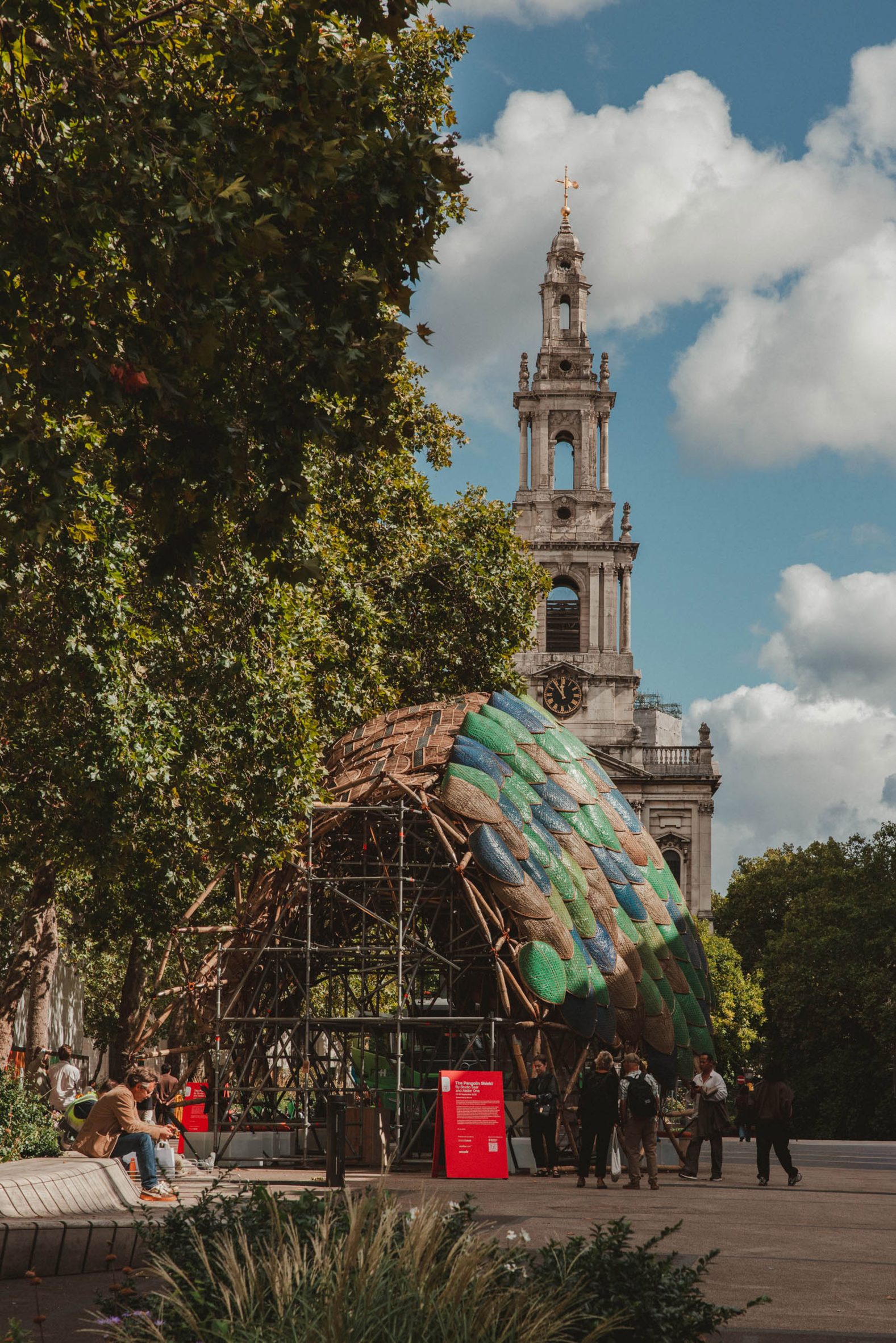
Named after, and baring a resemblance to, a pangolin – a scaly mammal – the pavilion is located on the newly pedestrianised part of The Strand outside London's Somerset House and near India House. According to Studio Saar co-founder Ananya Singhal, this location had a significant impact on the project.
"The Strand is right next to Somerset House and right next to India House," Singhal told Dezeen.
"Somerset House is where the British Navy was administered from during the colonial period, and India House is where the Indian High Commission is," he continued. "So this site has a very interesting history behind the relationship between India and the UK."
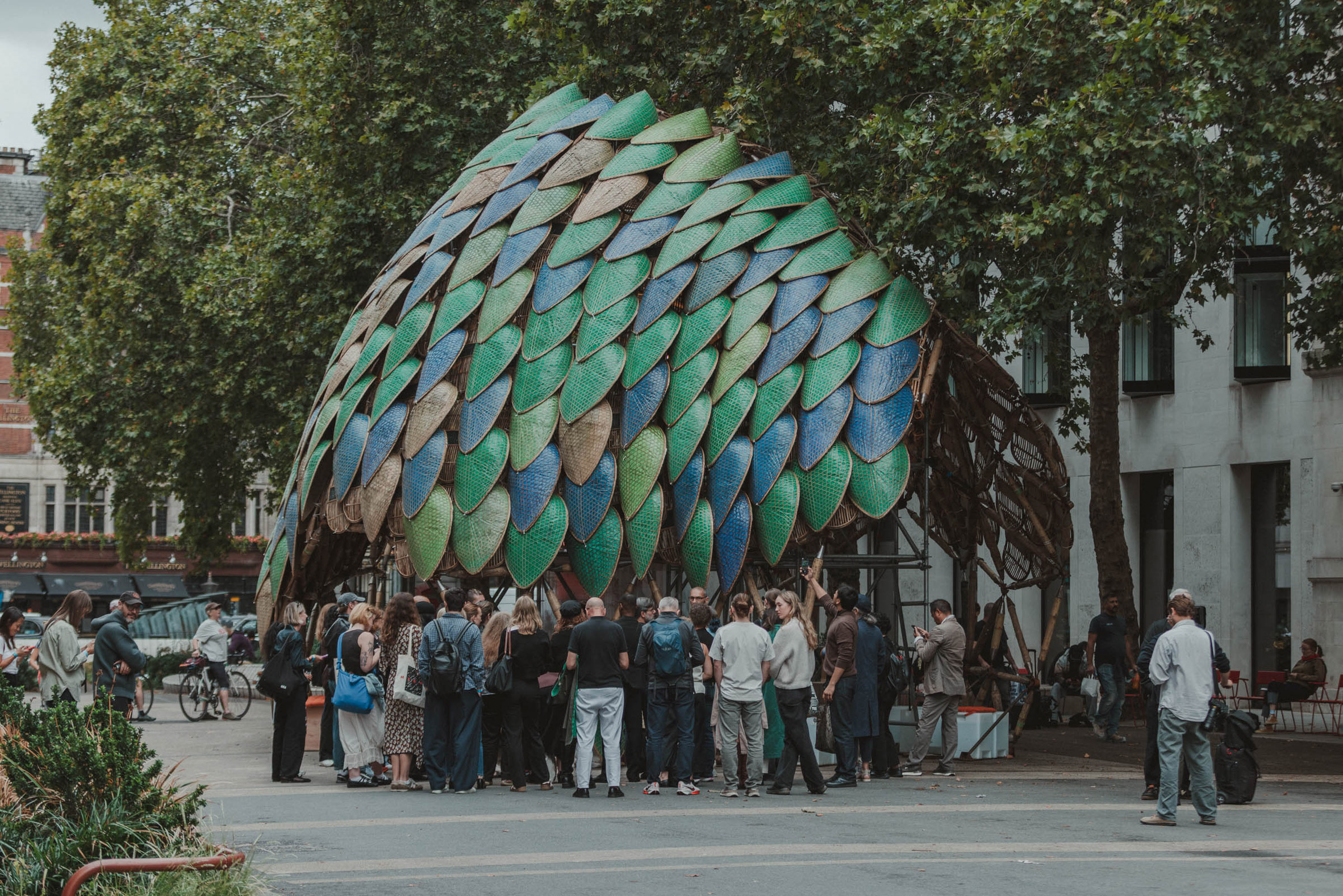
The Pangolin Shield pavilion also faces a bust of India's first prime minister, Jawaharlal Nehru.
To Singhal, placing the pavilion in this location was an opportunity to underline the new relationship that India has with the UK "and possibly the world", he said.
"We're an Indo-UK practice working with a British engineer, so there was something about this project and the site which kind of brought that combination together," Singhal said.
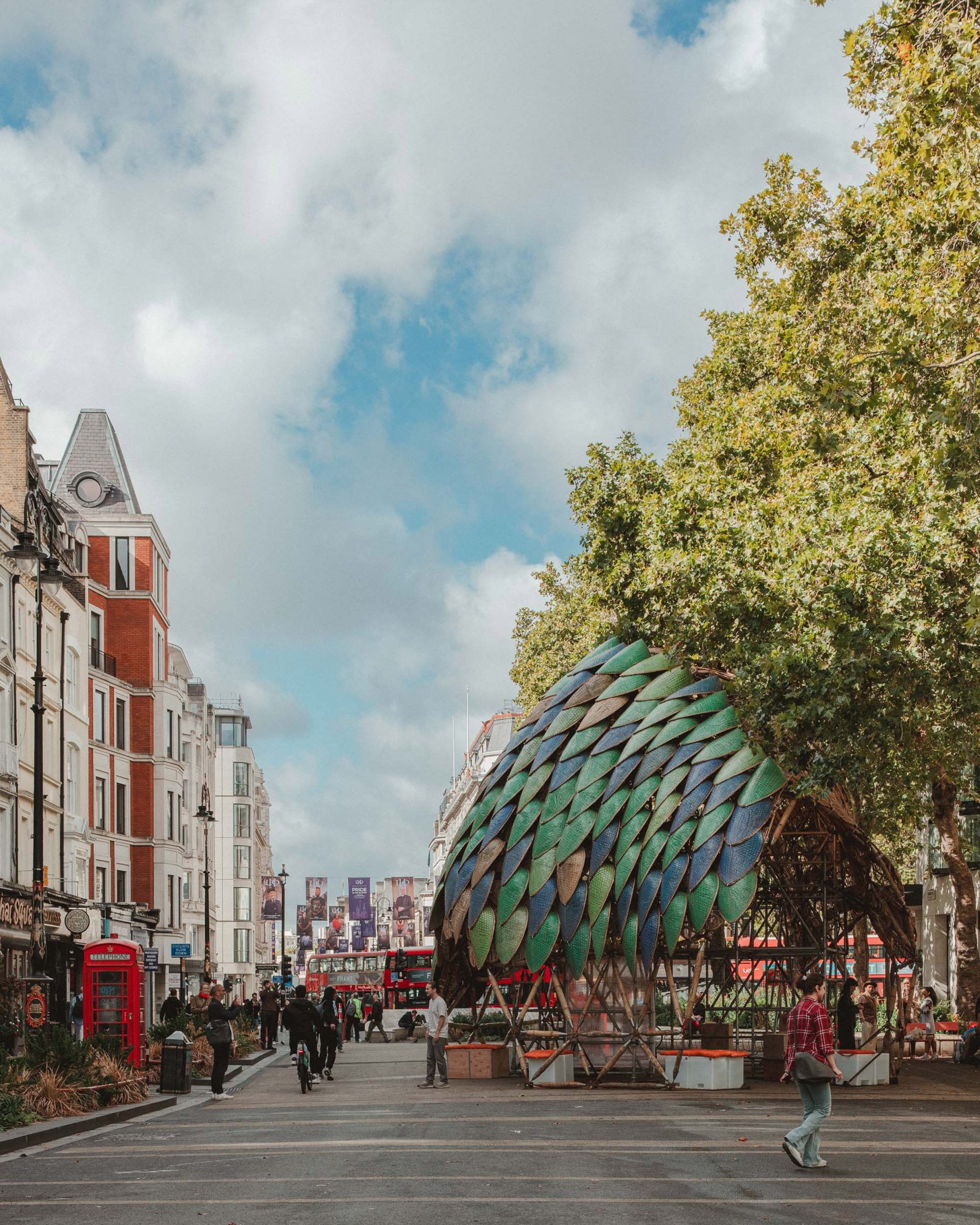
The Pangolin Shield was designed by Studio Saar and structural engineers Atelier One, led by founder Neil Thomas. It was constructed using a bamboo grid shell, which the studios wanted to use because of the material's many positive characteristics.
"It's lightweight, it's durable, it grows very quickly; once you finish with it, it's biodegradable, and you can make super interesting shapes from it," Singhal said.
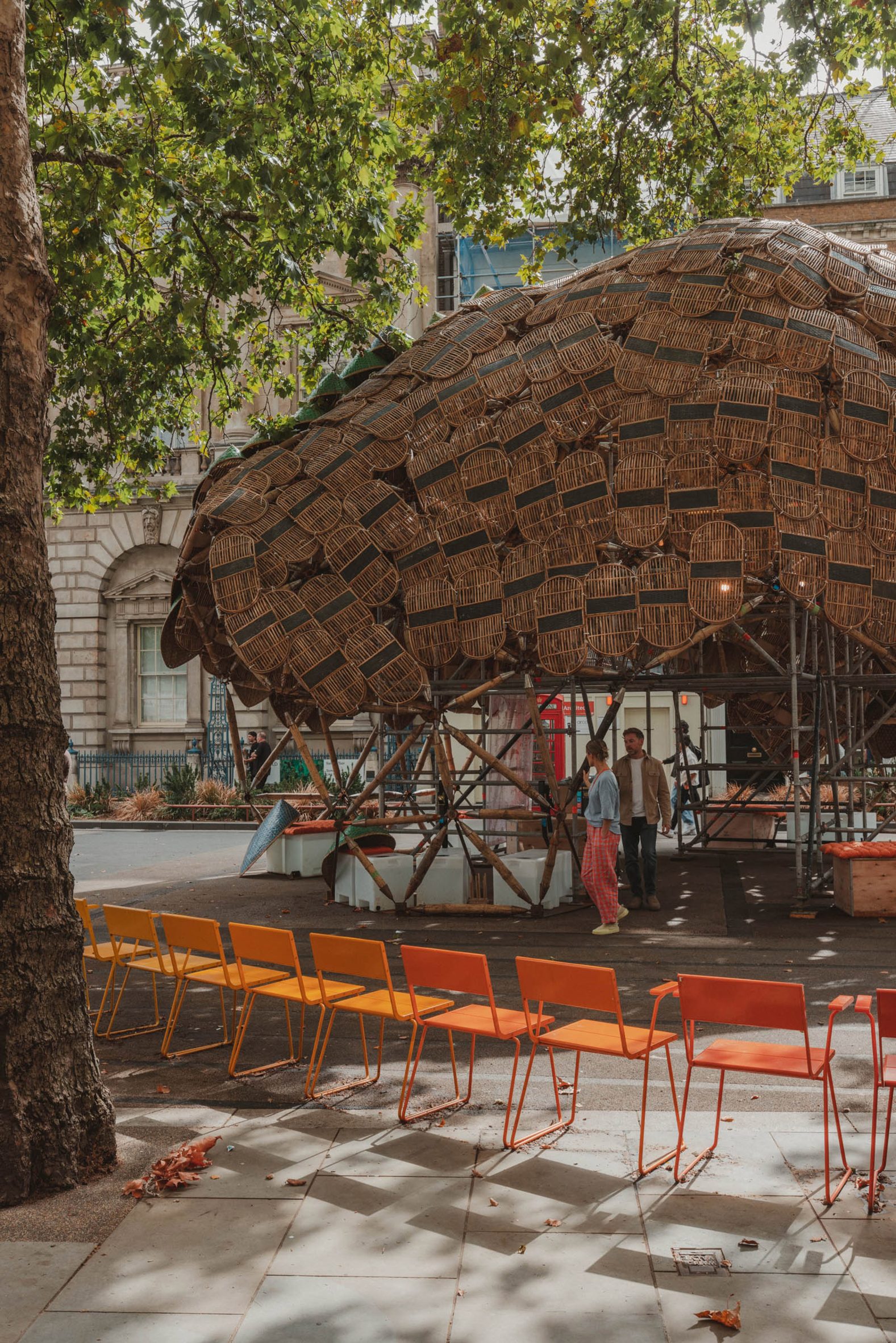
The gridded shell structure that forms the base – and which is strengthened by steel fastenings – was then covered in two very different types of shields.
On top of the bamboo grid is a first layer, made from traditional Indian police shields constructed out of lathis, a type of bamboo stick.
This first layer is then covered by knups, woven rain shields that are traditionally used by farmers in the north-east of India.
"The police shields were designed by the British colonial rulers to keep riots down in India all those years ago; it's really beautiful, the idea of making it a part of the structure that shelters both visitors and the locals here," Singhal said.
"The knups are from Meghalaya, the wettest place on Earth – it gets more than two metres of rain per year and its name literally means 'the land of the clouds'," he continued.
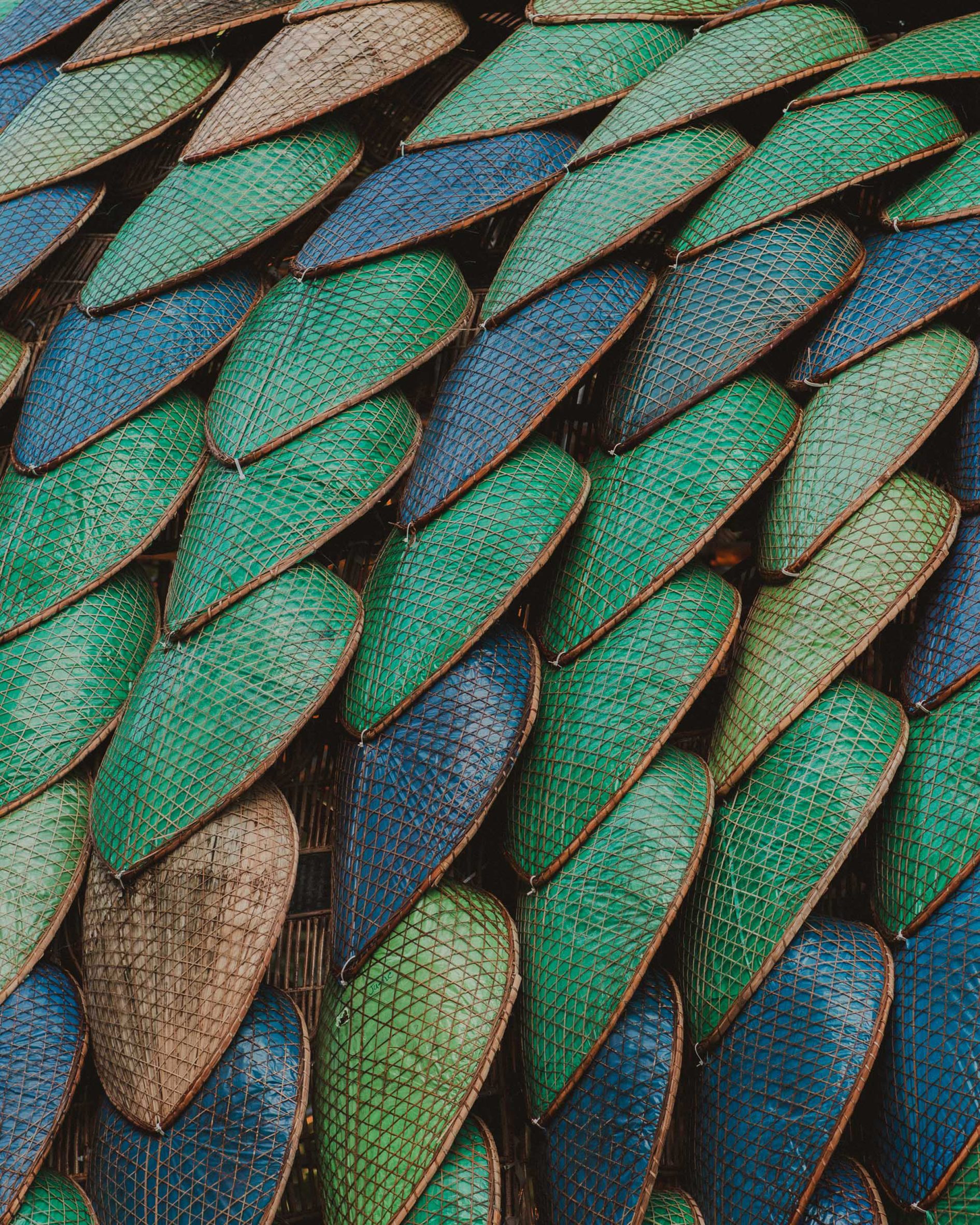
The design of the pavilion, which resembles a creature covered in scales, was also inspired by Singhal's work outside of Studio Saar.
"I'm a wildlife photographer and conservationist, and one of the animals that I hear about a lot is the pangolin, which is the most trafficked mammal on Earth," he explained. "So I wanted to create a structure that brought the pangolin into conversation."
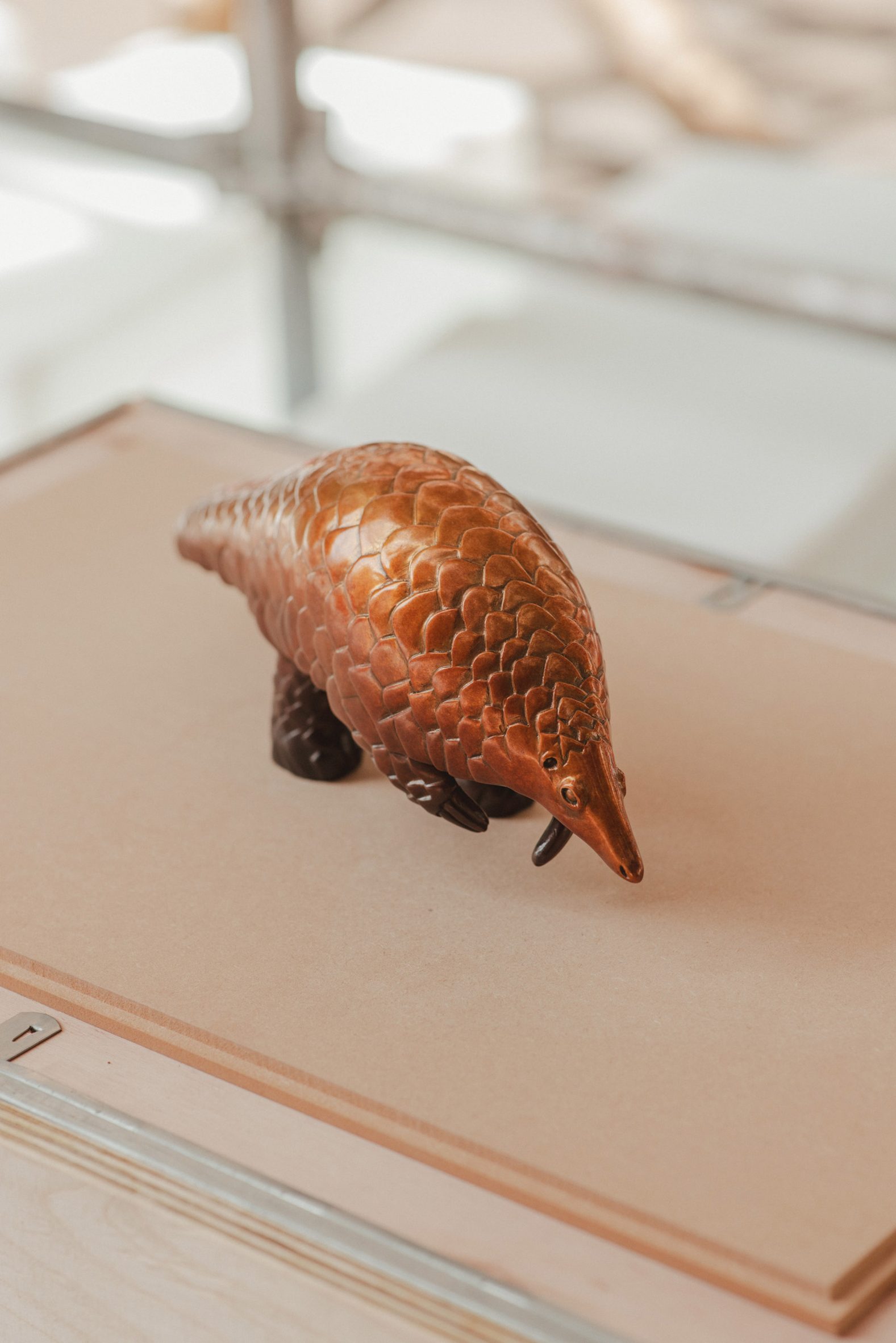
Inside the pavilion, visitors can admire a sculpture of the pangolin and look at the drawings for the project.
As the pavilion was damaged when it was transported from India to the UK, it will be shown with an interior scaffold during London Design Festival (LDF) due to "abundant caution," Singhal said.
"It's a public space and there are going to be drunk people coming up and down this street", he said in reference to the risk of the pavilion being damaged.
Overall, Singhal believes that the project is a good representation of the values that Studio Saar stands for.
"Something which we really hold dear as a practice is the idea you can take small, humble, crafted things and combine them to make amazing things," he said.
"And that's the piece that we've practised in many areas, and what we would really love to do, and that's what we're doing here with the police shields and the knups."
Other projects on show at London Design Festival include Craft x Tech, which explores Japanese craft in a contemporary way, and Lozi's modular plywood furniture.
The photography is by Taran Wilkhu.
The Pangolin Shield is on show at The Strand, WC2 1HL, from 12 to 20 September. See our London Design Festival 2026 guide on Dezeen Events Guide for information about the many other exhibitions, installations and talks that take place during the week.
The post Studio Saar tops LDF pavilion with police and rain shields appeared first on Dezeen.