

Superflex and KWY.studio create architecture for fish to enjoy after sea levels rise

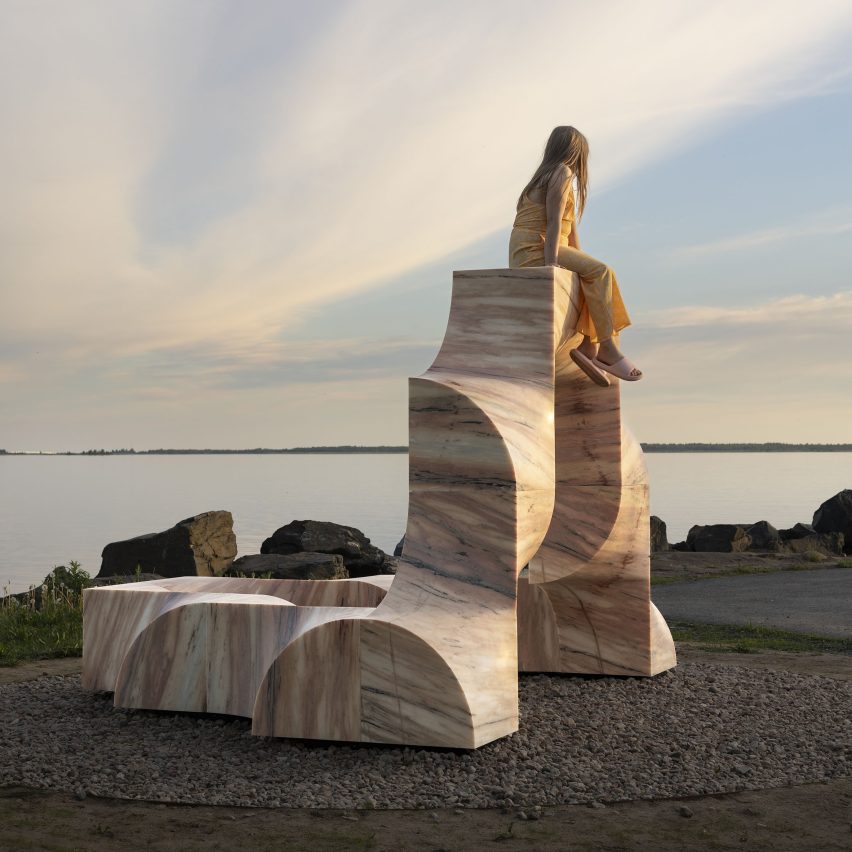
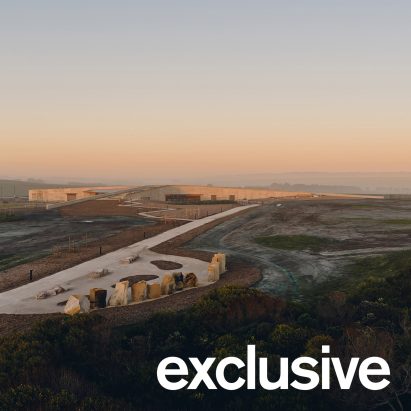
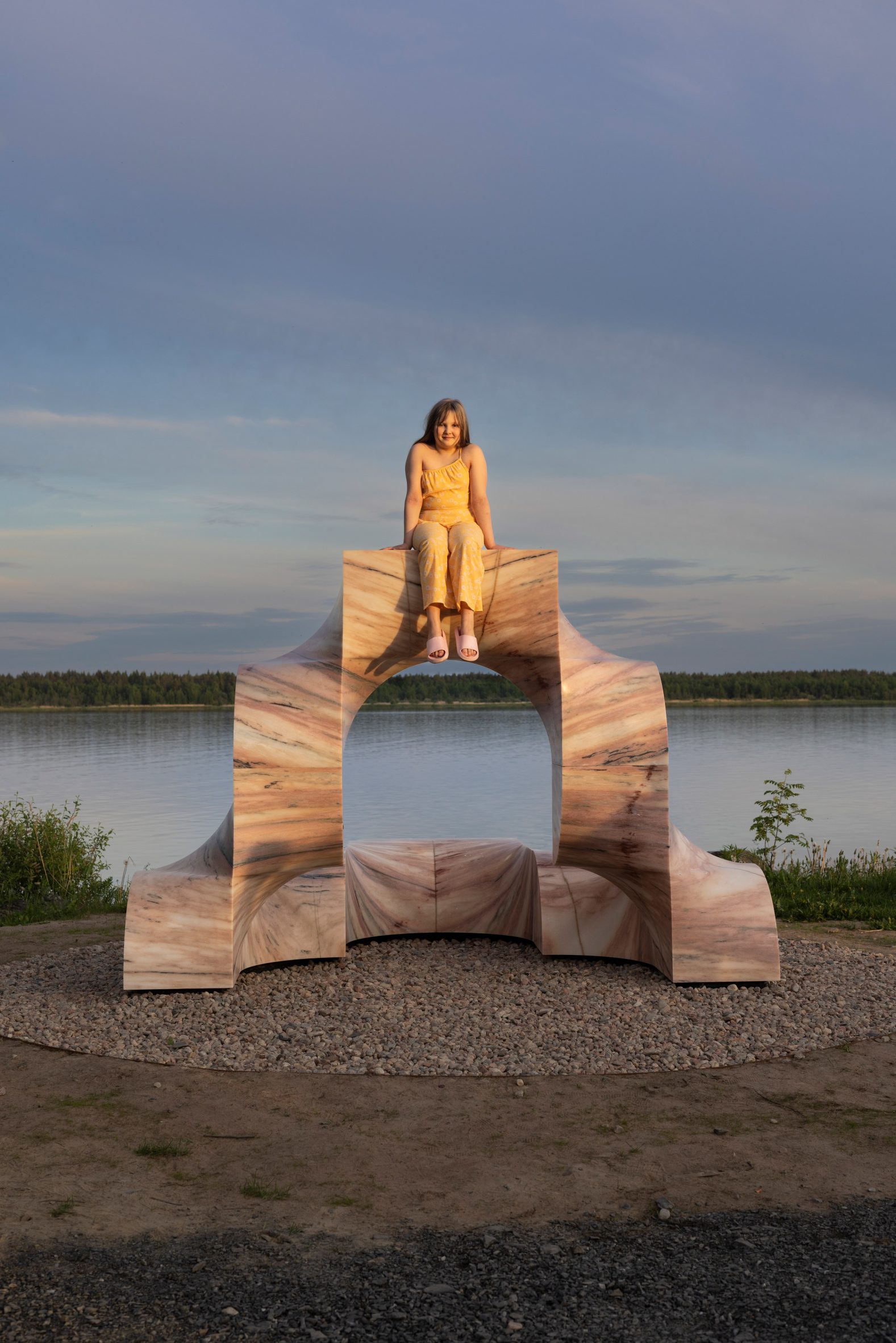
Danish artist collective Superflex has collaborated with KWY.studio architects to create Super Kello – a harbourside stone sculpture in Oulu, Finland, to be enjoyed by fish after sea levels rise.
Created for the new climate change-themed public art trail Climate Clock, Super Kello is one of seven works nestled into the local landscape to provoke engagement with the theme of environmental crisis.
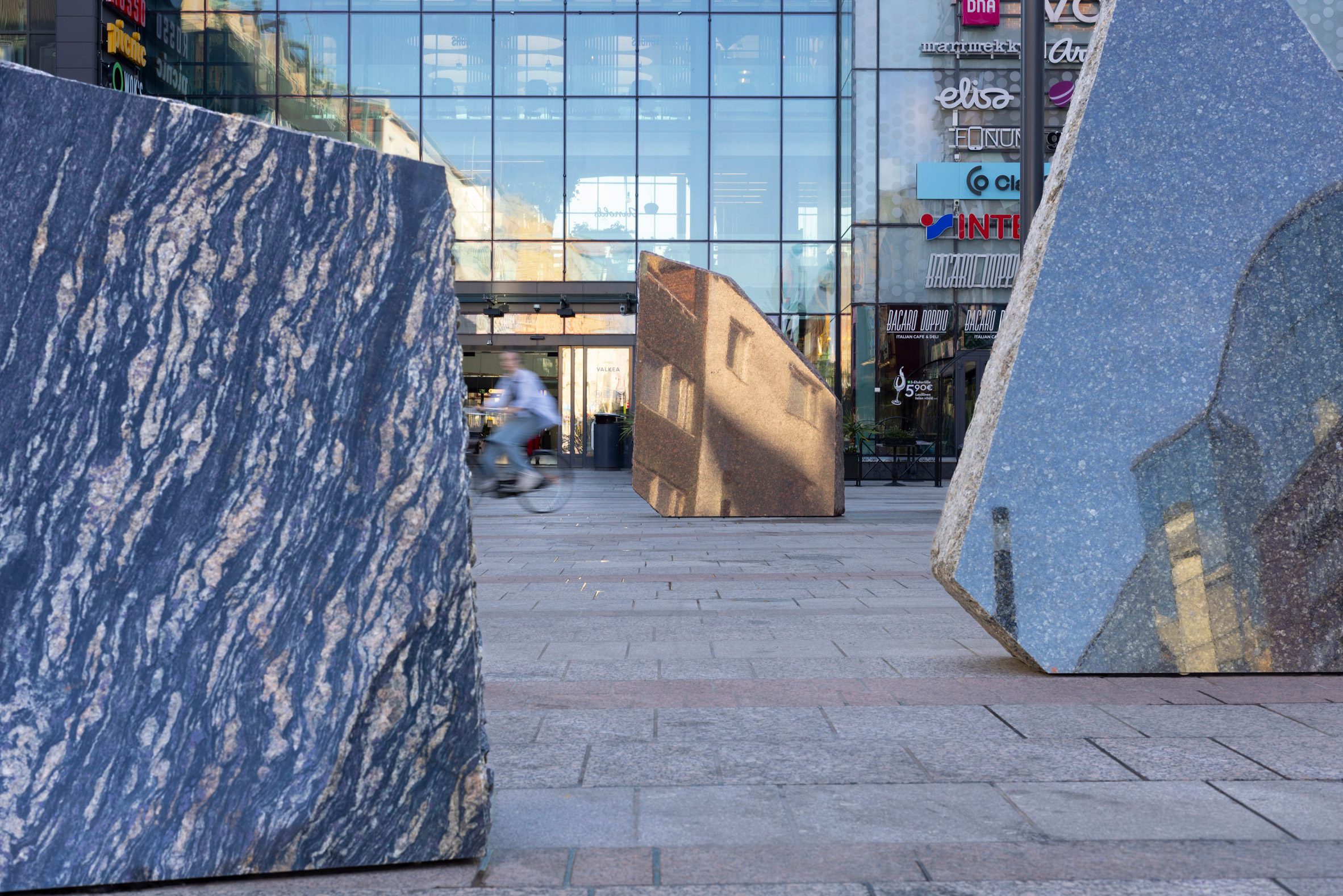
Super Kello is located at the Kiviniemi fishing harbour on the shores of Bothnian Bay, at the northern tip of the Baltic Sea, and represents the latest iteration in Superflex and KWY.studio's series of "fish cubes".
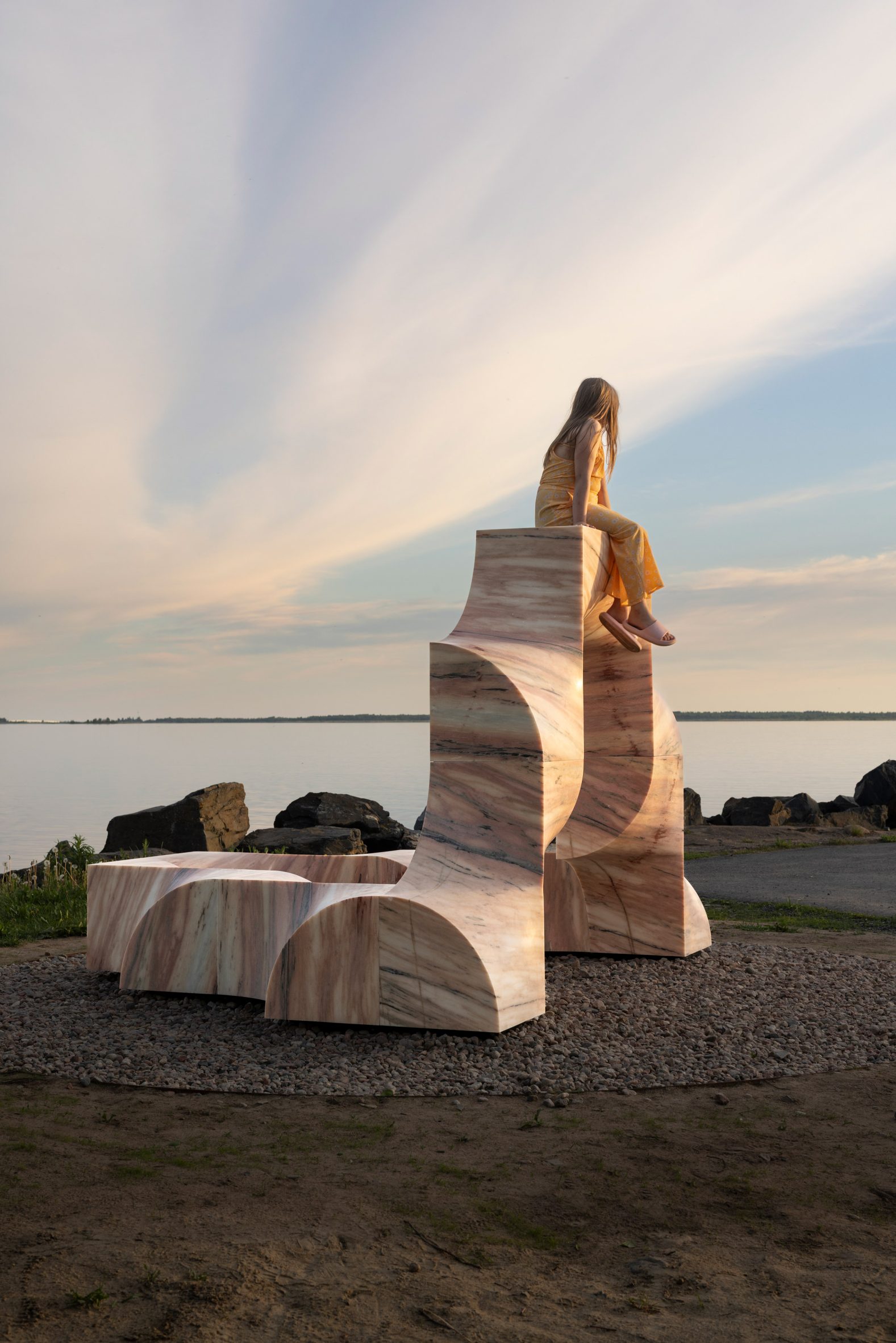
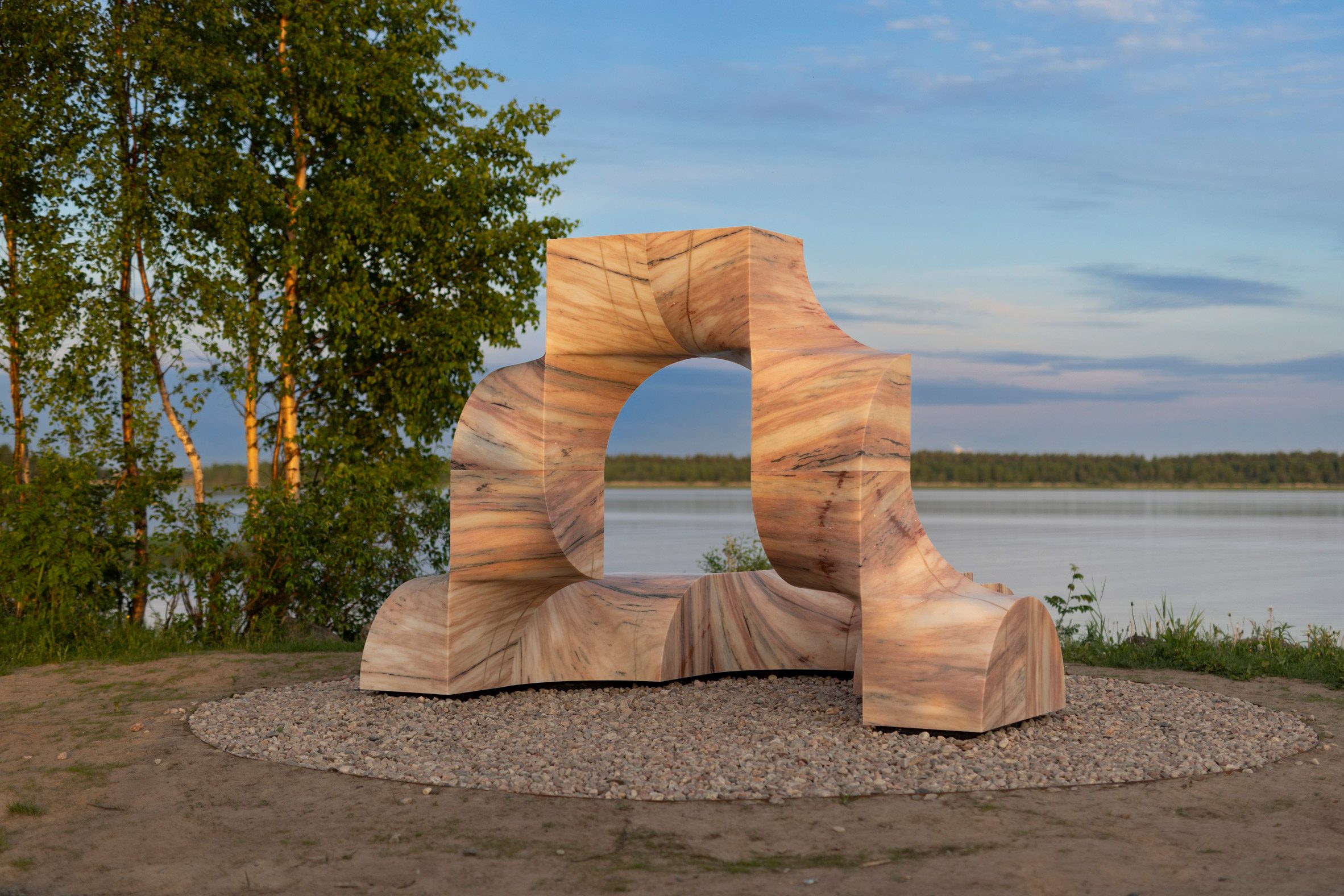
These sculptures are each parametrically designed to maximise the surface area of a single cube of waste marble, using wire cutting to slice the stone with precise curves and make modular building blocks for a world that appeals to fish.
Superflex has worked with KWY.studio for several years on this "fish-friendly architecture", Superflex co-founder Rasmus Rosengren Nielsen told Dezeen.
One of Superflex's fish cubes serves as street furniture in Portugal, while another sits under the waters of Copenhagen Harbour in the collective's home town, providing a gathering place for marine life.
"Surface area is what lacks in the seas in this part of the world, and even more so in a place like Denmark," said Nielsen. "We [the Danish] built a country with stones we took from the sea, and stone reefs were the homes of fish, so it's like we took their cities to build our cities."
This kind of "interspecies design", where objects are designed for the enjoyment of species other than humans, is a recurring subject of Superflex's work and has even seen the studio write an "Interspecies Architectural Manifesto".
"We have this principle that we don't just make things for people, but we make things with people, but if you're making things in places that might disappear, you're not making it with people any more, you're making it with, potentially, fish," said Nielsen.
"So we like to think that fish are our new collaborators and we have to take into account their aesthetic preferences," he continued.
Among Superflex's collaborators on Super Kello and other works is the behavioural ecologist Alex Jordan, who has helped the collective to understand the world from the perspective of fish.
This is partly what led to the choice of Rosa Aurora marble from Portugal. Its pink colour mimics the coral polyps that, hundreds of years from now, could arrive in these northern reaches of the world as the oceans warm.
"This might be a beginning of a Kiviniemi coral reef in the deep future," said Nielsen.
For now, Super Kello – the "kello" meaning bell in Finnish, and referencing both the sculpture's shape and the name and iconography of a nearby town – is better positioned to be enjoyed by humans, with the expectation that they might use the spot to pause, slow down and ponder.
To encourage visitors to access a sense of "deep time", the sculpture is accompanied by a broadcast of Homer's Odyssey, read at the pace of one word per hour over ten years – the duration of Odysseus's journey home.
The Climate Clock public art trail is part of the 2026 European Capital of Culture programme in Oulu, one of the world's northernmost cities.
The trail was curated by Alice Sharp of British organisation Invisible Dust, which brings together artists and scientists to create works on environmental issues.
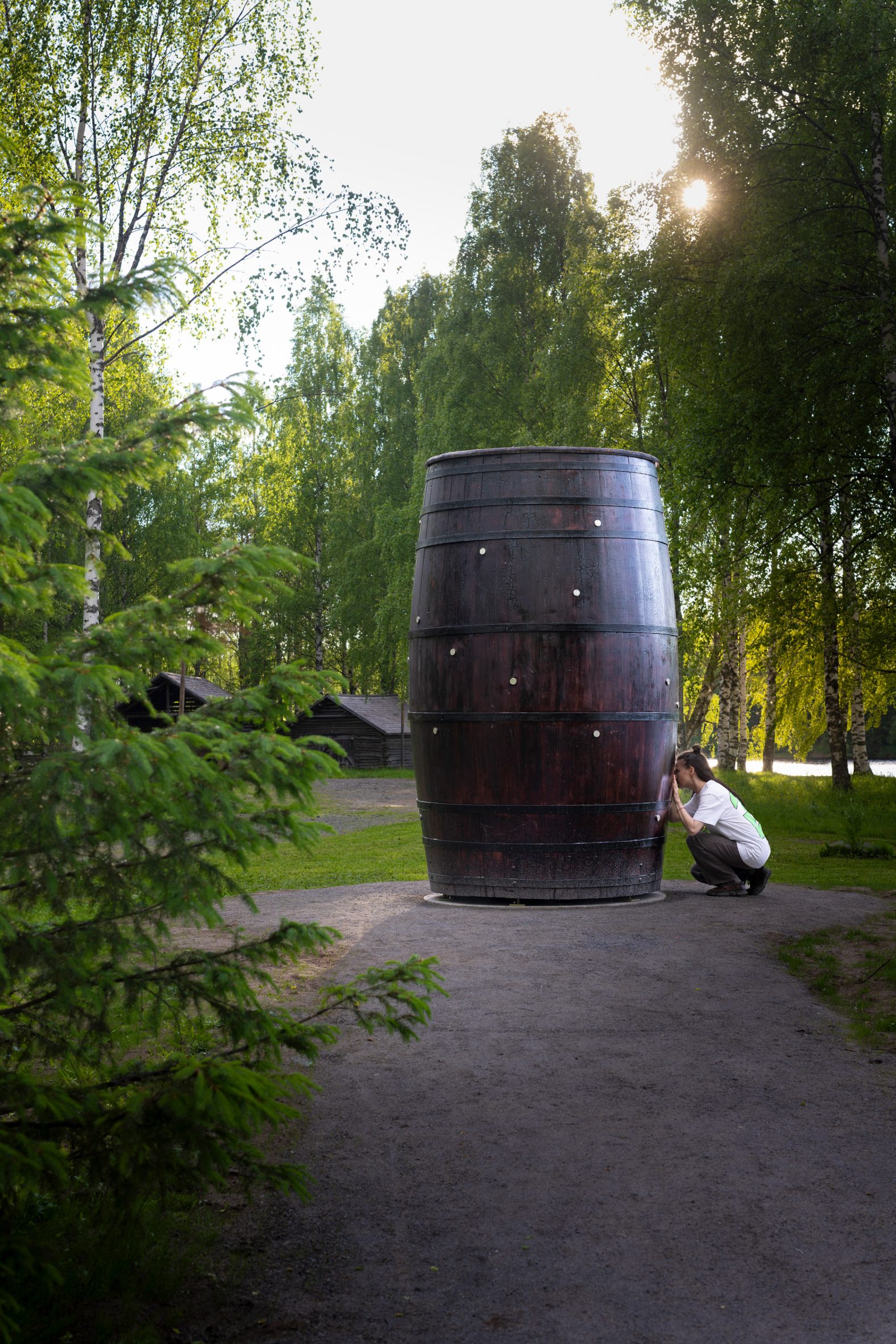
For Climate Clock, each of the seven international artists involved was paired with a different scientist, ranging from glaciologist Alun Hubbard for Rana Begum's monumental stone composition to snow hydrologist Pertti Ala-aho for Takahiro Iwasaki's three-metre-high barrel of snowflakes on a beach.
The artworks are built to withstand dramatically changing conditions, as the seasons vary radically in the sub-Arctic location.
The harbour around Super Kello, for instance, is frozen throughout the winter and people can cycle across the ice to the other side of the bay. The snow only melts in April, giving way to exceptionally verdant greenery.
"I was so impressed by this beautiful space, where you have this transformation from the winter to the summer," said curator Alice Sharp. "But at the same time you have climate change warming [the Arctic] at four times the rate of the rest of the world. So things that are changing here are changing faster."
"What my concept for the whole of Climate Clock has been is to look at reconnecting to nature's time. Each of these artworks seeks to enable you to be in a moment where you have a pause, and you think about yourself and nature."
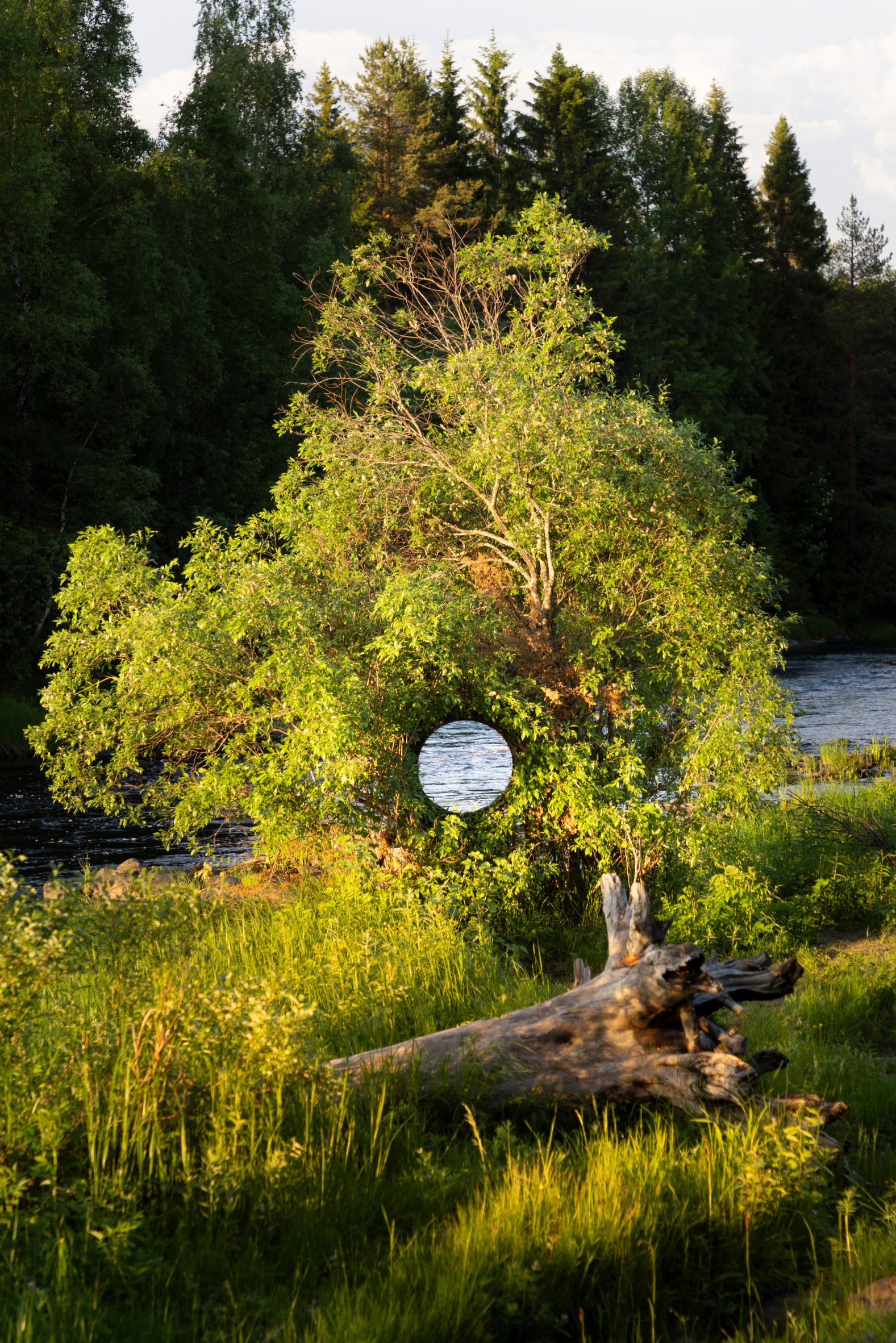
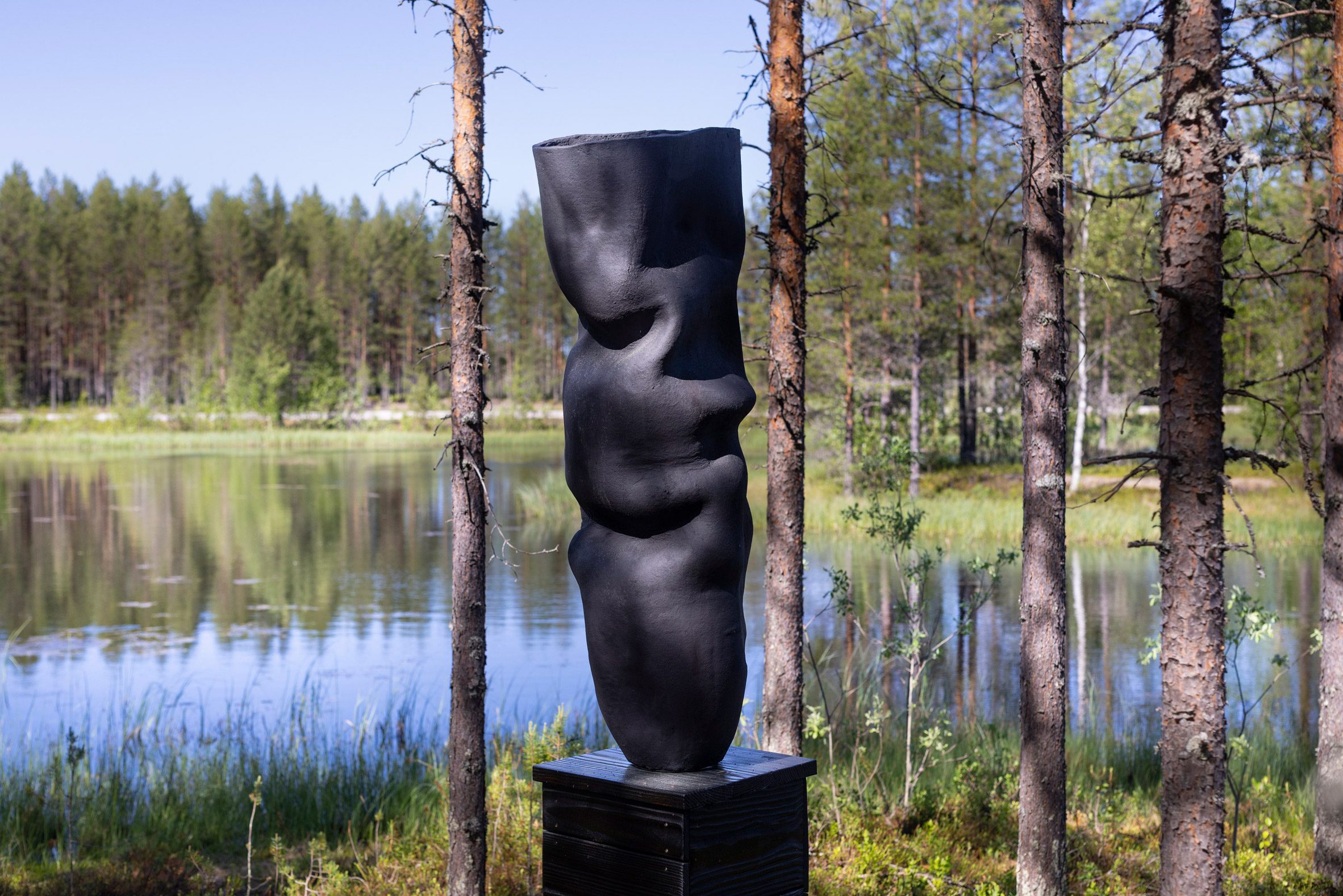
Climate Clock also includes a series of ceramic vessels in a forest setting by British-Nigerian artist Ranti Bam, created with advice from physical geographer Jan Hjort, and a project by local artist Antti Laitinen with circular portals woven into the trees around river rapids, created with input from mycologist Jouko Rikkinen.
A collaboration between Mexican artist Gabriel Kuri and climate scientist Kevin Anderson brought the colours of risk-assessment charts to a roadside, while Helsinki duo Tellervo Kalleinen and Oliver Kochta-Kalleinen worked with several science advisors to make their touring community-based artwork, the Most Valuable Clock in the World.
Oulu is otherwise known as Finland's technology hub, home to Nokia and Oura. It is also the location of Aaltosiilo, one of architects Aino and Alvar Aalto's earliest industrial works.
The post Superflex and KWY.studio create architecture for fish to enjoy after sea levels rise appeared first on Dezeen.