




‘the intelligent hand moves everything’: alberto cavalli on homo faber and the future of craft

INTERVIEW WITH ALBERTO CAVALLI ahead of homo faber 2026
Following a widely acclaimed 2024 edition, which saw Italian director Luca Guadagnino transform the San Giorgio Maggiore island into a poetic Journey of Life, the Homo Faber Biennial returns to Venice for its fourth edition this September. Organized by the Geneva-based Michelangelo Foundation, the cultural showcase at the Fondazione Giorgio Cini invites audiences in an international celebration of craftsmanship, where hundreds of master artisans and rising stars from around the world come together to demonstrate the skill, talent and creativity that goes into crafting objects by hand.
Through its flagship event, alongside a global digital artisan guide and extensive educational fellowships, the non-profit organization provides a powerful, tactile counter-narrative to modern disposability, mass production, and aggressive dematerialization. ‘We may live in the era of AI, but we’re still made of flesh and bones, and our senses are still the best interceptor of the spirit of the time,’ Alberto Cavalli, Executive Director of the Michelangelo Foundation, tells designboom. This physical grounding drives the upcoming edition of Homo Faber, titled An Island of Light. With creative direction by British artist Es Devlin, the 2026 biennial will map 15 immersive spaces across the historic Venetian site. Devlin’s spatial design draws from the geography of the surrounding lagoon, relying on water, mirrors, and kinetic elements to shape light around the work of international makers. Rather than a standard showcase, the layout treats each artisan as a distinct island of talent connected by the shared currents of their trade.
Ahead of the opening, designboom spoke with Cavalli about the upcoming biennial, why the human hand remains our most precious instrument for understanding the world, and the foundation’s active role in equipping the next generation to keep artisan traditions and techniques alive.

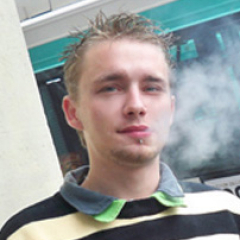
executive director Alberto Cavalli | image by Susanna Pozzoli © Michelangelo Foundation
THE BIENNIAL’S PURPOSE AND DETAILS OF THE 2026 EDITION
For the Michelangelo Foundation, the Homo Faber Biennial is structured to push back against standard commercial sourcing. Rather than operating as a conventional trade show, the event looks to alter how contemporary architects, interior designers, and decorators choose and specify objects, techniques, and materials for their projects. By wrapping the exhibition in storytelling, the foundation builds a tangible defense for handmade objects over mass-produced alternatives.
‘These artistic and creative concepts, developed by refined art directors like Luca Guadagnino and Es Devlin, are a fruitful and inspiring way to put again craft, and handmade objects, at the centre of our lives,’ Cavalli says. ‘It is important to create a plausible narrative structure, to convey emotions and to trigger attention: Homo Faber is not a fair, a Salon or an exhibition – it is an authentic celebration of human talent and ingenuity, and these narratives are fundamental to invite the visitors to feel part of this community.’

Homo Faber 2024: Birth | image by Giulio Ghirardi © Michelangelo Foundation
This intent directly shapes the setup of the 2026 edition, An Island of Light, taking place across the Fondazione Giorgio Cini on San Giorgio Maggiore. Devlin’s creative direction relies on light as both a practical focus tool and an active element within the different environments. These range from A Language of Hands, which builds a working artisan atelier for live demonstrations, to A Full Moon Rising, where historical Korean moon jars sit inside a 1960s swimming pool to catch reflections from the water. In other rooms, the moving shadow sculptures of An Alphabet of Objects transition into the saturated, mirror-backed colors of A Rainbow of Forms. This layout forces visitors to engage with the environments where these objects are actually born, rather than looking at them on a shelf.
To Cavalli, light here is intended both physically and metaphorically. ‘Homo Faber is a movement dedicated to giving visibility to master artisans, to shed light and value on their talent, practices, ideas and work,’ he explains. ‘For this edition, the “light” will also be a physical, inspiring element that will accompany the visitors throughout the exhibition: every aspect of the illumination of the rooms, of the objects and of the spaces has been carefully taken care of, to create a game of shadows, reflections, even sounds that will allow this “light” to put in evidence the extraordinary objects presented, with their colours, textures, techniques. Light is the force that allow the soil to be productive, that makes the earth bloom: it’s the element that makes all the other elements shine and live, and Es Devlin has the exceptional talent to morph light into a visual concept at the same time simple and sophisticated.’

Es Devlin, art director of Homo Faber 2026 | image ©Cian Oban-Smith
THE MICHELANGELO FOUNDATION’S GLOBAL CRAFT NETWORK
While the biennial in Venice serves as a concentrated physical anchor, the Michelangelo foundation extends its reach year-round through the Homo Faber Guide. With a network of over 100 partner institutions, the digital directory maps master artisans, ateliers, and independent makers across more than 50 countries and six continents. Instead of keeping craft siloed within regional markets, the platform allows contemporary designers, architects, and collectors to locate, contact, and commission work directly from global creators. For Cavalli, expanding this network is about recognizing specific, localized knowledge. ‘Everywhere we go we try to give value to the local genius loci, to the spirit of the place that represents the true soul and identity of the territories,’ he says, ‘that the master artisans know how to express in the purest and most authentic way.’
This digital network materializes on the ground through the Homo Faber in Città program, which runs parallel to the main event. Throughout September, local Venetian workshops featured on the online guide open their studio doors directly to the public. Using interactive itineraries provided on the foundation’s platform, visitors can look past the central exhibition halls to navigate Venice’s working craft ecosystem.

Caterina Roma, artisan, and Mili Couto, fellow | image ©Mar Puig Soler
BUILDING THE INFRASTRUCTURE FOR TOMORROW’S ARTISANS
Connecting these global makers is only part of the equation; ensuring their trades remain economically viable requires heavy social infrastructure. An economy geared toward rapid turnover constantly threatens the slow, methodical transmission of knowledge. To counter this, the foundation developed the Homo Faber Fellowship, a program that funds international mobility by placing young talents inside a master artisan’s workshop for six months of rigorous, on-the-job training. ‘With the homo Faber Fellowship, as anticipated, we give a concrete help to both artisans who want to transmit their knowhow, and to young talents who want to start working but still have to learn,’ Cavalli says. ‘We offer them real opportunities and many advantages, like the one-month masterclass dedicated to ameliorating their knowledge of finance, intellectual property, design, etc. Skills that will be fundamental for their future activities.’
This investment in the next generation carries directly onto the floor of the biennial through the Young Ambassadors program. During the exhibition, promising design and applied arts students relocate to Venice, living together as a community for a month. They act as the public-facing voices of the event, guiding visitors through the installations and explaining the complex techniques behind the objects. Cavalli views this direct engagement as a crucial tool for keeping young creatives in the industry. Immersing them in the event, he explains, allows them ‘to understand how powerful is the love that people have for craft and for human talent.’

Simone Crestani, artisan | image © Alberto Parise
CRAFT AS PHYSICAL NECESSITY IN AN AUTOMATED AGE
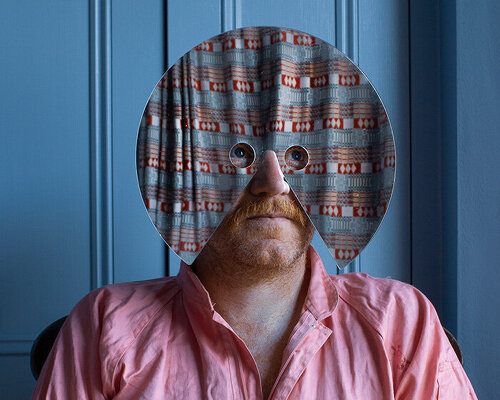
For the Michelangelo Foundation, craft isn’t just about preserving the past, it’s a physical necessity. Even as digital processes dominate modern manufacturing, the friction between a maker and raw material remains fundamental to our humanity. Cavalli points to French critic Henri Focillon to explain this, noting that hands are ‘the most precious instruments of knowledge and understanding.’ The tactile act of shaping materials is an innate drive. It allows us to project our identities into our environments, turning a generic space into a home. ‘When the hands touch the material, we are allowed to look into the future,’ Cavalli explains, ‘because we can “see” what that material can become, how our talent can transform it, how our senses can be awaked and empowered by the direct encounter with the materials.’
This physical reality separates high craftsmanship from standard industrial output. While machines easily achieve flawless, uniform execution, they lack intent. True artisanal excellence requires more than just technical precision, it needs an underlying soul. ‘A cold and merciless efficiency is not a synonym of artisanal excellence: many machines can achieve it,’ Cavalli says. A master acts as the refined interpreter of a project. To possess a valuable material memory, he insists, an object ‘must be made with joy and purpose, on top of ability and knowhow.’

Gabriela de Sagarminaga, artisan | image via the Michelangelo Foundation © all rights reserved
This mindset directly shapes how the foundation approaches the collision of ancient techniques and modern digital fabrication. They don’t reject new tech, instead, they view it as an instrument that must be consciously managed by the ‘thinking hand.’ Applied correctly, digital tools eliminate exhausting labor and save resources, buying artisans time to focus on their specialized techniques. But technology is never neutral. ‘The intelligent hand is what moves everything, and if technology can give it a more efficient amplitude it’s a perfect evolution of the history of tools,’ Cavalli asserts. ‘But if technology turns us into odd tools, deprived of any intuition and taste, then we think that Homo Faber can propose a way to re-install human talent at the centre of the conversation.’

Clare Celeste Borsch, artisan | image via the Michelangelo Foundation © all rights reserved

Clare Celeste Borsch, artisan | image © Clare Borsch

artisan from Nymphenburg | image © Porzellan Manufaktur Nymphenburg

Aucella Atelier | image via the Michelangelo Foundation © all rights reserved

Homo Faber 2022: Origami for Life by designer Charles Kaisin | image by Lola Moser @ Michelangelo Foundation

San Giorgio Maggiore Island | image by Matteo De Fina © courtesy of the Fondazione Giorgio Cini

Homo Faber 2026: Piscina Gandini visualization | image @Es Devlin Studio

Homo Faber 2024: Buccellati Celebration | image by Alessandra Chemollo © Michelangelo Foundation
project info:
event name: Homo Faber 2026 | @homofaber
event dates: 1 – 30 September, 2026
event: location: Fondazione Giorgio Cini, Island of San Giorgio Maggiore, Venice, Italy
organizer: Michelangelo Foundation For Creativity & Craftsmanship
Homo Faber 2026 partners: Fondazione Cologni dei Mestieri d’Arte and Fondazione Giorgio Cini
This article is part of designboom’s Crafting the Future chapter, exploring what it means to be a maker in today’s world and the future of craftsmanship. Discover more related stories here.
The post ‘the intelligent hand moves everything’: alberto cavalli on homo faber and the future of craft appeared first on designboom | architecture & design magazine.