



















Five inflatable garments that use air to regulate the wearer's temperature


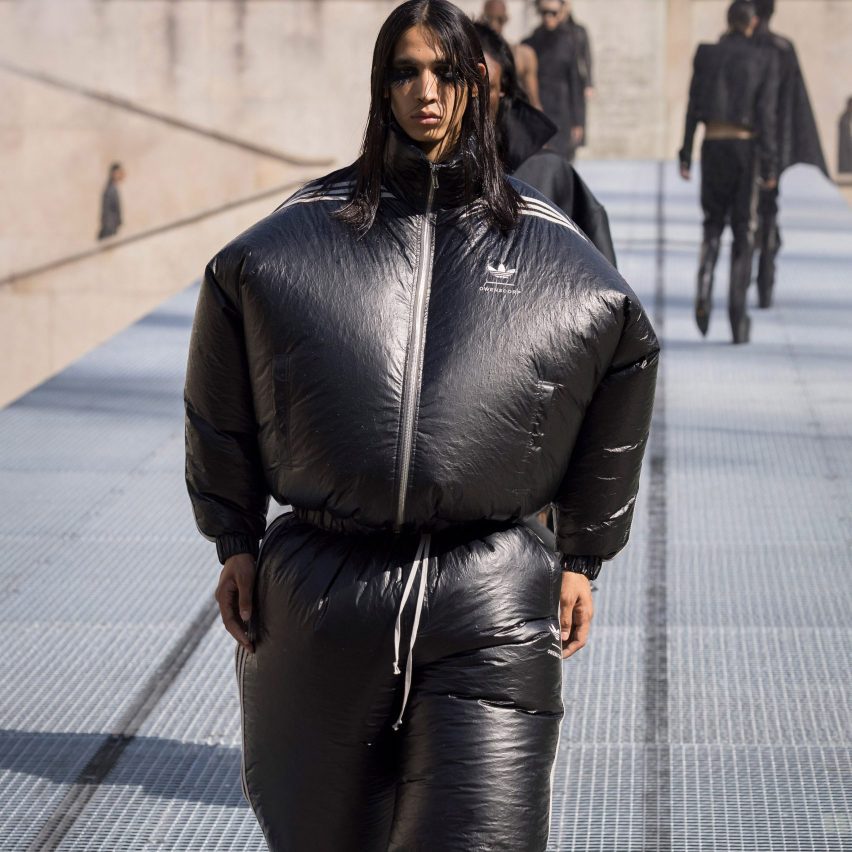
On the heels of Rick Owens's fan-powered Adidas tracksuits blowing up at Paris Fashion Week, we've rounded up five examples of pneumatic outerwear that doubles as personal aircon.
As climate change heralds ever more extreme weather, fashion designers are increasingly turning to air as a means of heating and cooling the body.
Sometimes, that sees feather down replaced with air pockets for insulation. Other times, fans are used to circulate air around the body for ventilation, creating bulbous, billowing silhouettes.
"Air can deliver upon cushioning, can deliver upon cooling, and it turns out it's a very good insulator," Nike's chief design officer Martin Lotti told Dezeen.
"Air is such an amazing ingredient," he added. "You can't even see it; that's the irony of it from a design perspective."
Read on for five examples of garments that put this invisible material to good use.
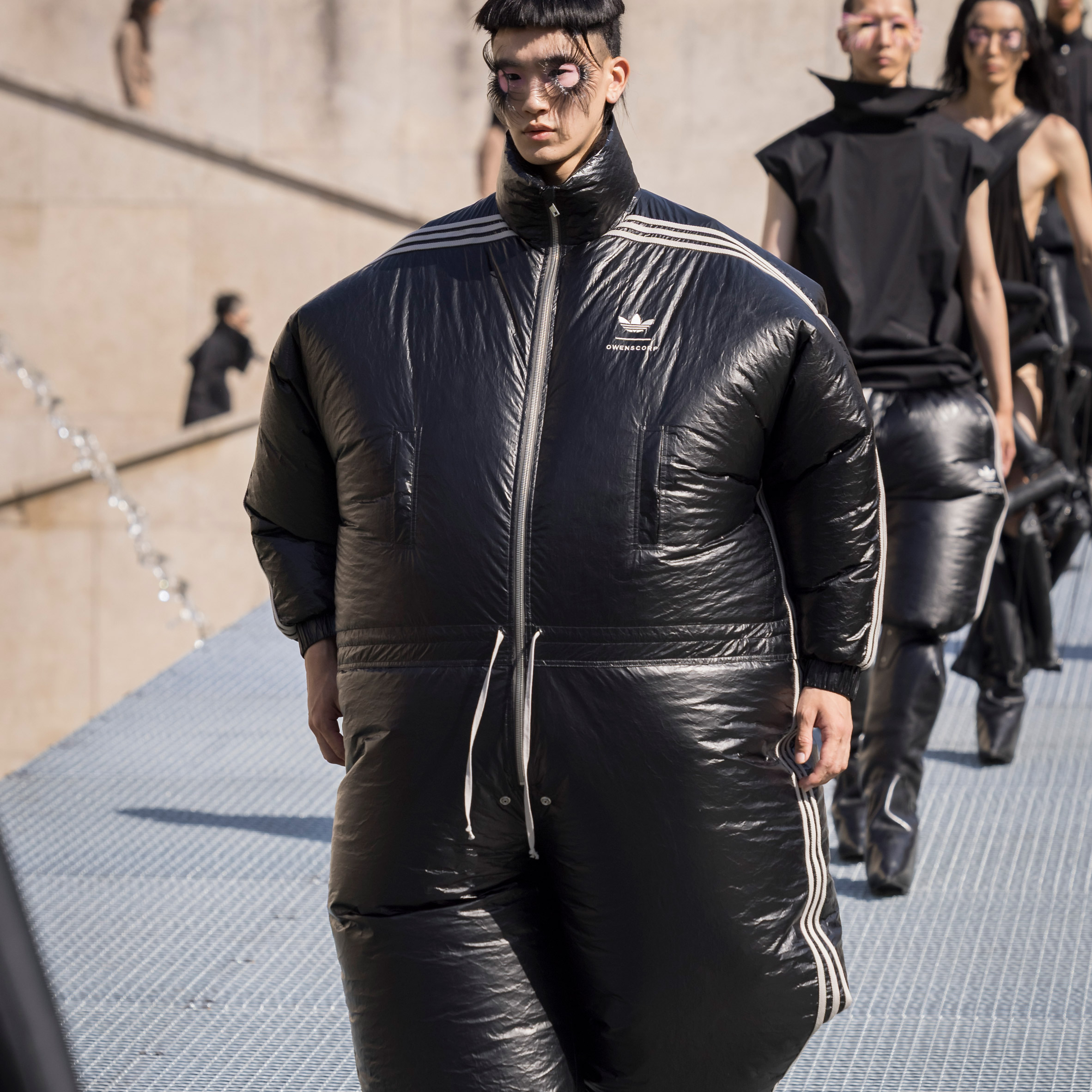
Adidas tracksuits by Rick Owens
As part of his Spring Summer 27 menswear show in Paris last week, American designer Owens showed blow-up Adidas tracksuits made from Tyvek – the same durable plastic used to make hazmat suits.
Worn with an ice vest underneath, the garment turns into what Owens describes as a "personal air conditioning system", with a fan built into the lining circulating cool air around the body.
The system, originally developed by Adidas for athletes competing in increasingly sweltering temperatures, can reduce the wearer's skin temperature by up to 13 degrees Celsius.
Find out more about the tracksuits ›
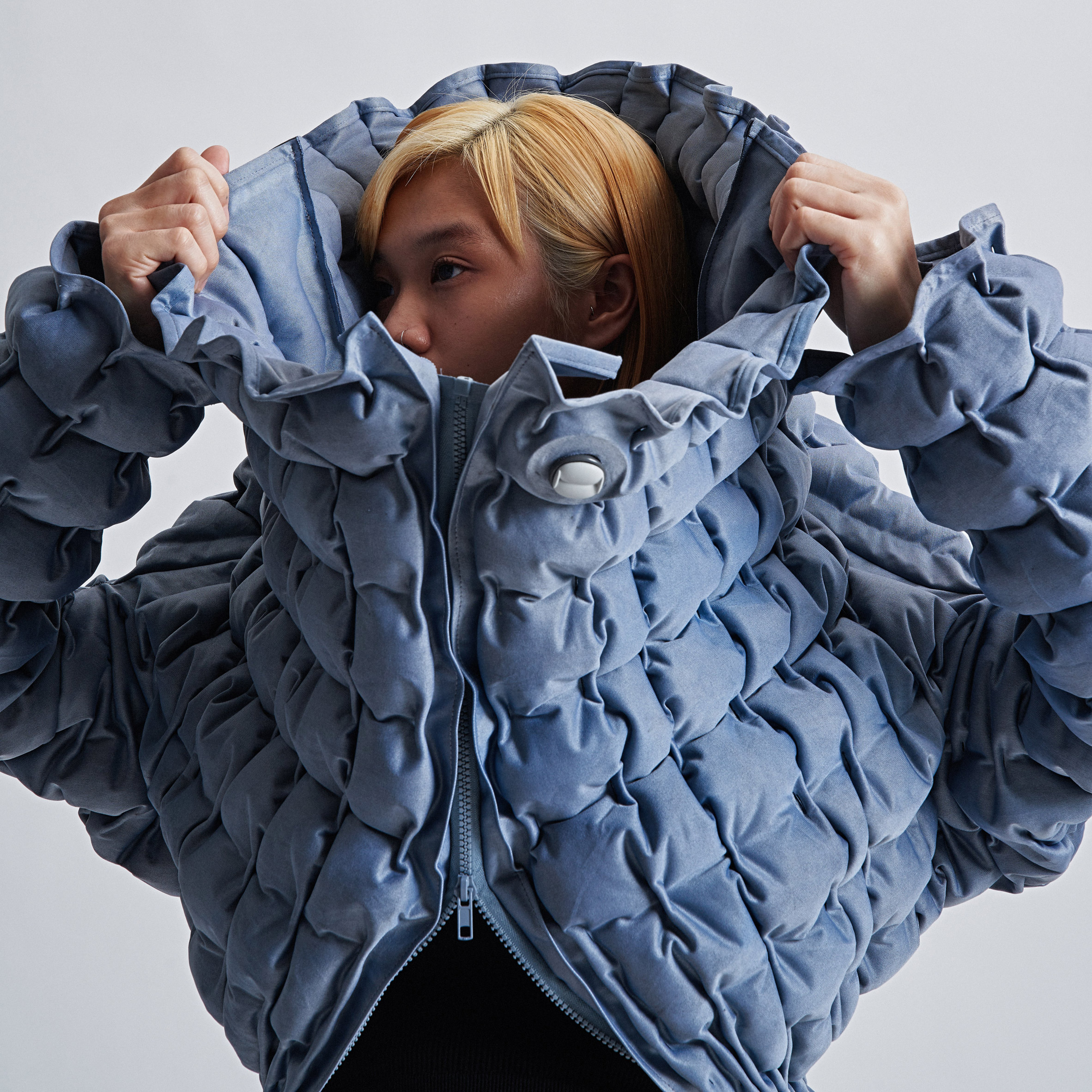
Traditional pleating techniques create pockets of air across the Looft Jacket by Singaporean designer Sheryl Teng, providing insulation without restricting movement.
The garment is made using a TPU-coated polyester and inflated via a valve that doubles as a decorative feature on the collar.
Find out more about Pneumatics Touch ›
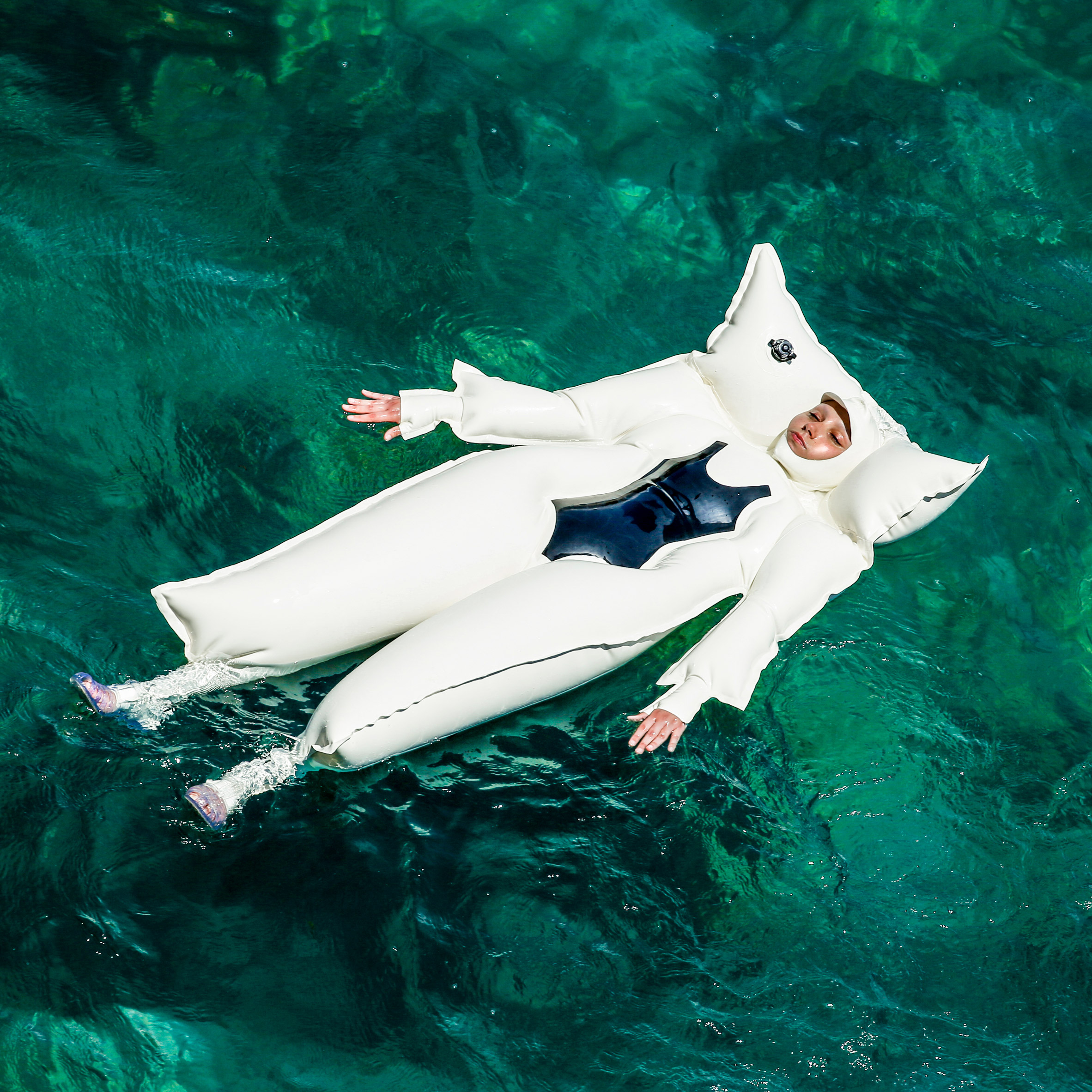
Floating Above Limits by SiiGii
Spanish artist SiiGii developed a wearable float to allow her to enjoy summers despite her sun allergy.
It consists of a latex suit that wraps around the body and head to shield the skin from UV rays, while inflatable elements around the extremities can be blown up to turn the garment into a lilo.
"Simply put, I could never lay on a float and relax in the sun; I had to become the float," SiiGii told Dezeen.
Find out more about Floating Above Limits ›

NTT Pavilion uniforms by Anrealage
Fan-jakketos, or fan jackets, were originally invented in Japan in the early 2000s to cool down outdoor labourers in hot weather.
But the exaggerated silhouettes created by the air-circulation technology have proven so grabby – and heatwaves have proven so extreme – that several fashion brands have since adapted the design for other settings.
Before Owens, there was Japanese fashion brand Anrealage, which last year created a collection of air-cooled outerwear for staff at Osaka Expo's NTT Pavilion.
Find out more about the uniforms ›
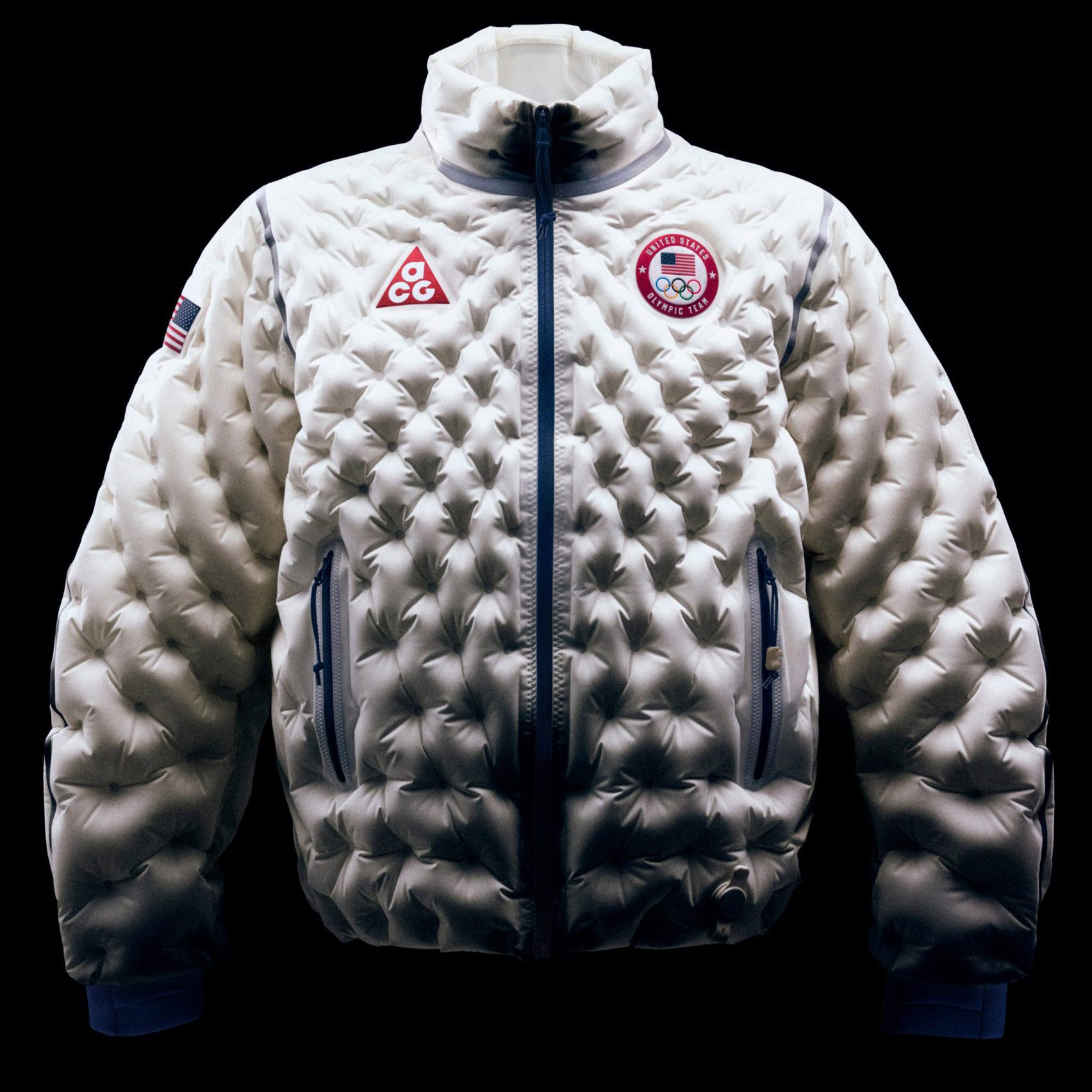
At this year's Winter Olympics in Milan, Team USA wore Nike jackets that can be inflated and deflated on the fly to help the wearer regulate their body temperature without taking off or adding layers.
The jacket inflates in around 20 seconds using a small, battery-powered fan, turning it from a light windbreaker into a mid-weight puffer.
"Because it's air, there's not anything like down, so it doesn't wet out," Nike's Lotti explained. "With a down puffer, when it rains, it gets wet, and then you lose all of the heat capacity."
"The weight-to-warmth ratio is incredible, too," he added.
Find out more about the Air Milano Jacket ›
The post Five inflatable garments that use air to regulate the wearer's temperature appeared first on Dezeen.