









issey miyake turns matisse cut-outs into clothing and choreography at tate modern

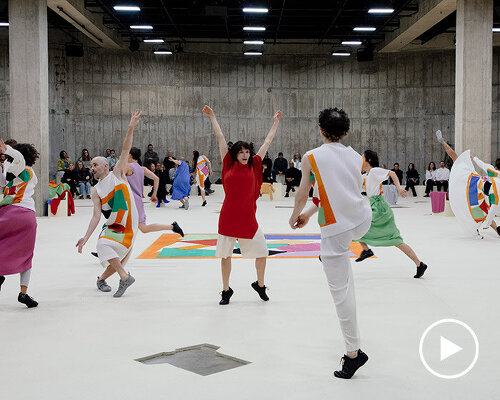
the audience enters the choreography
Inside Tate Modern’s South Tank, the performance begins as guests entered the room. A pale felt surface covered the floor, with benches following the circular concrete wall and individual seats scattered closer to its center. Lying across the floor was a pleated garment shaped after one of the paper cut-outs in Henri Matisse’s The Snail (1953). Then a performer began lifting sections of felt to reveal more clothing underneath.
Presented on September 16th, 2026 as the second edition of HOMME PLISSÉ ISSEY MIYAKE’s OPEN STUDIO, the evening placed the audience directly inside the structure of the dance. Performers approached individual guests and invited them to sit for sessions of One One One, a format developed by Ioannis Mandafounis in which a dancer creates choreography live in response to the person in front of them. Eye contact holds the exchange together. Around them, the rest of the room watches these encounters take shape one by one.
images © ISSEY MIYAKE INC., artwork © 2026 Succession H. Matisse / Artists Rights Society (ARS), New York
matisse’s cut-outs leave the page
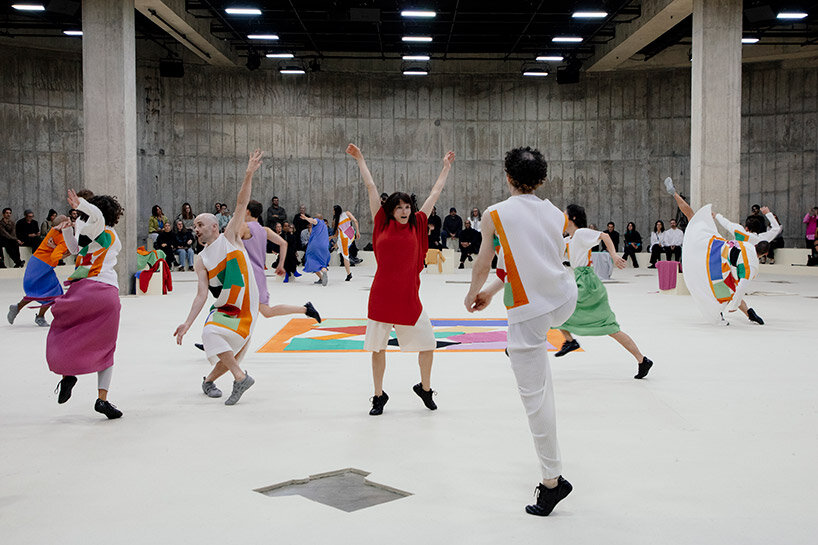
As the sessions continued, performers pulled garments from beneath the felt and slipped them on. Shapes familiar from The Snail (1953) began moving independently across the room. In Matisse’s composition, colored paper sits flat against a white ground. Here, those same geometries stretch across shoulders and torsos, while HOMME PLISSÉ ISSEY MIYAKE’s pleats expand and contract with each movement.
The idea came from the design team’s first encounter with the work. They describe wanting to ‘animate each paper cut-out by translating it into a garment,’ using their pleating process to give Matisse’s forms another kind of movement. During the performance, dancers repeatedly changed clothes and placed the discarded pieces across the stage, recalling the loose paper forms that once filled Matisse’s studio. The source image gradually disperses across the room rather than remaining fixed at its center.
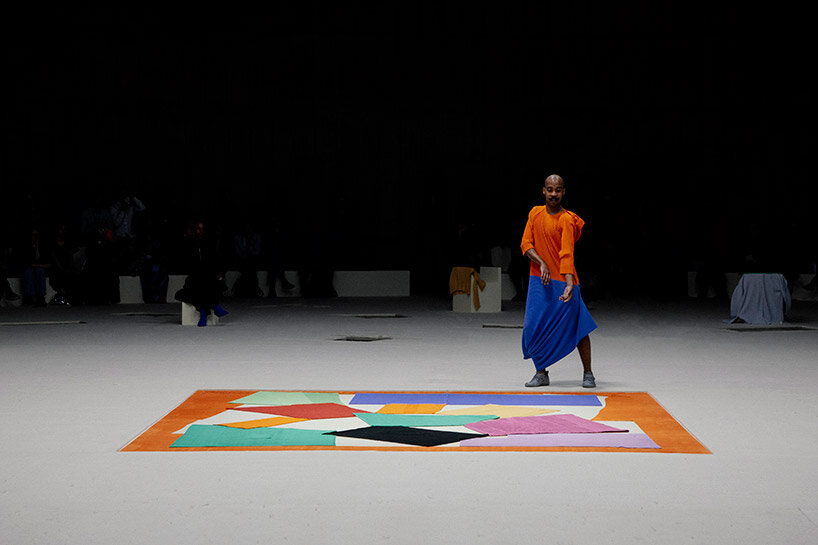
performers move through the Tate Modern’s South Tank
the stage loses its fixed front
The South Tank gives the exchange room to move in every direction. Its raw concrete perimeter surrounds a broad open floor, while the seating arrangement leaves people embedded within the performance area itself. In the wider views, dancers cross between seated guests as other performers occupy distant corners of the room. Attention keeps shifting. A person who is watching can suddenly become the person being watched.
That spatial setup suits Mandafounis’s One One One. The method asks dancers to translate sensations prompted by an audience member’s presence into movement, giving each encounter its own duration and rhythm. The spectator influences what happens simply by being there. Meanwhile, everyone sitting along the outer wall sees a series of small performances forming across the room, each with its own temporary center.
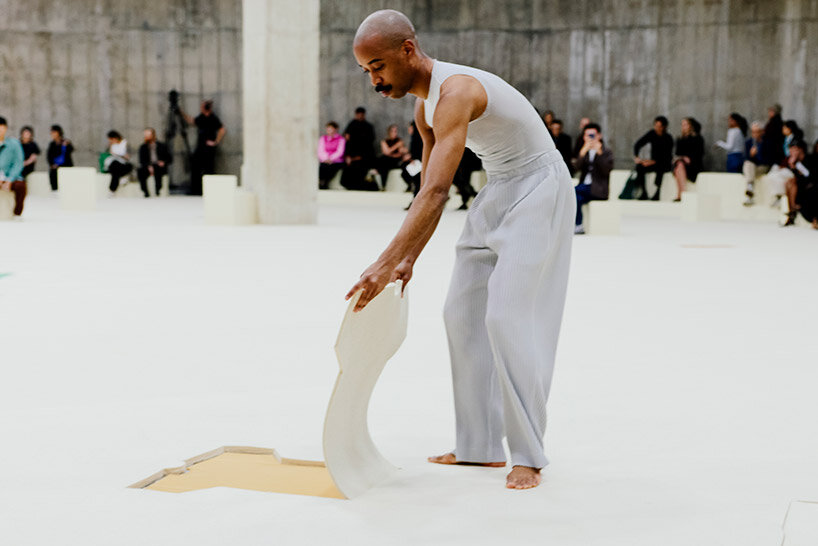
dancers retrieve pleated garments hidden beneath the felt flooring throughout the performance
from image to body and back again
Toward the end, the exchange changes again. A single performer appears on the floor before the others return and pull back the felt at the center of the Tank. Beneath it is a full-scale reconstruction of The Snail (1953) assembled from the pleated garments, with each piece cut to match the geometry of Matisse’s original composition. The dancers gather around it and continue moving as the fragmented image comes back together.
For much of the performance, Matisse’s image exists through people. Its forms bend around bodies and travel through the room. By the closing sequence, those garments return to the floor and become an image again. The audience also changes position within that cycle. Earlier, an individual spectator could prompt the choreography directly. At the end, everyone faces the same composition. OPEN STUDIO turns that shift between participation and observation into part of the work itself.
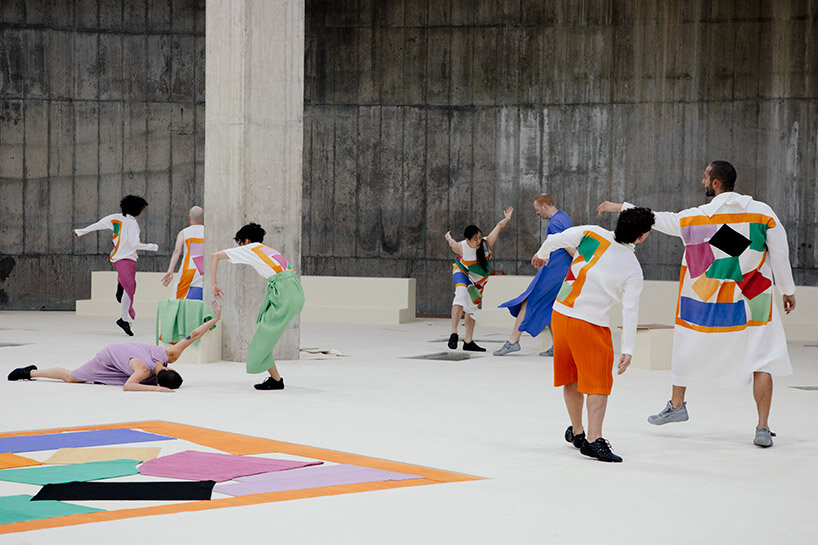
the audience sits along the circular perimeter as dancers move across the felt-covered floor
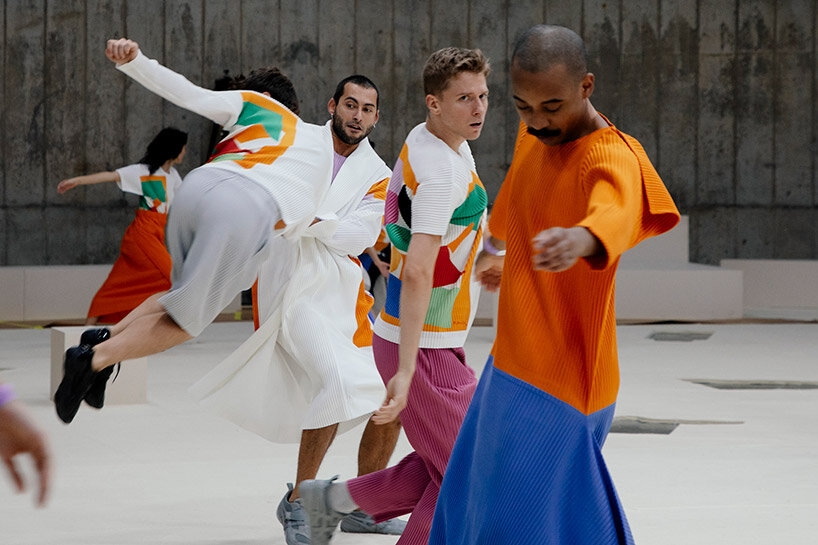
pleated garments translate the paper cut-outs of Henri Matisse’s The Snail (1953) into moving forms
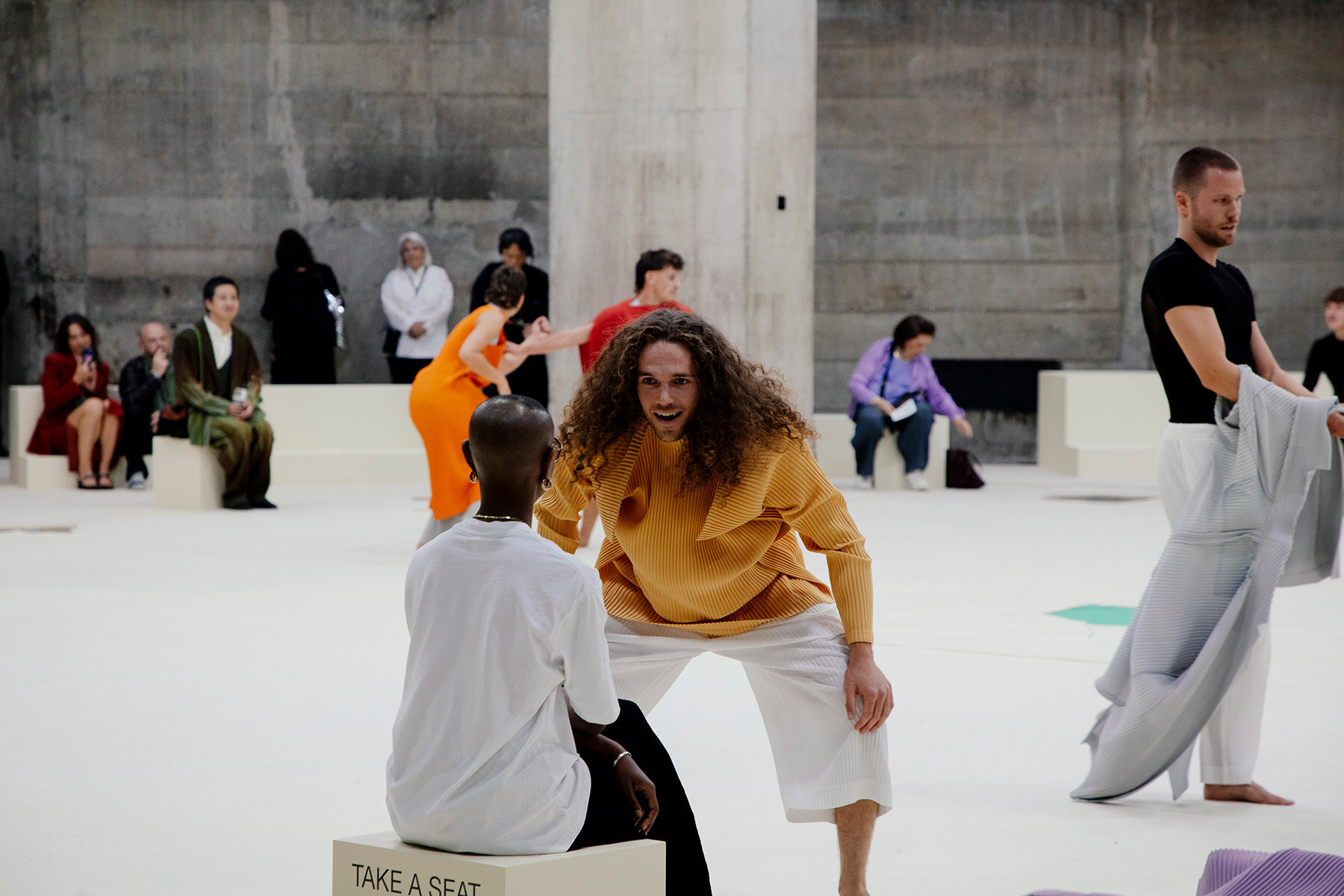
One One One pairs individual spectators with performers for improvised encounters sustained through eye contact
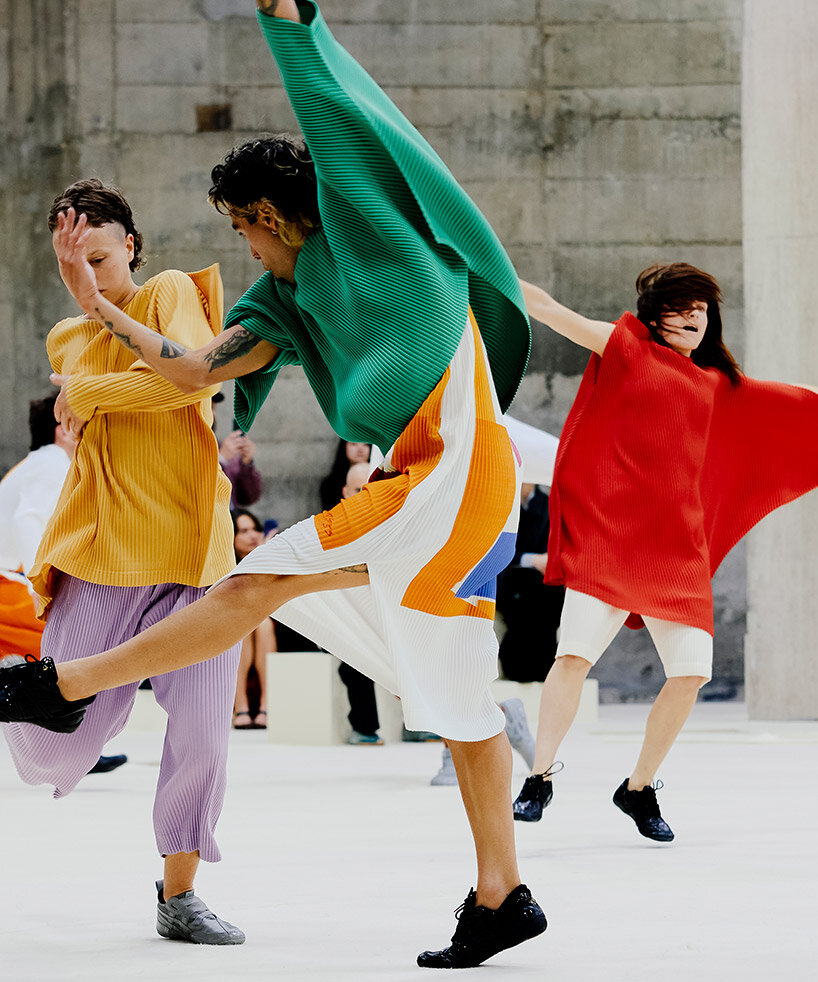
performers change between garments as the composition disperses across the South Tank
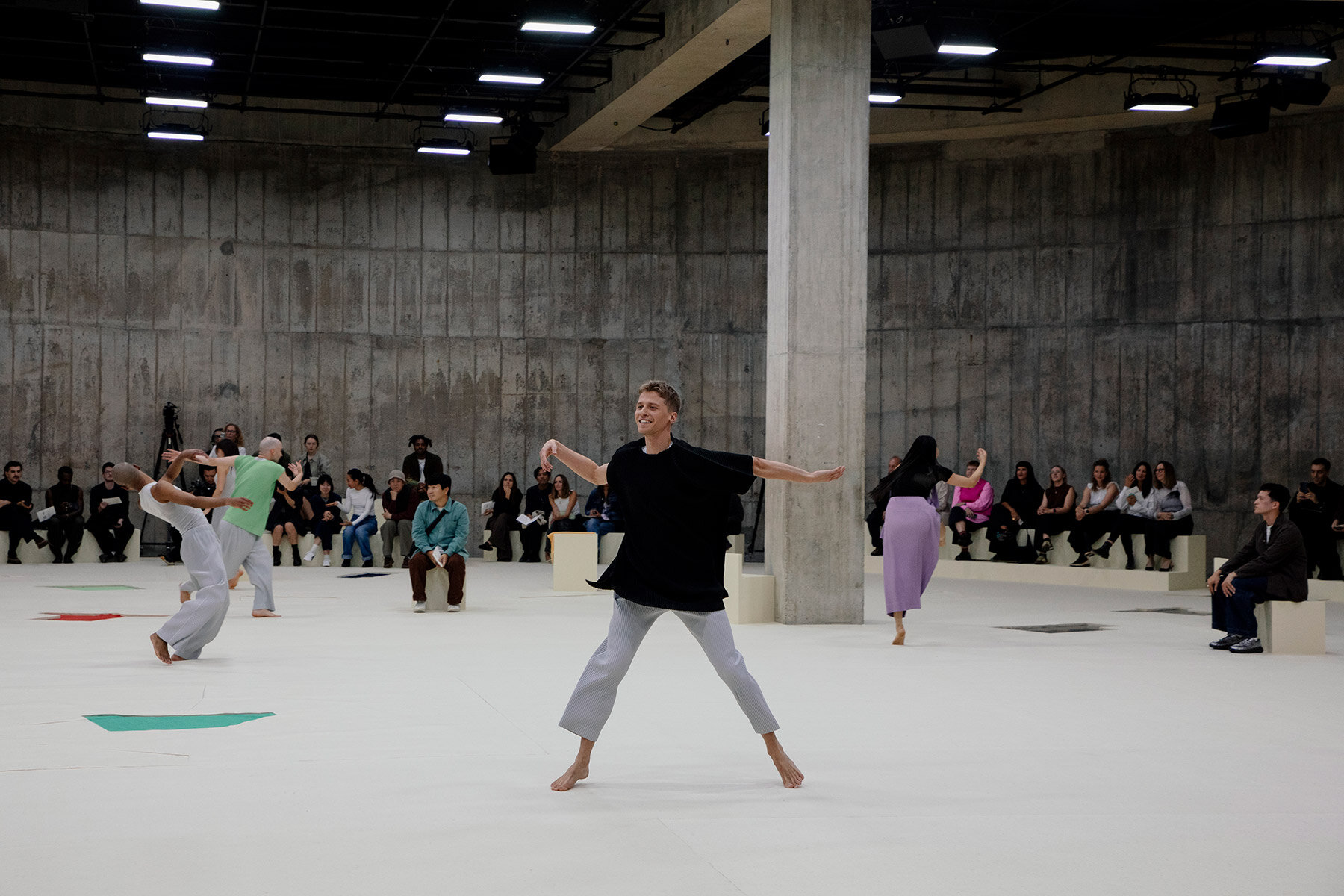
the performance moves between direct audience encounters and a central, shared view of The Snail (1953)
project info:
name: OPEN STUDIO, second edition
designer: HOMME PLISSÉ ISSEY MIYAKE | @hommeplisse_isseymiyake
museum: Tate Modern | @tate
location: London, UK
date: September 16th, 2026
performance: Dresden Frankfurt Dance Company
artistic director: Ioannis Mandafounis (Dresden Frankfurt Dance Company)
artwork: © 2026 Succession H. Matisse / Artists Rights Society (ARS), New York
photography: © ISSEY MIYAKE INC.
This article is part of designboom’s SPECTATOR AND SPECTACLE chapter, asking how wonder gets built, presented in partnership with SolidNature, and how it might return some mystery to a world that has measured most of it away. Discover more stories that turn onlookers into participants, alter perception and disrupt the everyday here.
The post issey miyake turns matisse cut-outs into clothing and choreography at tate modern appeared first on designboom | architecture & design magazine.