



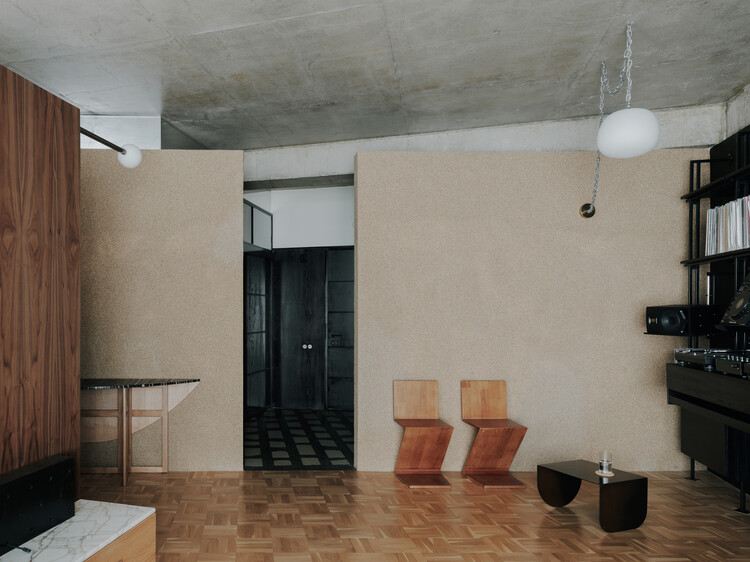




Meet Harry Nuriev, Bjarke Ingels' pick for the most influential designer of the next 20 years

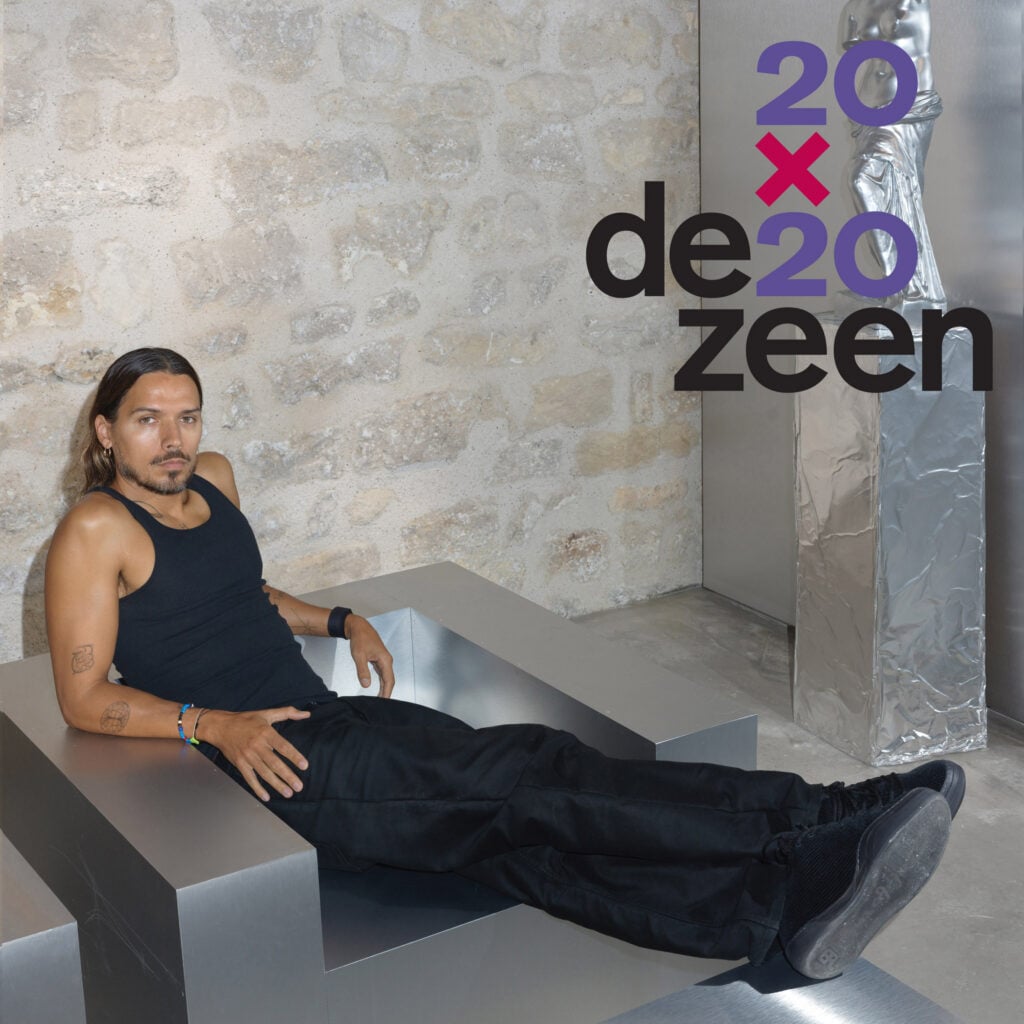

BIG founder Bjarke Ingels has selected Harry Nuriev for Dezeen's 20x20 project in partnership with Kohler. In this interview, the Russian-born, Paris-based architect and designer explains how he constantly aims to reinvent himself and his work.
Nuriev established his studio, Crosby Studios, 12 years ago with the aim of shaking up the world of interior design.
"First, it came from this game of rejection," he told Dezeen from his house in Tuscany.
"Let's say everyone likes to use wood – I won't have any wood. If everyone likes beige or brown – I won't have beige or brown. People are confused with a material, so that's exactly the material I'm going to use."
"I'll bring exterior to interior, interior to exterior," he continued. "I'll mess everything. My colours will be inspired by fashion, my texture will be inspired by architecture."
"You can't be safe. You always have to risk."
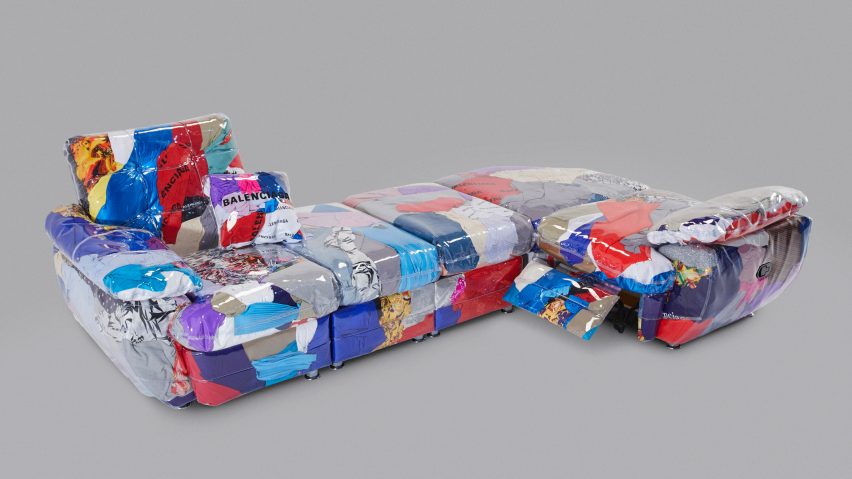
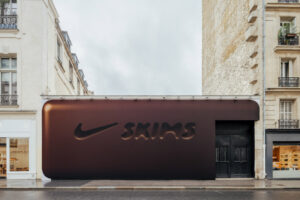
Over a decade later, the strategy appears to have worked. Nuriev was recently named Designer of the Year at French design show Maison&Objet and has a client list that many designers would envy. Among his recent works are a sofa for Balenciaga, a pop-up store for Skims, a reflecting pool for Gucci and a puffer-jacket-filled virtual sofa for Nike.
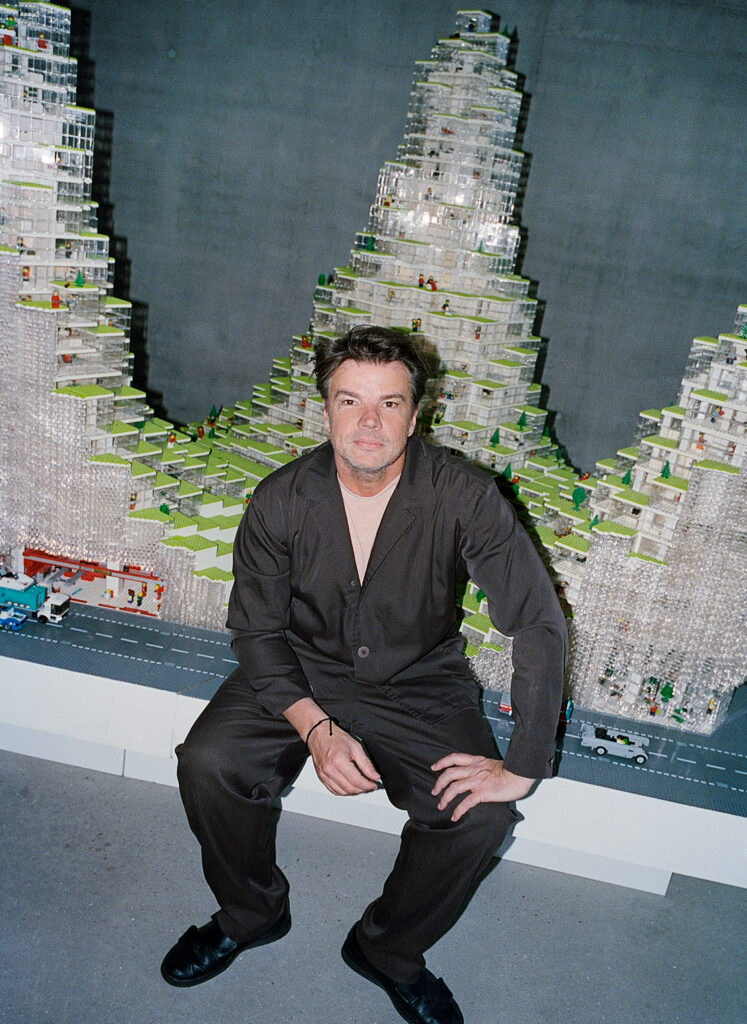
Now Ingels, arguably the world's best known architect, has selected him as the designer that he believes will have the biggest impact over the next 20 years, as part of our new series marking 20 years of Dezeen.
Nuriev established his own studio after freelancing and working on other people's projects for many years, with the aim of being able to pursue his own creative interests.
"When you work freelance just to pay bills, you don't really have particular voice," he said. "You have nothing really too specific to express."
"I was like, hold on, I actually need to pull all the things together to express myself, whether it's comfortable for everyone or not."
At the time he established his studio, Nuriev recalls the interior design landscape being constrained and dominated by a couple of key, predominant styles that he was determined to break out of.
"Twelve years ago interior design was just minimalistic Japanese style or classic," he said. "Maybe there were some alternative, very vague and obscure styles, but there was literally just two, maybe two and a half camps."

"I remember that in interior design, and in particular the industrial area, there was no room to express yourself in a fashion or an art way," he continued.
"[I realised] there is no way that everyone needs to live the same way, have the same living room and sit in the same sofa. I thought that I will create something different."
It was really a big experiment. In retrospect, looking back now, I really think I was lucky
Rather than identify a target market or clients that wanted a particular style, Nuriev simply set out to create his own individually styled interior spaces and objects.
"It was really a big experiment," he said. "In retrospect, looking back now, I really think I was lucky."
"By then I had learned classic and traditional way of doing it, so I knew the marble game and wood game and all of the, let's say, Architectural Digest alphabet. But my idea was that my personal voice, my internal conversation, was very different, I didn't know if people would like it or not," he continued.
"Then, to my surprise, some people liked it."
Much of Crosby Studio's work utilises stainless steel, and has an appearance that is cold and almost uncomfortable. However, although this aesthetic is now associated with the studio, Nuriev is keen to ensure that his work continues to evolve.
"I understand we're responsible for this whole stainless steel, futuristic, uncomfortable, Instagramable aesthetic," he said.
"In a certain way we keep in our DNA our signature things that people already liked, even though they're kind of retired for me and maybe I want something different," he continued.
But we always experiment because that's the part of the formula, part of the recipe, to always have this little spice in every project
"But we always experiment because that's the part of the formula, part of the recipe, to always have this little spice in every project."
His metallic, almost cold aesthetic is partly born of the idea that you can create spaces that people can be enjoy without necessarily being comfortable.
"It's bullshit because there's no such a thing [as comfort]," he said. "I remember after a nightclub at 2am, sitting on a sidewalk, eating some hot dog and being extremely happy, but also I remember being in the most refined, beautiful restaurant, sitting in the most comfortable chair with soft cushioning and feel miserable."
"I developed this mentality that comfort is actually not really healthy," he continued. "Sitting comfortably in a sort of like sleeping environment, where you can relax all the way, can pull the strength out of you."
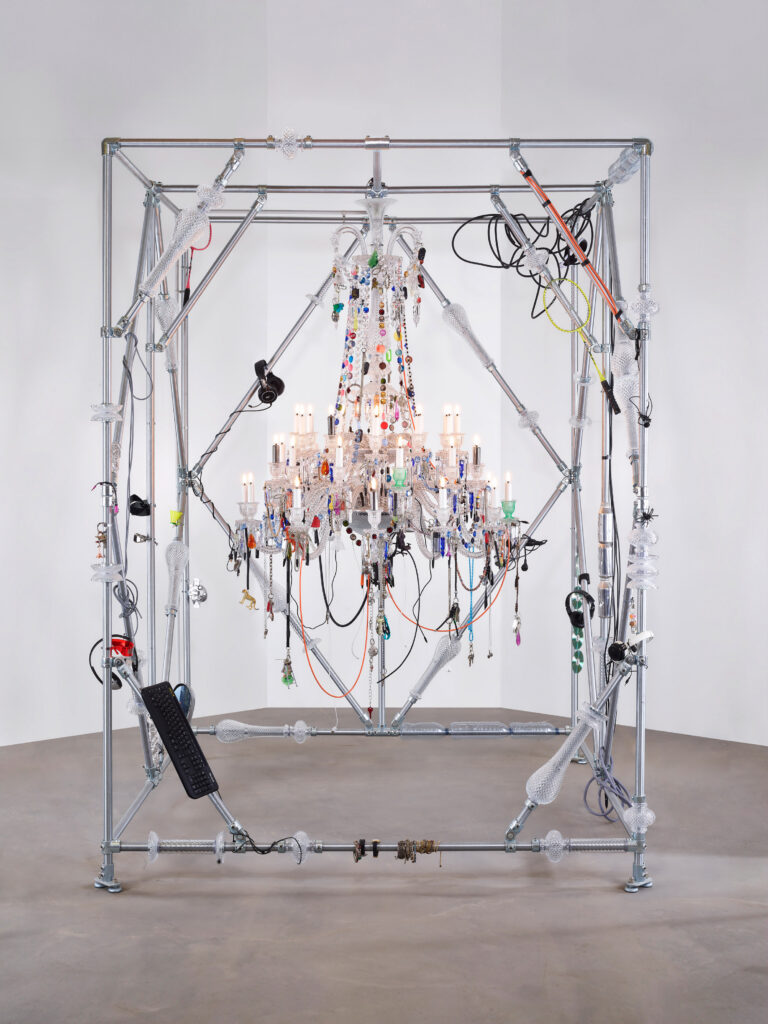
The competition to create something new and attention-grabbing has intensified in the past 10 years, but Nuriev believes that it is still possible to find new ways of reinventing materials and forms through a process of experimentation and reinvention that he calls "transformism".
"[I tell myself] 'don't fool yourself, you can't create anything new, Harry,'" he said. "What you can do, you can find an existing thing and you can reinvent it. You can find a new life."
"I'm trying to find new materials, and it's becoming harder and harder because we explore quite a lot of different things, but surprisingly, there is always something," he continued.
"It's like music – every year there is new songs, there is new combinations of the same notes that we have known since Mozart, Bach and Chopin, but it's still different."
After more than a decade, Nuriev has a clear idea of his and Crosby Studio's strengths, as well as the limitations of his creations.
"They are dessert-ish in their nutrition level, kind of like the entertaining side," he said. "You don't expect a full meal from Crosby."
"You come to experience emotion," he continued. "You want to have this sweet or salty or spicy something, and then you get it and you go. It's not a daily situation."
He believes that his work translates best at the medium scale – an installation, store, room or hotel lobby.
My nightmare is to become a replica of my own self and just retire, becoming an established artist who just found his own voice and just puts his signature everywhere
"I think I have found my scale," he said. "We work in big development projects, which is fine. We can deliver it easily, but there are so many great people who can do it better than us."
"Rather than we just distribute all our juice everywhere, and then maybe it will have less energy, [for example in] a huge building, let's just do this lobby so crazy that people will feel the emotion."
As Crosby Studios has established its reputation, the profile of its clients has risen considerably to include some extremely well known and demanding brands, though Nuriev says these projects can be the most creative.
"The calibre of clients is changing dramatically," he said. "And you know it's just like in a computer game, you feel like you're on a different level, they speak in different vocabulary, it's just complete different game."
"Now I'm working with big sharks, and obviously their expectation is different. They've been working before me with bigger artists, so it's also challenging. But this is the challenge of growing."

Nuriev believes his most important role at Crosby Studios now is to maintain the "rebellious spirit" that it was launched with – something that inevitably becomes harder as a studio grows and the clients change.
"I think the game now is to constantly remind myself that we're not an Armani Casa with steel, no matter how old we are, and to keep this spirit," he said.
"I think that's my job as the founder to remind my team, yes, we have gained professional skills, we know how to talk to people, we know how to draft a contract, we know how to deliver on time, but nevertheless, we still want to keep our rebellious spirit."
His biggest fear? Becoming a pastiche of himself and rolling out designs in an unchanging signature style.
"My nightmare is to become a replica of my own self and just retire, becoming an established artist who just found his own voice and just puts his signature everywhere. This is not what I want."
"As Coco Chanel said, once you feel comfortable, it's the time to change completely. So to reinvent yourself is an exercise, and it's pretty much my daily life."
To celebrate Dezeen's 20th birthday, we asked 20 of the most influential architects and designers of the last 20 years to identify someone they think will have a major impact in the next 20 years. Over the next four weeks, we'll reveal their picks in a series of profile interviews.

20x20
The post Meet Harry Nuriev, Bjarke Ingels' pick for the most influential designer of the next 20 years appeared first on Dezeen.