


US and China share a love of "new things and innovation" says Ma Yansong

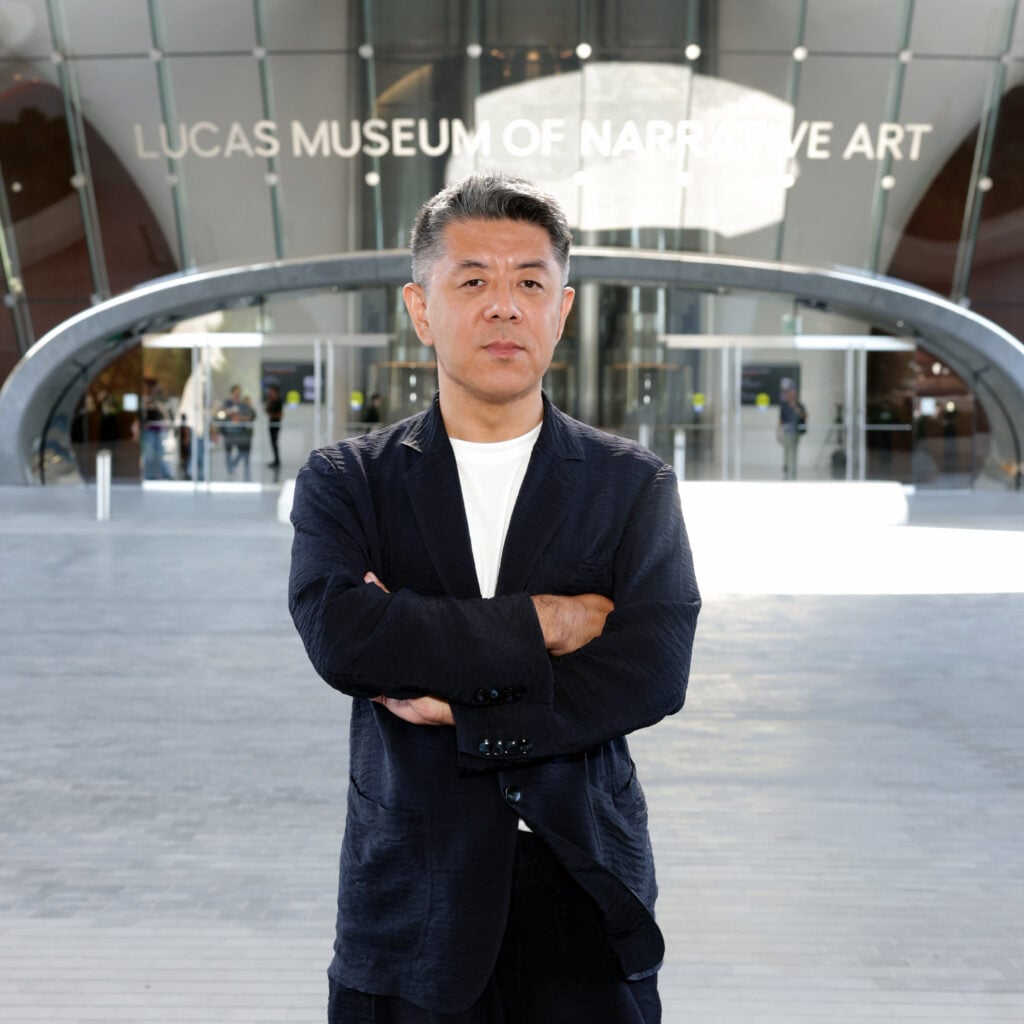

Chinese architect Ma Yansong has completed one of the highest-profile US buildings of 2026 – the Lucas Museum of Narrative Art, in California. In this interview, he explains his architecture’s international appeal as a “bridge between imagination and reality”.
Speaking over video call on the occasion of the Lucas Museum’s opening, Ma told Dezeen that the building has acted as a stable point in a rapidly changing world, with trade wars, AI races and a US federal government that has enshrined classical architecture as a national norm.
“This project took 12 years, across two countries, and the world changed around it. The building didn’t,” he said.
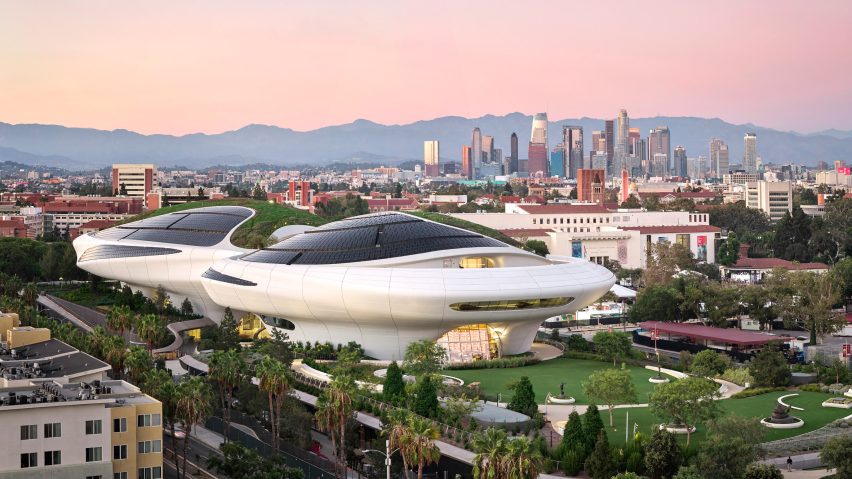
The long-anticipated project, funded by Star Wars creator George Lucas, was first planned for San Francisco, then Chicago, before landing in Los Angeles.
“What made it possible is that George and I come from different roots, but both love the same kind of thing – stories that belong to ordinary people, not to high culture,” said Ma.
Ma believes this shared tendency toward exploration between himself and the American filmmaker applies more widely, and the 51-year-old architect spoke positively about the potential for architecture to illuminate the similarities between China and the United States.
“I see a lot in common between the two countries,” he said. “They both like innovation and new things, and they focus on young people, on education.”
"I think architecture is a bridge between the imagination and reality"
His own life mirrors this outlook. Attracted by innovation as a youth in Beijing, he travelled to Yale, where he graduated with a master's degree in 2002.
At Yale, Ma became interested in Zaha Hadid's parametric architecture and eventually worked at her firm in London.
Despite teaching and working mostly in the United States and Europe, Hadid cultivated her signature parametric style working in China’s early 2000s building boom.
The completion of the Lucas Museum represents a Chinese architect taking these principles abroad, a full-circle moment as Ma moved from the US to the UK, back to China, where he has completed dozens of projects, bringing his honed sensibility to California.
Buildings created in the parametric style, or design based on the specific geometries allowed by computer calculations, have been criticised for their lack of relation to sites, and for being self-referential.
The museum’s curved exterior is covered in thousands of white polymer panels, giving it a futuristic look.
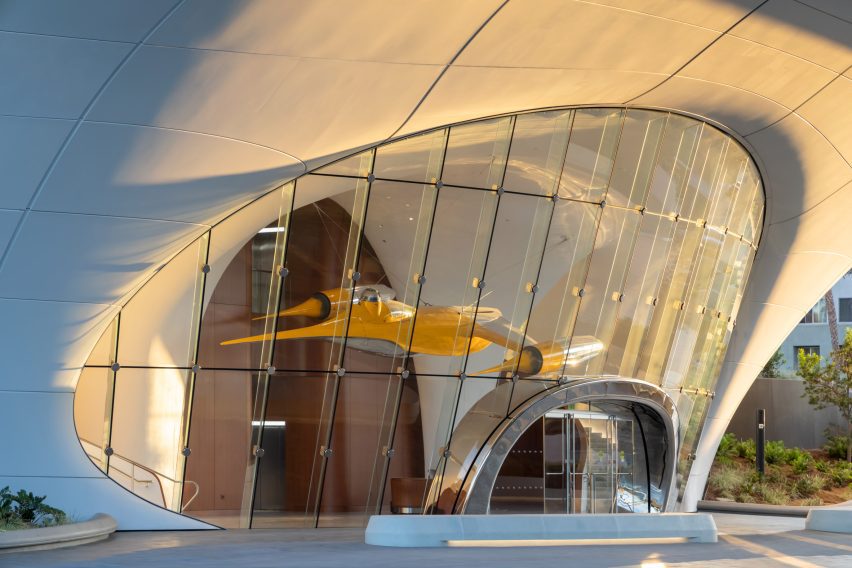
Nevertheless, Ma pushes back on Dezeen’s description of the building as “spaceship-like”. Instead, he compares it to a cloud, as an enduring symbol for the imagination – an aspect of consciousness that the architect hopes is provoked by his buildings.
He worked with landscape studio SLA to design an expansive park to serve as an extension of the museum, and the building itself, according to him, features organic curves. He called the effect of these combined elements “surreal nature” and said he aims to bring the natural into the urban environment.
The suggestion of the surreal also points to his aim of provoking the imagination in his design – something the architect said he shares with Lucas and science fiction storytelling.
“I think architecture is a bridge between the imagination and reality,” he said, adding that he hopes the Lucas Museum functions like the narrative art that it holds.
"You create a dream. That's important."
The relationship between Ma and Lucas developed around the question of narrative art since the filmmaker first tapped the architect for the project in 2014.
Ma had actually referenced a scene from Star Wars in his bulbous 2005 museum for Ordos, though he didn’t advertise the influence in his early meetings with Lucas.
“On the personal level, me and George have very easy communication,” said Ma, who famously wanted to become a science fiction director before his career in architecture.
“[George and I] are always talking about ideas, and he’s always supportive. We were constantly discussing what is narrative art,” he continued, adding that the question has led Ma to ask a question that has helped clarify his own practice – “what is narrative architecture?”
Ma said that the project has allowed him to “kind of achieve my goal as a movie maker”.
“You create a dream,” said Ma. “That's important.”
“It’s why I like science fiction movies – because you put your imagination on the screen, and when people watch it, they believe in something.”
For Ma, this narrative approach to architecture is about opening up to different perspectives, and like science fiction and fantasy, this bridge to the imagination requires a certain suspension of disbelief.
“I’m not interested in everyone receiving the same message,” he said. “I think good public space lets everyone reflect their own experience or knowledge or thinking and share with other people.”
“So I’ve had to find a balance between abstraction and emotion.”
At the Lucas Museum, this intersection of abstraction and emotion is most evident in the massive open-air dome, where visitors can stand on the ground and look up through the panelled apex at the sky.
The space has almost a cathedral-like quality in its grandeur, but it is without ornament and other traditional figurative elements of storytelling in architecture, such as statues or text.
“The architectural space is a trigger for different people to have their own stories. I think that's a little different from the classic buildings.”
“When you frame it and bring the light into the space, people start to look up, and they will see this connection between individuals and the universe beyond the building, so I think that's something narrative to me.”
“I like the future, but not the cold future”
The building was also designed to evoke well-proportioned natural elements and bring nature into the city, literally in the case of the green roofs and surrounding park.
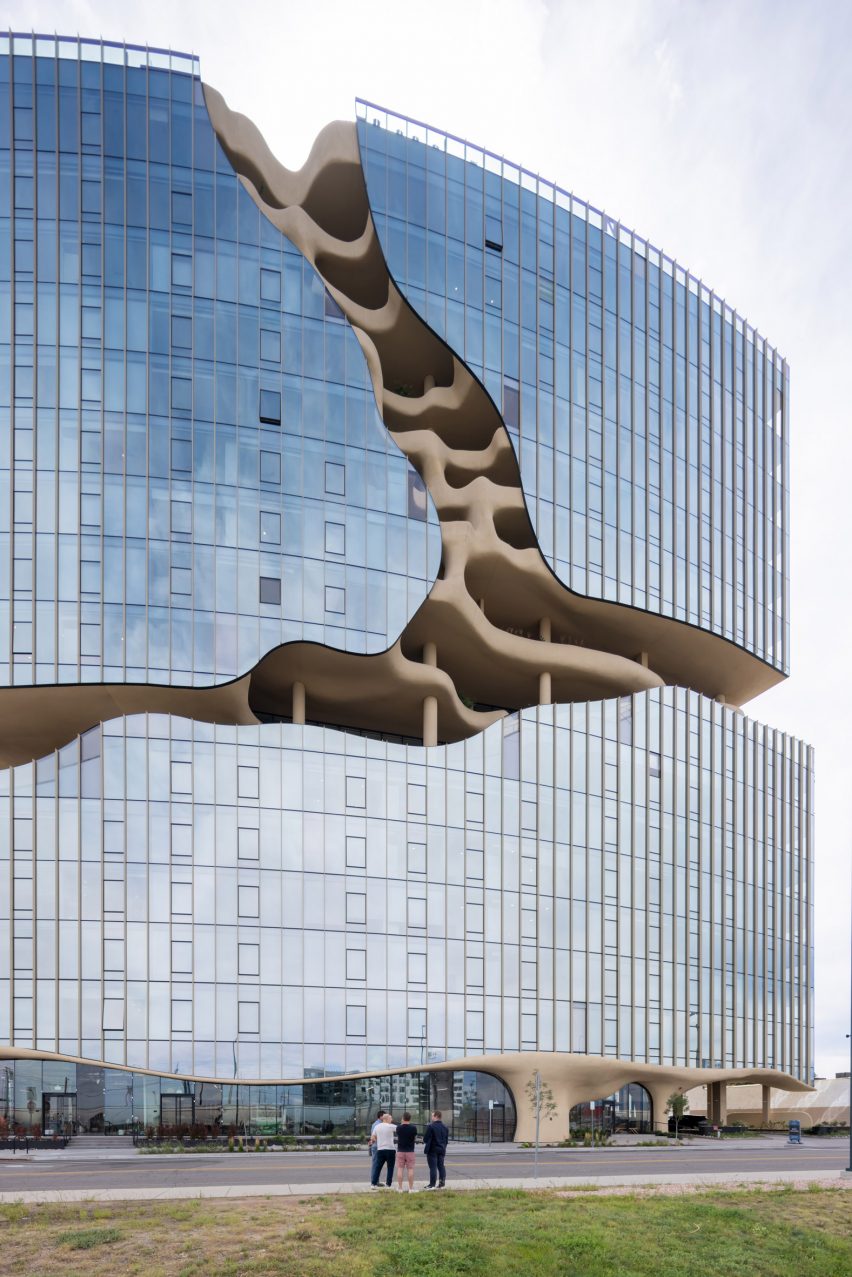
Other projects by Ma's studio have had similar ambitions, such as the Shenzhen Bay Culture Square and One River North in Denver.
And if his architecture is futuristic, Ma hopes that a greener version of the city is the future it evokes, he said.
“I like the future, but not the cold future,” said Ma. “It’s more important that the building is warm and welcoming.”
Ma hopes that Lucas Museum will be inspiring to people, just as his younger self was inspired by the innovative architecture coming out of Yale when he was starting.
“When people see a building that’s so idealistic, that is pushing the boundary, everyone will be encouraged,” he said.
Dezeen In Depth
If you enjoy reading Dezeen’s interviews, opinions and features, subscribe to Dezeen In Depth. Sent on the last Friday of each month, this newsletter provides a single place to read about the design and architecture stories behind the headlines.
The post US and China share a love of "new things and innovation" says Ma Yansong appeared first on Dezeen.