



















200 Years of Innovation in Architectural Glass

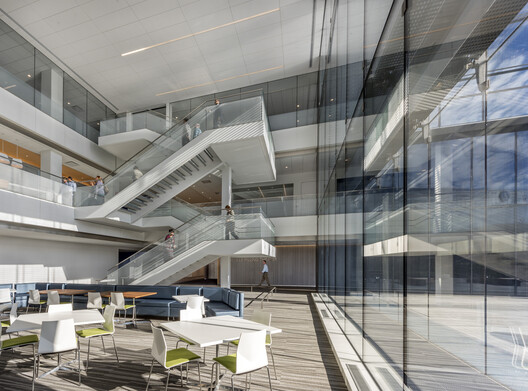
 Zurich North America Headquarters / Goettsch Partners © James Steinkamp Photography
Scientifically, glass is defined as an amorphous solid, meaning its atoms are not arranged in a regular crystalline structure. This is why the material is often described as a "liquid frozen in time." This structural configuration explains one of its most distinctive qualities: transparency. Without a crystalline lattice capable of scattering light, radiation passes through the material with relatively little interference. Although it often appears delicate, this same structure also allows glass to achieve significant mechanical performance. With industrial processes such as tempering, lamination, and specialized coatings, the material can reach high levels of strength, safety, and environmental performance.