










Anthropic Says AI Could Automate 80% of Architecture. That’s Not the Whole Story.

For more ways to supercharge your workflow, check out more articles in our Tech for Architects series, which includes our recommendations of Top Laptops for Architects and Designers.
There is a frightening graphic currently making the rounds. Released by Anthropic, the company behind Claude, it purports to show the professions most at risk to automation by AI. The image consists of two circular line graphs nested inside one another. The smaller red graph shows each profession’s “actual exposure” to AI. This was determined by analyzing Claude’s user data to measure the share of tasks in each industry that are currently being performed by AI systems. For architecture, that number is currently pretty low, close to zero. But the larger blue graph shows the “theoretical exposure” of each profession, or the percentage of its tasks that could conceivably be done by AI systems twice as quickly. Here, the number is scarier for architecture – over 80% – making it one of the most exposed industries of all.
The conclusion of the Anthropic study is what one would expect from something released by an AI company: “The coverage shows AI is far from reaching its theoretical capabilities. High exposure has not yet correlated with unemployment.” (Note the subtext: but it will…)
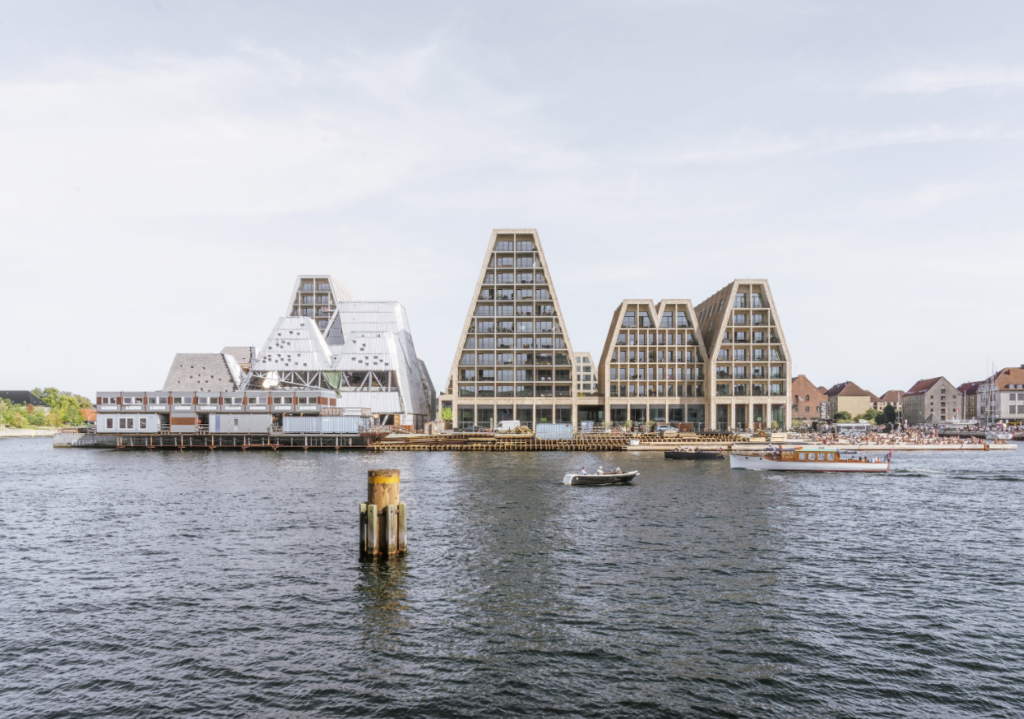
The Architizer A+ Awards celebrate work of human ingenuity, such as Cobe’s Paper Island in Copenhagen, the 2025 Jury Winner in the category of Commercial Mixed Use (>25,000 sq. ft.). This project, a transformed industrial site, was conceived as a celebration of Copenhagen and its tradition of “generous urban living.” These values mean a great deal to human beings — and nothing at all to bots.
Before panicking, let’s look at some simple facts. The stock valuations of Anthropic, OpenAI, and other companies in the AI space depend on these types of projections. Their pitch is that AI is a golden goose that will someday allow companies to maintain or exceed their current levels of production with far fewer employees. This promise — utopian or dystopian, depending on one’s relationship to the means of production — is why oceans of money have poured into these companies over the past four years, creating what many observers fear is a speculative bubble in the stock market. A study by Anthropic on the future impact of AI should be taken with as much salt as one would sprinkle on an old Philip Morris study on the health effects of cigarette smoking.
Nevertheless, it would be wrong to simply bury one’s head in the sand and pretend that AI will have a negligible impact on the future of architecture — or any industry for that matter. The truth is that it is impossible to know what the future holds. As a high school teacher, I do not tell my students to ignore AI when choosing their future course of study. It is certainly conceivable that some roles, like entry-level copywriting and coding jobs, will diminish in future years due to this technology. Even certain technical roles in architecture studios could change or even vanish. Automation is nothing new, and the economy changes all the time.
For students who are passionate about architecture, though, I still tell them to go for it. Because, despite what Anthropic says, architecture is not merely a series of tasks that can be automated. It is an art form, and as such, it requires two things that AI does not have and can never develop: taste and judgment. Or to put it in less Kantian terms, there is a difference between generating designs for a building and designing a building. The latter, by definition, can only be done by a human, or a perceiving subject capable of acting with intent and taking responsibility for what they create.
The first big misconception surrounding AI stems from its name: artificial intelligence. That’s not really what it is. The technical term — multimodal large language models — better captures what these programs actually do, which is not thinking, but modeling data. As the artist Hito Steyerl wrote in 2023, right at the start of the AI craze, generative models “represent the norm by signaling the mean. They replace likeness with likeliness.” This is true whether their output is text, images, or video, as in each case, the output is based on averages derived from vast data sets. This is a problem because it means that LLMs are only capable of recycling old information, not generating new ideas. While their outputs can at times seem surprising, even novel, this is always a mirage.
To say that AI is different from human intelligence is not to say that it isn’t impressive or useful. Audio-to-text transcription tools like otter.ai are a proverbial dream come true for journalists and others who conduct interviews. And who can resist those videos of cats waking up their owners by playing instruments in the middle of the night? My point is simply that the distinction must be made between human subjectivity and so-called AI if we are to think clearly about how this technology can best be integrated into society.
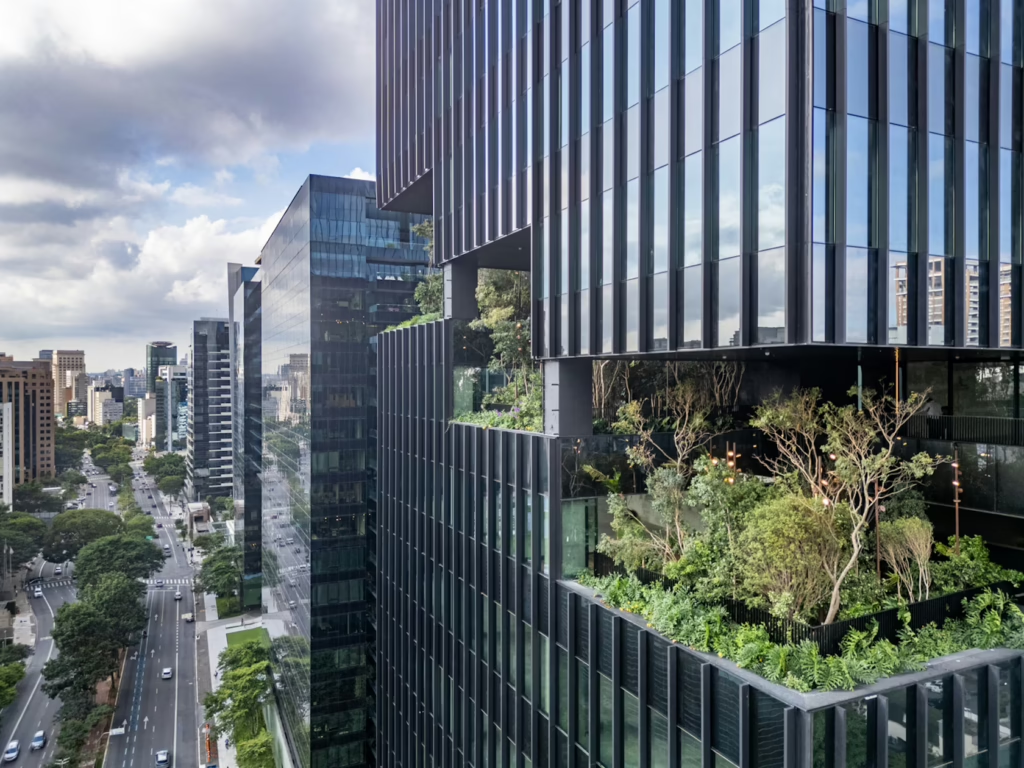
Mies van der Rohe defined architecture as the “will of an epoch translated into space.” (A “will,” of course, is precisely what a bot lacks). Mies’s idea can clearly be seen in many 21st-century skyscrapers, such as Salma Tower in São Paulo, Brazil, which was designed by aflalo/gasperi and was the Popular Winner of the 2025 A+ Awards in the category of Office High Rise (16+ Floors). The project applies bioarchitecture principles and emphasizes sustainability, both in its visual design and in its efficient use of energy and water.
Architect Chad D. Reineke, writing in Common/Edge, explains this distinction very lucidly: “Automation alters technique; it cannot displace responsibility. The architect is licensed not to produce drawings, but to exercise judgment on behalf of the public.” Reineke claims that the architect’s expertise would still be needed even if Anthropic’s prediction comes to pass and 80% of architecture’s tasks are automated. “The interpretive dimension of practice, therefore, becomes more visible in an automated environment,” he writes. “It requires the capacity to question assumptions embedded within datasets, to identify the limits of simulation, and to assess long-term implications that extend beyond immediate performance metrics. These assessments are not a rejection of technology. Instead, they recognize that technology operates within boundaries that must be continually evaluated.”
Reineke emphasizes the civic dimension of architecture, the requirement of architects to balance the needs of various stakeholders and make decisions that are truly in the public interest. But responsibility starts earlier than that. There is responsibility in the mere act of creation, of putting pen to paper. When we undertake any action, we are responsible for it. Even our smallest actions are, in some way, expressions of our humanity.
AI is not just incapable of designing a building; it cannot design anything. A lamp, for example. There is a difference between a lamp that was designed by an individual designer or a team of designers and a lamp whose design was generated by AI. The latter does not reflect the intentions of anyone — not really. It does not “disclose the world,” as Heidegger said all works of art do. It is simply the product of impersonal, mechanistic forces, at best a “blurry JPEG” of thousands of different lamp designs. It’s slop, to use a potentially rude expression, and this would be true even if it were the most beautiful lamp in the world.
There are awful buildings out there that were designed by architects, and perhaps some day there will be beautiful, functional buildings generated by AI. But this isn’t the point. The latter won’t ever really be architecture — not unless human architects take care to review every detail, exercising their own judgment and not deferring responsibility to the machine. And in such cases, was the building actually auto-generated or was AI simply used as a digital tool?
Buildings designed without human care and attention are nothing but slop. Such buildings do not speak to their time and place, and they certainly do not point beyond themselves, to the future. If our communities are to remain human, we need human architects, not machines.
For more ways to supercharge your workflow, check out more articles in our Tech for Architects series, which includes our recommendations of Top Laptops for Architects and Designers.
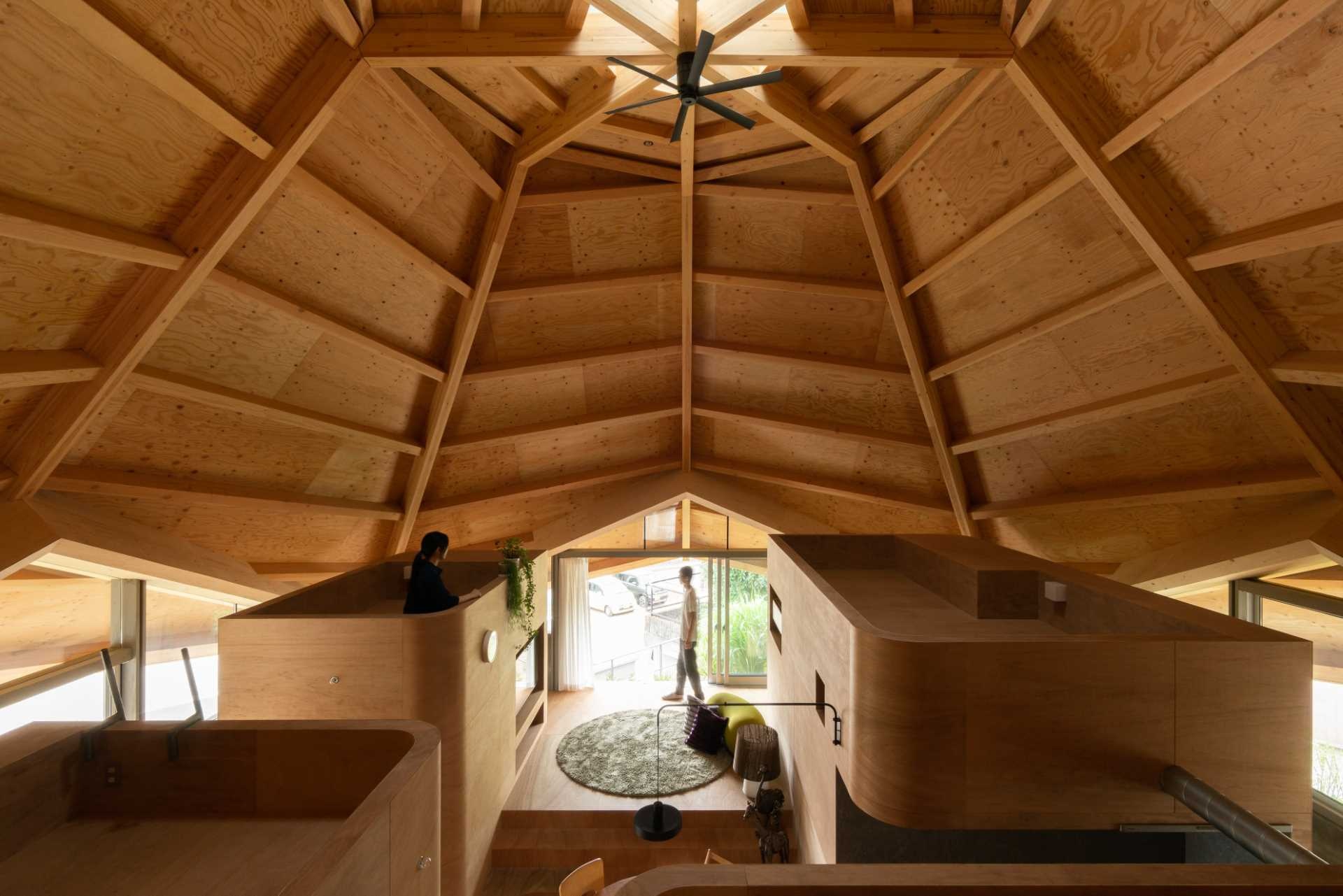
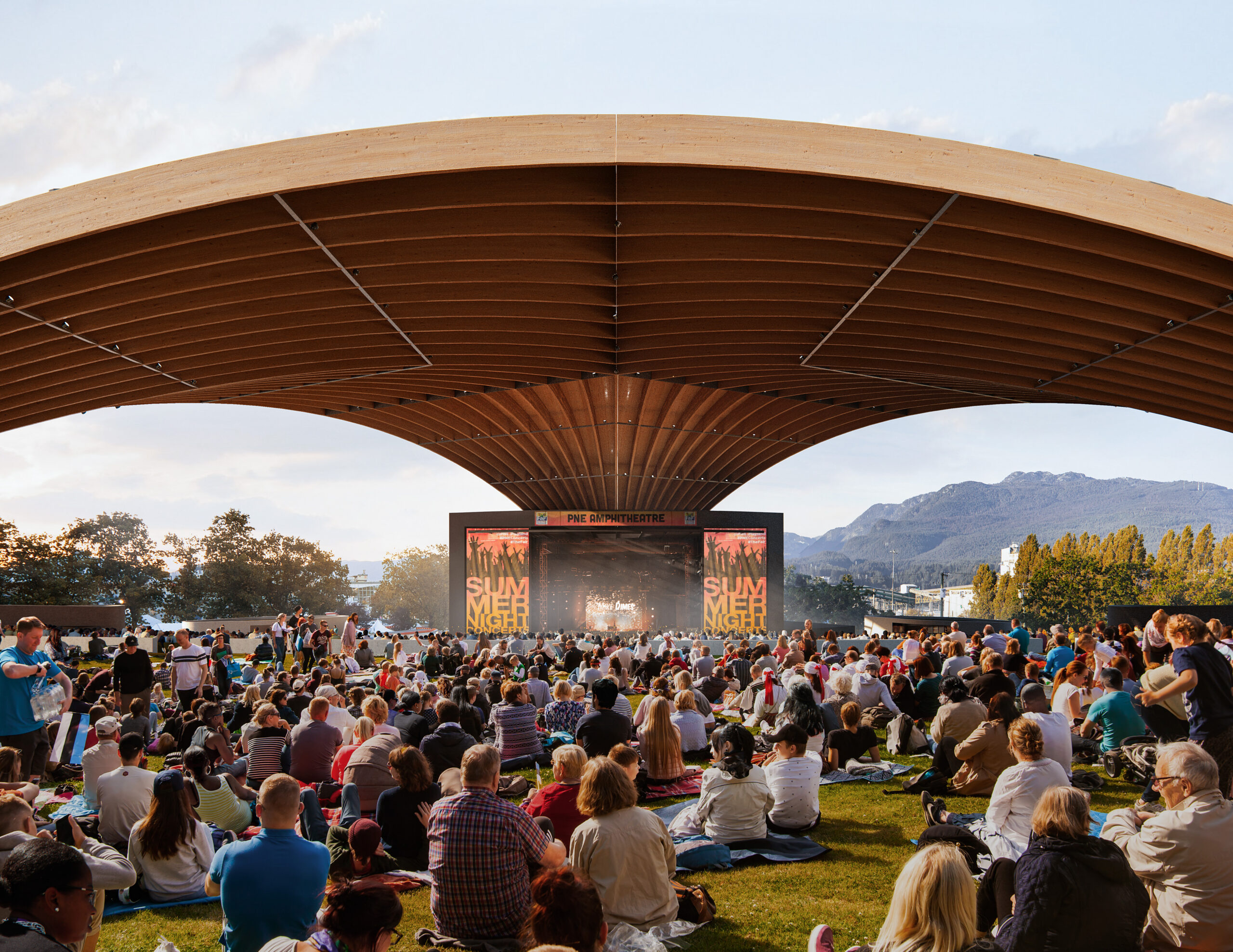
Cover Image: PNE Amphitheatre by Revery Architecture, Vancouver, Canada | Popular Choice Winner, Unbuilt Cultural, 14th Architizer A+Awards | A roof that sequestrates carbon on an unprecedented scale for its form — it seats 10,000 under its warm timber embrace — is clearly not based on precedent, but original human ambition. And it’s rooted in human responsibility.
The post Anthropic Says AI Could Automate 80% of Architecture. That’s Not the Whole Story. appeared first on Journal.