

‘listen, step back, make sense of what’s happening’: miriam van der lubbe on shared attention in design

Over the years, I must have written hundreds of them. Letters for people facing serious injustice and violations of their human rights. Through Amnesty International, you write to bring their situation to the attention of those in power. Most of the time, there is no immediate effect. But every now and again, a sentence is reconsidered or someone is released. My letter does not tip the balance; the hundreds, sometimes thousands of them do.

Miriam van der Lubbe | image by Lisa Klappe
Small gestures, collective force
This logic of small gestures and collective force offers a useful way of thinking about what we might call radical softness. The term can sound personal or abstract, linked to ideas like vulnerability and tenderness. But in design it also shows up in practical ways. For example, when you leave the outcome open, but carefully shape the process. When you listen, step back, make sense of what’s happening, and then decide what is needed next. It is a way of working that depends on shared attention.
This challenges a design culture historically shaped by strong authorship and dominant, often male, voices. A culture that still tends to value clarity, control, and fixed definitions. Radical softness points to another way: focusing on creating the conditions that make our work relevant and meaningful to the people it is for.
This way of working runs through our studio practice. When Friedman Benda Gallery in New York asked for the most costly object possible, we took time and craftsmanship as a starting point. In Godogan, developed in collaboration with Droog Design with craftspeople in Indonesia, value is not defined by the object, but by the conditions of its making. The carving required weeks of well-paid work by skilled makers in Jepara. The more carving, the higher the price, but also the less table remained.

the Godogan table shifts attention to the conditions of its making | image by Boudewijn Bollmann
How things take shape
Because when you think about it; softness only exists in relation to something else. It takes shape between people, between positions, between moving parts. In that sense, I see it as a way of organising relations. If you follow this line of thinking, your focus shifts. Away from fixed outcomes and straight lines between problems and solutions, towards the conditions that allow something to take shape.
This requires a design approach that is less concerned with final objects or results, and more with shaping the structures in which things can happen. The work is not only what is made, but how it comes into being: who is involved, how people are invited in, and how they become part of it.

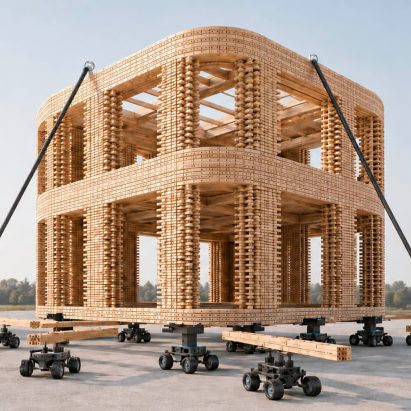
VDL experience centre turns complex technology into a story you can step into | image courtesy of Dutch Design Foundation
Where ideas take form
Still, ideas need a form. If we want ideas to be shared and understood, we need to design objects or spaces people can see, touch and experience. Not to force meaning, but for meaning to grow. In our studio, we develop projects for both cultural institutions and international companies such as ASML and IKEA. Different contexts, but often the same question: how to make complex ideas accessible and engaging.
A clear example is our work for the National Archives of the Netherlands. While its collection has always been accessible, it did not always feel that way. Through a large-scale renovation, a new interior and interactive installations, we helped transform it from a closed archive into a shared story. By listening, translating and designing for the people the archive serves, it became a place where history is not just stored, but something people can touch.

DDF helped transform the Netherlands’ National Archives from a closed archive into a shared story | image courtesy of Dutch Design Foundation
Design as invitation and a moment in a movement
Leaving outcomes open and trusting processes in motion asks for a different kind of confidence. From designers and from those who commission them. We love to work with ambitious clients: people who want to make a difference, but who also leave space to discover what that means together. Projects that are not set up as fixed assignments, but as open questions we explore and shape together. Working in this way means making room for experiment, for not knowing, and for iteration. In other words: for trying, learning, returning, and adjusting, again and again. A design is not the final result, but a moment within a movement.
This is how I like to look at Dutch Design Week. As Creative Head, I see the event as an invitation rather than a place where finished products are shown. I love it when I notice visitors are not just there to watch, but to take part. That might mean responding to an idea, or asking what you can do to help move it forward. This is where softness comes into play.

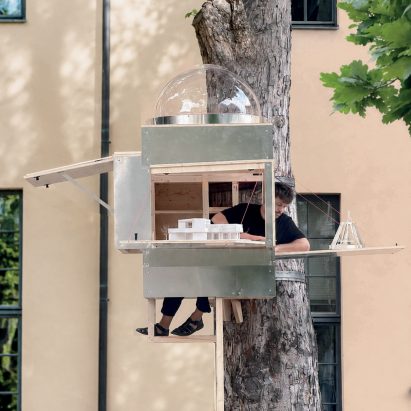
‘I see DDW as an invitation rather than a place where finished products are shown’ | image courtesy of Dutch Design Foundation
Not problems to be solved, but conditions to be cultivated
In 2025, I was invited by the Van Abbemuseum as guest curator to develop its largest design exhibition to date, Bridging Minds. We started with a simple question: what if we look at design not for what it is, but for what it does? What it makes you feel?
Instead of showing products and objects as results in themselves, the exhibition focused on what they do for people: feeling connected, caring for yourself and others, feeling included or safe, or regaining a sense of control over your own life. These are not problems to be solved once, but conditions to be cultivated.

‘Bridging Minds’ shifted the focus from objects to outcomes: what design makes you feel, and what it allows you to do | image by Boudewijn Bollmann
Shaping what comes next
At the same time, this approach is not without tension. Designing means making choices. Who is invited? How do people take part? How open can a process be? The role of the designer is to step back, understand what is happening, and decide what needs to come next. We are not trying to avoid these questions, but to work with them. To value attention over spectacle, relation over scale, and movement over (re)solution.
In this sense, the Amnesty International letters we started with are not separate from design practice, but a way of understanding it. Each letter is a small act, an unfinished product, but together they create the conditions for something else to begin. Something radical, perhaps.
—-
With this article, we would like to reach a broad audience, so more people can join the important conversations in the field of design. For that reason, it was written in collaboration with Anna van den Berg, a writer specialised in accessibility and plain language.
Dutch designer Miriam van der Lubbe is partner at Van Eijk & Van der Lubbe and Creative Head of Dutch Design Week. She also works as a guest curator, strategic thinker and keynote speaker. Through her studio, she develops projects for both cultural institutions and international companies such as ASML and IKEA, creating momentum around complex questions and translating them into experiences people can engage with.
project info:
author: Miriam van der Lubbe | @miriamgetsinspiredby
studio: Van Ejik & Van der Lubbe | @vevdl
organisation: Dutch Design Week | @dutchdesignweek
The post ‘listen, step back, make sense of what’s happening’: miriam van der lubbe on shared attention in design appeared first on designboom | architecture & design magazine.