







refik anadol generates a living architecture from nature’s data


in refik anadol’s works data becomes the site, not the image
Refik Anadol’s practice treats data as a living material, constructing environments from vast ecological datasets that include weather systems, landscapes, and non-human intelligence. Rather than speculating on distant futures, his work operates as a present-tense method, using machine learning to reorganize environmental data into immersive spatial systems. Within this framework, utopia is not projected but tested, as architecture becomes a responsive interface that translates natural processes into shared, sensory experience.
Superstudio’s continuous monument (find designboom’s previous coverage here) imagined an endless white grid stretching across the planet, flattening cities, cultures, and landscapes into a single neutral surface. It was never meant to be built. It was a warning disguised as architecture, exposing how modernism’s obsession with control could erase difference entirely. Anadol picks up that thread but bends it in the opposite direction. Where the grid imposed sameness, his ‘latent space’ absorbs difference. Instead of flattening the world, it digests it. Data becomes a porous field of memory, continuously reorganized by machine learning into fluid, unstable forms. The rigid geometry of the 20th century dissolves into something closer to weather, or dreaming.
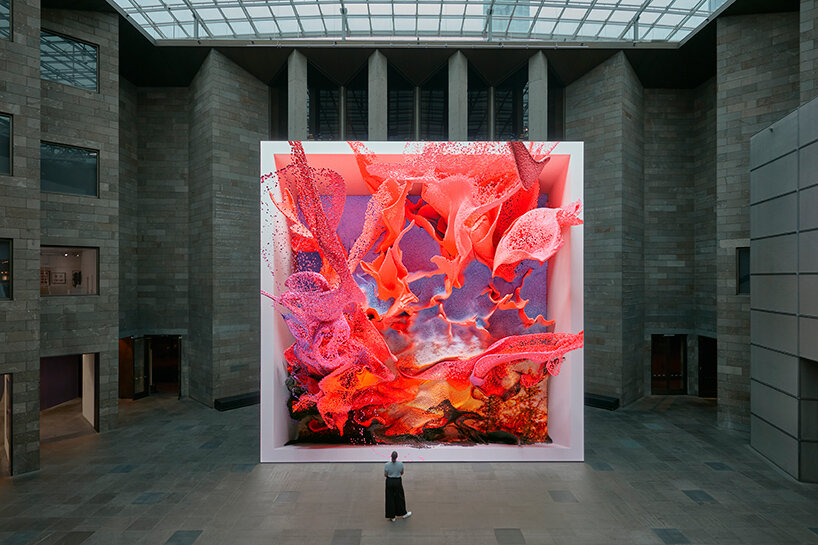
installation view of Refik Anadol’s Quantum Memories, 2020, on display in NGV Τriennial 2020, © Refik Anadol | all images by Tom Ross
architecture begins to breathe
This shift becomes tangible in WDCH Dreams, projected onto Frank Gehry’s Walt Disney Concert Hall. Trained on a century of Los Angeles Philharmonic archives, the AI recomposes history. Images, sounds, and fragments of text circulate across the surface of the building, turning steel into a kind of responsive skin. The facade starts acting like a membrane.
If architecture can think through data, who or what gets to speak? Anadol’s answer appears in the Large Nature Model, a generative system trained not on human language but on the intelligence of ecosystems. Millions of images, field recordings, and environmental datasets feed into a structure that allows forests, oceans, and atmospheres to register as more than background. In works like Large Nature Model: Coral, entire environments unfold as immersive simulations, balancing between scientific archive and sensory fiction.
This is not representation in the traditional sense. It is closer to translation. Birdsongs become spatial rhythms. Coral formations mutate into light fields. Scent data is synthesized into atmospheric cues. The machine collaborates with nature, producing what could be read as a form of digital animism, where non-human systems gain presence inside cultural space. There is a tendency to treat data as abstract, something weightless and invisible. Anadol handles it as material, with density and consequence, compressing archives into luminous volumes. Both approaches anchor design in time, whether geological or informational.
His immersive installations, often described as infinity rooms, remove conventional coordinates altogether. No corners, no clear ground, no stable horizon. Viewers step into an environment that feels less constructed than continuously generated, as if the space were thinking in real time.

Refik Anadol, Echoes of the Earth: Living Archive, 2024 | images by Hugo Glendinning, courtesy Refik Anadol Studio and Serpentine
from speculation to infrastructure
With DATALAND, set to open in Spring 2026 in Los Angeles, this line of thinking takes on a more permanent form. Positioned as a museum of AI arts, it operates more like an ecosystem. Research lab, exhibition space, and public platform collapse into a single framework where datasets, artists, and audiences circulate together.
The project insists on accessibility. The Large Nature Model is open-source, countering the closed systems that dominate most AI development. This move reframes authorship, shifting from individual production toward shared cultural infrastructure. In that sense, DATALAND aligns more with civic space than with institutional monument.
The optimism is measured. AI carries a well-documented environmental cost, and Anadol does not sidestep it. The training of his models relies on renewable energy, while the architecture of DATALAND integrates strategies of data efficiency alongside spatial design. Equally important is the question of provenance. The datasets are drawn from public archives and scientific institutions, grounding the work in traceable and accountable sources.

Large Nature Model unveiled at the 54th annual World Economic Forum
utopia as a working tool
Transparency becomes part of the aesthetic. The ‘thinking brush’ is not hidden. It is exposed, with all its inputs, biases, and limitations visible as part of the work itself.
Placed against the historical backdrop of radical architecture, Anadol’s practice reads less like a break and more like a continuation under different conditions. Superstudio used fiction to critique the present. Anadol uses computation to rewrite it in real time. The latent space suggests something less stable but more open, a field where memory, ecology, and machine intelligence intersect without settling into a fixed form. Utopia, in this context, stops being a clean image of the future and becomes a method of operating within the present, messy, data-driven, and constantly updating itself.

The Sphere – Las Vegas Exosphere

WDCH Dreams
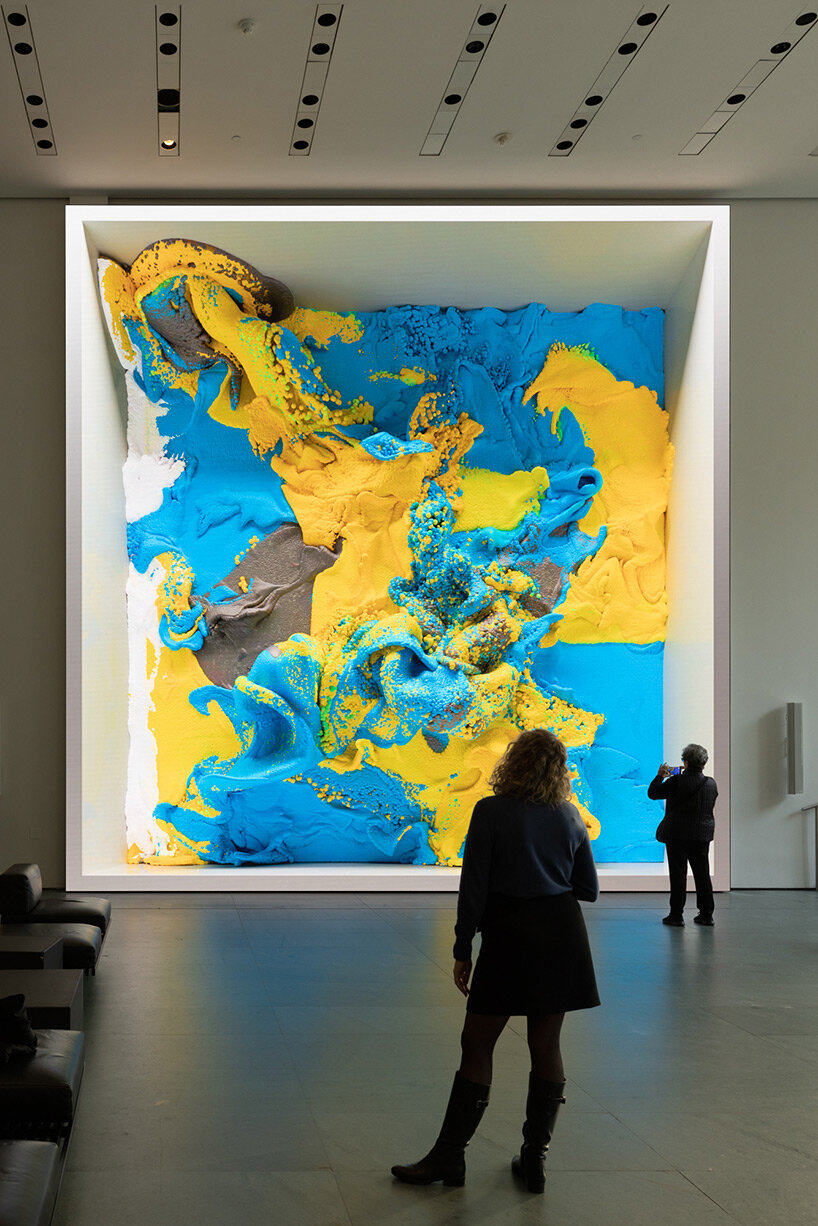
installation view of Refik Anadol: Unsupervised, The Museum of Modern Art, New York, November 19, 2022 – March 5, 2023. © 2022 The Museum of Modern Art. Photo: Robert Gerhardt
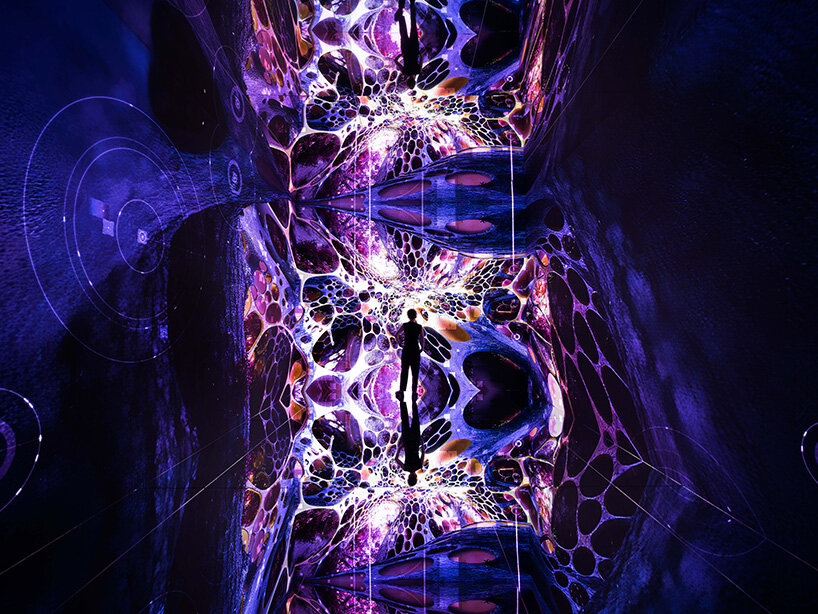
Infinity Room has traveled to 35 cities worldwide and been experienced by more than 10 million visitors
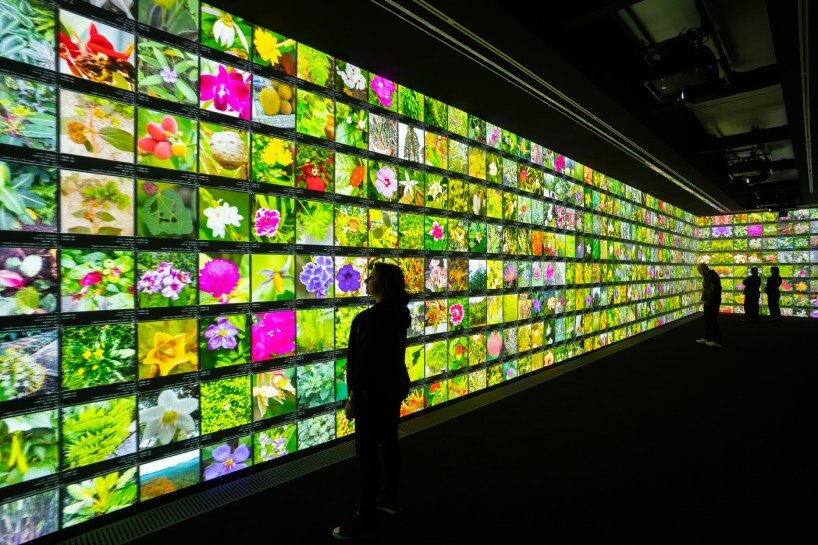
Echoes of the Earth: Living Archives

image via Casa Batlló
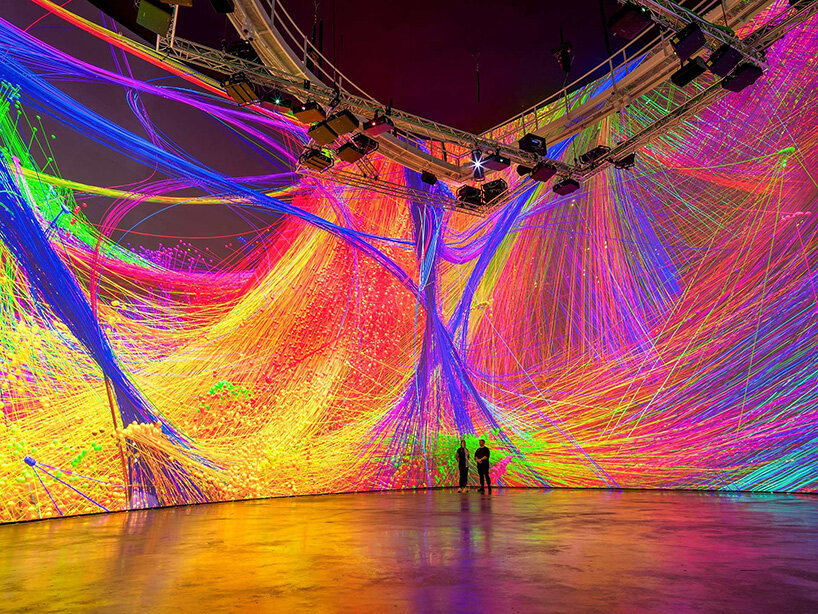
Living Architecture: Gehry | image courtesy of Guggenheim Museum Bilbao
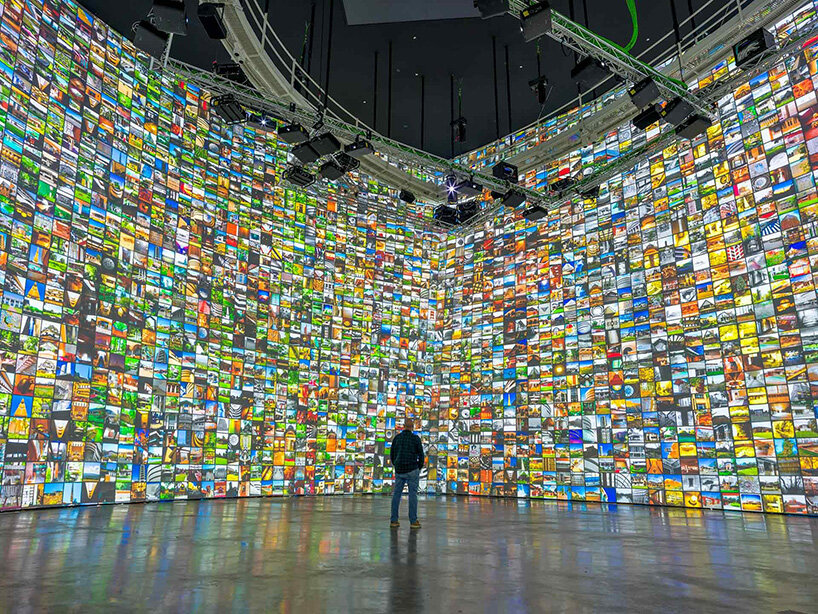
Living Architecture: Gehry | image courtesy of Guggenheim Museum Bilbao
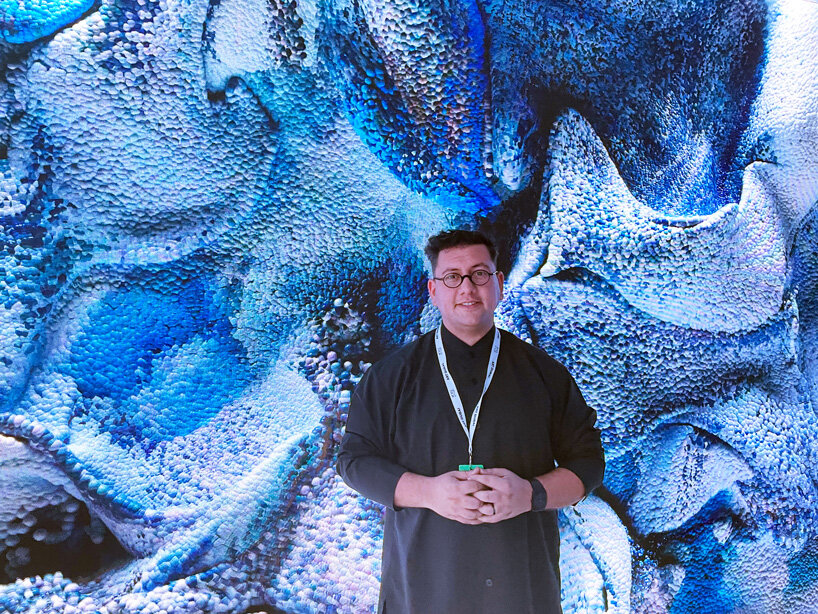
Refik Anadol in front of Glacier Dreams at Art Dubai 2023 | image © designboom
This article is part of designboom’s Utopia: Then and Now chapter, examining utopia’s role in the past, present and future as a way of envisioning a better way of being. Explore more related stories here.
The post refik anadol generates a living architecture from nature’s data appeared first on designboom | architecture & design magazine.