






"I'm not happy" with how fast parametricism is being adopted says Patrik Schumacher



Despite it being adopted more slowly than he anticipated, Patrik Schumacher believes parametricism will still become a universal architectural style, he tells Dezeen in this interview.
Almost two decades have passed since Zaha Hadid Architects principal Schumacher coined parametricism as a term at the 2008 Venice Architecture Biennale.
At the time, he declared parametricism "the great new style after modernism", prophesying that it would become the universal architecture style of the 21st century. He still believes that it will become the style that defines our era.
"Yes – it is still going to be true and it is already partly true when you look at major projects," Schumacher told Dezeen.
"It's not universal, but it's sufficiently entrenched," he continued. "It's been long-lasting, people still go for it, you still win major competitions and so it is definitely longer lasting than [for example] deconstructivism, which had a run of 10 years and then fully disappeared, or postmodernism, which also disappeared."
Global economic crisis "a watershed moment"
However, Schumacher acknowledges that – to his own disappointment – parametricism has not yet been widely adopted by the industry, and at the moment is far from a universal style.
"No, I'm not happy," he said. "I was very happy with it [the rate of adoption] until 2008 actually."
"I mean, it's strange that when I launched the phrase it was still moving and was confident. It took me a while to realise that the 2008 crisis was in retrospect a kind of watershed moment," he continued.
"We were all going for a number of years still, but it actually, if you look back, it's when it started to slow."

Schumacher believes that the global economic recession, combined with leading architecture schools moving their focus away from digital design, led to a slowdown in the adoption of parametricism.
"By 2015, 16, 17 it had kind of shifted," he said. "There was a lot of retrogression, to some extent less interest in design. There was less opportunity in Europe, Dubai was dead. China kept going. But, overall, it was frustrating."
"By like 2012-13 it was still good, but I saw it kind of fading off, particularly at leading universities," he continued.
"They withdrew and went into this woke kind of territory – anti-capitalism, anti-design, anti-star architecture."
"I only see modernism and then parametricism"
Schumacher places parametricism alongside modernism as an "epochal style" – meaning that it is era-defining.
Within his definitions, he sees high-tech and brutalism as sub-styles within modernism, while he describes postmodernism and deconstructivism as transition styles that bridged the gap between modernism and parametricism.
"I only see modernism and then parametricism; these are the opposable styles of the 20th century and 21st century," he explained.
"The transitional styles are postmodernism and deconstructivism, then you have apparitions like neo-classicism – what Leon Krier was doing."
"Today's minimalism, for me, is a kind of retro-modernism, a reaction to deconstructivism, [while] high tech is a form of modernism, still in the full-on tradition."
"The right answer to the era of post-Fordism"
Schumacher's confidence that parametricism will eventually become widely adopted stems from his view that the style aligns with the needs of people in the 21st century.
He believes that while modernist architecture was fitting for an era of mass production, the flexibility within parametric design makes it ideologically aligned with our computer-dominated current age.
"These epochal styles are not whimsical or highly subjective, just to be explained out of influences," he said.
"What really drives the proliferation is a good fit with the sociology, economic, technology and dynamics of an era," he continued.
"Modernism was a good fit for that era of category production, and parametricism is the right answer to the era of post-Fordism, computational, telecommunication, et cetera."
As a result, Schumacher considers parametricism's eventual domination of architecture inevitable. The only way he foresees this not coming to fruition is if there is a major shift in how the global population operates.
"I don't expect any other style, unless there's another civilisational transformation," he explained. "There's nothing new, so we should not expect anything else."
"It's still a drop in the ocean"
Although parametricism is not being adopted at the rate that Schumacher hoped and expected, he argues that for some typologies it has become the dominant style, including airports.
"It's still a drop in the ocean, for some reason," he said.
"But I'm looking around the world, and you know, there are a lot of airports, nearly all airports, are parametricism."
For Schumacher, it's logical that the widespread adoption of parametricism will start with the largest, most complex buildings.

He believes that large-scale buildings – such as airports and stadiums, along with entire new neighbourhoods – are where parametricism has the greatest benefits for architects.
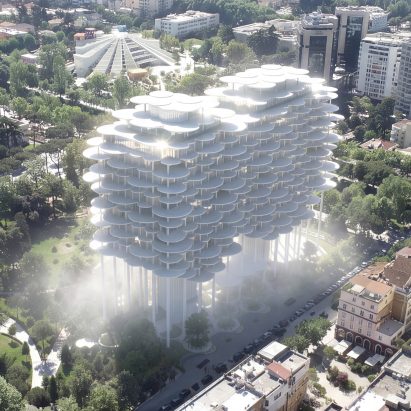
"The advantages of parametricism come out the strongest, the larger the project," he said. "Particularly in large mixed-use complexes, or if you're doing city expansions, extensions, knowledge economy clusters, incubator clusters, like our Unicorn Island project in Chengdu."
Schumacher claims that parametricism has evolved significantly since he coined the term, with parametric buildings becoming more complex and refined.
He acknowledged that early buildings in the style had to use lots of material and complex engineering to achieve a desired look.
"The first wave of parametricism was just form. On the inside you had hatched jobs of steel frames with cladding on the outside, and between was a huge kind of unaccounted-for pochette [pocket] – it was just surfaces," he said.

Now, however, he points to what he sees as an evolution of the style that he terms "tectonism" – which aims to directly link digital form-finding with physical fabrication and structural engineering.
Schumacher believes that tectonism makes more structural sense than earlier works and is therefore less of an easy target for criticism.
"Tectonism has more substance and credibility – it is not so easily dismissed as the earlier parametric buildings, which were partly illogical, partly over-expensive, let's say compositionally, artistic and willful," he said.
"They were popular, but in the profession, not respected. I think some of the things that we're doing with tectonism have more credibility, they have more rationality, also, it's good on the sustainability front – how much material you can save," he continued.
"They can be relatively smaller projects, which build up the credibility, and they have a beauty and organic sophistication and clarity and conscious conscientiousness [that means] they're not so vulnerable to critique."
"Young architects would love to design parametricism"
Despite the setbacks that parametricism has faced, Schumacher remains confident that the style, and in particular the sub-style of tectonism, will become widespread.
"[Even] with all the kind of discouragement from the schools of architecture that just want to talk about sustainability and social justice, all the students and young architects, what they would love to design and build is parametricism," he said.
"That's what I take a lot of encouragement from, along with the advent of AI, all these tools, Midjourney and so on. I think this is, for me, is very encouraging."
In fact, he not only believes that it will still become a universal style, but that all architects and educators should be working towards making this happen.
"I'm not only predicting that we will perceive parametricism as a uniform style, I'm saying we should wish for that and we should converge towards this," he said.
"And there are two reasons why. One is because it is the most sophisticated style in the sense of absorbing all the engineering optimisation intelligence," he continued.
"But also, it is good to be on the same paradigm if you want to build a city together, which functions together, something where there's a coherence with an identity and beauty," he said.
"It's not good that the different approaches fight each other, because then you don't generate something larger. All you get is the garbage spill, where everything is trying to be prominent and in the end, nothing is prominent – there's no hierarchy, no legibility and no logic."
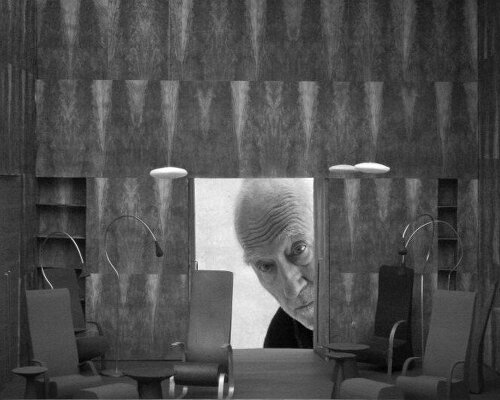
The main portrait is by Frederic Aranda.
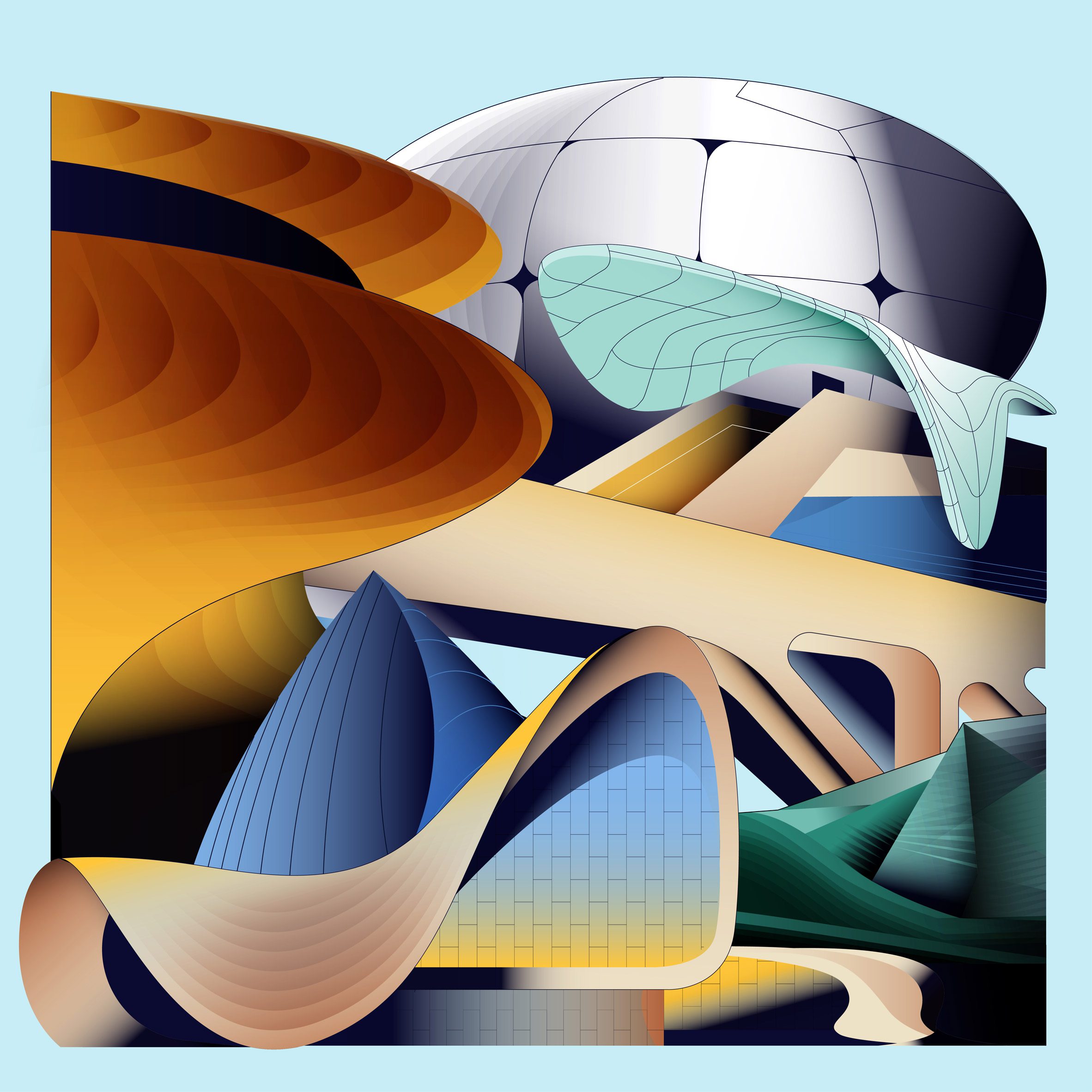
Parametricism
This article is part of our series on parametricism, the theory of architecture developed by Zaha Hadid Architects principal Patrik Schumacher that lays claim to becoming the 21st century's defining style.
The post "I'm not happy" with how fast parametricism is being adopted says Patrik Schumacher appeared first on Dezeen.